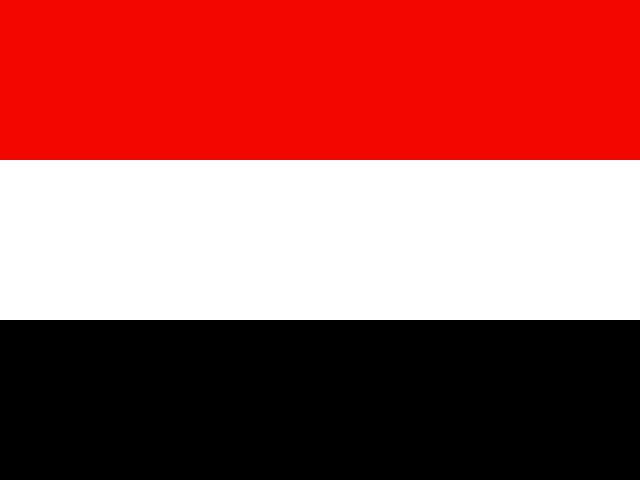
Overview
Yemen, formally the Republic of Yemen, lies in the south of the Arabian Peninsula in West Asia. It has land borders with Saudi Arabia to the north and Oman to the northeast, and coasts on the Red Sea, the Gulf of Aden and the Arabian Sea. The Socotra Archipelago also belongs to it, and it shares sea boundaries with Djibouti, Eritrea and Somalia across the water.
The country covers about 455,503 square kilometres and has roughly 2,000 km of coastline. According to the source it is the second-largest country on the peninsula by both area and population. The population is estimated at 34.7 million, mostly Muslim Arabs. Sanaa is the constitutional capital and the largest city.
Because of where it sits, Yemen has been a meeting point of civilisations for more than 7,000 years. Over time it was home to the Sabaean and Himyarite kingdoms, converted to Islam in the seventh century, became a centre of Islamic learning, and for centuries was the main coffee supplier to the world, shipping through the port of Mocha.
The modern state was formed in 1990, when North Yemen and South Yemen merged. Since 2011 the country has been in political turmoil, and since about 2015 it has been in a civil war in which rival authorities claim to govern: the internationally recognised Presidential Leadership Council and the Houthi movement's Supreme Political Council. The fighting has produced a humanitarian emergency of great scale.
Yemen ranks among the least developed nations and is one of the poorest in the Middle East and North Africa. In 2019 the United Nations counted about 24 million people, close to 75% of the population, as needing humanitarian assistance, the largest such figure in the world at that time. Yemen belongs to the Arab League, the United Nations, the Non-Aligned Movement and the Organisation of Islamic Cooperation.
History
Large settlements existed in the northern Yemeni mountains as early as 5000 BC. Four main kingdoms arose in South Arabia: Saba, Hadhramaut, Qataban and Ma'in. Saba, usually linked with the biblical Sheba, was the most prominent. Its rulers held a title, generally read as 'unifier', reflecting the task of binding tribes together under one kingdom. The Sabaeans built a commercial kingdom whose influence reached parts of what is now Ethiopia and Eritrea. In AD 275 the Himyarite Kingdom took over, covering most of present-day Yemen and strongly shaped by Judaism. Christianity came in the fourth century.
Islam reached Yemen around 630, when Muhammad sent Ali to Sanaa and its surroundings. At that time Yemen was the most advanced region of Arabia. The Banu Hamdan confederation was among the first to accept the faith, Muadh ibn Jabal was sent to Al-Janad near Taiz, and tribes including Himyar sent delegations to Medina in the 'year of delegations' (about 630–631). Yemenite troops became important in the early Islamic conquests, and various dynasties rose and fell between the ninth and sixteenth centuries.
From the 15th century Portugal intervened, dominating the port of Aden for roughly 20 years and holding a fortified post on Socotra. In the 16th century Portuguese power threatened Indian Ocean trade, so the Mamluks sent a force under Hussein al-Kurdi, and in 1515 the Mamluk sultan met the Tahiri sultan 'Amir bin Abdulwahab at Zabid to discuss funds for the campaign against the Portuguese.
The Ottomans wanted to protect Mecca and Medina and the India trade route. Hadım Suleiman Pasha stormed Aden in 1538 and took Zabid in 1539, making it the seat of Yemen Eyalet and eventually bringing all of Tihamah under Ottoman rule. Their authority stayed mostly in the southern coastal belt around Zabid, Mocha and Aden, with little control over the highlands.
In the 17th century the Zaydi imams expanded. In 1632 Al-Mu'ayyad Muhammad sent 1,000 men to seize Mecca; the force took the city and killed its governor, but an Ottoman army from Egypt cut off the Yemenis' water and caused over 200 deaths, mostly from thirst, and the tribesmen surrendered. Al-Mu'ayyad died in 1644 and his successor Al-Mutawakkil Isma'il conquered the whole of Yemen.
Yemen then became the world's only coffee producer and held diplomatic relations with Safavid Persia, the Ottomans of Hejaz, the Mughal Empire and Ethiopia. In the first half of the 18th century Europeans smuggled out coffee plants and grew them in colonies in the East Indies, East Africa, the West Indies and Latin America, ending the Yemeni monopoly. The imamate lacked a clear succession method, and family disputes and tribal defiance led to the decline of the Qasimi dynasty during the 1700s.
Britain wanted a coal depot for steamers heading to India (a round trip from Suez to Bombay took 700 tons of coal) and the East India Company chose Aden. After failing to secure a foothold at Mocha from the Zaydi imam of Sanaa, Britain obtained a similar deal from the Sultan of Lahej, then occupied Aden and forced the sultan to accept British 'protection'. In November 1839, 5,000 tribesmen failed to retake the town and about 200 were killed. With migrants from India, East Africa and Southeast Asia, Aden became a cosmopolitan port; in 1850 only 980 Arabs were recorded as original residents.
The British presence set them against the Ottomans, who claimed sovereignty over all of Arabia. Worried about British expansion toward the Red Sea, the Ottomans returned to Tihamah in 1849 after two centuries away. Disorder among the Zaydi imams, tribes and religious scholars led some Sanaa citizens to ask the Ottoman pasha for help, and the opening of the Suez Canal in 1869 reinforced Ottoman interest. By 1873 they had taken the northern highlands, and Sanaa became the administrative centre of Yemen Vilayet.
Ottoman rule tried to weaken local lords, pardoned rebel chiefs and gave them posts, introduced economic reforms and even attempted to secularise society. Corruption was widespread, since capable officials avoided postings to Yemen. The Zaydi tribes regarded the Tanzimat reforms as heretical, and in 1876 the Hashid and Bakil tribes rebelled. Imam Yahya Hamidaddin led a revolt from 1904; the uprisings of 1904–1911 cost the Ottomans as many as 10,000 soldiers and up to 500,000 pounds a year. A treaty in 1911 recognised Yahya as autonomous leader of the Zaydi northern highlands, while the Ottomans kept the Shafi'i mid-south until leaving in 1918.
After the Anglo-Ottoman Convention of 1913, Britain and the Ottomans split Arabia in 1914 into a northwest zone under Ottoman influence and a southeast zone under British influence, with a boundary later called the Violet Line. Imam Yahya ruled the northern highlands independently from 1911 and began extending his rule over other Yemeni lands.
After World War I the Kingdom of Yemen emerged in the north. It became the Yemen Arab Republic (North Yemen) in 1962 following a civil war. In 1967 the People's Democratic Republic of Yemen (South Yemen) became independent from the British Aden Protectorate, and was the first and only communist state in the Middle East. The two states united in 1990 as the Republic of Yemen, with Ali Abdullah Saleh as first president; he stepped down in 2012 in the aftermath of the Arab Spring. A civil war in 1994 followed unification.
From 2011 street protests over poverty, unemployment, corruption and Saleh's plans to change the constitution launched a lasting political crisis. By 2015 a civil war was underway. A Saudi-led, Western-backed coalition including the United Arab Emirates intervened in 2015 to restore the government removed by the Houthi movement. The UN has called the situation the world's worst humanitarian crisis, with tens of thousands killed and millions facing famine. In January 2024 the United States, Britain and several allies launched strikes on Houthi targets in Yemen.
Climate
Yemen has four broad geographic zones, each with its own climate: the Red Sea coastal plain (Tihamah), the western highlands, the central/eastern highlands, and the Rub' al Khali desert in the east.
The Tihamah is a hot, very dry, flat strip along the whole Red Sea coast. Evaporation is so high that streams from the mountains never reach the sea, though they feed large groundwater stores that are now heavily used for farming. Lagoons make parts of it marshy and a breeding area for malaria-carrying mosquitoes. The port city of Hodeidah lies here and is typically very hot and humid (approx.).
The western highlands rise steeply from the Tihamah escarpment and are heavily terraced. They get the most rain in Arabia, with annual totals climbing from about 100 mm near the foot of the slope to around 760 mm in Taiz and over 1,000 mm in Ibb. Days are warm, but temperatures drop sharply at night.
The central highlands form a plateau above 2,000 m. They are drier than the western slopes because of a rain shadow but still get enough rain in wet years for cereals such as wheat and barley, helped by water storage. Sanaa sits here and has a mild, dry highland climate with cool nights, cold winters at times, and a rainy season mostly in spring and summer (approx.). The highest point in Yemen and Arabia is Jabal An-Nabi Shu'ayb at about 3,666 m.
The Yemeni part of the Rub' al Khali is mostly below 1,000 m, receives almost no rain and is inhabited only by Bedouin camel herders. Along the southern coast, Aden has a hot desert climate with very warm summers and mild winters and low rainfall (approx.), and Mukalla on the Gulf of Aden coast is similarly hot and dry (approx.).
Socotra in the Arabian Sea is geographically and biogeographically linked with Africa and is much nearer to Africa than Asia. Yemen holds six terrestrial ecoregions, ranging from coastal fog desert and Socotra xeric shrublands to montane woodlands. Plants mix tropical African (Sudanian) species in the wetter western mountains with Saharo-Arabian species in coastal plains and deserts. The Arabian leopard is rare. Jabal al-Tair island erupted in 1883 and 2007.
Government and politics
Yemen is organized as a unitary semi-presidential republic, and its legislature has two chambers. The 1991 constitution divides power among an elected president, an elected Assembly of Representatives with 301 seats, and a Shura Council of 111 appointed members. The president serves as head of state, while the prime minister leads the government. Voters choose the president from a field of at least two candidates, each of whom must be endorsed by no fewer than 15 members of parliament. The president's term lasts seven years, and the president names the prime minister, who must win the approval of two-thirds of parliament. Parliament sits for six years at a time. All citizens aged 18 or older may vote, yet only Muslims are allowed to hold elected office.
Ali Abdullah Saleh was president of North Yemen from 1978 and of united Yemen from 1990, and won the first direct election in 1999. He was re-elected in September 2006 in a vote observers judged only 'partly free', marred by violence, press restrictions and fraud allegations. Parliamentary elections in April 2003 left the General People's Congress with a supermajority. Mass protests in 2011 forced Saleh to resign in 2012, though he stayed influential and later allied with the Houthis during their takeover in the mid-2010s.
Control of the state is now contested. As of 2025 the armed forces and the presidency's authority are divided between the internationally recognised Presidential Leadership Council, chaired by Rashad al-Alimi, and the Houthi-led Supreme Political Council, chaired by Mahdi al-Mashat. The Supreme Political Council, based in Sanaa, forms a government for Houthi-held territory but is not recognised internationally.
The constitution calls for an independent judiciary. The old northern and southern legal codes have been merged, and the system includes separate commercial courts and a Supreme Court in Sanaa. Sharia is the main source of law, and many judges are religious scholars as well as legal experts.
Administratively, Yemen has twenty-one governorates (muhafazat) plus one municipality, Amanat Al-Asemah, which holds the constitutional capital Sanaa. Socotra Governorate was created in December 2013 from part of Hadramaut. The governorates are divided into 333 districts, 2,210 sub-districts and 38,284 villages (as of 2001). The source does not detail which powers sit at which level; as a unitary state, authority formally rests with the central government. In 2014 a constitutional panel proposed a federal system of six regions (four north, two south) with Sanaa outside any region. This proposal was one factor behind the Houthi takeover.
In foreign relations, Yemen is a member of the UN, Arab League and Organisation of Islamic Cooperation, takes part in the Non-Aligned Movement, and has joined the Nuclear Non-Proliferation Treaty. After the 1994 civil war it restored relations with neighbours, and in 2000 signed a border treaty with Saudi Arabia ending a dispute of about 50 years. Saudi Arabia built a barrier along the border in 2004, saying militants, drugs and weapons were entering from Yemen. In March 2020 key donors cut tens of millions of dollars from UN aid for Yemen, forcing UN agencies to close or cut over 75% of programmes that year and affecting over 8 million people.
The military comprises the Army (including the Republican Guard), Navy (including Marines), Air Force (including Air Defence), and strategic reserve and unmanned aviation forces. Forces have been split since the war began. In 2012 active troops were estimated at 66,700 army, 7,000 navy and 5,000 air force. Compulsory service was reinstated in 2007, and in 2006 defence took about 40% of the budget.
On human rights, Yemen ranked 176 of 180 in the 2022 Corruption Perceptions Index. The source reports torture, extrajudicial executions, arbitrary arrests (especially in the south), prolonged pretrial detention and limits on speech, press and religion. Homosexuality is illegal and punishable by death. Yemen ranked last of 135 countries in the 2012 Global Gender Gap Report, and Human Rights Watch has reported discrimination and violence against women. International IDEA rates Yemen low on overall democratic measures.
Economy
Since unification in 1990 Yemen has been among the poorest Middle Eastern countries. In 2013 GDP (PPP) was about US$61.63 billion, or $2,500 per person. Services made up 61.4% of GDP, industry 30.9% and agriculture 7.7%. Petroleum was about 25% of GDP and 63% of government revenue. After the war began in 2014, GDP fell by more than half because of a Saudi-led blockade and a de facto Houthi embargo on oil exports.
Main farm products are grain, vegetables, fruit, pulses, qat, coffee, cotton, dairy, fish, livestock (sheep, goats, cattle, camels) and poultry. Most Yemenis work in agriculture, yet 97% of households are net food buyers. Sorghum is the commonest crop, and mangoes are the most valuable fruit.
Qat (khat), a stimulant leaf chewed by many, takes up to 40% of the water drawn from the Sanaa Basin each year, and the share is growing. It has displaced food crops and helped push up food prices, which pushed an additional 6% of people into poverty in 2008 and triggered food riots in poorer cities. The government and the Dawoodi Bohra community in northern governorates are working to replace qat with coffee.
In 2013 exports were $6.694 billion, mainly crude oil, coffee, dried and salted fish and liquefied natural gas, sent to China (41%), Thailand (19.2%), India (11.4%) and South Korea (4.4%). Imports were $10.97 billion, mostly machinery, food, livestock and chemicals, from the EU (48.8%), UAE (9.8%), Switzerland (8.8%), China (7.4%) and India (5.8%).
The 2013 budget had $7.769 billion in revenue and $12.31 billion in spending. Revenue was about 17.7% of GDP, the deficit 10.3% and public debt 47.1% of GDP. Foreign exchange and gold reserves were about $5.538 billion, inflation 11.8% and external debt $7.806 billion. As of 2024 Yemen is one of three countries that have not ratified the Paris Agreement.
Water scarcity is the central challenge. The average Yemeni has about 140 cubic metres a year for all uses, against a Middle Eastern average of 1,000 and a water-stress threshold of 1,700. Groundwater is the main source and is unregulated; in Sanaa the water table fell from about 30 m below the surface in the 1970s to about 1,200 m by 2012. Yemen is described as both the poorest and the most water-scarce country in the Arab world. Poverty makes cost recovery hard, institutions are weak, and the war has delayed infrastructure; an estimated 80% of people struggle to get water to drink and wash. UNICEF and partners have supplied safe drinking water to 8.8 million people, including 5.3 million children, through solar-powered systems and rainwater harvesting.
Demographics and urbanization
Yemen's population was about 33 million by 2021 estimates (the lead gives 34.7 million), up from 4.3 million in 1950 and projected to reach about 60 million by 2050. About 46% of people are under 15 and 2.7% are over 65. The fertility rate is about 4.45 children per woman.
Urbanisation figures are not given in the source, but it notes rapid city growth: Sanaa grew from about 55,000 in 1978 to nearly 1 million by the early 21st century. Most people live in the northern and northwestern highlands, while the south and southeast are less populous. Other large cities (approx.) include Aden (about 1 million), Taiz (several hundred thousand to around 1 million), Hodeidah (several hundred thousand), Ibb and Mukalla. Sanaa's metropolitan area is roughly 3 to 4 million (approx.).
Yemen is largely tribal, and hereditary caste-like groups such as the Akhdam live in urban areas. About 100,000 Indo-Yemenis live in the south, and there are also Iranian Yemenis. Yemenite Jews were once a sizeable minority but mostly left for Israel in the mid-20th century. Minority groups largely departed when North and South Yemen were established.
Yemen is the only Arabian country to sign the international refugee accords. In 2007 it hosted 124,600 refugees and asylum seekers, mostly from Somalia, Iraq, Ethiopia and Syria, and over 334,000 Yemenis were internally displaced by conflict. The diaspora is concentrated in Saudi Arabia, with a smaller group in the United Kingdom.
Modern Standard Arabic is official and Yemeni Arabic is the everyday vernacular. Modern South Arabian languages are spoken in the far east and on Socotra: Mehri has about 70,000 speakers and Soqotri about 57,000. Of the Old South Arabian languages only Razihi survives. Yemeni Sign Language serves the deaf community.
Islam is the state religion. Per a UNHCR report, Shia Zaydis are about 45% and Sunnis about 53%, with notable Ismaili and Twelver minorities. Sunnis are mainly Shafi'i, with Maliki and Hanbali groups; they form the majority in the south and southeast. Zaydis dominate the north and northwest, and Ismailis are concentrated in urban centres such as Sanaa and Ma'rib. Gallup International found Yemen to have the highest share of religious people among Arab countries and worldwide. About 0.05% follow Christianity, Judaism, Hinduism or have no affiliation; Christians are estimated at 25,000 to 41,000, and very few Jews remain (estimates range from a few dozen to one).
Adult literacy was 64% in 2010. Free compulsory schooling is provided in law for ages six to 15 but is not enforced. A 2003 plan aimed to enrol 95% of children aged six to 14 and narrow the gender gap, and a 2008 World Bank project supported girls' secondary education in rural areas. Education spending rose from 5% of GDP in 1995 to 10% in 2005. The top-ranked local universities on Webometrics are the Yemeni University of Science & Technology, Al Ahgaff University and Sanaa University. Yemen placed 131st in the 2021 Global Innovation Index.
Capital city
Sanaa is the constitutional capital and the largest city. It lies in the central highlands, on a plateau above 2,000 m (roughly 2,250 m, approx.), about 50 km south of the Madar dinosaur-footprint site. Its population grew from about 55,000 in 1978 to nearly 1 million in the early 2000s, and the metro area is now several million (approx. 3 to 4 million).
Because of its altitude Sanaa has a mild, dry highland climate: warm days, cool to cold nights, and modest rain mostly in spring and summer (approx.). The Sanaa Basin faces serious groundwater depletion, partly because of qat cultivation.
Sanaa is the seat of the Supreme Court and, before the civil war, of the united military headquarters. It served as the Ottoman administrative capital of Yemen Vilayet from 1873. It is now in Houthi-controlled territory, where the Supreme Political Council forms a government that is not internationally recognised. The internationally recognised government, led by the Presidential Leadership Council, has operated largely from Aden in the south (approx., general knowledge). The country thus effectively has competing administrative centres.
Sanaa is the political and, historically, the main population and cultural centre. Aden, the port city that Britain developed as a coaling station, was the capital of South Yemen and remains the main southern commercial hub and seaport (approx.). Hodeidah is the main Red Sea port for the north. So the constitutional capital is the largest city, but economic activity is spread among Sanaa, Aden and the ports, and the war has severely damaged all of them.
About this summary
City climates, Sanaa's metro population and role, Aden's interim position, and other capital-city and recent-conflict details come from general knowledge and are approximate. Populations of other cities are likewise approximate.