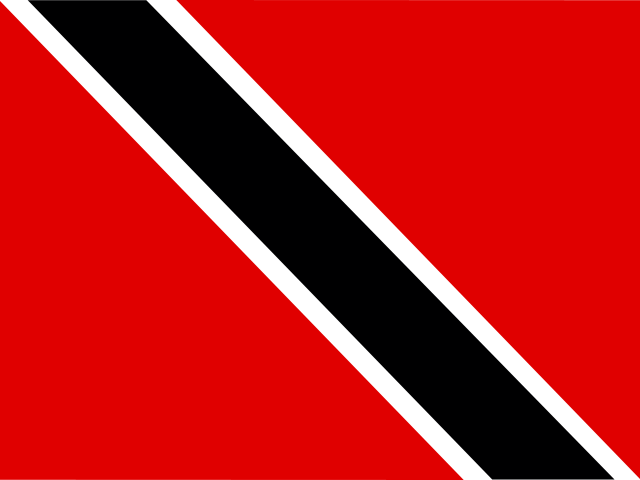
Overview
Trinidad and Tobago is a Caribbean island nation made up of two main islands, Trinidad and Tobago, plus several small islets. It is the most southerly country in the Caribbean island chain and sits just off the South American coast: Trinidad is about 11 km from Venezuela, roughly 130 km south of Grenada and about 287 km southwest of Barbados.
The capital is Port of Spain. Chaguanas is the largest and most populous municipality. Most people live on Trinidad, and Tobago is much smaller and more tourism-oriented.
Indigenous peoples lived on Trinidad for centuries before Spanish colonisation began after Columbus sighted the island in 1498. The Spanish governor surrendered Trinidad to a British fleet in 1797, and Britain's hold was confirmed by the Treaty of Amiens in 1802. Trinidad and Tobago were ceded as separate territories and were unified in 1889. The country became independent in 1962 and a republic in 1976.
Unlike most of its Caribbean neighbours, the economy depends mainly on industry built on large oil and natural gas reserves, not on tourism. The country lies south of the main hurricane belt and sees fewer hurricanes than most of the region.
Culturally it is known for its African and Indian Caribbean heritage, shown in its large Carnival and in Hosay and Diwali celebrations. It is the birthplace of the steelpan and the limbo, and of musical styles including calypso, soca, rapso, chutney and chutney soca.
History
The first known settlement is at Banwari Trace in southwestern Trinidad, dated to about 5000 BCE. It is described as the oldest pre-Columbian archaeological site in the Caribbean and produced the remains of 'Banwari Man'. At European contact Trinidad was home to Arawakan-speaking groups such as the Nepoya and Shebaya and Cariban-speaking groups such as the Yao. Karina, also Cariban, was spoken on Tobago.
Columbus sighted Trinidad in 1498 on his third voyage and saw Tobago in the distance, naming it Bellaforma, without landing. In the 1530s Antonio de Sedeño landed on the southwest coast, built a fort and fought the native population, and the following decades were marked by warfare with Indigenous peoples.
In 1777 the captain general of Venezuela, Luis de Unzaga, allowed free trade in Trinidad, which drew French settlers. A Cédula de Población granted by Charles III of Spain on 4 November 1783, obtained by Roume de St. Laurent, was more generous than an earlier one of 1776 and offered free land and a ten-year tax exemption. French settlers and their Creole language shaped the island in the 19th century.
A British force led by Sir Ralph Abercromby arrived off Chaguaramas in 1797, and the Spanish governor, José María Chacón, whose troops were outnumbered, gave up the island without fighting. The Treaty of Amiens in 1802 formalised Trinidad's status as a British crown colony, where most inhabitants spoke French and the legal system remained Spanish. Thomas Picton served as its first British governor.
After emancipation many formerly enslaved Africans left the plantations, often moving to urban areas such as Laventille and Belmont near Port of Spain, which created a labour shortage. Britain filled it with indentured workers, including Indians, Chinese and Portuguese. Indians arrived in the largest numbers, starting on 1 May 1845 when 225 people came on the ship Fatel Razack.
In 1903 a protest over new water rates in Port of Spain turned into riots in which 18 people were shot dead and the Red House was damaged by fire. A limited local elected assembly was introduced in 1913. A dockworkers' strike in November–December 1919 grew into a general strike, was put down with help from the sailors of HMS Calcutta, and was the first notable cooperation across ethnic groups.
The 1920s collapse of sugar and cocoa, followed by the Great Depression, produced hardship and labour riots in 1937. Key labour figures included Arthur Cipriani, Tubal Uriah 'Buzz' Butler and Adrian Cola Rienzi. Petroleum was discovered in 1857 but became economically significant mainly from the 1930s, and by the 1950s it was a staple export and the base of a growing middle class.
US military bases at Chaguaramas and Cumuto during World War II improved infrastructure and provided well-paid work; the Americans left in 1961. Universal suffrage came in 1945. Politics split largely along ethnic lines, with the People's National Movement (PNM, founded 1956 by Eric Williams) drawing mainly Afro-Trinidadian support and the People's Democratic Party (later the Democratic Labour Party) drawing mainly Indo-Trinidadian support. After the West Indies Federation (1958) dissolved when Jamaica withdrew in 1961, Trinidad and Tobago sought independence on its own.
Independence from the United Kingdom came on 31 August 1962, with Elizabeth II remaining head of state until the 1976 Republican Constitution. Eric Williams was prime minister until 1981. The Black Power movement of the late 1960s led to a state of emergency in April 1970 and an attempted army mutiny that was quashed by the Coast Guard. The radical National Union of Freedom Fighters waged an insurgency that was suppressed by 1974.
Hurricane Flora struck Tobago in 1963, killing 30 people, and tourism later replaced agriculture as Tobago's main income. The country joined CARIFTA in 1968 and was a founding member of CARICOM in 1973. Rising oil prices and new offshore discoveries brought a boom from 1972 to 1983. In 1976 the country became a republic within the Commonwealth, with Ellis Clarke as first President, while keeping the Privy Council as its final appeal court. The Tobago House of Assembly was created in 1980.
After Williams's death in 1981 George Chambers led the country. A fall in oil prices caused recession, and the National Alliance for Reconstruction (NAR) won the 1986 election under A. N. R. Robinson. Structural adjustment under the IMF and a currency devaluation led to unrest. In 1990 members of the Jamaat al Muslimeen, led by Yasin Abu Bakr, stormed the Red House and the national television station and held the government hostage for six days before surrendering.
The PNM under Patrick Manning won in 1991. A hung parliament in 1995 brought Basdeo Panday of the United National Congress (UNC) to power as the first Indo-Trinidadian prime minister. After several inconclusive elections Manning returned in 2001 and served until 2010. A second oil and gas boom began in 2003.
In 2010 the People's Partnership coalition won and Kamla Persad-Bissessar became the first female prime minister. A state of emergency ran from 21 August to 5 December 2011 because of a spike in killings. The PNM under Keith Rowley won in 2015 and again in August 2020. A state of emergency in 2021 addressed COVID-19, and another began on 30 December 2024 to target criminal activity and illegal firearms. A curfew imposed on 18 July 2025 was reported as still in effect in late 2025.
The country hosted the seventh Commonwealth Youth Games on 4–11 August 2023, the first time a Caribbean country hosted them. Rowley announced he would leave office before the 2025 general election, and Stuart Young of the PNM briefly succeeded him in March 2025. The UNC then won the April 2025 election and Kamla Persad-Bissessar became prime minister in May 2025.
Climate
Trinidad and Tobago has a maritime tropical climate with two seasons: a dry season for roughly the first five months of the year and a rainy season for the remaining seven. Northeast trade winds dominate. The islands lie outside the main hurricane belt, though Tobago was struck by Hurricane Flora on 30 September 1963.
The Northern Range of Trinidad is often cooler than the hot plains below because of persistent cloud and mist and heavy rain. Recorded extremes in Port of Spain are a high of 39 °C and a low of 12 °C.
Port of Spain, the capital, is hot and humid all year, with typical daytime highs of about 31–33 °C (approx.) and a wetter June to December season. San Fernando, Chaguanas and Arima share a similar lowland tropical climate. Scarborough, the main town on Tobago, is also tropical, with sea breezes keeping conditions slightly milder (approx.).
The terrain mixes mountains and plains. The Northern Range holds the highest peak, El Cerro del Aripo (940 m), and Tobago's highest point is Pigeon Peak (550 m). Trinidad has large swamps (Caroni and Nariva), east-coast beaches such as Manzanilla and Pitch Lake, the largest natural asphalt deposit in the world. Because Trinidad lies on the South American continental shelf, its wildlife resembles Venezuela's more than the other Caribbean islands, with 472 recorded bird species and forests covering about 40% of the country.
Government and politics
Trinidad and Tobago is a republic whose parliament follows the Westminster model, with two chambers and a two-party political system. Christine Kangaloo currently serves as president, a largely ceremonial head of state chosen by an electoral college composed of every member of both houses of Parliament. Government leadership rests with the prime minister, and since May 2025 that office has been held by Kamla Persad-Bissessar.
Elections for the national legislature take place at five-year intervals. The prime minister is the individual whom the president selects as having majority support in the House of Representatives, which typically means the head of the largest party. Parliament consists of a 31-seat Senate and a 41-seat House of Representatives, the latter chosen by first-past-the-post voting. In the Senate, 16 government senators are named on the prime minister's advice, six opposition senators on the advice of the opposition leader, and nine independent senators are picked by the president. Pennelope Beckles-Robinson serves as the leader of the opposition.
Sub-national government is limited. Trinidad is divided into 14 regional corporations and municipalities (nine regions and five municipalities) with limited autonomy and councils of elected and appointed members, with elections every three years. These local bodies are first responders in disasters and work under the Ministry of Rural Development and Local Government. The central government keeps the main powers over tax, health, law and education.
Tobago is a special jurisdiction with its own unicameral Tobago House of Assembly, created in 1980 and elected separately from general elections since then. It manages local matters, including emergency management through the Tobago Emergency Management Agency.
The two main parties, the PNM and the UNC, are both described as left of centre, and their support follows ethnic lines more than ideology: the PNM draws mostly Afro-Trinidadian votes and the UNC mostly Indo-Trinidadian votes. There were 19 registered parties at the August 2020 election.
The Trinidad and Tobago Defence Force (Regiment, Coast Guard, Air Guard and Reserves) was established in 1962 and is among the larger militaries of the Anglophone Caribbean. Policing is led by the Trinidad and Tobago Police Service under the Ministry of Homeland Security, with a Municipal Police Service alongside it. The country is a member of CARICOM, the Commonwealth, the UN and the OAS, and hosts the Association of Caribbean States.
Crime is a major issue: there are roughly 500 murders per year, and the country is a transshipment point for drugs from South America. Governments have used states of emergency and curfews in response. The prison population is about 4,000, in nine establishments.
Economy
Trinidad and Tobago is one of the wealthiest and most industrialised economies in the Caribbean. Its gross national income per capita was about US$20,070 in 2014, and the OECD removed it from its list of developing countries in 2011. It is a regional financial centre and a manufacturing exporter, notably of food, beverages and cement.
Although the energy sector provides only around 5% of jobs, it generates roughly 40% of GDP and 80% of exports, since oil and gas dominate the economy. Production has moved away from oil and toward natural gas. Gas output reached 18.5 billion m3 in 2017, whereas annual oil output declined from 7.1 million tonnes in 2007 to 4.4 million in 2017. When Atlantic LNG's fourth train began operating in December 2005, it was the world's largest LNG train, and Chile and the United States were the principal LNG markets. The country also exports petrochemicals, methanol among them.
Tourism is much less important than elsewhere in the Caribbean and is concentrated on Tobago. Agriculture is now only about 0.4% of GDP and 3.1% of employment, with sugar production ended around 2010 and cocoa much reduced. Some crops, such as cassava, eggplant and coconut, are still grown, and fishing continues.
Diversification efforts include the investment agency InvesTT (2012) and CreativeTT (2015), which supports music, film and fashion. The country hosts the Carib Brewery, the largest brewery in CARICOM, and a Nestlé plant. Telecoms and broadcasting earned about TT$5.63 billion in 2014 (3.1% of GDP).
Transport includes highways on Trinidad, the Claude Noel Highway on Tobago, buses, taxis and minibuses, and ferries linking Port of Spain with Scarborough and San Fernando. Piarco International Airport on Trinidad was named Best Airport in the Caribbean by Skytrax in 2023, and Tobago is served by A.N.R. Robinson International Airport. The state-owned Caribbean Airlines has its hub at Piarco. The railway closed in 1968. The country has about 500 vehicles per 1,000 people.
Per capita CO2 emissions are among the highest in the world (about 21 tonnes in 2021), largely from industrial processes and gas-based industry.
Demographics and urbanization
The population is estimated at roughly 1.4–1.5 million in the mid-2020s. Most people live on Trinidad, particularly along the East–West Corridor and the western side of the island (approx.). The source does not give an urbanisation rate. Roughly half the population is urban by commonly cited estimates (approx.), though towns and suburbs merge into one another.
Four major municipalities are on Trinidad: Port of Spain, San Fernando, Arima and Chaguanas, the last being the largest municipality. Approximate populations are Chaguanas around 80,000–100,000, San Fernando about 50,000–60,000, Arima about 30,000–35,000 and Port of Spain about 30,000–40,000 within the city proper (approx.), with the wider Port of Spain urban area much larger. Scarborough is the main town on Tobago, with a few thousand residents (approx.).
Indo-Trinidadians and Tobagonians are the largest group at about 35.4%, mostly descended from indentured workers, and live mainly on Trinidad. Afro-Trinidadians are about 34.2% and form 85.2% of Tobago. People of mixed heritage are about 23%, and there are smaller communities of Indigenous, Portuguese, other European, Latin American, Chinese and Arab descent. Arima is a centre of First Peoples' culture, and a Cocoa Panyol community descends from Venezuelan cocoa workers.
English is the official language, but the most commonly spoken tongue is Trinidadian and Tobagonian English Creole. Other languages include Trinidadian Hindustani (now mostly heritage and musical use), Antillean French Creole (declining, in villages such as Paramin), Spanish (mainly Venezuelan and Colombian migrants), Tamil and Chinese dialects.
Christianity is followed by about 65.9% of people (including Roman Catholics, Pentecostals, Anglicans and Baptists), Hinduism by about 22.7% and Islam by about 5.9%. Rastafari, Spiritual Baptist and Orisha faiths are also practised, and about 3.6% are non-religious or unstated. Diwali and Eid al-Fitr are national holidays.
Public primary and secondary education is free. Children start primary school at five, take the Secondary Entrance Assessment in their final primary year, and sit CSEC exams after at least five years of secondary school, with an optional CAPE stage. The GATE programme funds tuition up to bachelor's level at institutions such as the University of the West Indies, UTT, USC and COSTAATT. Women are about 49% of the population but nearly 55% of the workforce.
Capital city
Port of Spain is the capital and is on the northwest coast of Trinidad, on the Gulf of Paria. The city proper has roughly 30,000–40,000 residents, while the surrounding urban area is several times larger (approx.). It is the seat of national government, including Parliament at the Red House, and holds the Supreme Court and most ministries.
Its climate is hot and humid year-round, with highs of about 31–33 °C (approx.), a drier January to May and a wet season from June to December. The record high is 39 °C and the record low 12 °C.
Port of Spain is the country's commercial, financial and cultural hub as well as its political capital. It is the main port, home to company headquarters, banks and energy-sector firms, and the centre of Carnival and the steelpan and calypso scene. The country's oil and gas industry is concentrated in the south (for example around Point Lisas and Pointe-à-Pierre), so the energy industry is not centred in the capital (approx.), though the city hosts many corporate offices.
The country has a single capital. Chaguanas is the largest municipality by population but is not the capital. Piarco International Airport lies east of the city, and ferries connect Port of Spain to Scarborough on Tobago and to San Fernando.
About this summary
Includes approximate general-knowledge facts on city and metro populations, city climates, capital-city details, and recent economic and political context.