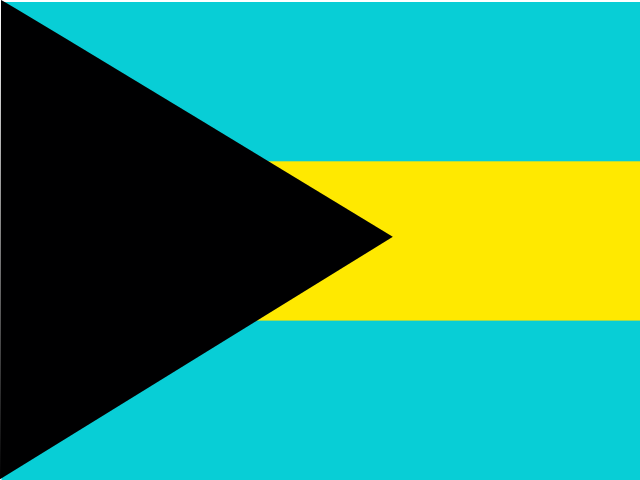
Overview
The Bahamas is an island nation in the western Atlantic, part of the Lucayan Archipelago. It is usually counted as part of the wider Caribbean region even though it does not touch the Caribbean Sea. It lies southeast of Florida, east of the Florida Keys, north of Cuba and Hispaniola, and northwest of the Turks and Caicos Islands.
The country has about 700 islands and roughly 2,400 to 2,500 cays, of which around 30 are inhabited. Its land area is about 10,010 km2, but the Royal Bahamas Defence Force describes its ocean territory as about 470,000 km2.
Nassau, on New Providence, is the capital and largest city. About 90 per cent of residents are Black Bahamians, and the official language is English.
The Bahamas became independent from the United Kingdom in 1973 and remains a Commonwealth realm with King Charles III as monarch. Its economy rests mainly on tourism and offshore financial services, and it has one of the highest GDPs per capita in the Americas. The country is a full member of CARICOM but is not part of the CARICOM Single Market and Economy.
History
Lucayans, a Taíno people who had migrated from Hispaniola and Cuba (and ultimately from South America) between about AD 500 and 800, were the first inhabitants. Around 30,000 of them lived in the islands when Christopher Columbus arrived in 1492. His first landfall in the Americas was on an island he named San Salvador, called Guanahaní by the Lucayans. Scholars still debate which island this was: San Salvador Island (formerly Watling's Island) is the traditional candidate, while Samana Cay is an alternative theory.
Spain deported and enslaved the Lucayans on Hispaniola, leaving the islands largely empty from about 1513 until the mid-1600s. English Puritans from Bermuda, the Eleutherian Adventurers led by William Sayle, arrived around 1648-49 seeking religious freedom and founded the first permanent European settlement on Eleuthera. They later settled New Providence, but conditions were hard and many, including Sayle, went back to Bermuda.
Under proprietary rule the islands became a haven for pirates, including Blackbeard. Britain made the Bahamas a crown colony in 1718 under Governor Woodes Rogers, who suppressed piracy. Spain attacked Nassau in 1720, and a local assembly giving British settlers some self-government was set up in 1729.
After the American Revolutionary War, thousands of American Loyalists were resettled in the Bahamas around 1783. They brought enslaved people and set up plantations on land grants, and from then on people of African descent formed the majority of the population. Britain banned the slave trade in 1807, and the Royal Navy resettled thousands of Africans freed from slave ships in the islands. In the 1820s hundreds of North American slaves and African Seminoles fled Florida, settling mostly on northwest Andros. Slavery itself was abolished in 1834, although from 1818 the Bahamas had already been a haven for freed enslaved people from outside the British West Indies.
The early 20th century brought a stagnant economy and widespread poverty, with many people living by subsistence farming or fishing. The Duke of Windsor served as governor from August 1940, and disliked the post, calling the islands a third-class British colony.
Modern party politics began in the 1950s. The United Bahamian Party represented the English-descended minority (the Bay Street Boys) and the Progressive Liberal Party (PLP) represented the Black majority. A constitution granting internal autonomy took effect on 7 January 1964, with Sir Roland Symonette as first premier. Lynden Pindling of the PLP became the first Black premier in 1967, and the title became prime minister in 1968. The Free National Movement (FNM), a centre-right party, was formed in 1971.
Independence came by an Order in Council dated 20 June 1973 and took effect on 10 July 1973, which is now Independence Day. Sir Milo Butler became the first governor-general. The country joined the IMF and World Bank on 22 August 1973 and the UN on 18 September 1973.
The PLP under Pindling dominated the first two decades after independence despite allegations of corruption and links with drug cartels. Tourism and offshore finance drove strong growth, and the country drew many immigrants, notably from Haiti. Hubert Ingraham (FNM) won in 1992 and 1997. Perry Christie (PLP) won in 2002, Ingraham returned from 2007 to 2012, and Christie served again from 2012 to 2017. Hubert Minnis (FNM) won in 2017.
Hurricane Dorian struck Abaco and Grand Bahama at Category 5 strength in September 2019, causing at least US$7 billion in damage and more than 50 deaths, with many more missing. COVID-19 reached the country on 15 March 2020. At the 2021 general election the PLP defeated the FNM amid a deep economic downturn, and Philip Davis was sworn in as prime minister on 17 September 2021.
Climate
The Bahamas has a mostly tropical savannah climate (Köppen Aw), with a hot, wet season from May to October and a warmer-than-winter dry season. The low latitude, the warm Gulf Stream and the low elevation make for a largely winterless climate, with only about 7 °C between the warmest and coolest months in most islands. Temperatures may briefly dip below 10 °C every few decades during severe cold outbreaks from North America, but frost has never been recorded. The only reported snow, mixed with rain, was seen briefly in Freeport on 19 January 1977. The islands average more than 3,000 hours of sunshine a year.
In Nassau (New Providence) the climate is tropical, with warm winters, typically in the low-to-mid 20s °C by day and cooler nights (approx.), and hot, humid summers with highs around 31-32 °C (approx.) and frequent showers. Freeport on Grand Bahama is similar but slightly cooler in winter because it is farther north (approx.).
Hurricanes and tropical storms are a recurring risk. Andrew passed over the northern islands in 1992, Floyd passed near the eastern islands in 1999, and Dorian in 2019 hit Grand Bahama and Great Abaco as a Category 5 storm with sustained winds of about 298 km/h, the strongest cyclone on record to affect that part of the country.
Average temperatures have risen by roughly 0.5 °C since 1960. At least 80 per cent of the land lies below 10 m elevation, so sea level rise is a major threat. The highest point is Mount Alvernia on Cat Island at 64 m. The country relies on imported fossil fuels and aims to raise solar to 30 per cent of energy production by 2033, and has pledged a 30 per cent emissions cut by 2030 if it receives international support.
The islands are low and flat, built on limestone formed over a very long period on shallow carbonate banks. Features include blue holes, caves, coral reefs and sand-dune ridges, and the country has no rivers. Forests cover about 51 per cent of the land, with Bahamian dry forests, pine mosaic and mangrove ecoregions.
Government and politics
The Bahamas is a parliamentary constitutional monarchy in the Westminster tradition, with King Charles III as head of state, represented by a governor-general (currently Dame Cynthia Pratt). The prime minister is head of government and leads the party with the most seats in the House of Assembly; the current prime minister is Philip Davis. Executive power is exercised by the Cabinet chosen by the prime minister. Its legal system is based on English law, and the judiciary is independent. Constitutional guarantees cover speech, press, worship, movement and association.
The legislature has two chambers. Single-member districts return 38 members to the House of Assembly. The governor-general appoints the Senate's 16 members, with the prime minister advising on nine of those seats and the Leader of the Opposition advising on four. The remaining three are filled on the prime minister's recommendation, made after consultation with the opposition leader. Within a five-year term, the prime minister is free to call an election whenever he or she chooses.
Politics is a two-party system between the centre-left PLP and the centre-right FNM, and other parties have not won seats. Polling shows a growing republican movement, especially since the death of Elizabeth II, with a majority now favouring an elected head of state.
Local government is provided by 32 districts under the Local Government Act of 1996, with elections every five years and 110 councillors and 281 town committee members. The system covers every area except New Providence, which holds about 70 per cent of the population and is administered directly by the central government. The Bahamas has no states or provinces with their own legislatures; the districts handle local administration and the proper use of public funds for maintenance and development, while major powers such as taxation, law and national services remain with the central government (approx.). There are no special self-governing jurisdictions within the country.
The Bahamas has close ties with the US and UK and with CARICOM members. The Royal Bahamas Defence Force, established on 31 March 1980, is mainly a coast-guard-style navy with a Commando Squadron and an Air Wing. It has over 1,100 personnel and 26 patrol craft, and handles territorial defence, anti-smuggling, illegal immigration and poaching, disaster relief and maritime assistance.
Economy
The Bahamas is one of the wealthiest countries in the Americas by GDP per capita. The Bahamian dollar is pegged 1-to-1 to the US dollar. The IMF's 2023 report noted improved financial stability after the pandemic, higher revenue and a shrinking deficit, but flagged risks from global shifts, climate threats and dependence on imports.
Tourism accounts for about 70 per cent of GDP and about half of jobs. The pandemic exposed this dependence, with one of the sharpest tourism drops in the region. Visitor numbers have since rebounded, and in 2024 the country recorded a high of about 11.22 million visitors by air and sea, about 16 per cent more than in 2023. Cruise passengers make up a large share of arrivals; in 2012 they were more than 70 per cent of 5.8 million visitors.
Offshore banking and financial services are the next largest sector, contributing about 15 per cent of GDP (an estimated 20 per cent as recently as 2019). The Panama Papers showed the Bahamas had the most offshore entities of any jurisdiction, and some estimates call it the fourth-largest tax haven by assets under management.
There is no income, corporate, capital gains or wealth tax. Government revenue comes from import tariffs, VAT, licence fees, and property and stamp taxes. Payroll contributions to social insurance are 3.9 per cent for employees and 5.9 per cent for employers. Overall tax revenue was 17.2 per cent of GDP in 2010.
Agriculture and manufacturing together represent about 5-7 per cent of GDP, and about 80 per cent of food is imported. Crops include onions, okra, tomatoes, citrus, cucumbers, sugar cane and sweet potatoes. The country has a biocapacity reserve, with 9.2 global hectares per person in 2016 against a footprint of 3.7.
The road network includes about 1,620 km of paved roads, and inter-island travel is mostly by ship and air. There are 61 airports, the chief ones being Lynden Pindling International on New Providence, Grand Bahama International, and Leonard M. Thompson International on Abaco.
Demographics and urbanization
The 2018 census counted 407,906 people, and the latest official estimate (2022) is 400,516. Roughly 26 per cent were aged 14 or under, 67 per cent aged 15-64 and 7 per cent aged 65 and over. Source figures give a birth rate of about 17.8 per 1,000, a death rate of about 9.4 per 1,000 and a fertility rate of about 2.0 (2010). The Bahamas ranks among the higher Caribbean countries on the UN Human Development Index, though inequality, climate risk and limited land remain challenges.
The country is highly urbanized (approx. 83-84 per cent of people live in urban areas). About 70 per cent of the population lives on New Providence, where Nassau is located. Grand Bahama is the other most populous island and home to Freeport, the second-largest city. Nassau's urban area holds roughly 270,000 people (approx.) and Freeport roughly 25,000-30,000 (approx.). Most other islands (the Family Islands) are sparsely populated.
In the 2010 census, 90.6 per cent identified as Black, 4.7 per cent as White and 2.1 per cent as mixed African and European. Afro-Bahamians are mainly of West African ancestry. White Bahamians are mostly descendants of English Puritans and American Loyalists, with many in Abaco. A small Greek Bahamian community descends from sponge-industry labourers. The Haitian community numbers about 80,000 and Haitians and their descendants are said to be up to about 25 per cent of the population. The government began deporting irregular Haitian migrants in late 2014.
English is the official language. Many Bahamians also speak an English-based creole known as Bahamian dialect or Bahamianese, and Haitian Creole is spoken by Haitians and their descendants.
The population is predominantly Christian. Protestants account for over 70 per cent, including Baptists (35 per cent), Anglicans (15 per cent), Pentecostals (8 per cent), Church of God (5 per cent), Seventh-day Adventists (5 per cent) and Methodists (4 per cent). Catholics are about 14 per cent. Small communities of Jews (about 200-300), Muslims (about 300), Baháʼís, Hindus, Rastafari and followers of Obeah also exist.
Adult literacy was about 95 per cent in 2011 estimates. The University of The Bahamas, chartered on 10 November 2016, is the national tertiary institution, with three campuses and centres across the islands, offering associate, bachelor's and master's degrees.
Capital city
Nassau is the capital and largest city, on the northern coast of New Providence island in the northern-central Bahamas. The metropolitan area has roughly 270,000 residents (approx.), and New Providence holds about 70 per cent of the national population. The city has been the centre of government since the colonial period; it was a pirate base before Woodes Rogers restored order in 1718, and the Spanish attacked it in 1720.
Nassau's climate is tropical, with a wet season from May to October with hot, humid weather and frequent showers, and a drier, milder winter with daytime highs typically in the mid-20s °C (approx.). Like the rest of the country, it is exposed to hurricanes.
Nassau is the seat of Parliament, the Cabinet and the governor-general, and its affairs are run directly by the central government rather than by a local district council. It is also the main economic city: it hosts most banking and offshore financial services, major tourism and cruise-ship activity, and Lynden Pindling International Airport, the country's chief airport. The US embassy and other diplomatic missions are located there (approx.). Freeport on Grand Bahama is the second-largest city and a separate industrial and tourism centre, but there is only one capital, and it coincides with the main economic city.
About this summary
Includes approximate general-knowledge facts on Nassau and Freeport populations, city climates, capital-city details, recent political context and some economic and tourism details.