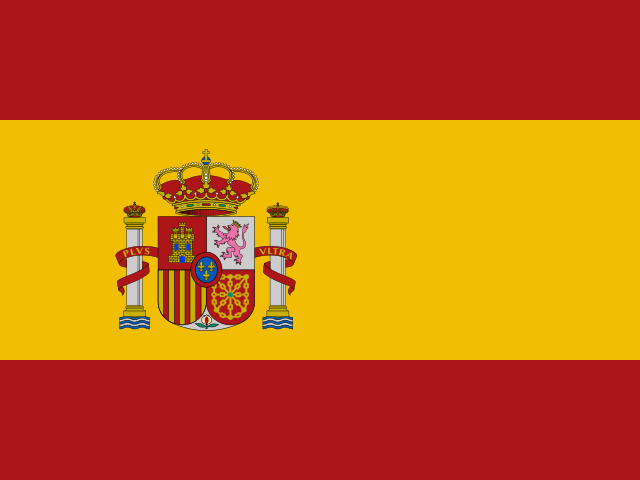
Overview
Spain, officially the Kingdom of Spain, lies in Southern and Western Europe and also holds territory in North Africa. It covers most of the Iberian Peninsula and also includes the Canary Islands in the Atlantic, the Balearic Islands in the western Mediterranean, and the autonomous cities of Ceuta and Melilla on the African mainland. It contains the southernmost point of continental Europe.
On the peninsula, Spain borders France, Andorra and the Bay of Biscay to the north, Portugal and the Atlantic to the west, and the Mediterranean to the east and south. It also borders Gibraltar and, through its African exclaves, Morocco. It is the largest country in Southern Europe and the fourth most populous member of the European Union.
Spain is a secular parliamentary democracy and a constitutional monarchy; King Felipe VI is head of state. It is a high-income, advanced economy with one of the largest national outputs in the world, fourth largest in the EU. Spanish is the national official language, and several regional languages are co-official in their own regions.
Madrid is the capital and largest city. Other major urban areas include Barcelona, Valencia, Seville, Málaga, Zaragoza, Bilbao, Murcia, Palma de Mallorca and Las Palmas. Spain is a major tourism destination, second most visited country in the world in 2024 with about 94 million visitors.
History
Humans have a very long record on the peninsula: remains at Atapuerca point to hominids about 1.3 million years ago. Neanderthals lasted in parts of Iberia until roughly 40,000 years ago, and modern humans reached the north around 42,000 years ago. The painted cave of Altamira in Cantabria is the best-known prehistoric site. In early antiquity the peninsula was home to Iberians, Celts and other peoples.
Rome took Carthaginian coastal colonies around 210–205 BC during the Second Punic War, and needed nearly two centuries to subdue the whole peninsula, which it then held for over six centuries. Law, language and roads tied the province of Hispania together, and local populations were gradually Latinised and later Christianised. After the Western Roman Empire fell, Germanic groups including the Visigoths took over and founded a kingdom centred on Toledo.
From 711 to 718, forces of the Umayyad Caliphate crossed the Strait of Gibraltar and conquered nearly all of the peninsula, ending the Visigothic kingdom. Only a small mountainous area in the north held out, and the Kingdom of Asturias-León grew from it, alongside other northern Christian realms such as Navarre and Aragon. The Muslim province of Al-Andalus later became independent, centred on Córdoba, and was a leading intellectual and economic power. Over centuries the northern kingdoms advanced south in the Reconquista, which ended with the fall of the Nasrid Kingdom of Granada in 1492.
Castile and Aragon were joined through the marriage of Isabella I and Ferdinand II, and their union is often treated as the practical beginning of Spain as a single state, with the dynastic union dated to 1479 in some accounts and the marriage to 1469. In 1492 Jews were made to convert or leave under the Inquisition, and as many as 200,000 were expelled. The same year Columbus, backed by Isabella, reached the Caribbean, opening Spanish conquest of the Americas.
In the Age of Discovery Spain led exploration, completed the first circumnavigation of the globe and built one of the largest empires in history, with a global trade system based on precious metals. The Habsburg dynasty ruled from 1516 to 1700 and the Bourbons from 1700 onward, both of foreign origin.
A succession dispute dominated the early 18th century. The War of the Spanish Succession combined an international war with a civil war, cost Spain its European possessions and its status as a leading European power, and installed the French-born Bourbons. The Nueva Planta decrees and other Bourbon Reforms then centralised the state and strengthened royal authority.
Spain fought revolutionary France in the War of the Pyrenees and made peace at Basel in 1795, losing two-thirds of Hispaniola. In 1807 a secret deal with Napoleon led to French troops entering and occupying the country. The Peninsular War (1808–1814) ended in victory over Napoleonic forces. During the 19th century most American colonies were lost, amid conflict between liberals and absolutists.
The Spanish Civil War began in July 1936 with a military coup that split the country. The Republic received help from the Soviet Union, Mexico and the International Brigades, while the Nationalist rebels were backed mainly by Nazi Germany and Fascist Italy; Western powers followed a British-led non-intervention policy. General Francisco Franco emerged on top and ruled as dictator from 1939 to 1975.
Opposition figures at home and abroad called for democracy in Munich in 1962. After Franco died in November 1975, Juan Carlos became king. Under Prime Minister Adolfo Suárez, elections in 1977 produced a constituent parliament, and the 1978 Constitution was approved by 88% of voters in a referendum on 6 December 1978. It restored democracy and devolved large powers to autonomous communities.
Spain joined the European Economic Community in 1986 and adopted the euro in 2002 (participating from its 1999 launch). The early 2000s were a boom, with property prices and the trade deficit warned about as risks. In 2002 the Prestige oil spill damaged the Atlantic coast. In 2003 Prime Minister Aznar backed the US in the Iraq War, provoking a strong anti-war movement. In March 2004 Islamist bombings of commuter trains in Madrid killed 191 people and wounded over 1,800, the largest terrorist attack in Western Europe's history. Responsibility became a political dispute days before the general election, which PSOE won under José Luis Rodríguez Zapatero.
Same-sex marriage was legalised in 2005, making Spain the third country to do so. ETA announced a permanent end to violence in 2010. The property bubble burst in 2008 and led to the 2008–2014 financial crisis, with high unemployment, spending cuts and corruption scandals involving the royal family and the People's Party, and the 2011–12 protests. Mariano Rajoy's People's Party won in 2011 with 44.6% and applied austerity measures. King Juan Carlos abdicated on 19 June 2014 and was succeeded by his son Felipe VI.
In October 2017 a Catalan independence referendum was held, and the Catalan parliament voted to declare independence unilaterally. The Senate approved direct rule on the same day, Rajoy dissolved the Catalan parliament and called new elections, and no country recognised Catalonia as a separate state. In June 2018 a no-confidence motion removed Rajoy and made PSOE leader Pedro Sánchez prime minister. In 2019 Spain got its first coalition government, between PSOE and Unidas Podemos (now Sumar).
COVID-19 reached Spain in January 2020 and cut life expectancy by more than a year. The EU's Next Generation EU recovery package runs over 2021–2026. In March 2021 Spain became the sixth country to legalise active euthanasia. From 2018 to 2024 an institutional crisis surrounded the mandate of the General Council of the Judiciary, until it was renewed. After the 23 July 2023 general election Sánchez formed another coalition, this time with Sumar. In 2024 Salvador Illa became the first Catalan regional president in over a decade who is not pro-independence, easing relations between Madrid and Barcelona. Polling in 2024 showed over 50% of Catalans against independence and under 40% in favour.
Climate
Spain spans latitudes about 27° to 44° N and has three main climate zones, plus several local types. The Mediterranean climate is the most widespread, with warm or hot, dry summers. Its hot-summer form (Csa) covers the southern Mediterranean coast, the southern Atlantic coast, and inland Andalusia, Extremadura and much of the centre. Inland parts have cool winters, while coastal areas have mild winters. The warm-summer form (Csb) covers much of the north-centre and also reaches rainy Galicia.
A semi-arid climate dominates the southeast, including most of Murcia, southern and central-eastern Valencia and eastern Andalusia, and also the middle and upper Ebro valley. A true desert climate occurs around Almería, Murcia and the eastern Canary Islands. The north, notably the Basque Country, Cantabria, Asturias and part of Galicia, has an oceanic climate without a dry season. Mountain areas such as the Pyrenees, Sierra Nevada and the Central System have alpine or continental climates. Low-lying Canary Islands stay above about 18 °C even in the coolest month, though they are arid or semi-arid rather than tropical.
Major cities (approx.): Madrid, on the central plateau, has hot dry summers (often above 30 °C in July and August) and cool winters with occasional frost, with low rainfall. Barcelona has a Mediterranean climate with hot humid summers, mild winters and autumn rain. Valencia has hot summers and mild winters. Seville is among the hottest large cities in Europe, with summer highs often above 35–40 °C and mild winters. Málaga has very mild winters and hot summers. Bilbao has an oceanic climate that is mild and rainy all year. Las Palmas has a mild, near-constant subtropical-style climate, around 20–27 °C year-round.
Spain is among the European countries most affected by climate change. Heatwaves and droughts are becoming more frequent and severe, and water resources are expected to suffer. The country is promoting a shift to renewable energy, especially solar and wind.
The highest point is Teide (Tenerife), about 3,715–3,718 m according to the source, a volcano; the highest point on the Iberian Peninsula is Mulhacén (3,478 m) in Sierra Nevada. The central Meseta plateau is split by the Central System. Main rivers are the Tagus, Ebro, Guadiana, Douro, Guadalquivir, Júcar, Segura, Turia and Minho. Spain has about 7,600 vascular plant species, the most in Europe, and over 17 billion trees.
Government and politics
Spain is a parliamentary monarchy under the 1978 Constitution, which was approved by 88% of voters. It moved the country from a one-party dictatorship to a multiparty democracy. International IDEA rates Spain in the high range on democratic measures, particularly inclusive suffrage and access to justice.
The Constitution names five basic state institutions. The Crown symbolises the state's permanence and acts as a moderating arbiter, not a policy maker. The monarch has no veto, must grant assent to bills within fifteen days, and every official act needs the countersignature of the prime minister or the president of the Congress. The monarch appoints ministers on the prime minister's advice, appoints the heads of the Supreme Court and Constitutional Tribunal and the Fiscal General, formally appoints regional presidents elected by their parliaments, is supreme commander of the armed forces, and ratifies treaties, all on advice. The monarch also nominates a prime minister candidate after consulting parliamentary groups, and can dissolve parliament at the prime minister's request.
The legislature is the Cortes Generales, which has two chambers. The Congress of Deputies has 350 members elected by closed-list proportional representation for four-year terms. The Senate has 266 senators: 208 directly elected and 58 appointed by regional legislatures. The Government, made up of the prime minister, deputy prime ministers and ministers, forms the Council of Ministers and remains in office as long as it holds the Congress's confidence. The prime minister is invested by a vote in the Congress. The judiciary is overseen by the 20-member General Council of the Judiciary, and the 12-member Constitutional Tribunal rules on constitutional matters. Some political corruption has been identified in Spain.
Territorially, Spain is officially a unitary state but is among the most decentralised countries in Europe, comparable to federations such as Germany or Belgium. It has 17 autonomous communities and two autonomous cities (Ceuta and Melilla). The system is known as the State of Autonomies, with each community governed by its own Statute of Autonomy. The Constitution states the indivisible unity of the Spanish nation.
The communities have their own elected parliaments, governments and administrations, with wide legislative and executive powers. Each is responsible for healthcare and education, among other services. Devolution is deliberately asymmetrical: only the Basque Country and Navarre have full fiscal autonomy, based on historic foral rights. Andalusia, the Basque Country, Catalonia and Galicia are described as nationalities and received extra powers, including the regional president's ability to call elections at any time. The Basque Country, the Canary Islands, Catalonia and Navarre have their own police forces (Ertzaintza, Policía Canaria, Mossos d'Esquadra, Policía Foral). Co-official regional languages are set by the statutes.
Below the communities are 50 provinces, based on the 1833 Javier de Burgos division, and municipalities. Both are protected by the Constitution and municipalities manage their internal affairs. Asturias, Cantabria, La Rioja, the Balearic Islands, Madrid, Murcia and Navarre are single-province communities. Special jurisdictions include the autonomous cities of Ceuta and Melilla, the Canary and Balearic island councils (Cabildos and Consells insulars), the plazas de soberanía small territories, and the Spanish-French condominium on Pheasant Island.
After Franco, foreign policy aimed to end isolation, join the European Community and set security ties with the West. Spain joined NATO in 1982 and the EEC in 1986. Prime Minister Pedro Sánchez leads the current coalition government with Sumar, formed after the 2023 election.
Economy
Spain has a mixed economy combining free-market capitalism with social welfare and state intervention. Its nominal GDP exceeds US$1 trillion, about 12th largest worldwide and fourth in both the EU and the eurozone. The World Bank classes it as high-income. In 2024 it was the fastest-growing major advanced economy, growing nearly four times faster than the eurozone average.
Industrialisation began in the late 18th century but was uneven, mostly in Catalonia (textiles) and the Basque Country (iron and steel). The Civil War and failed autarkic policies left the economy near collapse by the late 1950s. Technocratic reforms led to the 'Spanish economic miracle' of 1960–1974, with growth averaging 6.6% a year. Spain joined the EEC in 1986 and the euro at launch, and foreign direct investment tripled between 1990 and 2000. It was hit hard by the 2008 financial crisis.
Unemployment has never fallen below 8% since the 1980s. It peaked at 27% in 2013 and stood at 9.93% in January 2026, the lowest since 2008. Youth unemployment was 24.9% in January 2025, the highest in the EU and well above the 14.6% EU average. Weak points include a large informal economy, a school system that performs poorly against developed peers, and low private investment. Median equivalised disposable income was about US$26,630 a year (2021, PPP).
Spanish companies grew into multinationals after the wave of privatisations in the 1990s. They built a strong base in Latin America, where only the US invests more among foreign countries, and their activity in Asia is expanding. Eight Spanish firms appeared in the 2023 Fortune Global 500, among them Banco Santander, Telefónica and Iberdrola, which runs more renewable energy capacity than any other operator in the world. The Forbes Global 2000 listed twenty, including ACS, ENAIRE, Grifols and Ferrovial. Mondragon Corporation is the largest worker-owned cooperative in the world.
Cars are a pillar of industry: about one-tenth of GDP and 18% of exports, supporting nearly two million jobs (9% of the workforce). In 2023 Spain built 2.45 million vehicles, over 2.1 million exported, giving a vehicle trade surplus of €18.8 billion. Electrified cars were about 18% of new monthly registrations as of 2026.
Tourism brought 94 million visitors in 2024, with spending of around €126 billion, and contributed 12.3% of GDP in 2023. The World Tourism Organization is headquartered in Madrid. Castile and León leads in rural tourism.
In energy, Spain led the world in solar power in 2010 and is Europe's main wind producer; wind reached 16.4% of electricity in 2010 and peaked at 53% of mainland demand in November 2010. Other sources are hydro, biomass, marine, eight nuclear reactors, gas, coal and oil. In 2009 fossil fuels produced 58% of electricity, nuclear 19%, and wind and hydro about 12% each.
Research is led by the CSIC, ranked fifth among governmental scientific institutions worldwide in 2018. Spain ranked 29th in the 2025 Global Innovation Index. Universities do about 60% of basic research, and private R&D spending is low relative to other EU and OECD countries.
Transport: six highways radiate from Madrid, with coastal highways on the Atlantic, Cantabrian and Mediterranean coasts. As of February 2025 the high-speed rail network was about 3,973 km, the longest in Europe and second longest in the world, linking Madrid with Barcelona, Valencia, Seville, Málaga and Valladolid at up to 330 km/h, with 98.5% on-time arrivals. There are 49 public airports; Madrid-Barajas handled about 60 million passengers in 2023 and Barcelona-El Prat about 50 million in 2024. Other main airports serve Mallorca, Málaga, Las Palmas and Alicante.
Demographics and urbanization
Spain had 49,570,725 residents in January 2026, with a density of about 98 per km². Population is spread unevenly: apart from the area around Madrid, the densest areas are on the coast. The population has grown about 2.5 times since 1900 (18.6 million), mostly during the 1960s and early 1970s boom.
Fertility is very low: 1.10 children per woman in 2024, against a historic high of 5.11 in 1865. The median age is 46.8 years, one of the oldest populations in the world. Life expectancy rose from 79.1 years in 2000 to 82.7 in 2021.
About 81.6% of people lived in urban areas in 2023. Largest cities (approx., city proper): Madrid about 3.4 million, Barcelona about 1.7 million, Valencia about 0.8 million, Seville about 0.7 million, Zaragoza about 0.7 million, Málaga about 0.6 million. Metropolitan areas are larger, with Madrid at about 6.8 million and Barcelona at about 5.5 million (approx.).
In January 2026 people born abroad made up 19.3–20.3% of residents (over ten million, per the source's two figures), and over seven million held foreign nationality or were born outside Europe depending on measure. The largest source countries as of December 2024 were Morocco (over one million), Colombia (856,616), Venezuela (599,769), Romania (532,456) and Ecuador (448,643). Among non-EU immigrants, 39% are from Latin America, 16% from North Africa, 15% from Eastern Europe and 4% from Sub-Saharan Africa. Large numbers of Britons, Germans and French also live in Spain, many retired on the Mediterranean coast. In 2024, 252,476 foreign residents acquired Spanish nationality. The government planned to regularise around 900,000 undocumented migrants by 2027. In late July 2026 a mass crossing from Morocco into Ceuta occurred, with at least 141 deaths reported, and by 3 August officials said about 70,000 people had voluntarily returned to Morocco.
Spain is multilingual. Spanish (Castilian) is the national official language, and other languages are co-official in their regions: Catalan/Valencian (Catalonia, the Balearic Islands, Valencian Community), Galician, Basque and Aranese. In 2021, Spanish was the first language of 81.53%, Catalan/Valencian 10.50%, Galician 3.77% and Basque 1.42%. Arabic (2.17%), English (1.58%) and Romanian (1.44%) are the most common first languages among foreign ones.
Education is free and compulsory from ages six to sixteen. The system is governed by the 2006 LOE as modified by the LOMCE in 2014, and there have been seven education laws between 1970 and 2014. Vocational tracks run at basic, medium and higher levels. In PISA 2021, Spanish 15-year-olds scored significantly below the OECD average of 493 in reading, mathematics and science.
Health care is public, universal and free for legal residents, and was ranked 7th by the WHO in 2000. Health spending is 9.4% of GDP, against an OECD average of 9.3%.
Roman Catholicism remains the dominant religion, though it has no official status, and about 30% of the population is irreligious. The Constitution protects freedom of religion and says no religion has a state character. Muslims number over 2.1 million (4–5%), Protestants about 1.2 million, Jehovah's Witnesses about 105,000 and Jews about 62,000 (0.14%).
Capital city
Madrid is Spain's capital and largest city, located on the central plateau (Meseta) in the heart of the peninsula. Its population is approx. 3.4 million in the city and approx. 6.8 million in the metropolitan area. It is the seat of the monarchy, the Government, the Cortes Generales and the main national institutions. The Madrid region is one of the seven single-province autonomous communities.
The climate is continental-influenced Mediterranean, with hot dry summers, cool winters and low rainfall. It sits among the inland areas the source says have cool winters. Madrid-Barajas is the country's busiest airport (about 60 million passengers in 2023), and the capital is the hub of the road and high-speed rail network, with lines to Barcelona, Valencia, Seville, Málaga and Valladolid.
Madrid is also a leading economic centre: it is home to many headquarters of large Spanish companies and financial services, and the World Tourism Organization has its headquarters there. Barcelona is the other major economic and cultural centre, so Madrid is the political capital and the largest economic city, but not the only one. Madrid was the target of the March 2004 train bombings. It is a major cultural centre with large museums and a strong international and expatriate community (approx.). Spain has a single national capital.
About this summary
Includes approximate general-knowledge facts: metro populations, city climates, capital-city details, and some recent economic and political context.