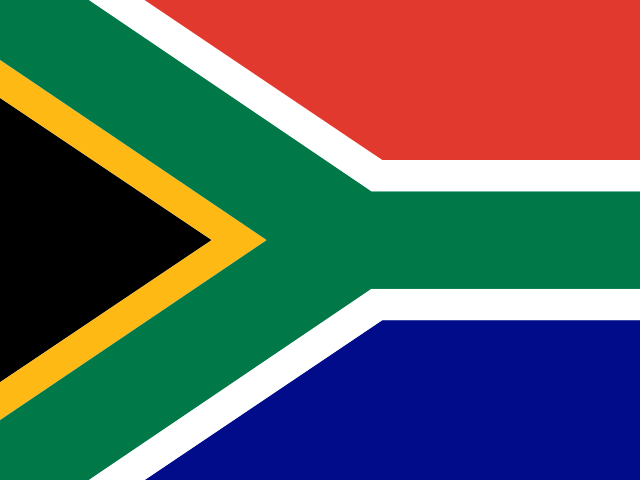
Overview
South Africa, officially the Republic of South Africa, occupies the southern tip of the African continent. It has nine provinces and a southern coastline of roughly 2,800 km along the South Atlantic and Indian Oceans. To the north it borders Namibia, Botswana and Zimbabwe, and to the east and northeast it borders Mozambique and Eswatini. It also completely surrounds the enclave country of Lesotho.
The country covers roughly 1.22 million square kilometres and has a population of just over 63 million. Its administrative seat is Pretoria, while Cape Town serves as the seat of the legislature and Bloemfontein is considered the seat of the judiciary. Johannesburg is the biggest city, with Cape Town and Durban next in size.
The country is classed as a developing, newly industrialised economy and has the biggest economy in Africa by nominal GDP. It is a biodiversity hotspot and shares with Ethiopia the highest number of UNESCO World Heritage Sites in Africa. Its mix of cultures, languages and religions led to the nickname 'rainbow nation', especially after apartheid ended.
Quality of life and government accountability have improved substantially for non-white citizens since apartheid. Even so, crime, violence, poverty and inequality remain widespread. About 32% of people were unemployed in 2024, and some 56% lived below the poverty line in 2014. The Gini coefficient of about 0.67 makes it one of the most unequal countries in the world.
South Africa is described as a middle power. It belongs to BRICS+, the African Union (and hosts the Pan-African Parliament), SADC, SACU, the Commonwealth and the G20.
History
South Africa holds some of the oldest archaeological and human-fossil sites anywhere. The Cradle of Humankind in Gauteng, a UNESCO World Heritage Site, includes Sterkfontein (one of the richest hominin fossil sites in the world), Swartkrans, Gondolin, Kromdraai, Cooper's Cave and Malapa. The Taung Child, found near Taung in 1924, was the first hominin fossil discovered in Africa. Hominids lived in the region about 2.5 million years ago and modern humans over 100,000 years ago.
The San and the Khoikhoi are the earliest known inhabitants of the region. They lived chiefly as hunter-gatherers, though the Khoikhoi kept herds of livestock as well. Their ancestry may trace back to an early spread of modern humans that took place more than 150,000 years ago. Between roughly 1,500 and 2,000 years ago, the Bantu expansion brought waves of Bantu-speaking farmers and herders, who used iron and migrated southward from West and Central Africa. Most San and Khoikhoi were pushed out or assimilated by these newcomers. In the north, the Kingdom of Mapungubwe emerged in the 13th century, and the Venda Kingdom followed in the 17th.
In 1487 Bartolomeu Dias of Portugal became the first European navigator to come ashore in southern Africa, landing at what is now Walvis Bay in Namibia. In January 1488 storms pushed him out to sea and he rounded the southern tip of Africa without sighting it. The Dutch first reached the coast in 1595. After two Dutch East India Company employees survived a shipwreck at the Cape in 1647, the company took interest, and in 1652 the Dutch founded the first European settlement at Table Bay, the Cape Colony. The British invaded in 1795, and after the Battle of Blaauwberg in 1806 they occupied the Cape.
In the early 1800s the Mfecane ('crushing') was a period of conflict, migration and state formation driven by trade, environmental instability and European colonisation. The Ndwandwe defeated the Mthethwa, and a group that split from the Mthethwa was led by Shaka of the amaZulu, leading to the Zulu Kingdom. The fourth and fifth Xhosa Wars were fought in the 1810s as British colonisation pushed outward.
Using guerrilla tactics, the Boer republics fought off British encroachment during the First Boer War (1880-1881). Britain came back with far greater strength in the Second Boer War (1899-1902) and prevailed in spite of heavy losses, aided by scorched earth methods and by concentration camps where roughly 27,000 Boer civilians perished from disease and neglect. Diamonds found near the Orange River in 1867, followed by gold on the Witwatersrand in 1886, set off the Mineral Revolution, which brought rapid industrialisation and urban growth.
The Union of South Africa was created in 1910 by joining the Cape, Natal, Transvaal and Orange River colonies. The multi-racial Cape Qualified Franchise was gradually eroded, and most black South Africans could not vote until 1994.
The National Party took power in 1948 and built on earlier segregation to create apartheid. All people were classified into racial groups with different rights and limits. Whites enjoyed a high standard of living, while the black majority was disadvantaged in income, education, housing and life expectancy. The multi-racial Congress Alliance adopted the Freedom Charter in 1955, calling for a non-racial society.
On 31 May 1961 the country became a republic after a referendum open only to white voters, which passed narrowly; Natal largely voted against. Elizabeth II ceased to be Queen of South Africa, and the last Governor-General, Charles Robberts Swart, became state president. South Africa left the Commonwealth in 1961 under pressure from other members. The presidency was largely ceremonial until P. W. Botha's 1983 Constitution Act abolished the post of prime minister and created a 'strong presidency' answerable to parliament.
Opposition to apartheid came from people of all backgrounds, but the government kept legislating to maintain it and security forces suppressed dissent. The ANC, the Azanian People's Organisation and the Pan-Africanist Congress carried out guerrilla warfare and urban sabotage (and, according to Oxford Academic, acts of terrorism), and the rival movements sometimes clashed. Foreign boycotts grew into international sanctions and divestment by foreign investors.
The 1974 Mahlabatini Declaration of Faith, signed by Mangosuthu Buthelezi and Harry Schwarz, set out principles of peaceful transition and equality and was the first such agreement between black and white political leaders. In 1990 the government lifted the ban on the ANC and other organisations and freed Nelson Mandela after 27 years in prison. White voters approved continued negotiations in a 1992 referendum, and F. W. de Klerk and Mandela held bilateral talks on the transition. The first universal elections in 1994 were won by the ANC by a large majority. South Africa rejoined the Commonwealth and joined SADC.
The post-apartheid era has been marked by high unemployment and rising income inequality but also by relative political stability. There have been periodic outbreaks of violence, including the 2008 xenophobic riots (over 60 killed and an estimated 100,000 displaced) and the Marikana massacre, the deadliest use of force by security forces against civilians since the Soweto uprising. Widespread corruption and state capture occurred under President Jacob Zuma.
Climate
South Africa has a generally temperate climate. Oceans surround it on three sides, it sits in the milder Southern Hemisphere, and the land climbs in elevation toward the north and the interior. Its climatic regions stretch from the harsh desert of the southern Namib in the far northwest to lush subtropical conditions in the east, along the Indian Ocean and the Mozambique border. Winter lasts from June to August.
The interior is a largely flat plateau at 1,000 to 2,100 m, highest in the east and ringed by the Great Escarpment, whose eastern stretch is the Drakensberg. Mafadi, at 3,450 m, is the highest peak. The Highveld is the relatively well-watered, high eastern part of the plateau, with much commercial farmland and the Gauteng conurbation. The Great Karoo to the south and southwest is sparsely populated shrubland, giving way to arid Bushmanland and then the Kalahari Desert in the northwest. The Lowveld to the northeast is hotter and drier than the Highveld and contains Kruger National Park (about 19,633 km²).
The extreme southwest, including the Cape Peninsula, has a Mediterranean climate with wet winters and hot, dry summers and the fynbos biome. It is the only part of Sub-Saharan Africa getting most of its rain in winter. It is known for wind that blows much of the year, which made the Cape of Good Hope dangerous for sailors. Much of the country's wine comes from here. Further east along the south coast, including the Garden Route, rain is spread more evenly through the year, giving green landscapes and the country's largest forest area. The west coast north of the Cape (Swartland, Namaqualand) gets little winter rain and becomes more arid toward the Orange River; spring flower displays in August and September are famous.
Johannesburg, on the Highveld at about 1,740 m, receives about 760 mm of rain a year. It has cold winters, with rare snow, and does not suffer subtropical heat extremes. Approx.: Johannesburg and Pretoria have mild, sunny dry winter days with frosty nights and warm summers with afternoon thunderstorms. Cape Town has a Mediterranean climate: mild, wet winters and warm, dry, windy summers. Durban, on the Indian Ocean coast, is subtropical, humid and warm year-round with summer rain. Bloemfontein, on the high plateau, has hot summers and cold, dry winters. Gqeberha (Port Elizabeth) on the south coast has mild, fairly evenly distributed rainfall.
The coldest recorded mainland temperature is -20.1 °C at Buffelsfontein, Eastern Cape, in 2013. The official highest is 48.8 °C at Vioolsdrif in January 1993. An unofficial 51.7 °C was recorded near Upington in 1948 with non-standard equipment.
Climate change is raising temperatures and increasing rainfall variability, and extreme weather is becoming more common, with implications for water resources, air quality, food security and disease burden. The South African National Biodiversity Institute's modelling points to warming of about 1 °C along the coast and more than 4 °C in the hot interior.
The Prince Edward Islands (Marion Island, about 290 km², and Prince Edward Island, about 45 km²) are a sub-Antarctic offshore possession with colder average temperatures than the mainland.
Government and politics
South Africa operates as a parliamentary republic, yet its president holds the roles of both state head and government head, while remaining dependent on Parliament's confidence. The Constitution stands above the executive, the legislature and the judiciary alike, and the superior courts have the power to invalidate laws and executive conduct that violate it.
The National Assembly has 400 members elected every five years by party-list proportional representation. The National Council of Provinces has ninety members, ten chosen by each of the nine provincial legislatures. After each election the National Assembly elects one of its members as president, for a term matching the Assembly's, normally five years, with a limit of two terms. The president appoints a deputy president and ministers to form the cabinet. The Assembly can remove the president and cabinet by a no-confidence vote.
On 29 May 2024, the ANC saw its parliamentary majority disappear for the first time since apartheid ended, taking roughly 40% of ballots and 159 seats. The Democratic Alliance took 22% and 87 seats. uMkhonto weSizwe, which former President Jacob Zuma founded, received 14.6% and 58 seats, while the Economic Freedom Fighters, founded by Julius Malema, got 9.5% and 39 seats. Afterward, the ANC set up a Government of National Unity that included the DA along with several smaller parties.
South Africa has no legally defined capital. The constitution says the seat of Parliament is Cape Town, though an Act of Parliament could set it elsewhere. The branches are spread across cities: Cape Town (legislative), Pretoria (administrative, seat of the president and cabinet) and Bloemfontein (judicial, seat of the Supreme Court of Appeal). The Constitutional Court, the highest court, has sat in Johannesburg since 1994. Most foreign embassies are in Pretoria.
Sub-national government: each of the nine provinces has a unicameral legislature elected every five years by proportional representation. The legislature elects a premier as head of government, who appoints an Executive Council as provincial cabinet. Provincial powers are limited to topics listed in the constitution, including health, education, public housing and transport. The provinces are divided into 52 districts (eight metropolitan and 44 district municipalities), and the district municipalities are split into 205 local municipalities. Metropolitan municipalities govern the largest urban areas and carry out both district and local functions.
The legal system rests on Roman-Dutch law, brought by the Dutch East India Company, and English common and statutory law from the 19th century, with national legislation after 1910. Courts comprise magistrates' courts, High Court divisions, the Supreme Court of Appeal and the Constitutional Court.
Since 2004 South Africa has seen many thousands of protests, some violent; one academic called it the 'most protest-rich country in the world'. Some analysts and civil society groups have said there is or could be a climate of political repression. In 2022 it ranked sixth of 48 sub-Saharan countries on the Ibrahim Index of African Governance, scoring well on rule of law, transparency, participation and human rights but low on safety and security. In 2006 it was among the first jurisdictions to legalise same-sex marriage.
Foreign relations: South Africa was a founding UN member, and Jan Smuts wrote the preamble to the UN Charter. It is a founding member of the African Union and NEPAD, and belongs to the Commonwealth, G77, SADC, SACU, WTO, IMF, G20 and other bodies. It has mediated in conflicts in Burundi, the DRC, Comoros, Mozambique and Zimbabwe. It upgraded ties with China to a comprehensive strategic partnership in 2010 and joined BRICS in 2011.
The South African National Defence Force was formed in 1994 by merging the former SADF with liberation movement forces. It has four branches: Army, Air Force, Navy and Military Health Service. As of 2025 it has nearly 100,000 personnel, about 75,000 of them active professional soldiers, with the president as commander-in-chief. It has been a leading contributor to UN and AU peacekeeping missions.
Economy
South Africa runs a mixed economy, with a sizeable services sector, abundant natural resources and an industrial base spread across many fields. Africa's largest economy, it is widely regarded as the continent's most industrialised and diversified. In 2026, its nominal GDP tops US$450 billion, placing it 39th in the world. The rand is the most traded currency in Africa, and the Johannesburg Stock Exchange is the biggest on the continent and ranks among the 20 largest worldwide by market capitalisation, at about US$1.53 trillion in 2026. South Africa is also the only African member of the G20.
In 2023 it ranked 106th on the Human Development Index, in the high human development category. The labour force was about 27.8 million in 2024. The official unemployment rate was 33.6% in the second quarter of 2026. About 23 million people (37.9%) live below the lower-bound poverty line, 10.8 million live below the food poverty line, and the Gini coefficient is consistently among the world's highest.
Trade: the country ranks among the 50 biggest exporters and importers worldwide. Its outbound shipments cover minerals, precious metals, vehicles, machinery, farm products and manufactured goods, and in 2025 they accounted for roughly 31.4% of GDP. In 2026 its top export destinations are China (12.5%), the US (7.7%), Germany (7.4%), Japan (5.6%) and the UK (4.0%). It buys most of its imports from China (22.7%), India (12.2%), Nigeria (6.8%), the US (6.3%) and Germany (5.7%).
Industry made up about 24% of GDP in 2024, with manufacturing around 13%. Main sectors are construction, motor vehicles, chemicals, steel, machinery, processed food, textiles and military hardware, plus shipbuilding and aerospace. State-owned enterprises such as Eskom, Transnet and Denel are active in energy, transport and defence. Ford opened the first car assembly plant in 1924 and General Motors followed in 1926; Toyota, Volkswagen, BMW, Mercedes-Benz and Nissan also assemble in the country. South Africa is Africa's largest vehicle producer, at around 600,000 a year, with about two-thirds exported.
Services were 63.1% of GDP in 2025. Johannesburg is Africa's leading financial centre and home to the JSE. Retail is significant, with the world's sixth-largest number of shopping centres. Real estate, telecoms and business services are major, and Cape Town is a leading technology hub. Prominent companies include AngloGold Ashanti, Gold Fields, Impala Platinum, Naspers, MTN, Vodacom, Sanlam, Sasol, FirstRand and Standard Bank.
Mining contributed about 6.0% of GDP in 2024, and mineral products were about 52% of export value in 2025. The sector grew from the diamond discovery of 1867 and the Witwatersrand gold discovery of 1886. Shares of 2024 world mined output include platinum (70%), chromium (46%), manganese (40%) and palladium (38%). Reserves are valued at over US$2.5 trillion, including about 88% of world platinum-group metals, 80% of manganese and 72% of chromite. The sector is regulated by the Department of Mineral and Petroleum Resources.
Agriculture was about 2.7% of GDP in 2025 and is considered Africa's most modern and diverse. The 2017 census counted 40,122 commercial farming units. Commercial agriculture covered 46.4 million hectares (37.9% of land) in 2018, mostly grazing land. South Africa is a leading producer and exporter of citrus, grapes, wine, apples, pears, maize, sugarcane, nuts and wool. It became the largest citrus exporter by volume in 2025 (about 2.9 million tonnes), has the seventh-largest wine industry, and is the largest producer of mohair and ostrich meat. It exports about half its farm output.
Science and technology: the first human heart transplant was performed by Christiaan Barnard at Groote Schuur Hospital in December 1967. Max Theiler developed a yellow fever vaccine, Allan Cormack pioneered CT scanning, Aaron Klug developed crystallographic electron microscopy, and Sydney Brenner won a Nobel Prize in 2002. Mark Shuttleworth founded Thawte. The country ranked 61st in the 2025 Global Innovation Index and hosts the Southern African Large Telescope and the MeerKAT radio telescope.
Demographics and urbanization
The population was about 62 million in the 2022 census (over 63 million in current estimates). It was 13.6 million in 1950 and 55.3 million in 2015. An estimated five million undocumented immigrants live in the country, including some three million Zimbabweans, and anti-immigrant riots began in May 2008. In 2007 there were about 144,700 refugees and asylum seekers, mainly from Zimbabwe, the DRC and Somalia, living mostly in Johannesburg, Pretoria, Durban, Cape Town and Port Elizabeth.
In the 2022 census, 81% described themselves as Black African, 8.2% Coloured, 7.3% White, 2.7% Indian or Asian and 0.5% other. Whites were 22% of the population in 1911 and 16% by 1980.
Urbanisation and cities: the source does not give an urbanisation rate. Approx.: roughly two-thirds to three-quarters of people live in urban areas. Most people are concentrated in Gauteng (Johannesburg, Pretoria and surrounding cities, a metro region of roughly 10 to 15 million), Cape Town (roughly 4.5 to 5 million), the Durban/eThekwini area (roughly 3.5 to 4 million) and smaller cities such as Gqeberha, Bloemfontein and East London. Pretoria (Tshwane) holds roughly 3 million. One database lists over 12,600 cities and towns.
South Africa has 12 official languages: Afrikaans, Zulu, Xhosa, English, Pedi, Tswana, Southern Sotho, Tsonga, Swazi, Venda and Southern Ndebele, plus South African Sign Language since 2023. In 2022 the most common first languages were Zulu (24.4%), Xhosa (16.6%) and Afrikaans (10.6%). English is the home language of only 8.7% but is the de facto lingua franca and the language of commerce and science. San and Khoekhoe languages are marginalised and at risk of extinction. Other communities speak European languages, Indian languages such as Gujarati, Hindi and Tamil, and French (migrants from Francophone Africa).
Religion (2022 census): Christians 85.3%, traditional African religions 7.8%, Muslims 1.6%, Hindus 1.1%, no affiliation 3.1%, other 1.1%. African-initiated churches are the largest Christian group. About 200,000 traditional healers (sangoma and inyanga) operate, and up to 60% of South Africans consult them. There is a Jewish community of around 75,000, down from a 1970s peak of 118,000, the largest in Africa.
Education: adult literacy was 95% in 2025. Schooling has 12 years (grades 1-12) plus a pre-primary Grade R year, ending with the National Senior Certificate. There are 23 public universities: 11 traditional, 6 universities of technology and 6 comprehensive, plus many FET and TVET colleges. Under apartheid, black schools were underfunded and taught 'Bantu Education'. A tertiary reform from 2004 merged small institutions into larger ones.
Health: health spending is about 9% of GDP. About 84% of people rely on the strained public system, while about 20% use private care and only 16% have medical aid cover. In 2009 life expectancy was reported as 71 years for white South Africans and 48 for black South Africans.
Capital city
South Africa has three capitals, each hosting one branch of government. Pretoria (the Tshwane area, in Gauteng on the Highveld) is the administrative capital, seat of the president and cabinet, and home to most foreign embassies. Cape Town, in the southwest on the Cape Peninsula, is the legislative capital and seat of Parliament. Bloemfontein, in the Free State on the central plateau, is the judicial capital and seat of the Supreme Court of Appeal. The Constitutional Court sits in Johannesburg. The constitution names only Cape Town as the seat of Parliament and defines no single capital.
Pretoria (approx. 2.5 to 3 million in the wider metro) has a climate typical of the northern Highveld: warm to hot, wet summers with afternoon thunderstorms, and dry, sunny, mild winters with cool nights. It is the main political and diplomatic centre but not the main economic city.
Cape Town (approx. 4.5 to 5 million people) has a Mediterranean climate with mild, wet winters and warm, dry, windy summers. As the seat of Parliament it is the legislative capital, and it is also a leading technology hub with Groote Schuur Hospital, where the first human heart transplant took place.
The main economic city is Johannesburg, the largest city and Africa's leading financial centre, home to the JSE and the Constitutional Court. It lies on the Highveld at about 1,740 m with about 760 mm annual rainfall. Johannesburg is therefore separate from all three capitals, so political, legislative, judicial and economic functions are spread over several cities.
About this summary
Approximate general-knowledge facts: metro populations, city climates, capital-city details and some recent context. These are rounded estimates, not taken from the source.