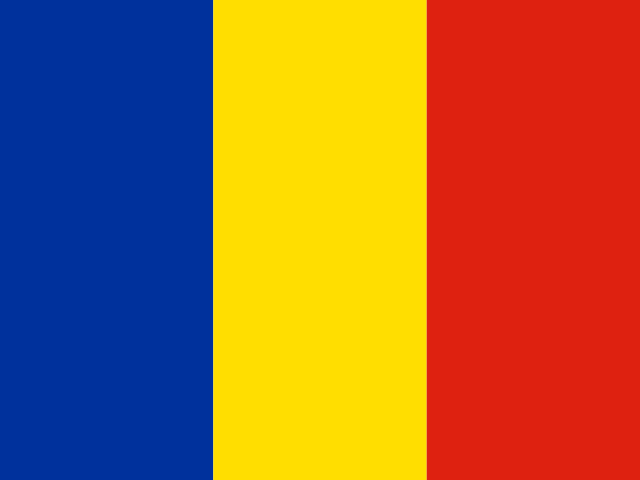
Overview
Romania sits in Central and Southeastern Europe, on the lower Danube, north of the Balkan Peninsula and along the northwestern Black Sea coast. Its neighbours are Ukraine (north and east), Hungary (west), Serbia (southwest), Bulgaria (south) and Moldova (east), with the Black Sea to the southeast.
The country covers 238,397 km2 and has about 19 million people. It is the largest country in Southeastern Europe and, by the source's count, the twelfth-largest in Europe by area, and the sixth most populous EU member. Bucharest is the seat of government, the biggest city and the main economic hub. Other large cities are Cluj-Napoca, Iași, Constanța, Timișoara, Brașov and Craiova.
Modern Romania was formed in 1859 by the union of Moldavia and Wallachia, became an independent kingdom in the 1870s–1881, and expanded greatly after World War I. It was communist from 1947 to 1989 and has been a multi-party democracy since then.
It is classed as a high-income economy and is often described as a middle power. It has 11 UNESCO World Heritage Sites, a large automotive-parts export sector, a growing technology scene and very fast internet speeds.
Memberships include the UN (1955), the Council of Europe (1993), NATO (29 March 2004), the EU (1 January 2007) and the Schengen area (full membership from 1 January 2025). It is also an OECD accession candidate.
History
Prehistory: remains from the Peștera cu Oase cave, dated to about 40,000 years ago, are among the oldest known modern human remains in Europe. Farming spread in the 6th millennium BC. The Poiana Slatinei site by a salt spring shows Europe's earliest known salt production, from the 5th–4th millennium BC.
Antiquity: Greek colonies on the Black Sea coast from the 7th century BC became trading centres. Herodotus named peoples such as the Getae, Agathyrsi and Syginnae. By the 1st century BC the Dacians controlled the lands around the southern Carpathians, and Burebista was the first ruler to unite the tribes. Roman emperor Trajan fought the Dacian Wars in the early 2nd century AD, and Roman rule and Romanisation followed.
Middle Ages: the Goths pushed toward the Lower Danube from the 230s, and the Huns arrived in 376. After the Hunnic empire collapsed in 454, the Gepids took the former Dacia. Many Slavic place names show that large Slavic-speaking groups settled. Later centuries saw the formation of the principalities of Wallachia, Moldavia and Transylvania (the last tied for periods to Hungary).
Early modern period: the Ottomans occupied parts of Banat and Crișana in 1541 after the Kingdom of Hungary collapsed. The Principality of Transylvania arose under Ottoman suzerainty. The Edict of Torda (1568) gave communities the right to choose their preachers and recognised four received religions: Catholicism, Lutheranism, Calvinism and Unitarianism. Wallachia and Moldavia remained Ottoman vassals.
Unification: after the Paris Convention of 1858, Alexandru Ioan Cuza was elected ruler of both Moldavia and Wallachia in 1859, creating the modern state. He carried out many reforms but was forced to abdicate in 1866 by the so-called Monstrous coalition. Romania gained independence from the Ottoman Empire in 1877, confirmed by the Treaty of Berlin, and Carol I became king in 1881.
World War I: Romania joined the Entente in 1916. Although its army did poorly, the collapse of the Austrian and Russian empires let Transylvania, Bukovina and Bessarabia declare union with Romania. Ferdinand I and Queen Maria were crowned in Alba Iulia on 15 October 1922. Bukovina's union was ratified by the Treaty of Saint-Germain in 1919. Greater Romania reached its largest extent.
Interwar years: Carol II returned in 1930, took his son's throne, and weakened democracy under the influence of his circle, the Royal Camarilla. In 1938 he assumed dictatorial powers. Some governments of the period adopted anti-Semitic measures.
World War II: in June 1940, after the Molotov–Ribbentrop Pact, Romania accepted the loss of Bessarabia, Northern Bukovina and the Hertsa region to the USSR. Further territories were lost to Hungary and Bulgaria under Axis-backed arrangements in 1940. Romania aligned with the Axis, then switched to the Allies after the Act of 23 August 1944. Northern Transylvania was regained through the Paris Peace Treaties.
Communist period: King Michael I was forced to abdicate in 1947 and the People's Republic was proclaimed, led by the Romanian Workers' Party with Stalinist-style repression of opposition. From the early 1960s Romania asserted some foreign-policy independence from Moscow. After Gheorghiu-Dej died in 1965, Nicolae Ceaușescu led the party, became head of state in 1967 and president in 1974. His rule grew increasingly authoritarian in the 1980s.
1989 revolution: protests that began in Timișoara in December 1989, in support of pastor László Tőkés, spread into a national uprising. Nicolae and Elena Ceaușescu were executed on 25 December 1989. Ion Iliescu became provisional president and won the free elections of May 1990 with about 85% of the vote. A new constitution was approved by referendum in 1991.
Since 1989: presidents have included Iliescu (to 1996 and again 2000–2004), Emil Constantinescu (1996–2000), Traian Băsescu (2004–2014) and Klaus Iohannis (2014–2025). The 1990s were a period of economic decline, followed by fast growth in the 2000s. The 2008 financial crisis caused a sharp contraction and an IMF-led bailout in 2009. The National Anticorruption Directorate was set up in 2002 and became very active from 2014.
Protests: the Colectiv nightclub fire in 2015 led to mass protests and the resignation of Prime Minister Victor Ponta. In 2017–2019 over 500,000 people protested nationwide against measures seen as weakening the anti-corruption fight. A 2021 political crisis ousted the Cîțu government and the Ciucă cabinet followed. Some commentators describe the period as one of illiberal drift and increased corruption.
Recent events: in the 2024 presidential election, independent Călin Georgescu won the first round unexpectedly, but the Constitutional Court annulled the result, citing Russian interference. This caused protests and international criticism. Iohannis resigned in February 2025 under pressure and Ilie Bolojan became acting president. Bucharest mayor Nicușor Dan won the rerun presidential election in 2025.
Climate
Romania has a continental climate with four distinct seasons because it is far from open sea. The average annual temperature is about 11 °C in the south and 8 °C in the north. Summer highs in Bucharest average about 28 °C and temperatures over 35 °C are fairly common in lowland areas. Winter highs are generally below 2 °C. Rainfall is moderate, over 750 mm a year only on the highest western mountains and about 570 mm around Bucharest.
Regional differences: the west, such as Banat, is milder with some Mediterranean influence, while the east is more strongly continental. Dobruja is moderated by the Black Sea. The Carpathians have a cold, snowy mountain climate.
Major cities (approx.): Bucharest has hot summers and cold winters with frequent snow and fog. Cluj-Napoca in Transylvania is cooler, with colder winters and mild summers. Iași in the northeast is strongly continental, with cold winters. Constanța on the Black Sea coast has milder winters and warm, breezy summers. Timișoara in the west is milder, with warm summers. Brașov at the foot of the mountains has cool summers and snowy winters.
Government and politics
Romania is a unitary semi-presidential republic. The president is directly elected and serves as head of state, represents the country abroad, guards the constitutional order and is commander-in-chief. The prime minister is nominated by the president and confirmed by Parliament, and leads the government and public administration. The president can serve at most two five-year terms.
Parliament has two chambers, the Chamber of Deputies and the Senate, elected by proportional representation (the source also notes a four-year term) and meeting at the Palace of the Parliament in Bucharest. The judiciary is independent and follows a civil-law, inquisitorial system strongly influenced by the French model. The High Court of Cassation and Justice is the supreme court, below which sit courts of appeal, county courts and local courts. The Constitutional Court reviews laws, and the constitution can be amended only by public referendum.
EU membership since 2007 has shaped domestic policy, including judicial reform and anti-corruption measures. International IDEA rates Romania in the mid-range for democracy, and the Economist Intelligence Unit rated it a flawed democracy in 2025.
Sub-national structure: Romania has 41 counties (județe) and the municipality of Bucharest, which has county-level status. Each county has an elected county council for local affairs and a prefect appointed by the central government, who oversees national matters and may not belong to a party. Below counties are 320 cities and 2,861 communes, each with a mayor and local council. 103 of the larger cities have municipality status with greater local powers. Bucharest is divided into six sectors and has a general mayor, a general city council and a prefect. As a unitary state, key powers such as taxation, health and education policy and the legal system are set nationally, with local bodies handling local services. The four NUTS-1 macroregions and eight NUTS-2 development regions have no administrative power and are used for statistics and regional development planning.
Foreign policy: since 1989 Romania has pursued closer ties with the West, notably the US and the EU, and has limited relations with Russia. It joined NATO in 2004 and the EU in 2007, is a founding member of the WTO, and joined the IMF and World Bank in 1972. It supports Western integration for Moldova, Ukraine and Georgia. Relations with Moldova are special because of the shared language and history. Romania became a full Schengen member in 2025. The US has a missile-defence site at Deveslu (operational since 2016) and Mihail Kogălniceanu air base is being expanded. US-Romanian relations became strained in 2025 over the annulled election.
Military: about 71,500 active personnel and 55,000 reservists. Defence spending was about 2.44% of GDP in 2023 (about US$8.5 billion). Conscription ended in 2007. The air force flies F-16s and is acquiring F-35s, and the navy operates frigates and corvettes. Romania contributed troops to Afghanistan and Iraq.
Economy
Romania is a World Bank high-income economy. In 2024 its GDP (PPP) was about US$894 billion and GDP per capita (PPP) about US$47,200. Eurostat put GDP per head at 77% of the EU average in 2022, up from 44% in 2007, making it one of the EU's fastest-growing economies.
Following ten years of instability after 1989, the economy expanded robustly beginning in 2000, reaching real growth of 7.7% in 2006. The crisis of 2009 pushed the country to borrow from abroad, including through a programme led by the IMF. A flat 16% tax has been levied since 2005 on both corporate profit and personal income, a figure that places it among the EU's lowest rates.
Services made up about 56% of GDP in 2017, industry about 30% and agriculture about 4.4%, though roughly a quarter of workers (25.8%) are employed in farming, one of the highest shares in Europe.
Main exports include vehicles and auto parts, software, clothing and textiles, machinery, electrical equipment, metal products, pharmaceuticals, chemicals and agricultural goods. Trade is focused on the EU, with Germany, Italy and France the largest partners. Foreign direct investment stock reached about €83.8 billion in mid-2019.
The Bucharest Stock Exchange had about US$74 billion in market capitalisation and 86 listed companies in 2024, and was upgraded by FTSE Russell to Secondary Emerging Market status in 2020. The currency is the leu (redenominated in 2005); the government plans to adopt the euro in 2029.
Infrastructure: about 86,000 km of roads (2015) and about 22,300 km of railway, among the larger networks in Europe. The Bucharest Metro opened in 1979 and is about 80 km long. There are sixteen international commercial airports, and Henri Coandă airport handled over 12.8 million passengers in 2017. Romania is a net electricity exporter, with about a third of power from renewables, mainly hydro, plus nuclear at Cernavodă and sizeable refining capacity. Internet speeds are among the fastest in the world, with Timișoara noted.
Roughly 5% of GDP comes from tourism. Visitors are drawn to Black Sea resorts like Mamaia, to ski destinations in Valea Prahovei and Poiana Brașov, and to spa towns and wine regions. They also visit the medieval Transylvanian towns of Sibiu, Brașov and Sighișoara, as well as Bran Castle and the Danube Delta. In northern Moldavia the painted churches stand out, while Maramureș is known for its wooden ones. The Via Transilvanica trail passes through 10 counties.
Science: Romanians credited with early achievements include Traian Vuia and Aurel Vlaicu in aviation, Henri Coandă (the Coandă effect) and Emil Palade (Nobel Prize). R&D spending is very low, about 0.5% of GDP in 2016–2017, versus an EU average above 2%. Romania joined ESA in 2011 and CERN in 2016, and ranked 49th in the 2025 Global Innovation Index.
Demographics and urbanization
The 2021 census counted 19,053,815 people. The population is expected to keep declining because of low fertility (about 1.36 children per woman in 2018) and net emigration. The median age was about 41.6 years (2018), about 16.8% are 65 or older, and life expectancy was about 75 years in 2015. About 12 million Romanians or people of Romanian descent live abroad.
Ethnicity (2021 census): Romanians 89.33%, Hungarians 6.05% and Roma 3.44%. The Council of Europe estimates the Roma share at about 8.3%. Hungarians are a majority in Harghita and Covasna counties. Other minorities include Ukrainians, Germans, Turks, Lipovans, Aromanians, Tatars and Serbs. About 133,000 immigrants lived in the country as of 2009, mainly from Moldova and China.
Urbanisation: 54% of people lived in urban areas in 2011, a share that has been falling since 1996. Hunedoara, Brașov and Constanța counties are more than two-thirds urban, while Dâmbovița, Giurgiu and Teleorman are under a third urban.
Bucharest had over 1.7 million people in 2021 and about 2.2 million in its larger urban zone. Another 17 cities exceed 100,000 people. Cluj-Napoca, Iași, Constanța and Timișoara each have over 250,000 residents, and Craiova, Brașov and Galați over 200,000. Most have metropolitan areas.
Languages: Romanian, a Romance language, is the official language and the first language of 91.55% of people. Hungarian is spoken by 6.28% and Vlax Romani by 1.20%. In localities where a minority exceeds 20%, its language may be used in administration, courts and schools. English and French are the main foreign languages taught; about 31% spoke English in 2012.
Religion: Romania is secular. In the 2021 census 73.6% identified as Orthodox Christian (mostly the Romanian Orthodox Church), 6.22% as Protestant, 3.89% as Roman Catholic and 0.61% as Greek Catholic. There are about 58,000 Muslims and a small Jewish community.
Education and health: adult literacy was 98.8% in 2018 and schooling is compulsory from age 5 until grade 12. The University of Bucharest and Babeș-Bolyai University in Cluj-Napoca are in the QS top 800. Romania has done very well at the International Mathematical Olympiad. Healthcare is mainly public, with national insurance covering nearly all citizens, 543 hospitals and about 135,000 inpatient beds.
Capital city
Bucharest lies in the south of the country on the Wallachian plain and is the national capital. It had over 1.7 million residents in 2021, with about 2.2 million in the wider urban zone, and a metropolitan area is planned. It is a separate administrative unit with county-level status, divided into six sectors.
Climate (approx.): hot summers with highs around 28 °C or more and cold winters with highs often near or below freezing. Annual rainfall is around 570 mm.
Role: Bucharest is the political centre, seat of the president, government and Parliament (in the Palace of the Parliament), and also the economic hub and home of the Bucharest Stock Exchange. It is also a major cultural and university centre, home to the University of Bucharest. It has the country's only metro system (opened 1979, about 80 km) and Henri Coandă International Airport. There is no separate economic capital, since the political and economic functions are in the same city.
About this summary
Approx. general-knowledge facts: metro populations, city climates, capital-city details, and some recent political and economic context.