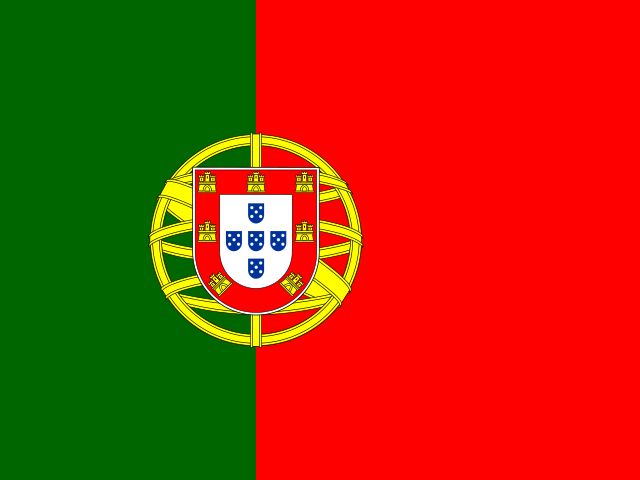
Overview
Portugal, officially the Portuguese Republic, lies in Southwestern Europe. The mainland occupies the western edge of the Iberian Peninsula and borders Spain to the north and east. The country also includes two Atlantic archipelagos, Madeira and the Azores.
The population is about 11.4 million (2025). Lisbon is both the capital and the largest city. Counting internal waters and territorial sea, the legal national area is about 156,600 km2, and the exclusive economic zone of roughly 1.7 million km2 is among the largest in Europe.
Portugal is a unitary semi-presidential republic and a multi-party democracy. It is a developed, high-income country whose economy rests mainly on services, industry and tourism. Portuguese is spoken natively by around 250 million people worldwide, which makes it the fifth most spoken first language.
Portugal belongs to many international bodies. It is a founding member of NATO (1949), EFTA (1960), the OECD (1961) and the Community of Portuguese Language Countries (1996), and has been a UN member since 1955. It uses the euro.
History
People have lived in the area for roughly 400,000 years. Neanderthals persisted in the southwest until about 37,000 years ago, and modern humans arrived around 40,000 years ago. The Neolithic began between about 5500 and 5300 BC. Iron Age inscribed stelae in the south are among the earliest evidence of writing on the peninsula. The Lusitanians lived mainly in the central interior.
Carthaginians were familiar with the Mediterranean coast and held influence there from about the 6th or 5th century BC. After losing the First Punic War, Carthage turned to Iberia, and the Barcid conquest began in 237 BC. Rome invaded in 218 BC and drove the Carthaginians out after the Battle of Ilipa in 206 BC. Roman rule then shaped language, law and culture. Muslim rule over much of the peninsula began in 711.
The Reconquista was the series of campaigns by northern Christian polities against al-Andalus. Portugal emerged as a county in 868 within the Kingdom of León and was formally recognised as a kingdom in 1179.
After King Ferdinand I died in 1383 a succession crisis followed. John of Aviz was elected king in 1385 and defeated the Castilians at Aljubarrota, establishing the House of Aviz. In 1386 the alliance with England was sealed by the Treaty of Windsor. In the Age of Discovery, Portuguese advances in navigation and exploration opened new sea routes and led to the Portuguese Empire.
King Sebastian died in battle in 1578 and King Henry died in 1580 without naming an heir. Philip II of Spain was acclaimed king of Portugal in 1581, creating a personal union that cost Portugal an independent foreign policy and drew it into the Dutch-Portuguese War. In 1641 John, Duke of Braganza, was proclaimed king after an uprising, ending the union.
In 1807 Portugal refused Napoleon's demand to join the Continental System and was invaded, with Lisbon captured. The royal court moved to Rio de Janeiro, which was the capital from 1808 to 1821. British help in the Peninsular War ensured that French troops were gone by 1812. A 1820 uprising in Porto pushed for a constitution and brought King John VI back from Brazil.
Republicans assassinated King Carlos I and his heir in 1908, and the monarchy gave way to a republic in 1910. Portugal fought with the Allies in World War I, and the resulting instability and economic crisis led to a military coup in 1926. The regime developed into the authoritarian Estado Novo in 1933 under António de Oliveira Salazar. Portugal stayed neutral in World War II. Forced labour in the colonies lasted until 1961, and the Colonial War ran from 1961 to 1974.
In 1974 a military coup began the Carnation Revolution, which ended the dictatorship. The years that followed brought turmoil and the breakup of the overseas empire, from the African colonies' independence through to the transfer of Macau to China in 1999. A new constitution and elections arrived in 1976, and democracy was consolidated.
Portugal joined the European Economic Community in 1986. The 1990s saw growth fuelled by credit and consumer spending, followed by rising private debt and stagnation after 2000. The 2010–2014 financial crisis led to an international bailout and strict austerity.
Climate
Mainland Portugal and Madeira have a Mediterranean climate, while the Azores are mostly temperate oceanic. Average temperatures range about 4–20 °C on the mainland, around 18 °C in the Azores and 9–19 °C in Madeira.
In winter the polar front tends to bring cooler, wetter weather. In summer the Azores High brings stable conditions, and coastal upwelling produces the summer Nortada wind.
Lisbon (approx.) has mild, wet winters and hot, dry summers, with highs around 28–30 °C in July and August and winter highs around 15 °C. Porto (approx.) is cooler and rainier because of its Atlantic exposure. Faro and the Algarve (approx.) are the sunniest and warmest part of the mainland. Funchal in Madeira (approx.) is mild all year, and Ponta Delgada in the Azores (approx.) is mild, humid and changeable.
Wildfires are a serious problem. Between 2014 and 2024 Portugal averaged about 12,500 fires and roughly 112,000 ha burned per year, the highest averages among EU countries for both measures. Warming of up to 3–4 °C by 2100 is projected relative to the 1990s–2010s average, with effects on water, agriculture and health.
Government and politics
Since the 1976 Constitution, Portugal has operated as a semi-presidential democratic republic. Four bodies hold sovereign authority: the courts, the president, the government, and the Assembly of the Republic. Every citizen aged 18 or older may vote, and ballots are cast in secret. A number of observers have pointed to signs of a drift towards autocratisation.
The president is head of state, elected directly for five years, with moderating powers and supreme command of the armed forces. António José Seguro is president, having won the runoff of the 2026 presidential election. The prime minister, Luís Montenegro, leads a minority government formed by the AD (PSD/CDS) coalition after the 2024 legislative election.
The Assembly of the Republic is a single chamber of 180 to 230 members, elected every four years unless dissolved. The PSD, Chega and the Socialist Party dominate it.
The legal system is civil law, based on Roman law and influenced by German law. The Constitution is the supreme law. Courts are organised into judicial, administrative and fiscal branches, and a Constitutional Court reviews constitutionality and oversees elections.
Portugal is a highly centralised unitary state. Local government comprises municipalities (concelhos), civil parishes (freguesias) and intermunicipal communities. There are seven mainland regions, mainly planning areas, and two autonomous regions, Madeira and the Azores. These island regions have their own elected parliaments and governments with wider powers over regional matters, while defence, foreign policy, and the core legal and tax framework remain national (approx.). Health care is run nationally through the SNS, and education and criminal law are set nationally.
Foreign policy centres on Europe, NATO and ties with the UK and US, the Portuguese-speaking world, Portuguese communities abroad, economic internationalisation and multilateralism. Portugal has two territorial disputes with Spain: Olivenza, claimed by Portugal, and waters around the Savage Islands, claimed by Spain. Relations remain excellent.
The armed forces have three branches (navy, army, air force) with about 23,600 personnel in 2025, plus the gendarmerie GNR with about 23,000. The 2026 military budget was estimated at over US$7 billion, about 2.1% of GDP. Conscription was suspended in 1999. Police forces include the GNR, the urban PSP and the Polícia Judiciária.
Portugal abolished the death penalty and life imprisonment in the 19th century. It decriminalised personal drug possession in 2001 and has strengthened LGBTQ rights since the 1980s. Reported problems include use of force by police, discrimination, exploitation of migrants and prison deficiencies.
Economy
Portugal is a high-income country with an advanced economy. It ranks 14th in the EU by nominal GDP and 12th by PPP. GDP per capita (PPP) was about 81% of the EU average in 2025. Unemployment was 5.8% in 2025, public debt about 89.2% of GDP, and the poverty rate after social transfers was 15.4% in 2024.
Portugal replaced the escudo with the euro in 2002, with monetary policy set by the ECB, and it is part of the EU single market. Trade is large, with exports plus imports equal to about 90% of GDP in 2024. Spain and Germany are the main partners. Exports include machinery, vehicles, base metals and plastics. Imports include machinery, chemicals, agricultural products and fuels.
Services made up 76.5% of output in 2024, manufacturing 21.2% and agriculture 2.9%. Tourism accounted for 11.8% of GDP in 2025, with nearly 30 million international visitors. The motor vehicle sector is the largest exporter. Business services now outweigh traditional exports such as wine and cork. The PSI index on Euronext Lisbon includes EDP, Sonae, Mota-Engil, Corticeira Amorim and Navigator.
Agriculture covers about 3.7 million ha, with 17.4% farmed organically. Portugal consumes about 54 kg of fish per person per year and is a leading seafood eater. Innovation ranks 16th in the EU and 31st globally. Notable research bodies include the Champalimaud Foundation and the International Iberian Nanotechnology Laboratory.
Infrastructure includes 48 motorways, about 2,526 km of active railway (mainly Comboios de Portugal), major airports at Lisbon, Porto, Faro, Madeira and Ponta Delgada, and Sines as the main container port. About two-thirds of energy is imported. Renewables supplied 35.2% of energy consumption in 2023 and 78.1% of installed capacity, and coal power ended in 2021.
Demographics and urbanization
Population was 11,424,031 in 2025, including about 1.6 million foreign residents, now around 14% of the total, up from 3.5% in 2016. They live mainly in the Algarve and the Lisbon area. Portugal has been a net immigration country since 1993, apart from 2011–2016.
The population is among the oldest in the world: median age 45.8, 23.3% aged 65 or over, and fertility of 1.4. Projections suggest a fall to about 8.3 million by 2100. White Portuguese make up 84.2% of residents, multiracial 3.4%, Black 2.2%, Asian 0.7% and Romani 0.6%.
About 88% of people lived in urban areas in 2023. The Lisbon metropolitan area, with about 3.4 million people, is the largest. Lisbon city has about 658,000. Porto (approx. 1.3–1.7 million in the metro area) is the second main urban centre, and the Algarve coast, Braga, Coimbra and Funchal are other populated places (approx.).
Portugal has been secular since 1911. In the 2021 Census 80.2% of those aged 15 and over were Catholic and 14.1% nonreligious, with small Protestant, Muslim, Hindu, Jewish and other communities.
Portuguese is the official language. Mirandese and Barranquenho are recognised regional languages, and Portuguese Sign Language is protected by the constitution. About 67.5% speak at least two languages, and Portugal ranked sixth globally in the 2025 EF English Proficiency Index, which is useful for expats.
Schooling is compulsory for 12 years after optional preschool, with nine years of basic education and academic or vocational secondary tracks. Higher education follows the Bologna Process, and the University of Lisbon is the largest by enrolment. Fewer than two-thirds of adults have completed secondary education, and illiteracy was 3.1% in 2021. Education spending was 4.5% of GDP in 2022.
The SNS is a mainly tax-funded universal health service, alongside health subsystems and private insurance. Public health spending share is low within the EU and waiting times are long. Life expectancy in 2024 was 85.4 years for women and 79.8 for men, and infant mortality was 2.7 per 1,000 births. Cardiovascular disease is the leading cause of death.
Capital city
Lisbon lies on the Tagus estuary on the Atlantic coast of the mainland. The city had about 658,000 residents in 2025, and its metropolitan area has about 3.4 million, the largest in the country.
Climate (approx.): Mediterranean with mild, rainy winters and warm to hot, dry summers. Average highs are about 15 °C in winter and near 28–30 °C in summer.
Lisbon is the seat of the president, government, Assembly of the Republic and highest courts. It is also the main economic city, with headquarters of major firms, the busiest airport (Lisbon Airport), a large tourism sector, and the main cultural and university institutions, including the University of Lisbon. It was also the capital during the empire, apart from the court's stay in Rio de Janeiro from 1808 to 1821. Portugal has one capital, and it coincides with the largest city and the main economic centre; Porto is the main northern centre (approx.).
About this summary
Some details on metro populations, city climates, capital-city details, regional autonomy powers and a few historical and economic background facts come from general knowledge and are approximate.