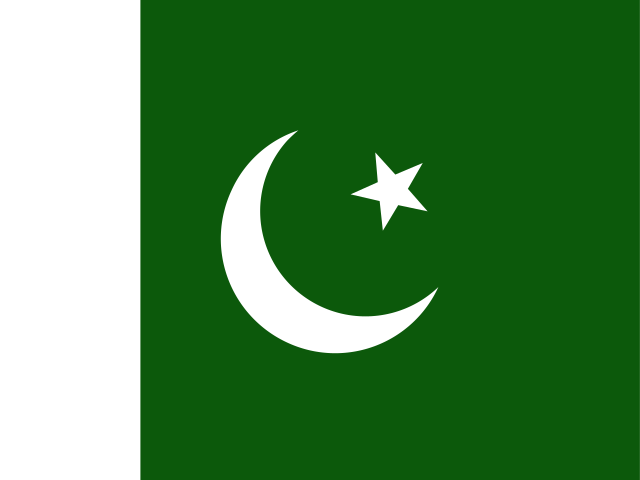
Overview
Pakistan, officially the Islamic Republic of Pakistan, is a South Asian country with a population of roughly 241.5 million (approx., 2023 figure). It is described in the source as having the second-largest Muslim population in the world. Islamabad is the capital, and Karachi is the largest city and financial centre.
Pakistan has an area of roughly 881,913 km2 (340,509 sq mi), placing it 33rd according to the source, though that number changes depending on how the contested Kashmir region is treated. Along the Arabian Sea and the Gulf of Oman, its shoreline stretches around 1,046 km. On land it borders India in the east, Afghanistan in the west, China in the northeast, and Iran in the southwest. Oman shares a maritime boundary with it, and Tajikistan is separated from it by the thin Wakhan Corridor, which belongs to Afghanistan. The southeastern limit of Pakistani territory is marked by Sir Creek.
The land holds some of the oldest cultures in South Asia, among them the roughly 8,500-year-old Neolithic settlement of Mehrgarh in Balochistan, the Bronze Age Indus Valley Civilisation and the ancient Gandhara civilisation. Many empires and dynasties ruled parts of the area over the centuries, ending with British rule from 1858 to 1947.
Pakistan became independent in 1947 through the partition of British India, which gave separate statehood to Muslim-majority regions. It first was a dominion, then adopted a republican constitution in 1956. East Pakistan broke away in 1971 as Bangladesh after a nine-month civil war. Since then governments have alternated between civilian and military rule.
The source calls Pakistan a middle power and a declared nuclear-weapon state, with the seventh-largest standing armed forces in the world. Its economy is described as emerging, with a large middle class, but the country still struggles with poverty, illiteracy, corruption and terrorism. It belongs to the United Nations, the Shanghai Cooperation Organisation, the Organisation of Islamic Cooperation, the Commonwealth of Nations, SAARC and the Islamic Military Counter-Terrorism Coalition, and the United States designates it a major non-NATO ally.
History
Prehistory: The oldest known stone tools in the region, about 2 million years old (Lower Palaeolithic), were found in the Soan Valley of northern Pakistan. The Indus plain hosted a series of early cultures, including the Neolithic settlement of Mehrgarh (7000–4300 BCE) and the cities of the Indus Valley Civilisation such as Mohenjo-daro and Harappa, part of a 5,000-year history of urban life in South Asia.
Classical period: Western areas joined the Achaemenid Empire around 517 BCE. In 326 BCE Alexander the Great overcame local rulers, notably King Porus at the Jhelum. The Mauryas ruled from 322 to 185 BCE, and Ashoka the Great expanded the empire. The Indo-Greek Kingdom, founded by Demetrius of Bactria, included Gandhara and Punjab and peaked under Menander (165–150 BCE), allowing Greco-Buddhist culture to flourish. Taxila was home to one of the earliest universities in the region.
Medieval period: Makran came under Muslim rule in the 7th century CE, with a garrison set up under Mu'awiya I. The Arab general Muhammad ibn Qasim took Sindh and parts of Punjab in 711 CE, a date the Pakistani government's official chronology treats as the foundation of Pakistan. Before Islam spread from the 8th century, the area followed many faiths, including Hinduism, Buddhism, Jainism and Zoroastrianism. Later powers named in the source include the Hindu Shahis, Ghaznavids, Delhi Sultanate, Samma, Shah Miris and Mughals.
Colonial rule: No part of modern Pakistan was under British control until 1839, when Karachi, then a small fishing village under the Talpurs of Sindh, was seized to serve as a port and military base for the First Afghan War. The rest of Sindh was taken in 1843. Through wars and treaties the East India Company, and after the Mutiny of 1857–1858 direct rule under Queen Victoria, gained most of the region. British rule lasted 1858 to 1947.
Independence: In the 1946 elections the Muslim League won about 90 percent of the Muslim seats, backed by landowners in Sindh and Punjab, forcing the Indian National Congress to recognise its standing. The Cabinet Mission Plan failed to prevent partition, and the British announced they would leave by June 1948. Lord Mountbatten announced the partition plan on 3 June 1947 after talks with Jinnah and Nehru. Pakistan was created on 14 August 1947 (27th of Ramadan 1366), combining Muslim-majority areas: Balochistan, East Bengal, the North-West Frontier Province, West Punjab and Sindh.
Partition violence and migration: Riots in Punjab killed between 200,000 and 2,000,000 people, a toll some have called a retributive genocide between religions. The source reports about 50,000 Muslim women and 33,000 Hindu and Sikh women were abducted and raped. About 6.5 million Muslims moved from India to West Pakistan and 4.7 million Hindus and Sikhs moved the other way, described as the largest mass migration in human history. A dispute over Jammu and Kashmir led to the Indo-Pakistani War of 1947–1948.
Early statehood: Muhammad Ali Jinnah served as Pakistan's first governor-general and died of tuberculosis on 11 September 1948. Liaquat Ali Khan was the country's inaugural prime minister. Between 1947 and 1956, Pakistan was a Commonwealth dominion under a monarchy, and it had two monarchs during that time. The source observes that certain British leaders, Mountbatten among them, never fully reconciled themselves to Pakistan's creation.
Islamic constitution: Religious scholars and Jamaat-i-Islami pressed for an Islamic constitution. The Objectives Resolution of March 1949 declared that sovereignty belongs to God Almighty and that authority is exercised by the state through its people as a sacred trust. It later became a preamble to the constitutions of 1956, 1962 and 1973.
Military rule and the 1971 split: Martial law was imposed by President Iskander Mirza and then led by General Ayub Khan, who adopted a presidential system in 1962. Pakistan saw strong growth until the second war with India in 1965, followed by economic downturn and discontent in 1967. Yahya Khan took control in 1969 and faced a cyclone in East Pakistan that killed about 500,000. In the 1970 elections, the East Pakistani Awami League beat the Pakistan Peoples Party, but the military refused to hand over power. This led to Operation Searchlight and a war of liberation by the Bengali Mukti Bahini, described in West Pakistan as a civil war. Independent researchers estimate 300,000 to 500,000 civilians died, while the Bangladesh government gives a far higher figure. East Pakistan became Bangladesh in 1971.
Climate
Pakistan's climate ranges from tropical to temperate, with arid conditions along the southern coast. There are four seasons: a cool, dry winter from December to February; a hot, dry spring from March to May; a summer rainy season (southwest monsoon) from June to September; and a retreating monsoon in October and November. Rainfall differs greatly from year to year, and flooding and drought often alternate.
Geography shapes local conditions. The country has three main zones: the northern highlands (Karakoram, Hindu Kush and Pamir ranges, including K2 at 8,611 m and Nanga Parbat at 8,126 m), the Indus River plain, and the Balochistan Plateau, with the Thar Desert in the east. The Indus, about 1,609 km long, feeds fertile plains in Punjab and Sindh.
City climates (approx.): Karachi on the Arabian Sea coast has a hot, arid to semi-arid climate moderated by sea breezes, with mild winters, very hot and humid late spring and early summer, and little rain mostly in the monsoon. Lahore in Punjab has a hot semi-arid climate with very hot summers, a monsoon from July to September, and cool winters with fog. Islamabad and neighbouring Rawalpindi lie at the foot of the Margalla Hills, with hot summers, heavy monsoon rains and cool winters. Peshawar is hot in summer and cool in winter with moderate rainfall. Quetta, on the high Balochistan Plateau, has cold winters, mild summers and low rainfall.
Natural environment: Plant life ranges from coniferous forests (spruce, pine, deodar) in the north to date palms and Ephedra in Balochistan and mangroves on the southern coast. About 4.8% of the country was forested in 2021. Recorded species include 174 mammals, 177 reptiles, 668 birds and over 5,700 plants. Notable animals include the markhor, snow leopard, Marco Polo sheep and the blind Indus river dolphin (about 1,816 remaining, protected in a reserve in Sindh). Deforestation, hunting and pollution are concerns. Northern areas lie on a seismically active plate boundary and are prone to strong earthquakes.
Government and politics
Pakistan is a democratic parliamentary federal republic with Islam as the state religion. The military has had major influence on politics. The 1956 constitution was suspended by Ayub Khan in 1958 and replaced in 1962. The 1973 constitution, under Zulfikar Ali Bhutto, set up a parliamentary system; it was suspended by Zia-ul-Haq's martial law in 1977 and restored with amendments in 1985. Military rule took place in 1958–1971, 1977–1988 and 1999–2008. The first successful democratic transition between civilian governments occurred in May 2013, and constitutional amendments in 2010 reduced presidential powers and strengthened the prime minister.
National institutions: The president is ceremonial head of state and civilian commander-in-chief, chosen by an Electoral College, and must act on the prime minister's advice on key appointments including military and judicial posts. The prime minister, usually leader of the majority party or coalition in the National Assembly, is chief executive and forms the cabinet. The legislature has two houses: a 96-member Senate elected by provincial legislators with equal representation per province, and a 336-member National Assembly elected by first-past-the-post, with 70 seats reserved for women and religious minorities allocated by proportional representation. The main parties are the conservative Pakistan Muslim League (N), the socialist Pakistan Peoples Party and the centrist Pakistan Tehreek-e-Insaf.
Sub-national structure: Pakistan has four provinces (Punjab, Khyber Pakhtunkhwa, Sindh, Balochistan) and three territories (Islamabad Capital Territory, Gilgit-Baltistan and Azad Kashmir). Each province has a directly elected Provincial Assembly that chooses a Chief Minister, who leads the provincial cabinet. Provincial assemblies make provincial laws and approve the annual provincial budget. A Chief Secretary, appointed by the prime minister, heads the provincial bureaucracy, and a ceremonial Governor is appointed by the president on the prime minister's binding advice. Local government has districts, tehsils and union councils, each with an elected body. The source does not give a detailed list of which subjects (tax, health, education) provinces control beyond these arrangements.
Special jurisdictions: Pakistan administers the western parts of the Kashmir region as Azad Kashmir and Gilgit-Baltistan, whose status is tied to the Kashmir dispute with India. A 2009 order (Gilgit–Baltistan Empowerment and Self-Governance Order) gave Gilgit-Baltistan semi-provincial status with self-government. Both have their own court systems.
Judiciary and Islam: The judiciary has superior and subordinate branches; the superior courts include the Supreme Court (which safeguards the constitution), the Federal Shariat Court and five high courts. The 1973 constitution declares Islam the state religion, requires laws to conform to the Quran and Sunnah, and created the Shariat Court and the Council of Islamic Ideology. Zia-ul-Haq expanded Shariat courts and Islamic law. A Pew poll cited in the source found most Pakistanis favour sharia as official law.
Foreign relations: Pakistan aims for an independent foreign policy centred on economy, security, national identity, territorial integrity and ties with Muslim countries. The Kashmir conflict with India remains central; three of the four wars between them were over it. Pakistan has close ties with Turkey, Iran and Saudi Arabia, and is not a signatory to the Nuclear Non-Proliferation Treaty.
Economy
Pakistan's economy ranks 27th by purchasing power parity and 42nd by nominal GDP, according to the source. Nominal GDP was about US$407.8 billion in 2025 and PPP GDP about US$1.8 trillion (2026). Nominal GDP per capita is about US$1,700 and PPP per capita about US$6,950. Growth in 2024 was 2.5%. Inflation in 2025 was 4.5% and unemployment about 8%. About 44.7% of people live below US$4.20 a day and 16.5% below US$3 a day. The middle class is estimated at 40–50 million people (15–20% of the population). Female labour participation is very low.
Structure: The economy is semi-industrialised and has moved from agriculture toward trade and services. Services are the largest sector at about 58.4% of GDP and 41.6% of employment. Industry is about 19.7% of GDP and 24% of employment, with large-scale manufacturing about 12.2% of GDP. Agriculture is about one-fifth of GDP and employs 43.5% of the labour force. In 2023 Pakistan had a trade deficit of US$21.3 billion, and its export share was about 0.12% of the global total.
Agriculture: Pakistan produced about 29 million tonnes of wheat in 2025/26 (about 3% of world output), and ranks high globally in cotton, sugar and milk. The Green Revolution of the late 1960s and 1970s raised wheat and rice yields through high-yielding varieties and private tube wells.
Industry: Textiles contribute about 9.5% of GDP and employ about 15 million people, and Pakistan has large cotton spinning capacity. Cement is a major industry, supplied to the domestic property market and Afghanistan; 2013 exports were about 7.7 million tonnes.
Services and technology: About 57% of people used the Internet in 2024. ICT exports reached a record US$2.6 billion in fiscal 2023–24. Pakistan has an estimated three million freelancers and is described as among the top five freelancing markets; they earned over US$950 million in foreign exchange in the first ten months of fiscal 2025–26.
Labour and remittances: Pakistan has the world's seventh-largest labour force. The diaspora of around 10 million sent about US$38.3 billion in remittances in fiscal 2024–25 according to the Special Investment Facilitation Council.
Tourism: About 6.6 million foreign tourists visited in 2018. Attractions include Mohenjo-daro, Harappa, Taxila, Takht-i-Bahi, Hunza and Chitral valleys (home of the Kalasha), peaks over 7,000 m and the Mughal sites of Lahore such as the Badshahi Masjid, Shalimar Gardens and Lahore Fort. Lahore is described as Pakistan's cultural capital.
Resources: Pakistan's untapped coal reserves are estimated as the fifth largest in the world. The Reko Diq mine in Balochistan holds one of the largest undeveloped copper deposits, about 15 million tonnes of copper reserves, plus an estimated 17.9 million ounces of gold over a projected 37-year life.
Demographics and urbanization
Population is about 241.5 million (2023). Urbanisation has risen since partition; the source says city dwellers were about 36% of the population in the 1990–2008 period, with over 50% living in towns of 5,000 or more people. Migration from India (especially to Karachi), internal migration and economic change such as the Green Revolution drive urban growth.
Where people live: Karachi is the biggest commercial hub in the south near the Indus delta. A dense arc of cities runs through the east, north and west: Lahore, Faisalabad, Rawalpindi, Islamabad, Sargodha, Gujranwala, Sialkot, Gujrat, Jhelum, Sheikhupura, Nowshera, Mardan and Peshawar. Approximate metro populations (approx.): Karachi about 15–20 million, Lahore about 13 million, Faisalabad about 3–4 million, Rawalpindi about 3 million, Islamabad about 1–2 million, Peshawar about 2–3 million.
Languages and ethnicity: Between 75 and 85 languages are spoken. Urdu and English are the official languages, with Urdu the lingua franca. Per the 2023 census, ethnolinguistic groups include Punjabis (36.98%), Pashtuns (18.15%), Sindhis (14.31%), Saraikis (12%), Urdu speakers (9.25%), Balochs (3.38%), Hindkowans/Hazarewals (2.32%) and Brahuis (1.16%), plus Kashmiris, Paharis, Chitralis, Kohistanis, Hazaras, Kalash, Siddis and others.
Religion: Muslims are 96.35%, Hindus 2.17% (5,217,216 people, concentrated in Sindh, where they are 8.81% of the population) and Christians 1.37%. Others include Sikhs, Buddhists, Jains, Zoroastrians, Bahá'ís and the Kalash. Most Muslims are Sunni, with Shia estimated at 5–25%. Ahmadis are officially considered non-Muslim and are banned from calling themselves Muslims since 1974 and face persecution.
Migration: After 1947, Muslim migrants from India continued to settle in Pakistan, chiefly in Karachi and across Sindh. The wars that hit Afghanistan during the 1980s and 1990s sent millions of refugees across the border, most of them to Khyber Pakhtunkhwa and some to Karachi and Quetta. In October 2023, citing security risks, the Pakistani government directed that undocumented Afghans be expelled en masse. The country also hosts roughly 2 million Bengalis and possibly 500,000 people from Myanmar, Rohingya among them, with many living in Karachi. Gilgit-Baltistan is home to thousands of Uyghurs, and Kashmiri refugees began arriving in 1989.
Diaspora: About 7 million Pakistanis live abroad (UN estimate), mainly in the Middle East, Europe and North America, the sixth-largest diaspora in the world. Remittances were US$19.9 billion in 2015–16 and were far higher recently. Saudi Arabia was the largest source in 2016.
Education: The constitution requires free primary and secondary education. Each province has public universities such as Punjab, Sindh, Peshawar, Karachi and Balochistan universities. Private schools often follow Cambridge curricula, and there are about 439 international schools. Madrassahs offer free Islamic education. Literacy was 62.3% in 2018 with large regional and gender gaps, and education spending is 2.3% of GDP. English-medium education was made mandatory from 2007. Malala Yousafzai, attacked by the Taliban in 2012, became the youngest Nobel laureate.
Capital city
Islamabad is the national capital and forms the Islamabad Capital Territory, a federal territory outside the four provinces. It lies in the north of the country at the foot of the Margalla Hills near Rawalpindi, which forms a twin-city area with it. Its population is about 1.2 million in the city (approx.), with a metro of roughly 2–3 million including Rawalpindi (approx.).
Climate (approx.): humid subtropical, with hot summers, heavy monsoon rain from July to September, and cool winters. Christians make up over 4% of the territory's population according to the source.
Role: Islamabad is the political and administrative capital, housing the federal government, parliament, the Supreme Court and embassies. It is a planned city, and relatively green and orderly. Karachi, not Islamabad, is the largest city and financial centre, and Lahore is described as the cultural capital. The source gives no separate capital or additional seats of government, so Islamabad is the sole capital.
About this summary
Approximate general-knowledge facts: metro populations, city climates, and capital-city details. Also some recent-event context.