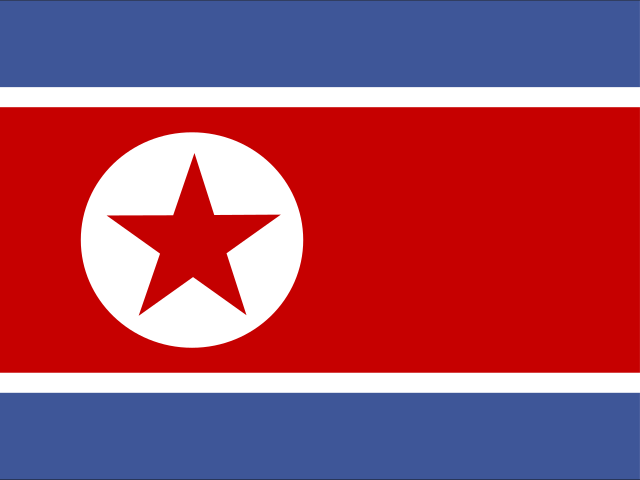
Overview
North Korea, officially the Democratic People's Republic of Korea (DPRK), occupies the northern part of the Korean Peninsula in East Asia. It shares land borders with China and Russia along the Yalu (Amnok) and Tumen rivers, and with South Korea along the Korean Demilitarized Zone (DMZ). The Yellow Sea lies to the west and the Sea of Japan to the east. Pyongyang is the capital and the largest city.
The state describes itself as socialist and holds elections, but outside observers describe them as uncompetitive and pre-determined. It is a one-party system led by the Workers' Party of Korea and has been ruled by three generations of the Kim family. Amnesty International considers its human rights record to be the worst in the world. The economy is state-owned and tightly controlled, and the country is heavily militarized and possesses nuclear weapons.
North Korea joined the United Nations in 1991. It is also a member of the Non-Aligned Movement, the G77 and the ASEAN Regional Forum. It is sometimes called the 'hermit kingdom' because of its isolation. For practical purposes, it is a very restricted destination for foreign residents, and most foreign embassies accredited to it are based in Beijing rather than Pyongyang.
History
People have lived on the Korean Peninsula since the Lower Paleolithic. Chinese records mention a first Korean kingdom in the early 7th century BCE. After the Three Kingdoms were united in the late 7th century as Silla and Balhae, the peninsula was governed by the Goryeo dynasty (918–1392) and then the Joseon dynasty (1392–1897). The Korean Empire (1897–1910) followed.
Japan gained regional power by winning wars against Qing China and Russia. It made Korea a protectorate in 1905 and annexed it in 1910. Korean language, culture and history were suppressed under forced assimilation. This provoked the March First Movement protests of 1919 and the formation of resistance groups in exile, mainly in China.
After Japan surrendered in 1945, the peninsula was split along the 38th parallel. The Soviet Union occupied the north and the United States the south. Talks on reunification failed. The Soviets set up a civil administration in August 1945 and backed Kim Il Sung as chairman of the Provisional People's Committee of North Korea, formed in February 1946. In 1948 two separate governments were created: the Soviet-aligned DPRK in the north and the Western-aligned Republic of Korea in the south.
North Korean forces invaded the South on 25 June 1950 and quickly overran most of it. The UN Security Council recognized the aggression, and a US-led United Nations Command intervened, a vote that passed because the Soviet Union was boycotting the council at the time. UN forces advanced rapidly into the North. The Korean Armistice Agreement of 1953 brought a ceasefire and created the DMZ. No peace treaty is described in the source.
In the 1950s and 1960s Kim Il Sung consolidated power. He criticized Soviet leader Khrushchev's de-Stalinization as revisionist. In the 1956 August faction incident he purged the pro-Soviet and Yan'an factions and resisted Soviet and Chinese efforts to remove him. Some scholars see this as a show of political independence. He promoted Juche, announced in 1955 and written into the constitution in 1972, as the state ideology.
The Soviet Union dissolved in 1991, which ended its aid. Kim Il Sung died in 1994 and his son Kim Jong Il took over after a three-year mourning period. Flooding and economic collapse in the mid-1990s caused a famine that killed an estimated 240,000 to 420,000 people and pushed many to flee to China, South Korea and elsewhere. The government accepted UN food aid in 1996. The Agreed Framework of 1994 promised a halt to nuclear weapons development, and South Korea pursued its Sunshine Policy of engagement. Kim Jong Il introduced the 'Songun' military-first policy. Clashes occurred near the Yeonpyeongdo islands in 1999 and 2002. North Korea announced its first nuclear test in 2006. Tensions rose in 2010 after the sinking of the South Korean warship Cheonan and the shelling of Yeonpyeongdo.
Kim Jong Il died on 17 December 2011 and his youngest son Kim Jong Un succeeded him. The nuclear arsenal continued to grow, possibly including a hydrogen bomb and missiles able to reach the United States. Relations with the US worsened in 2017, then eased in 2018 with a series of summits among the North, the South and the US. Those negotiations later collapsed.
Kim Jong Un announced on 30 December 2023 that reunifying with South Korea was no longer achievable. North Korea then dispatched soldiers to Russia in 2024 to back its war in Ukraine, and it also signed a defense pact with Moscow. The source states that in May 2026 the constitution was revised so that South Korea is described as a 'hostile state', and that mentions of a common heritage were removed.
Climate
North Korea has a humid continental climate. Winters are clear and cold, with occasional snowstorms driven by northerly and northwesterly winds from Siberia. Summers are the hottest, most humid and rainiest season, because monsoon winds bring moist air from the Pacific. About 60 percent of annual precipitation falls between June and September. Spring and autumn are transitional.
Pyongyang, the capital, has typical daily highs and lows of about −3 °C and −13 °C in January, and about 29 °C and 20 °C in August.
Other major cities (approx.): Hamhung and Wonsan on the east coast are somewhat milder and less cold in winter than inland areas. Chongjin in the northeast is colder and often foggy, and Kaesong in the south has a climate similar to Pyongyang's but slightly milder. Mountain areas in the north, including around Mount Paektu, have long and severe winters.
Mountains and uplands make up roughly 80 percent of the country. Its highest summit is the volcanic Mount Paektu, which rises to 2,744 m. More than 70 percent of the land is forested, chiefly on steep slopes. The Amnok (Yalu) is the longest river, running 790 km. Most of the population lives in the lowlands and plains, where the coastal plains broaden out along the western seaboard but break into separate pieces along the eastern one.
Government and politics
North Korea is a highly centralized one-party state. Its leaders have all come from the Kim family, so the system has been described as hereditary or dynastic. The current supreme leader, Kim Jong Un, leads the Workers' Party of Korea (WPK), serves as head of state and is commander-in-chief of the Korean People's Army.
The WPK is the sole ruling party. The Korean Social Democratic Party and the Chondoist Chongu Party exist but are subordinate to it. The constitution places all activity under WPK leadership, and all state organs work under party direction. The party congress, held at least every five years, elects the General Secretary and the Central Committee. The Central Committee in turn elects the Presidium, Politburo, Secretariat and Central Military Commission.
The Supreme People's Assembly (SPA) is the formal supreme state organ. It delegates policy-making to the State Affairs Commission and the president, executive power to the Cabinet, and judicial power to the Supreme Court. In practice these bodies, especially the State Affairs Commission and its president, act largely independently. The SPA's Standing Committee holds most of its powers between sessions and can interpret the constitution. The source says recent amendments centralized much of the State Affairs Commission's power in the president, who guides state activity, appoints and dismisses the SPA chairman and the premier, and can veto SPA decisions.
The Cabinet, headed by a premier elected by the SPA, administers the national economy. It consists of the premier, eight vice premiers, a secretary-general and ministers. The Supreme Court is the highest court of appeal and is viewed as a political organ working within limits set by the SPA and the WPK. The legal system is a civil law system based on the Prussian model, influenced by Japanese traditions and communist legal theory.
Power is not divided between national and sub-national levels in a federal sense. Sub-national administration is subordinate to the central party and state, and it carries out national policy on matters such as taxation (officially abolished in 1974), health, law and education. I have no detail on special jurisdictions beyond what is generally known: Pyongyang and a few other cities (approx.) have special city status, and Rason and some other zones have been designated as special economic zones.
The official ideology is Kimilsungism–Kimjongilism. Juche, which stresses economic self-sufficiency, military self-reliance and an independent foreign policy, was announced in 1955 and written into the constitution in 1972. References to Marxism–Leninism were removed in 1992. The 2009 constitution dropped references to communism and elevated Songun. The WPK reaffirmed its commitment to communism in 2021. The Kim family is called the Mount Paektu Bloodline and is the center of an extensive cult of personality. Kim Il Sung's birthday (15 April) and Kim Jong Il's birthday are major holidays.
In foreign relations, China is often called North Korea's closest ally and the two have a defense agreement, though relations have at times been strained over the nuclear program. Russia is also a close partner, and the two signed a defense agreement in 2024. North Korea had diplomatic relations with 166 countries as of 2015. The kidnapping of at least 13 Japanese citizens in the 1970s and 1980s has damaged its relations with Japan.
On the inter-Korean front, the DMZ remains the most heavily fortified border in the world. Key moments included the 2000 summit and the June 15th Joint Declaration, the 2007 agreement and the 2018 Panmunjom Declaration. Relations worsened again under later South Korean governments. In 2024 North Korea abandoned its earlier claim to be the legitimate government of the entire peninsula and stated it would no longer seek reunification.
The Korean People's Army has about 1.28 million active and 6.3 million reserve and paramilitary personnel, which the source says is the fourth-largest active force in the world. It has five branches: Ground Force, Navy, Air Force, Special Operations Force and Strategic Force. Its conventional equipment is dated and fuel is short, so it relies on asymmetric tools such as cyberwarfare units. Arms purchases are banned under UN sanctions.
Under the Songbun system, reported by US sources and refugees, citizens are ranked by assessed loyalty and family background across three generations. It reportedly affects education, jobs and party membership. The government denies any such discrimination.
Economy
North Korea's economy has been among the planet's most tightly centralized and isolated ever since the 1940s. Following Soviet-style five-year plans geared toward self-reliance, the country, backed heavily by the Soviet Union and China, rebounded quickly after the Korean War. Around 1960, however, inefficiency took hold, driven by scarcities of skilled workers, energy, farmland and transportation. By the 1980s, South Korea had surpassed the North in both overall GDP and per-capita income. In December 1993, the final seven-year plan was acknowledged as a failure, and no further plans were announced after that.
The loss of Eastern Bloc trading partners and natural disasters in the 1990s caused severe hardship and famine. Reforms in 1998 formally allowed private ownership of assets and decentralized some production control. Reforms in 2002 expanded market activity, introduced flexible prices and wages and partial monetization. Even so, the state owns almost all means of production and sets development priorities. Food, housing, education and healthcare are subsidized or free, and taxes were officially abolished in 1974.
PPP-adjusted GDP is estimated at around $40 billion, equal to roughly $1,800 per person. South Korea's gross national income per capita in 2024 was $36,965, compared with $1,317 in the North. Industry accounts for nearly half of GDP. The labor force totals 17.6 million, with 65% employed in industry and services. Key sectors are tourism, food processing, textiles, chemicals, mining, metallurgy, military equipment, and machine building. Output of iron ore and coal in South Korea is only about one tenth of the North's. The national currency is the North Korean won, which the Central Bank issues.
Most people depend on small informal jangmadang markets, though Pyongyang has department stores and supermarkets. A 2009 attempt to ban the markets and foreign currency and to devalue the won caused inflation and rare protests, and was reversed. Women dominate private trade because most men must attend their workplaces, even where state firms are not operating.
Farming was hit hard by 1990s disasters, and its roughly 3,500 cooperatives and state farms suffer from fertilizer and equipment shortages. Main crops are rice, corn, soybeans and potatoes. Fishing and aquaculture add to the food supply, and specialized farms grow ginseng, honey, matsutake and medicinal herbs. Oil reserves have been reported offshore in the Sea of Japan and south of Pyongyang. The government promotes tourism, for example through the Masikryong Ski Resort.
China is the largest trading partner, accounting for more than 74% of exports and 97% of imports as of 2023. According to the source, the economy improved significantly in the mid-2020s, helped by arms sales to Russia and growing trade with China. Arms sales to Russia brought in more than $10 billion from summer 2023 to the end of 2025. Signs of change include more shops in Pyongyang, a construction boom, increased digitization and a rise in electric vehicle sales.
Rail is the main mode of transport, with about 5,200 km of mostly standard-gauge track carrying 80% of passenger and 86% of freight traffic, though power shortages reduce efficiency. A high-speed line linking Kaesong, Pyongyang and Sinuiju was approved in 2013. The country links to the Trans-Siberian Railway via Rajin. Only 724 km of the 25,554 km road network is paved. Ports are ice-free and the merchant fleet has 158 vessels. Pyongyang International Airport is the only international airport, served by Russia and China, and Air Koryo is the state airline. Private car ownership has grown in the 2020s.
The energy system is obsolete and chronic power shortages persist. Coal supplies 70% of primary energy and hydropower 17%. The state aims for 5 million kW from renewables by 2044, up from about 430,000 kW total capacity now, and wants to develop civilian nuclear power, which is disputed internationally.
The State Academy of Sciences runs about 40 research institutes. The space program uses the Sohae and Tonghae launch sites, and Kwangmyongsong-3 Unit 2 reached orbit in December 2012. Mobile phones are widespread (4G via Koryolink and Kangsong NET), but there is no mobile internet. Ordinary users access only the Kwangmyong intranet, and the Red Star OS is used on computers. International calls are restricted.
Demographics and urbanization
The population is about 26 million (25,971,909 in the source) and is ethnically homogeneous apart from a small Chinese community and a few ethnic Japanese. The famine of 1995–1998 prevented expected growth. Annual growth was 0.9% in 2002 and 0.4% in 2024. The birth rate is 13.2 per 1,000. Two-thirds of households are extended families, usually in two-room units. Marriage is nearly universal and divorce is very rare.
Urbanization is about 62 to 63% (approx.). Most people live in the western coastal plains and lowlands rather than the mountainous interior. Largest cities (approx.): Pyongyang about 3 million, Hamhung about 700,000 to 800,000, Chongjin about 500,000 to 600,000, Nampo about 400,000 to 900,000 depending on boundaries, and Wonsan, Sinuiju and Kaesong a few hundred thousand each.
Korean is the national language, written only in Chosongul (Hangul). North Korea promotes its Pyongyang-based standard 'munhwao' and has removed Chinese, Manchu and Western loanwords and hanja. Russian and English study was made compulsory in upper middle schools in 1978.
The state is officially atheist. The constitution guarantees religious freedom but with limits, and proselytizing is banned. No official statistics exist. A 2020 study estimated 73% irreligious, 13% Chondoism, 12% Korean shamanism and 1.5% Buddhist. Pyongyang has five state-built churches, which critics call showcases. Chondoism is favored as an indigenous 'revolutionary religion'. Amnesty and Open Doors report persecution, which pro-North groups deny.
Education is free and compulsory for 11 years, the 2008 census listed everyone as literate, and about 300 universities and colleges exist. Ideological subjects make up a large share of the courses, and many graduates enter military service or farm and factory work.
Life expectancy was 72.3 years in 2019. Non-communicable diseases caused 84% of deaths in 2016. Maternal mortality is 89 per 100,000 live births. Care is free under a universal system and the country has 3.7 doctors per 1,000 people, but equipment, drugs and anesthetics are in severe shortage, and quality varies by region. The malnourished share of children fell from 60% in 1998 to 28% in 2013, though diets still lack variety.
Capital city
Pyongyang is the capital and largest city, located in the west of the country on the Taedong River (approx.). Its population is about 3 million (approx.). It is the seat of the Workers' Party, the Supreme People's Assembly, the Cabinet and the supreme leader, and it is the country's political center.
Its climate is humid continental: average daily highs and lows of about −3 °C and −13 °C in January, and about 29 °C and 20 °C in August, with the heaviest rain in summer.
Pyongyang is also the cultural showpiece and the main center of consumption, with department stores, supermarkets, universities and landmarks named for Kim Il Sung, including the university, stadium and square. Living standards and access to goods are generally higher than elsewhere in the country (approx.). Industrial and port activity is spread across other cities such as Nampo, Hamhung and Chongjin (approx.), so Pyongyang is the political and administrative capital while the economy is spread across several centers. The only international airport and the main rail links to China and Russia are here or nearby. Foreign residence is tightly limited, and some embassies and a few international agency offices operate here, though most accredited embassies are in Beijing.
About this summary
Approximate city populations, city climate details, capital-city details, and some recent economic and political context are from general knowledge and marked approx.