Overview
Nauru, officially renamed the Republic of Naoero in mid-2026, is a tiny island country in the South Pacific, in the Micronesia subregion of Oceania. Its closest neighbour is Banaba, part of Kiribati, roughly 300 km to the east. Yaren is the de facto capital, since the constitution names no formal capital.
The island covers only about 21 square kilometres, which makes it the third-smallest country in the world and the smallest Commonwealth member in both land area and population. About 12,000 people live there, and the 2021 count was 12,511. It belongs to the United Nations, the Commonwealth and the Organisation of African, Caribbean and Pacific States.
Micronesians settled the island around 1000 BCE. Germany annexed it in the late 1800s, Australia occupied it in World War I, and it was later administered under a League of Nations mandate and then a UN trusteeship. It became independent in 1968.
Phosphate rock lay close to the surface, and about a century of strip-mining from 1900 stripped most of the interior. The viable reserves ran out in the 1990s. Poor handling of the mining wealth led to serious financial trouble in the 2000s, followed by a gradual recovery in the 2010s. Since 2001 Nauru has hosted an Australian offshore immigration processing centre in exchange for aid, and some sources describe it as an Australian client state because of its dependence.
History
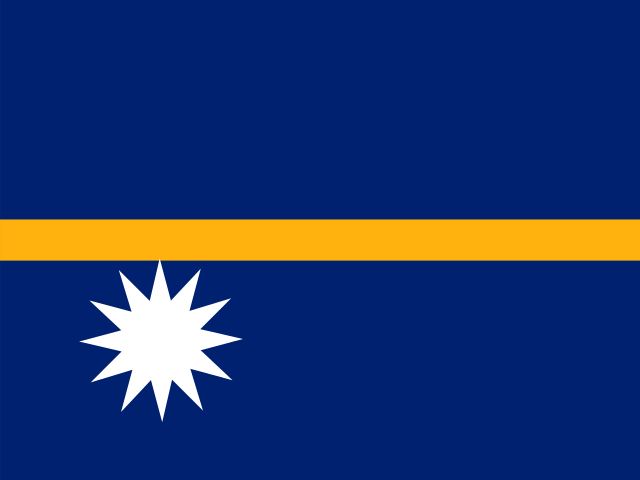
Micronesians settled Nauru at least 3,000 years ago, and there may have been some Polynesian influence. Long isolation produced a distinct language. Society was organised into twelve clans, shown by the twelve points of the star on the national flag, and descent was traced through the mother. Islanders raised juvenile milkfish in Buada Lagoon and also ate coconuts and pandanus fruit.
British captain John Fearn was the first Westerner to report the island in 1798 and named it Pleasant Island. From at least 1826, whaling and trading ships called for food and fresh water. Deserters from ships settled there, and trade in palm wine and firearms fed a ten-year civil war that began in 1878.
Germany annexed Nauru in 1888 after an agreement with Britain and administered it as part of the Marshall Islands Protectorate. This ended the civil war, and kings, of whom Auweyida was best known, ruled the island. Missionaries from the Gilbert Islands arrived the same year. Robert Rasch was appointed the first administrator in 1890.
Prospector Albert Fuller Ellis found phosphate in 1900. The Pacific Phosphate Company began extraction in 1906 and shipped the first cargo in 1907. Australian troops took the island in 1914, early in World War I. A League of Nations mandate followed, and the 1919 Nauru Island Agreement between Australia, New Zealand and the United Kingdom set up the British Phosphate Commission to mine the deposits. In 1923 Australia received a trustee mandate with the UK and New Zealand as co-trustees. An influenza epidemic and other hardship in the early twentieth century killed about 18 per cent of native Nauruans.
In December 1940, German auxiliary cruisers sank five supply ships near Nauru and shelled the mining area, oil storage and loading equipment. Japan occupied the island on 25 August 1942, built two airfields, and deported about 1,200 Nauruans to Chuuk to work as labourers. The island was surrendered to Australian forces on 13 September 1945. The 745 Nauruans who survived captivity returned in January 1946.
A UN trusteeship was set up in 1947 with Australia, New Zealand and the UK as joint administering authority, though Australia in practice held the power. In the 1948 riots, Chinese mine workers struck over pay and conditions. Security forces opened fire, killing two and wounding sixteen, and two more workers died in custody. The Soviet Union and China complained to the UN.
By the 1960s, mining had damaged the land so badly that the island was thought likely to be uninhabitable by the 1990s. Australia proposed resettling Nauruans on Curtis Island off Queensland, at an estimated cost of £10 million. Nauruans refused to give up sovereignty and Australia would not grant it, so they chose to remain and run their own mines.
Nauru became self-governing in January 1966 and independent on 31 January 1968, with Hammer DeRoburt as the first president. The government bought out the British Phosphate Commissioners' assets in 1967, and the locally owned Nauru Phosphate Corporation took control in June 1970. Mining income made Nauruans among the world's wealthiest people for a time. In 1989 Nauru took Australia to the International Court of Justice over unremedied environmental damage, and the case ended in an out-of-court settlement to rehabilitate mined land.
A COVID-19 state of emergency began on 17 March 2020. The first confirmed cases were announced on 2 April 2022, and one death was officially recorded. In mid-2026 the country officially renamed itself the Republic of Naoero, and on 30 July 2026 it withdrew its recognition of Abkhazia and South Ossetia.
Climate
Nauru sits close to the equator and is hot and very humid all year. Daytime temperatures run about 30 to 35 °C and nights stay near 25 °C. Monsoon rains arrive between November and February. Annual rainfall varies a lot with the El Niño–Southern Oscillation, and several significant droughts have been recorded.
The island has no rivers or streams. Water comes from roof catchment systems and from ships that bring it as ballast. Because the whole country is one small island, its climate is essentially uniform. The capital district, Yaren, shares the same hot, humid tropical maritime conditions.
The island is an oval about 21 km² in area, ringed by a coral reef that is exposed at low tide and has blocked the building of a seaport. A fertile coastal strip 150 to 300 m wide surrounds a plateau of coral cliffs whose highest point, Command Ridge, is 71 m above sea level. Mining has stripped around 80 per cent of the land into jagged limestone pinnacles up to 15 m high. Silt and phosphate runoff are estimated to have killed about 40 per cent of marine life in the surrounding waters.
Fauna and flora are limited here. Roughly 60 native vascular plant species have been recorded, and none of them is endemic. No native land mammals exist on the island. Its indigenous animal life consists of insects, land crabs and several bird species, among them the Nauru reed warbler, which is found nowhere else. Rats, cats, dogs, pigs and chickens were brought in by ship. Because sea levels are rising and habitable land is scarce, the island is highly vulnerable to climate change, a concern that bears on the relocation plan discussed in the economy section.
Government and politics
Nauru operates as a parliamentary republic, with a president who serves simultaneously as the head of state and the head of government, and who must retain parliament's confidence. Parliament is a single chamber of 19 members, all of whom face election every three years, and its members select the president from among themselves. The president names a cabinet made up of five to six members. The current president is David Adeang. In a 2021 referendum, voters decided that naturalised citizens and their descendants could not become parliamentarians.
There is no formal party structure. Most candidates run as independents, and 15 of the 19 current members are independents. Four parties have been active: the Nauru Party, the Democratic Party, Nauru First and the Centre Party. Alliances usually follow extended family ties rather than party lines.
The country has no real sub-national tier of government. It is divided into fourteen administrative districts, grouped into eight electoral constituencies and subdivided into villages. These units are mainly electoral and statistical. A nine-member local government body, the Nauru Island Council, handled municipal services from 1992 to 1999, as successor to a council set up in 1951. It was dissolved in 1999 and its assets and liabilities passed to the national government. As a result, taxation, health, education, law and other functions are all handled nationally.
Land tenure is unusual. Individuals and family groups own the land, and all Nauruans hold certain rights over all of it. The government and companies own none and must lease from landowners. Non-Nauruans cannot own land.
The Supreme Court, led by the Chief Justice, is the final authority on constitutional questions. Other cases can go to a two-judge Appellate Court, and Parliament cannot overturn court decisions. Appeals to the High Court of Australia were rare and ended entirely on 12 March 2018 when Nauru ended the arrangement. Lower courts are the District Court and the Family Court, both headed by a Resident Magistrate who is also Registrar of the Supreme Court. Two quasi-courts, the Public Service Appeal Board and the Police Appeal Board, are chaired by the Chief Justice.
Nauru maintains no armed forces, and its only security body is a small police force under civilian control. Under an informal arrangement, Australia takes responsibility for the country's defence. In September 2005, the two countries signed a memorandum of understanding under which Australia supplies financial aid and technical assistance. This includes a Secretary of Finance who prepares the budget, as well as advisers for health and education. In exchange, Nauru houses asylum seekers while their applications are processed. The official currency is the Australian dollar.
Nauru joined the Commonwealth as a Special Member after independence and became a full member in 1999. It joined the Asian Development Bank in 1991, the UN in 1999 and the IMF in April 2016. It also belongs to regional bodies such as the Pacific Community, and to IRENA. In February 2021 it announced, with Marshall Islands, Kiribati and the Federated States of Micronesia, that it would withdraw from the Pacific Islands Forum after a dispute over the election of the secretary-general.
Nauru has switched its recognition between Taiwan (the Republic of China) and the People's Republic of China more than once. It recognised the PRC in July 2002, returned to the ROC in May 2005, and on 15 January 2024 again ended ties with the ROC and re-established them with the PRC. It recognised Kosovo in 2008. In 2009 it recognised Abkhazia and South Ossetia, which Georgia considers part of its territory, and Russia was reported to provide aid afterwards; Nauru's government said a port refurbishment was unrelated. That recognition was withdrawn on 30 July 2026.
The offshore processing arrangement began after the 2001 Tampa affair, when asylum seekers rescued at sea were sent to Nauru under Australia's Pacific Solution. The centre closed in 2008 and reopened after August 2012. Amnesty International has described conditions there as a horror, and in 2018 reports highlighted a mental health crisis among children, including resignation syndrome. A few dozen refugees were still held there as of 2024.
Economy
Phosphate mining dominated the economy. GDP peaked in 1981, and output declined from the early 1980s. Few other resources exist, and most necessities are imported. RONPhos, formerly the Nauru Phosphate Corporation, still mines on a small scale. The government places a share of its earnings in the Nauru Phosphate Royalties Trust, meant to support citizens after the deposits ran out.
The trust lost most of its value through poor investments, including the 1993 musical Leonardo. Foreign property in Sydney and Melbourne was sold in 2004 and 2005 to cover debts, and Air Nauru's only Boeing 737 was repossessed in December 2005. The trust is estimated to have fallen from about A$1.3 billion in 1991 to A$138 million in 2002. The government struggled to fund basic functions in the 2000s, and the National Bank of Nauru was closed in 2006 after becoming insolvent.
Nauru levies no personal taxes. Unemployment is estimated at 23 per cent, and the government employs about 95 per cent of those who work. Estimates of GDP per capita have ranged from roughly US$2,400 to US$5,000 depending on source and year. Tourism is minor. The Asian Development Bank expects continued reliance on outside assistance in the medium term.
In the 1990s Nauru acted as a tax haven, sold passports and allowed banks to be licensed for US$25,000. The Financial Action Task Force listed it as non-cooperative on money laundering. After anti-avoidance laws in 2003, foreign funds left, and the designation was lifted in October 2005. In July 2017 the OECD upgraded its tax transparency rating to largely compliant.
The Australian detention centre has been a major income source. Its closure in 2008 was expected to cost about 100 jobs and affect roughly 10 per cent of the population. After reopening in 2012, its operations accounted for about 35 per cent of GDP by 2017. The 2017–2018 budget forecast A$128.7 million in revenue and A$128.6 million in spending.
In 2018 the government partnered with the deep-sea mining firm now called Nauru Ocean Resources Inc, a subsidiary of Canada's The Metals Company, to explore harvesting manganese nodules. In March 2025 Nauru announced a golden passport scheme, with citizenship from a minimum of US$105,000 and no residency requirement, intended to fund moving about 90 per cent of the population to a new community on higher ground.
Demographics and urbanization
Nauru had 12,511 residents in July 2021. In 2006 about 1,500 people, mostly workers from Kiribati and Tuvalu, left in a repatriation tied to phosphate layoffs. The whole country is a single small island, so the concept of urbanisation is blurred. Roughly the entire population is usually counted as urban in international statistics (approx.), but settlement is a loose ring of villages along the coastal belt, since the mined interior is largely uninhabitable.
There is no city in the usual sense. The most populous of the fourteen districts is Denigomodu, with 1,874 residents, of whom 1,526 live in a phosphate corporation settlement called Location. Other districts include Yaren, the de facto capital, and Meneng, Aiwo and Anabar (all small, with populations of roughly several hundred to around 1,500 each, approx.).
Nauruan and English are the official languages. Nauruan is a distinct Micronesian language spoken at home by 96 per cent of ethnic Nauruans. English is widely spoken and used in government and commerce. Nauruan Pidgin English is endangered.
In 2021 most people were Christian. The main denominations were the Nauru Congregational Church (34.3 per cent), the Catholic Church (33.9 per cent) and the Assemblies of God (11.7 per cent). The constitution provides for religious freedom, but the government has restricted the practices of the Church of Jesus Christ of Latter-day Saints and Jehovah's Witnesses, whose members are mostly foreign workers employed by the phosphate corporation. Catholics are served by the Diocese of Tarawa and Nauru, based in Kiribati.
Capital city
Yaren is the de facto capital, on the southern coast of the island. Nauru has no formally designated capital in its constitution, and Yaren is where parliament and key government offices are found. It is a district of only a few hundred people (approx.), so it is a small settlement rather than a city.
Its climate matches the rest of the island: hot, humid and tropical year-round, with daytime highs of about 30 to 35 °C, nights near 25 °C and monsoon rains from November to February.
Yaren serves mainly as the political centre. It is not the main economic hub: the old phosphate operations and port facilities are centred in the Aiwo district, and the island's airport (approx.) lies in the Yaren area. Because there are no true cities in Nauru, the capital is not distinct from the country as a whole in size, climate or lifestyle, and the whole island functions as one small community.
About this summary
Some details on the capital district, climate figures, Nauru's urban structure, the airport, and recent economic context are approximate general knowledge rather than from the source.