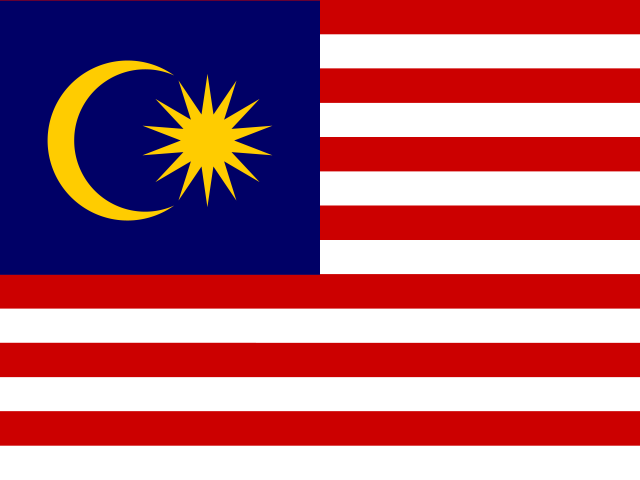
Overview
Malaysia is a federal constitutional monarchy in Southeast Asia made up of 13 states and three federal territories. The South China Sea splits it into two parts: Peninsular Malaysia, on the Southeast Asian mainland, and East Malaysia, on the island of Borneo.
Peninsular Malaysia shares a land border with Thailand, while its sea boundaries are with Singapore, Vietnam and Indonesia. East Malaysia, for its part, touches Brunei and Indonesia by land, and it meets the Philippines and Vietnam across the sea. Malaysia is the only country that holds territory on both the Asian mainland and the Malay Archipelago.
Kuala Lumpur is the national capital, the largest city and the seat of the federal legislature. Putrajaya is the federal administrative capital and hosts the executive and judicial branches. The population is over 34 million.
The country is multiethnic and multicultural, and this shapes its politics. About half the population is ethnically Malay, with Chinese, Indian and indigenous minorities. The Bumiputra policy gives the Malay majority and indigenous groups a constitutionally backed privileged position through affirmative action. The official language is Malaysian Malay, English is an active second language, and Islam is the official religion with freedom of religion for non-Muslims.
The economy was once dependent on agriculture and primary commodities and is now driven by services and manufacturing. Malaysia is a founding member of ASEAN, the OIC and the East Asia Summit, and also belongs to the Non-Aligned Movement, the Commonwealth and APEC. It is one of 17 megadiverse countries.
History
Modern humans have lived in the area for around 40,000 years, and the first inhabitants of the Malay Peninsula are thought to have been Negritos. Parts of present-day Malaysia took part in the Maritime Jade Road trade network between about 2000 BC and 1000 AD. Traders and settlers from India and China arrived from about the first century AD and founded trading ports and coastal towns in the second and third centuries. Hinduism and Buddhism spread, and Sanskrit inscriptions appear from the fourth or fifth century.
The Kingdom of Langkasuka arose around the second century in the north of the peninsula and lasted until about the 15th century. From the 7th to the 13th century much of the south belonged to the maritime Srivijayan empire. In the 13th and 14th centuries the Majapahit empire took control of most of the peninsula and archipelago. In the early 15th century Parameswara, a fugitive king from Singapura with ties to the Srivijayan court, founded the Malacca Sultanate. He converted to Islam, and the religion spread more widely. Malacca became a major trading hub.
Portugal conquered Malacca in 1511 and the Dutch took it in 1641. The British arrived in 1786, when the Sultan of Kedah leased Penang to the East India Company. Britain acquired Singapore in 1819 and took Malacca in 1824 under the Anglo-Dutch Treaty. By 1826 it directly ruled Penang, Malacca, Singapore and Labuan as the Straits Settlements crown colony. Pahang, Selangor, Perak and Negeri Sembilan became the Federated Malay States, with British residents advising the rulers. The other five peninsular states, the Unfederated Malay States, accepted British advisers around 1900. Britain encouraged Chinese and Indian labour migration.
The Klang War (1867–1874) began as a dispute between Raja Abdullah and Raja Mahadi over the Klang chieftaincy and drew in rival Chinese secret societies, the Ghee Hin and the Hai San. The Larut Wars (1861–1874) in Perak disrupted tin-producing areas in a similar way. The disorder and appeals from Malay chiefs led to the Pangkor Treaty of 1874, which set up the British residential system in the Malay states.
In Borneo, the area now called Sabah came under British control as North Borneo through transfers of rights by the Sultans of Brunei and Sulu in 1877–1878. Sarawak was ceded by the Sultan of Brunei to James Brooke in 1842. His successors ruled as the White Rajahs until it became a crown colony in 1946.
Japan occupied Malaya, North Borneo, Sarawak and Singapore for over three years in the Second World War, which heightened ethnic tensions and fed nationalism. After the war Britain created the Malayan Union in 1946, but Malays opposed it because it weakened their rulers and gave citizenship to ethnic Chinese. It was replaced on 1 February 1948 by the Federation of Malaya, which restored the rulers' autonomy under British protection.
From 1948 to 1960 the Malayan Emergency pitted Commonwealth forces against mostly ethnic Chinese guerrillas led by the Malayan Communist Party. Malaya became independent on 31 August 1957. A plan to merge it with North Borneo (Sabah), Sarawak and Singapore was delayed from 31 August to 16 September 1963 so the United Nations could assess opinion in Sabah and Sarawak. Malaysia was formed on 16 September 1963.
The new federation faced confrontation with Indonesia, communist insurgencies including the Sarawak Communist Insurgency, cross-border raids into Sabah, and racial strife. Singapore left the federation in August 1965. The 13 May 1969 race riots led Prime Minister Abdul Razak to launch the New Economic Policy to raise the bumiputera share of the economy.
Under Prime Minister Mahathir Mohamad, rapid growth and urbanisation began in the 1980s, and the economy moved from agriculture toward manufacturing and industry. Mega-projects included the Petronas Towers, the North–South Expressway, the Multimedia Super Corridor and the new administrative capital Putrajaya. The Asian financial crisis hit in the late 1990s but the country recovered.
The 1MDB scandal, which implicated Prime Minister Najib Razak from 2015, contributed to the first change of ruling party since independence at the 2018 election. A political crisis in 2020–2022 coincided with the COVID-19 pandemic. The November 2022 election produced the first hung parliament in the country's history, and Anwar Ibrahim was sworn in as the 10th Prime Minister on 24 November 2022, leading a grand coalition.
Climate
The climate is equatorial: hot and humid all year, with average annual rainfall of about 250 cm. Two monsoons shape the seasons: the southwest monsoon (April to October) and the northeast monsoon (October to February). The surrounding seas moderate temperatures. The peninsula is more affected by winds from the mainland, while the east has a more maritime climate. Local climates fall into highland, lowland and coastal types.
Kuala Lumpur has a tropical rainforest climate, with highs around 32–33°C, warm nights, high humidity and heavy rain in all months, with afternoon thunderstorms common (approx.). Penang (George Town) and Johor Bahru are similarly hot and humid, with Penang somewhat drier in the early months of the year (approx.). Kuching in Sarawak and Kota Kinabalu in Sabah are also hot and very wet, with the heaviest rain generally from the northeast monsoon period (approx.). The highlands, such as Cameron Highlands and Genting Highlands, are notably cooler (approx.).
Climate change is expected to bring sea level rise and heavier rainfall, which raises flood risks, along with droughts. East Malaysian floods have been worsened by tree loss.
Geography: the country covers about 330,803 km². Peninsular Malaysia holds about 40% of the land, runs about 740 km north to south, and is split between east and west coasts by the Titiwangsa Mountains (highest point Mount Korbu, 2,183 m). Harbours are only on the western coast. East Malaysia has a mountainous interior and Mount Kinabalu (4,095 m), the highest peak in the country. Sarawak has the Mulu Caves and the Rajang, the longest river in Malaysia. The Strait of Malacca, between Sumatra and the peninsula, carries about 40% of world trade, and Tanjung Piai in Johor is the southernmost point of mainland Asia.
Biodiversity: Malaysia is megadiverse and is estimated to hold about 20% of the world's animal species. It has about 210 mammal species, more than 620 bird species in the peninsula alone, about 250 reptile species and about 14,500 flowering plant species. Waters around Sipadan are among the most biodiverse marine areas. About two-thirds of the country was forested as of 2007, but logging and palm oil cultivation have caused heavy loss, with over 80% of Sarawak's rainforest logged. There are 28 national parks, and four UNESCO World Heritage Sites include Kinabalu and Gunung Mulu.
Government and politics
Malaysia operates as a constitutional monarchy with a federal structure and an elected sovereign, and it is Southeast Asia's sole federation; its governing arrangements follow the Westminster parliamentary model closely. The King, known as the Yang di-Pertuan Agong, serves as head of state. He is chosen for a five-year term by the nine hereditary rulers of the Malay states from among their own number, following an informal rotation. Ibrahim Iskandar of Johor has occupied the position since 31 January 2024, and the office is mainly ceremonial.
The federal parliament has two houses: the 222-member Dewan Rakyat, elected from single-member constituencies by first-past-the-post for up to five years, and the 70-member Dewan Negara. Of the senators, 26 are chosen by the 13 state assemblies and 44 are appointed by the King on the Prime Minister's advice, all for three-year terms. The voting age was lowered from 21 to 18 by a bill passed in July 2019, and voting is not compulsory.
Executive power rests with the Cabinet led by the Prime Minister, who must command a majority in the Dewan Rakyat. After the 2022 hung parliament, Anwar Ibrahim of Pakatan Harapan leads a unity government with Barisan Nasional, Gabungan Parti Sarawak, Gabungan Rakyat Sabah and others. Perikatan Nasional is the opposition. A general election is due by the constitutional limit; the next result is not covered here.
Malaysia's legal system rests on common law. At the top sits the Federal Court, below which are the Court of Appeal and a pair of high courts, with one serving Peninsular Malaysia and the other serving East Malaysia. Cases involving royalty are heard by a special court. Questions have been raised about the independence of the judiciary, and critics say the way judges are appointed lacks transparency. Syariah courts apply Islamic law to Muslims in family matters and a limited range of religious criminal offences, while civil courts do not hear matters concerning Islamic practice.
Division of power: there are three tiers: federal, state and local. Powers are divided between the federal and state governments, and the federal government directly administers the three federal territories (Kuala Lumpur, Putrajaya and Labuan). Each state has its own written constitution, a unicameral Legislative Assembly and a Chief Minister from the majority party. In states with a hereditary ruler, the Chief Minister is normally a Malay. Land matters, including district boundaries and land taxation, belong to the states, and criminal law is a federal responsibility. In practice, federal law and ministries (notably health, defence and foreign affairs, approx.) dominate national policy. Education, taxation of major revenue and health are mainly national-level (approx.), while states control land, natural resources and local government.
Local government: as of 2024 there are 19 cities, 40 municipalities, 91 district councils and four statutory agencies. The constitution gives them to the states, but the federal Ministry of Housing and Local Government oversees local policy in practice. Mayors and councillors are appointed by state governments, or by the federal government in the federal territories.
Special arrangements: the 13 states follow historical Malay kingdoms; nine have royal families, and the King appoints governors for the other four for four-year terms. Sabah and Sarawak have considerably more autonomy, including separate immigration controls and distinct residency status. Occasional secession talk by leaders in several states has not led to serious independence movements.
Politics and rights: race is a major political factor, and the New Economic Policy and its successors give bumiputera preferences in employment, education, business and housing, which has fuelled interethnic resentment. There is ongoing debate over Islamism versus secularism. Malaysia has been classified as a 'flawed democracy', and Freedom House rated it 'partly free' in 2018. The 1MDB scandal led to a US Justice Department suit alleging at least $3.5 billion was stolen. Homosexuality is illegal. The mandatory death penalty was abolished in July 2023, and natural life imprisonment was replaced by 30–40 year terms.
Foreign policy is officially neutral and peaceful, and the country is active in ASEAN, the OIC, the UN, APEC, the D-8 and the Commonwealth. Malaysia claims parts of the South China Sea, which China claims largely, and has become more vocal over Chinese incursions. The Philippines has a dormant claim to eastern Sabah. The armed forces have army, navy and air force branches and no conscription, with defence spending of about 1.5% of GDP. Malaysia belongs to the Five Power Defence Arrangements with Singapore, Australia, New Zealand and the UK.
Economy
Malaysia is a relatively open, state-oriented, newly industrialised market economy. It is the 34th-largest by nominal GDP and 28th-largest by PPP, according to the source. In 2017, services produced 53.6% of GDP, industry 37.6% and agriculture about 8.8%. Unemployment was 3.4% in 2024 and the labour force is about 15 million.
Trade and manufacturing are the key sectors, helped by the Strait of Malacca shipping route. Malaysia is the 23rd-largest exporter and 25th-largest importer. It exports petroleum and agricultural and natural resources and is a member of OPEC+. It was once the top producer of tin, rubber and palm oil and remains one of the largest palm oil producers. Its automotive industry is the 22nd-largest in the world by output. In 2020, high-tech exports were worth $92.1 billion, the second-highest in ASEAN.
Tourism is the third-largest contributor to GDP, about 15.9% in 2019, when there were over 26.1 million visits and receipts of $19.8 billion. The country is a centre of Islamic banking, and knowledge-based services are growing. It ranked 34th in the Global Innovation Index 2025.
Inequality persists between ethnic groups: the Chinese make up about a quarter of the population but hold about 70% of market capitalisation.
Infrastructure: railways run for about 2,783 km and roads about 238,823 km. The main airport is Kuala Lumpur International Airport (KLIA) in Sepang, and Port Klang is the main port. Malaysia Airlines is the flag carrier. Telecoms are strong in cities but weaker in rural areas, with more than 30 million cellular subscribers. Fresh water reaches over 95% of the population. Tenaga Nasional dominates electricity in the peninsula, with Sarawak Energy and Sabah Electricity serving the east. Energy production relies on oil and natural gas.
Demographics and urbanization
The population was 32,447,385 at the 2020 census and is now over 34 million. Density is about 96 people per km². About 70.3% are aged 15–64, 21.5% are 0–14 and 8.1% are 65 or older. Roughly 90.1% are citizens, and about 80% of people live in Peninsular Malaysia.
Urbanization is about 75.1%. Large urban areas include Kuala Lumpur and the wider Klang Valley (roughly 8 million, approx.), Johor Bahru (roughly 1.5–2 million, approx.), George Town in Penang (roughly 1.7 million, approx.), Ipoh (roughly 0.8 million, approx.), Kuching (roughly 0.7 million, approx.) and Kota Kinabalu (roughly 0.5 million, approx.).
Among citizens, 70.6% are bumiputera, including Malays and the indigenous groups of Sabah and Sarawak (Iban, Bidayuh, Orang Ulu, Kadazan-Dusun, Melanau, Bajau). Malaysian Chinese are 22.1% and Malaysian Indians (mostly Tamil) 6.5%. There are an estimated 3 million migrant workers, about 10% of the population, and about 171,500 refugees and asylum seekers, mostly from Myanmar. Dual citizenship is not permitted.
Religion (2020 census): Islam 63.5%, Buddhism 18.7%, Christianity 9.1%, Hinduism 6.1%, Chinese traditional religions 1.3%. Sarawak, Penang and Kuala Lumpur have non-Muslim majorities.
Languages: Malaysian Malay is the official language, with English as an active second language and an official state language in Sarawak. Chinese varieties (Mandarin, Cantonese, Hokkien) and Tamil are widely spoken, and there are 137 living languages.
Health and education: healthcare combines subsidised public provision with a private sector. Life expectancy was 76 in 2020 and fertility was 2.0. Education has six years of compulsory primary schooling, with national schools in Malay and vernacular schools in Chinese or Tamil, followed by five years of secondary school.
Capital city
Kuala Lumpur is the national capital and the largest city, and sits in the Klang Valley on the west side of Peninsular Malaysia. It is a federal territory with a city population of around 2 million and a wider metro area of roughly 8 million (approx.). It hosts the national legislature.
Putrajaya, a planned city built from the 1990s as part of Mahathir-era mega-projects, is the federal administrative capital. It holds the executive and judicial branches and is also a federal territory, with a population of under 150,000 (approx.). Kuala Lumpur and Putrajaya thus split the capital functions.
Kuala Lumpur has a hot, humid equatorial climate with heavy rain year-round and highs of about 32–33°C (approx.). It is also the main economic, financial, commercial and cultural centre, with the Petronas Towers as its landmark, and it is the country's main business city. KLIA is in nearby Sepang and Port Klang is the main port on the Klang Valley coast.
Kuala Lumpur is religiously mixed, and its non-Muslim population forms a majority, according to the source. It is a major hub for expats, with international schools, hospitals and a large Chinese, Malay and Indian population (approx.).
About this summary
Approx. general-knowledge facts: city and metro populations, city climates, capital-city details, and recent political and economic context.