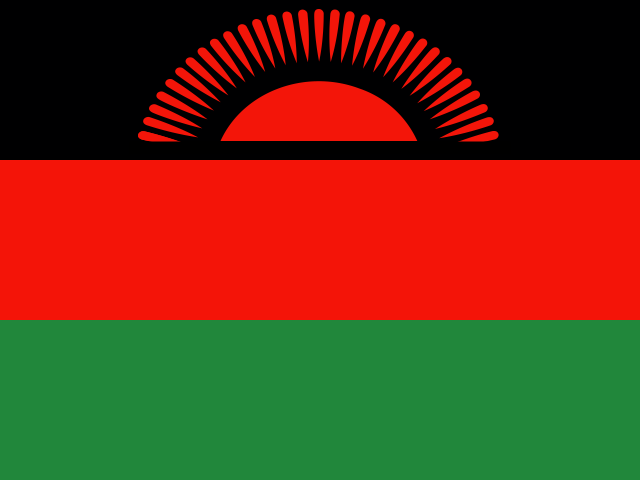
Overview
Malawi, officially the Republic of Malawi, is a landlocked country in Southeast Africa. Zambia lies on its western side, Tanzania across the north and northeast, and Mozambique wraps around the east, south and southwest. The country covers about 118,484 km2 and had roughly 22.2 million people in mid-2025. Lilongwe is the capital and, per the source, also the largest city.
Malawi became independent from Britain in 1964 and was a one-party state under Hastings Banda for almost three decades. A multi-party system was introduced in 1993 and power has since changed hands peacefully. It is a democratic, multi-party republic with an elected president, and belongs to the UN, the Commonwealth, the Southern African Development Community, COMESA and the African Union.
It is one of the world's least developed countries. The economy depends heavily on agriculture, most people live in rural areas and the population is growing quickly. Life expectancy is low, infant mortality is high and HIV/AIDS is widespread. The population is mostly Christian, mainly Protestant, and includes native African peoples as well as Asian and European minorities.
Notable features include Lake Malawi, which forms much of the eastern boundary, and two UNESCO World Heritage sites: Lake Malawi National Park (listed 1984) and the Chongoni Rock Art Area (listed 2006).
History
Before Bantu-speaking peoples arrived from the north around the 10th century CE, the area had a small population of hunter-gatherers, remembered in oral tradition as the Akafula, BaTwa, Akaombe or Mwandionerakuti. Farming Bantu groups gradually absorbed or displaced them. Some groups moved on southward, while others settled and formed ethnic groups based on shared ancestry. By the 16th century several kingdoms existed, including the Maravi Empire, which stretched from north of present Nkhotakota to the Zambezi River, and the Nkhamanga kingdom.
David Livingstone reached Lake Malawi (then Lake Nyasa) in 1859 and singled out the Shire Highlands as suitable for European settlement. Anglican and Presbyterian missions followed in the 1860s and 1870s. The African Lakes Company was founded in 1878 for trade and transport, a mission and trading settlement was set up at Blantyre in 1876, and a British consul was based there from 1883. Portugal also had ambitions in the region, and its claim to a belt between Angola and Mozambique (the 1885 Pink Map) was countered by the British Ultimatum of 1890. In 1891 Britain created the British Central African Protectorate, renamed Nyasaland in 1907.
Hastings Banda's Malawi Congress Party (MCP) won a majority in the 1961 Legislative Council elections and Banda became Prime Minister in 1963. The federation Nyasaland had belonged to was dissolved in 1963. On 6 July 1964 Nyasaland became independent as Malawi, a date now marked as Independence Day. A republic was proclaimed in 1966 with Banda as first president, and the MCP became the only legal party. In 1971 he was declared president for life. His rigidly totalitarian rule lasted almost 30 years; the country saw no armed conflict, but opposition groups such as Orton Chirwa's Malawi Freedom Movement and the Socialist League of Malawi operated in exile.
Under pressure for reform, Banda agreed to a 1993 referendum in which voters chose a multi-party system. A presidential council was formed, the life presidency abolished and a new constitution adopted (in force 18 May 1995). Bakili Muluzi, a former MCP secretary general and minister, defeated Banda in the first multi-party elections in 1994 and was re-elected in 1999. Bingu wa Mutharika won in 2004 and was re-elected in 2009 despite fraud allegations from the opposition and observers.
Mutharika was seen by some as increasingly autocratic. In July 2011 protests over living costs, foreign policy, poor governance and foreign-exchange shortages left 18 dead and at least 44 with gunshot wounds. He died of a heart attack in April 2012; his death was concealed for about 48 hours, including a flight with the body to South Africa, before Vice-President Joyce Banda (no relation to Hastings Banda) took over.
Joyce Banda placed third in 2014 and was succeeded by Peter Mutharika, Bingu's brother. He was narrowly re-elected in 2019, but in February 2020 the Constitutional Court annulled the result because of irregularities and fraud, and the Supreme Court upheld this in May 2020. It was the first time an election in Malawi was successfully challenged in court. In the rerun held in 2020, opposition leader Lazarus Chakwera won. Peter Mutharika returned to power in the 2025 general election.
Climate
Altitude moderates what would otherwise be an equatorial climate. The low-lying south is hot, while the northern highlands are temperate. From November to April it is warm with rains and thunderstorms, peaking in severity around late March. Rainfall drops sharply after March, and from May to September wet mists drift from the highlands onto the plateaus with almost no rain.
Terrain: the Great Rift Valley runs north to south, with Lake Malawi (about 587 km long and 84 km wide) on its eastern side. Plateaus around the rift generally sit at roughly 900 to 1,200 m, rising to about 2,400 m in the north. The Shire Highlands south of the lake lie at about 900 m, with Zomba (about 2,100 m) and Mulanje (about 3,000 m) rising above them.
Major cities (approx.): Lilongwe, the capital, sits on a central plateau at roughly 1,000 m and has a mild subtropical highland climate, with a warm wet season and a cool dry season, where nights can be chilly in June and July. Blantyre, the commercial centre in the Shire Highlands at about 1,000 m, has a similar but slightly warmer pattern. Mzuzu in the northern highlands is cooler and wetter. Zomba is cool and green on its plateau, while lakeshore and Shire valley areas such as Salima and Nsanje are hot and humid.
Floods struck the south in January 2015, affecting over a million people, displacing about 336,000, killing over 100 and washing away roughly 64,000 hectares of cropland. A drought followed in 2016, and an armyworm outbreak in early 2017 hit maize fields.
Wildlife and ecology: the country is home to elephants, hippos, antelopes, buffaloes, big cats, rhinos and numerous birds. Lake Malawi, for its part, is said to hold among the most diverse communities of lake fish anywhere on Earth. Seven terrestrial ecoregions are found here, chiefly miombo woodlands and mosaics of montane forest and grassland. Protected land includes five national parks, four wildlife and game reserves, and two further protected areas.
Government and politics
Malawi is a unitary presidential republic. Peter Mutharika has been president since 2025. The current constitution took effect on 18 May 1995, and power is split among executive, legislative and judicial branches. The president is both head of state and government and is elected with a vice president every five years. A second vice president may be appointed from a different party. The president names the Cabinet, whose members may come from inside or outside the legislature.
The legislature is a unicameral National Assembly of 193 members elected every five years. The constitution also provides for an 80-seat Senate (traditional leaders, districts and special interest groups), but none exists in practice. The Democratic Progressive Party (DPP), led by Mutharika, has been the governing party since 2025, and the Malawi Congress Party (MCP) is the main opposition. Voting is universal from age 18. The 2021/22 central government budget was about US$2.4 billion, down from US$2.8 billion the year before.
The judiciary follows the English model: a Supreme Court of Appeal, a High Court with general, constitutional and commercial divisions, an Industrial Relations Court, and Magistrates Courts in five grades, including Child Justice Courts. Conventional and traditional courts have been combined in various ways since 1964, with mixed success and some corruption.
Sub-national structure: the country has three regions (Northern, Central, Southern), split into 28 districts and then about 250 traditional authorities and 110 administrative wards. Local government is run by regional administrators and district commissioners appointed by the central government, so regions have little independent power over tax, health, law or education; these remain mainly national functions. Local elections were held in November 2000 (the UDF won about 70% of seats), but those due in May 2005 were cancelled. There are no federal-style special jurisdictions.
Rankings and rights: the 2024 V-Dem indices rank Malawi 74th among electoral democracies worldwide and 11th in Africa, and the 2024 Global Peace Index places it 79th of 163. In 2012 the Ibrahim Index placed it 7th in sub-Saharan Africa, strongest on safety and rule of law and weakest on sustainable economic opportunity. As of 2017, observers noted excessive force by security forces, harsh prisons, limits on speech and press, lengthy pretrial detention and corruption despite the Anti-Corruption Bureau. The legal marriage age was raised from 15 to 18 in 2015. Same-sex acts were criminalised; a couple convicted in 2010 were pardoned, and a moratorium on enforcement was imposed in 2015. The first pride parade took place in Lilongwe in June 2021.
Foreign relations: Malawi has kept generally pro-Western ties, notably with the United States, which hosts Peace Corps and other agencies there. It kept close links with apartheid South Africa, then normalised ties with all African states after 1994. Relations with Mozambique were strained in 2010 over Zambezi River use and an electrical grid. Ties with China began in 2007 and investment has grown. In 2011 the UK suspended budget aid after a dispute over a leaked ambassador's assessment, and the US froze a US$350 million grant. Malawi has hosted refugees since 1985 and receives aid from the US, Canada, Germany, the World Bank, IMF, EU and African Development Bank.
Economy
Malawi is among the world's least developed countries, with about 85% of people in rural areas. Agriculture supplies more than a third of GDP by some estimates and around 90% of export revenue. As of 2017, GDP (PPP) was about US$22.4 billion, per capita GDP about US$1,200 and inflation about 12.2%. Sector shares of GDP in the source are roughly 35% agriculture, 19% industry and 46% services (a 2013 figure puts agriculture at 27%).
Poverty has fallen: the share below the poverty line dropped from 54% in 1990 to 40% in 2006, and ultra-poor from 24% to 15% by 2007. Challenges include building a market economy, environmental protection, HIV/AIDS, education and reducing reliance on donors. The IMF halted aid in December 2000 over corruption, causing an almost 80% fall in the development budget, but aid exceeded US$575 million in 2005. Investment fell 23% in 2009 amid a foreign-exchange shortage, and barriers include costly and weak power, water and telecoms.
Agriculture: over 80% of people practise subsistence farming. Main products are tobacco, sugarcane, cotton, tea, maize, potatoes, sorghum, cattle and goats. Malawi spends a large share of GDP on agriculture. A fertiliser subsidy (FISP) began in 2006 and was replaced in 2020 by the Affordable Inputs Program, which covers maize seed and fertiliser plus sorghum and rice seed. Main industries are tobacco, tea and sugar processing, sawmilling, cement and consumer goods; uranium mining is minor. Ethanol is blended at 10% into petrol, and all petroleum is imported.
Trade: exports were about US$945 million in 2009 and imports about US$1.6 billion. Tea, tobacco, sugar and coffee make up over 90% of export revenue, and tobacco alone rose from 53% to 70% of export revenue in 2007-2008. Authorities are encouraging a shift to crops like paprika because of falling prices and health pressure on burley tobacco. Other exports are cotton, peanuts, wood products and apparel. Buyers include South Africa, Germany, Egypt, Zimbabwe, the US, Russia and the Netherlands. Imports (food, fuel, consumer goods, transport equipment) come mainly from South Africa, India, Zambia, Tanzania, the US and China. Cannabis (Malawi Gold) is grown illicitly.
Infrastructure: as of 2012 there were 31 airports, seven with paved runways and two international. There are about 797 km of narrow-gauge railway and roads of about 24,900 km (about 7,000 km paved as of 2003), plus 700 km of waterways on Lake Malawi and the Shire River. In 2022 there were about 10.2 million mobile connections and 4.0 million internet users. There is one state radio broadcaster and about a dozen private stations.
Science and policy: R&D spending was 1.06% of GDP in 2010, high for Africa, and Malawi was ranked 125th in the 2025 Global Innovation Index. In 2012 foreign investment flowed mostly to infrastructure (62%) and energy (33%). The government offers tax incentives and adopted a National Export Strategy in 2013 targeting oilseeds, sugar cane products and manufacturing. Women hold over 20% of parliamentary seats.
Demographics and urbanization
Population was about 22.2 million in mid-2025, up from about 16 million in 2010, with growth of about 3.3% a year (2021 estimate). Projections in the source suggest over 47 million by 2050. Around 85% of people live in rural areas (so roughly 15% urban, approx.), mostly as subsistence farmers, with the densest settlement in the south and around the lake.
Largest cities (approx.): Lilongwe about 1.2 million; Blantyre about 0.9 million; Mzuzu about 0.2 million; Zomba about 0.1 million. Blantyre had over 500,000 in 2006 per the source.
Ethnic groups include Chewa, Tumbuka, Yao, Lomwe, Sena, Tonga, Ngoni and Ngonde, plus small Chinese, Asian and European communities. English is the official language. Chichewa (42.5%), Chitumbuka (31.2%) and Chiyao (13.7%) are major regional languages; others include Lomwe, Kokola, Lambya, Ndali, Nyakyusa-Ngonde, Sena and Tonga. Public primary schools teach in Chichewa.
Religion: about 87% Christian and 11.6% Muslim. Roman Catholics are about 19% and the Church of Central Africa Presbyterian 18%. Other Protestant groups, Jehovah's Witnesses, Latter-day Saints, Rastafari, Hindus and Baháʼís also exist, and about 4% report no religion.
Health: public health care is free, with private and NGO services for fees. Life expectancy at birth is about 50 years in the source (68 for women in 2024 per another section; figures conflict, so treat as approx.). Infant mortality is high. About 1.0 million people lived with HIV in 2022, with about 11,900 deaths and 440,000 orphaned children. Malaria, typhoid, hepatitis A and schistosomiasis are risks. The 2024 Global Hunger Index score is 21.9 (serious), ranking 93rd of 127.
Education: free primary education began in 1994 and became compulsory in 2012. Primary enrolment rose from 58% (1992) to 75% (2007), and youth literacy from 68% (2000) to 75% (2015). Secondary attendance is about 25% and not free. Structure is eight years primary, four secondary and four university. Public universities include Mzuzu University, Lilongwe University of Agriculture and Natural Resources, University of Malawi, and Malawi University of Science and Technology; private ones include Livingstonia, Malawi Lakeview and Catholic University.
Capital city
Lilongwe is the capital, located in the central region on a plateau at roughly 1,000 m. Its population is approx. 1.2 million, and the source calls it the largest city.
Climate (approx.): mild subtropical highland, with a wet season from November to April, a cool dry season from May to August and heat building in October. Daytime highs are mostly in the mid-20s °C, with cool nights in midwinter.
Role: it is the seat of government, with the presidency, National Assembly and ministries, and a growing commercial and administrative centre. It also hosts the Kamuzu Central Hospital and the Lilongwe University of Agriculture and Natural Resources, and held Malawi's first pride parade in 2021.
Blantyre, in the south, is the country's commercial centre and was the earlier colonial-era hub. So the political capital (Lilongwe) and the main commercial city (Blantyre) differ in practice, though Lilongwe is larger by most current estimates. Expats mostly live in Lilongwe (diplomatic and NGO community) or Blantyre (business).
About this summary
Approximate general-knowledge facts: city populations and climates, capital-city details, and some recent economic and political context. Figures marked approx. or with a year.