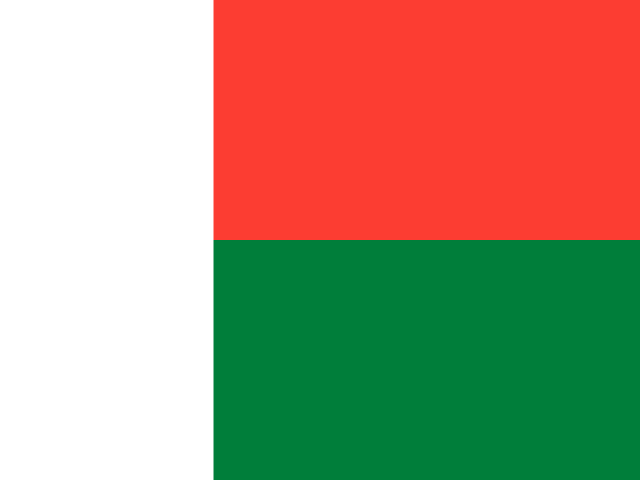
Overview
Madagascar is an Indian Ocean island nation off the southeastern coast of Africa. The main island is the fourth-largest island in the world, and the state ranks as the second-largest island country and the 46th-largest country by area. Antananarivo serves as both capital and largest city.
The island separated from Africa roughly 180 million years ago in the Early Jurassic, and from the Indian subcontinent about 90 million years ago. This long isolation let plants and animals evolve on their own. Over 90% of wildlife is endemic, and the country is counted among 17 megadiverse nations and as a biodiversity hotspot.
Austronesian seafarers, probably from present-day Indonesia, first settled the island around the mid-first millennium CE or earlier. Bantu-speaking groups from East Africa followed around the ninth century, and further groups arrived later. There are 18 or more recognized ethnic groups; the Merina of the central highlands are the most numerous.
The island was politically fragmented until the late 18th century. In the 19th century most of it was unified as the Kingdom of Madagascar under Merina rulers. France annexed it in 1897 and the country became independent in 1960. It has passed through four republics and has been a constitutional democracy since 1992. After a crisis and coup in 2009, constitutional governance was restored in January 2014. In 2025, mass protests led to a military takeover, and Michael Randrianirina was installed as president of a military junta.
Madagascar belongs to the UN, the African Union, the Southern African Development Community and the Francophonie. Malagasy and French are the official languages. Christianity is the main religion, with a notable minority following traditional beliefs.
The UN classes Madagascar as a least-developed country. Its development strategy leans on ecotourism and agriculture, plus investment in education, health and private business. Growth since the early 2000s has been accompanied by wider income gaps, and in 2021 about 68.4% of people were multidimensionally poor.
History
Archaeologists have traditionally thought the first settlers came in several waves by outrigger canoe from southern Borneo, perhaps between 350 BCE and 550 CE, although some researchers doubt dates before about 250 CE. Either way, Madagascar was among the last large landmasses settled by people, before Iceland and New Zealand. Bantu groups from East Africa joined around the ninth century, and Arab and Somali traders arrived in the Middle Ages.
Between 1500 and 1800 the population shifted from mobile and unsettled to largely organized in states. Northern trading ports such as Mahilaka, then Vohemar and Mazalagem Nova, flourished. Portuguese navigators reached the island around 1500 and sacked the port of Sada in 1506. The slave trade grew, with captives exchanged for firearms. Centralized kingdoms such as the Sakalava and Merina built the first standing armies by the 16th century.
The Merina king Andrianampoinimerina reunited Imerina, ruled from the Rova of Antananarivo, and expanded over neighbouring principalities, using control of slave supply from the highlands to dominate eastern coast trade. His son Radama I (reigned 1810–28) extended Merina power across most of the island, creating the Kingdom of Madagascar. Antananarivo had been founded as capital of Imerina around 1610 or 1625 by King Andrianjaka.
France began the First Franco-Hova War in 1883 by bombing Majunga. A vague 1885 treaty was read by Madagascar as confirming sovereignty and by France as a protectorate. Britain accepted a French protectorate in 1890, but Madagascar's government did not. French forces bombarded and occupied Toamasina and Majunga in 1894–95, then marched on Antananarivo, losing many men to disease. They shelled the royal palace in September 1895 and Queen Ranavalona III surrendered.
The Menalamba rebellion broke out in December 1895 and ran until the end of 1897. France annexed the island in 1896 and declared it a colony in 1897, ending the Merina monarchy and exiling the royal family to Réunion and Algeria. Repression of resistance, including the Ambiky massacre of 1897 and campaigns against Menabe, Antandroy and Mahafaly peoples through 1902–04, killed tens of thousands of Malagasy.
Colonial rule brought export plantations, large mining and forestry concessions, forced labour and taxes that pushed peasants into wage work. Slavery was abolished in 1896, freeing about 500,000 people, though many stayed as servants or sharecroppers and discrimination against slave descendants persists in places. Schooling became compulsory from ages 6 to 13, centred on French and practical skills. Labour-tax obligations were used to build railways and roads linking coastal cities to Antananarivo.
Independence movements included the Menalamba, Vy Vato Sakelika and the MDRM. Major demonstrations took place in Antananarivo in 1927, and anti-colonial activity grew in the 1930s before organizations were dissolved in 1939 under the Vichy-aligned administration. The 1947 Malagasy Uprising was met with violent repression, and the MDRM was blamed for it. Malagasy troops fought for France in World War I. A Nazi-era Madagascar Plan floated the island as a deportation site for Europe's Jews, and in World War II the Battle of Madagascar pitted Vichy French forces against an Allied expeditionary force.
The 1956 Loi Cadre reforms led to a peaceful path to independence. The Malagasy Republic was proclaimed on 14 October 1958 as an autonomous state in the French Community, a constitution followed in 1959, and full independence came on 26 June 1960.
The First Republic (1960–72) under Philibert Tsiranana kept close ties with France, with French staff and curricula widespread. Resentment of this arrangement sparked farmer and student protests that toppled him in 1972. General Gabriel Ramanantsoa led an interim government until 1975, and his successor, Colonel Richard Ratsimandrava, was assassinated six days into office. Didier Ratsiraka led the socialist Second Republic, which introduced mandatory national service (1976–91). Since 1992 the country has been a constitutional democracy, with later turbulence including the 2001 election standoff, the 2009 coup and the 2025 events.
Climate
Southeastern trade winds and northwestern monsoons produce a hot rainy season from November to April, often with destructive cyclones, and a cooler dry season from May to October. Clouds from the Indian Ocean drop most of their rain on the east coast, supporting rainforest. The Central Highlands are drier and cooler, the west is drier still, and the southwest and southern interior are semi-arid.
Antananarivo, in the highlands at roughly 1,200 m (approx.), has a mild subtropical highland climate with warm, wet summers and cool, dry winters with chilly nights. Toamasina on the east coast is hot, humid and very rainy all year and highly exposed to cyclones. Mahajanga on the northwest coast is hot with a pronounced dry season. Antsirabe, in the highlands south of the capital, is cooler than most towns (approx.).
Cyclones cause deaths and economic damage. Cyclone Gafilo in March 2004 was the strongest recorded to hit the country, killing 363, leaving 214,260 homeless and causing over US$250 million in damage. In February 2022 Cyclone Batsirai killed 121 people, weeks after Cyclone Ana killed 55 and displaced 130,000. A 2022 analysis estimated adaptation to climate change would cost about 15% of GDP.
Geography shapes local conditions. A steep escarpment with tropical lowland forest runs along the east coast, a central plateau sits at 750–1,500 m, and the west slopes toward the Mozambique Channel and mangroves. The west and south lie in the rain shadow, with dry deciduous forest, spiny forest and desert shrubland. The highest point is Maromokotro at 2,876 m.
Biodiversity is exceptional: roughly 90% of species are endemic, including over 80% of 14,883 plant species, around 170 palm species, six of nine baobab species and two-thirds of the world's chameleons. There were 103 recognized lemur species and subspecies as of 2012, almost all threatened. More than 90% of the original forest has been lost since humans arrived, driven largely by tavy slash-and-burn farming.
Government and politics
Madagascar is a semi-presidential multi-party republic under its constitution, with an elected president as head of state who picks a prime minister. The constitution sets independent executive, legislative and judicial branches and limits presidents to three terms. The National Assembly has 151 directly elected members, and the Senate has 18 members (12 chosen by local officials, 6 appointed by the president), all serving five-year terms. In practice the legislature is described as having little power. This constitutional framework should be read alongside the 2025 coup, after which a military junta led by Michael Randrianirina holds the presidency.
At the sub-national level there are 23 regions, each run by a governor and regional council and divided into communes. Power is highly centralized: the national government dominates tax, health, education and law, and the source gives little detail on regional powers. Police and gendarmerie are administered locally, but in 2009 fewer than a third of communes had access to them. No special autonomous jurisdictions are described in the source.
The judiciary follows the French civil-law model, with a constitutional court, high court of justice, supreme court, appeals courts, criminal tribunals and first-instance tribunals. Courts struggle to process cases quickly, leading to long pretrial detention in overcrowded prisons.
Political history has featured protests, disputed elections, an impeachment, two coups before 2025 and an assassination. The eight-month standoff after the 2001 election cost millions in lost tourism and trade, and the 2009 protests led by Andry Rajoelina left over 170 dead. Tension between highland Merina and coastal peoples, rooted in 19th-century Merina rule, has occasionally flared into violence. The African Union suspended Madagascar in 2009 after the unconstitutional transfer of power.
Human rights are protected by the constitution, but denial of assembly permits has been used to hinder demonstrations, arbitrary arrests and police and military corruption persist, and critics allege media censorship. The anti-corruption bureau BIANCO, created in 2004, reduced low-level corruption in Antananarivo but has not prosecuted high-level officials. The army has largely stayed neutral in crises, a tradition broken in 2009. Eleven countries have embassies in Madagascar. The country is a member of the International Criminal Court.
Economy
GDP was estimated at US$9.98 billion in 2015, with GDP per capita around $412 that year. Per capita GDP was about $1,600 in PPP terms in 2017, among the lowest worldwide. About 68.4% of people were multidimensionally poor in 2021, and by 2025 roughly 80% were poor by the $2.15 (2017 PPP) daily threshold. Around 1.94 million people were projected to face high acute food insecurity during the lean season.
Agriculture made up about 29% of GDP and manufacturing 15% as of 2011. Mining, fishing and forestry are mainstays; fishing is worth about US$800 million and directly employs 200,000 people. Growth exceeded 4% per year in the years after 2011, and unemployment was reported at 2.1% in 2016 for a workforce of about 13.4 million. Obstacles include corruption, weak public administration, legal uncertainty and outdated land law.
Madagascar provides roughly 80% of the natural vanilla consumed worldwide, and it is also a major producer of cloves and ylang-ylang, as well as coffee, lychees and shrimp. Its biggest exports in 2017 were vanilla at US$894 million, followed by nickel at US$414 million. Cloves earned US$288 million that year, while knitted sweaters brought in US$184 million and cobalt US$143 million. As of 2001, the Ilakaka region accounted for about half of all sapphires supplied globally. In 2023, lychee exports totaled 18,000 tons, with most going to Europe.
Mineral wealth includes one of the largest ilmenite reserves, plus chromite, coal, iron, cobalt, copper and nickel. Major projects include Rio Tinto's Mandena ilmenite and zircon mine, Sherritt's Ambatovy nickel mine near Moramanga with processing near Toamasina, and Madagascar Oil's heavy oil deposits at Tsimiroro and Bemolanga. France is the main trading partner, with strong ties to the US, Japan and Germany. Imports come mostly from China, France, Iran, Mauritius and Hong Kong.
Tourism focuses on ecotourism, with about 365,000 visitors in 2008, a drop to 180,000 in 2010 during the political crisis, and 293,000 in 2016.
Infrastructure is limited. In 2010 there were about 7,617 km of paved roads and 854 km of railways, and many roads are impassable in the rainy season. A toll highway between Antananarivo and the main seaport Toamasina, costing about US$1 billion, began construction in December 2022. Rail links connect Antananarivo with Toamasina, Ambatondrazaka and Antsirabe, and a new passenger train service began in Antananarivo in early 2026. Regional airports are vital in the rainy season.
Utilities are weak: Jirama, the state provider, reached only a small share of local communities as of 2009. About 56% of power is hydroelectric and 44% diesel. About 12 million people lacked safe drinking water in 2021, according to WaterAid. Mobile and internet access is widespread in cities but limited in rural areas.
Demographics and urbanization
The population was estimated at about 32 million in 2024, up from 2.2 million in 1900, growing around 2.4% a year. About 39.3% are under 15, 57.3% are 15–64 and 3.4% are 65 or older. Only two post-independence censuses have been held (1975 and 1993).
Almost 60% of people live in rural areas, so the urbanization rate is roughly 40% (approx.). The most densely populated areas are the Central/Eastern Highlands and the east coast, while the Western Plains are sparsely populated. Antananarivo had an estimated 1,391,433 residents in 2017. The next largest cities are Antsirabe, Toamasina and Mahajanga, with populations of several hundred thousand each or less (approx.).
Malagasy people make up over 90% of the population, in 18 subgroups. The Merina (about 26%) are the largest, followed by the Betsimisaraka (14.9%) and the Tsimihety and Sakalava (6% each). Genetic research shows an roughly even blend of Southeast Asian and East African ancestry. Chinese, Indian and Comoran minorities and a small French community also live there.
Malagasy, a Malayo-Polynesian language closely related to Ma'anyan, is spoken across the island in mutually intelligible dialects. French is official and mainly a second language among the educated, though some urban upper-class families use it natively. The 2007 constitution also named English, but the 2010 constitution recognized only Malagasy and French.
Religion statistics vary widely: the 1993 census found 52% following indigenous beliefs and 41% Christian, Pew (2010) reported 85% Christian, and the World Religion Database estimate for 2025 is 58.1% Christian, 39.2% traditional and 2.1% Muslim. Many people blend Christianity with ancestor veneration, including the famadihana reburial rite and fady taboos. Small Muslim, Hindu and Jewish communities exist.
Health services are concentrated in cities, especially Antananarivo, and care is out of reach for many rural people. In 2010 there were 3,150 doctors and about three hospital beds per 10,000 people for a population of 22 million.
Capital city
Antananarivo lies in the central highlands, near the geographic centre of the island, on the hill of Analamanga. It was founded as the capital of Imerina around 1610 or 1625 and became the administrative centre of the whole island under the Merina kingdom. The French kept it as their colonial capital, and it remained the capital after 1960.
The city had about 1.39 million residents in 2017, and the wider metropolitan area is likely larger, perhaps 3 million or more (approx.). Its highland climate is mild, with a warm rainy season from November to April and a cool dry winter (approx.).
Antananarivo is the administrative and political capital and the largest city. It is also the main economic and cultural centre, with medical facilities concentrated there and national roads and rail lines radiating to major towns. Toamasina, however, is the country's most important seaport and an industrial hub, linked to the capital by a planned toll highway. A passenger train service began in the capital in early 2026 to ease traffic. The source does not identify other capitals.
About this summary
Includes approximate capital-city details such as climate, metro population and role, plus city climates for other major towns. Recent political developments are described only in general terms.