Overview
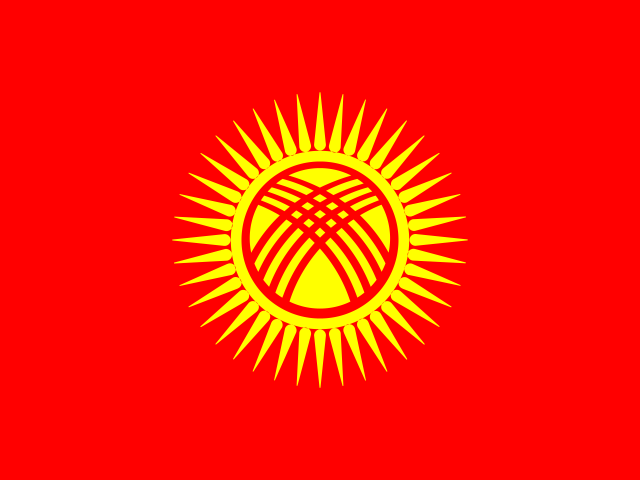
Kyrgyzstan, officially the Kyrgyz Republic (formerly Kirghizia), is a landlocked country in Central Asia, set among the Tian Shan and Pamir mountain systems. Its neighbours are Kazakhstan on the northern side, Uzbekistan on the western side, Tajikistan on the southern side, and China along the east and southeast.
The population is about 7.4 million (January 2026 estimate). Ethnic Kyrgyz are the majority, with sizeable Uzbek and Russian minorities. The capital and largest city is Bishkek, close to the Kazakh border in the north, with roughly 1.3 million residents (2025).
Mountains of the Tian Shan cover over 80% of the territory, which is why the country is sometimes nicknamed the Switzerland of Central Asia. Less than 8% of the land is cultivated. It is a developing country, ranked 117th on the Human Development Index, with an economy that leans on gold production, remittances and the re-export of Chinese goods.
Kyrgyzstan belongs to the Commonwealth of Independent States, the Eurasian Economic Union (since 2015), the Collective Security Treaty Organization, the Shanghai Cooperation Organisation, the Organisation of Islamic Cooperation, the OSCE, the Organization of Turkic States and the UN. It has been a WTO member since 1998.
History
Early Kyrgyz history is tied to the Yenisei Kyrgyz Khaganate. The Kyrgyz state reached its greatest extent after defeating the Uyghur Khaganate in 840 AD. From the 10th century the Kyrgyz spread as far as the Tian Shan and held dominance there for around 200 years. By the 12th century their realm had contracted to the Altay region. The Epic of Manas, a trilogy on the warrior said to have unified scattered tribes in the 9th century, is on the UNESCO Intangible Cultural Heritage list and preserves the memory of the nomadic Kyrgyz.
In the 13th century the Mongol Empire conquered the area. The Kyrgyz later regained independence but were invaded by the Dzungar Khanate. After the Qing destruction of the Dzungars, Kyrgyz and Kipchaks became an integral part of the Kokand Khanate. The land lay on the Silk Road and other trade routes, so it was a crossroads of civilizations despite its mountain isolation.
In the late 19th century Qing China ceded much of the Issyk-Kul region to Russia under the Treaty of Tarbagatai, and the territory (called Kirghizia by the Russians) was formally incorporated into the Russian Empire in 1876. The takeover provoked numerous revolts, and many Kyrgyz moved to the Pamirs and Afghanistan. After the suppression of the 1916 uprising (Urkun), many more fled to China.
Soviet power was established in 1919 with the Kara-Kyrgyz Autonomous Oblast inside the Russian SFSR. On 5 December 1936 the Kirghiz Soviet Socialist Republic became a constituent Union republic. In 1990 the pro-independence candidate Askar Akayev was elected president; Kyrgyzstan declared independence on 31 August 1991, and in October 1991 Akayev won a direct, unopposed vote with 95% of ballots. The USSR dissolved in December 1991, and Kyrgyzstan joined the Commonwealth of Independent States.
The 2002 Aksy shootings, where five protesters were killed, triggered nationwide protests. A 2003 referendum strengthened the presidency. After disputed parliamentary elections in February-March 2005, the Tulip Revolution drove Akayev out in March-April 2005. Kurmanbek Bakiyev won the July 2005 presidential election with 88.9%, but his support eroded over corruption and unfulfilled reform promises.
In April 2010 protests over corruption and energy prices ousted Bakiyev, and a provisional government under Roza Otunbayeva took over. In June 2010 ethnic clashes between Kyrgyz and Uzbeks in Osh and Jalal-Abad killed over 400 people and displaced thousands. A June 2010 referendum, approved by about 90% on roughly 70% turnout, adopted a constitution with a single six-year presidential term and a cap of 65 of 120 parliamentary seats for any one party. Almazbek Atambayev was elected president in 2011 and served until 2017, when Sooronbay Jeenbekov succeeded him. Military courts were abolished in December 2016, and in 2016 a monument at the Ata-Beyit complex marked the centennial of the 1916 uprising.
In October 2020 disputed parliamentary elections led to mass protests, annulment of the vote and Jeenbekov's resignation. Sadyr Japarov, a nationalist politician who had been in prison, was freed and became interim prime minister and president, then won the presidency in a landslide in January 2021. Constitutional changes approved by referendum in 2021 shifted the country to a presidential system with expanded presidential powers, including appointing judges; critics nicknamed it the Khanstitution.
Press freedom and civil society have come under growing pressure: in 2024 the investigative outlet Kloop was ordered closed and journalists were sentenced, and a foreign representatives law took effect in April 2024, imposing oversight on foreign-funded NGOs. Border disputes with Tajikistan flared into violence around Batken in 2021 and 2022, including a six-day conflict in September 2022. In March 2025 Presidents Japarov and Rahmon signed a border demarcation agreement aimed at settling the dispute and reopening closed transport links. In December 2024 Prime Minister Akylbek Japarov was dismissed and First Deputy Prime Minister Adylbek Kasymaliyev became acting prime minister.
Climate
Climate varies greatly with altitude and region. The low-lying Fergana Valley in the southwest is very hot in summer, with temperatures up to about 40 °C. The northern foothills are temperate, and the Tian Shan ranges from dry continental to polar conditions depending on elevation. In the coldest areas winter temperatures stay below freezing for about 40 days. In lowlands, temperatures run from about -6 °C in January to about 24 °C in July.
Bishkek (north, around 800 m elevation, approx.) has a continental climate with hot, dry summers (July highs often around 30 °C or above, approx.) and cold winters with January averages a little below freezing (approx.). Osh, in the Fergana Valley, is hot in summer and milder in winter than the north (approx.). Cholpon-Ata on Lake Issyk-Kul has a moderated, milder lakeside climate for its altitude, and the lake rarely freezes (approx.).
Heavy winter snowfall causes spring floods that often damage downstream areas. Mountain runoff feeds hydroelectric power. Glaciers and climate change are a concern for water supply in the region.
Government and politics
Kyrgyzstan is a unitary state. Power was formally a presidential system after independence, then parliamentary after 2005, semi-presidential in practice, and since 2021 a presidential system under the revised constitution. The president is head of state and holds strong powers, including judicial appointments, while parliament (unicameral) has a reduced role. The judiciary includes a supreme court, local courts and a chief prosecutor.
The country has seven regions (Batken, Chüy, Jalal-Abad, Naryn, Osh, Talas, Ysyk-Köl) split into 44 districts, with rural districts (ayil okmotu) at the lowest level. Bishkek and Osh are cities of state importance and do not belong to any region. Regional governors (akims) are appointed by the president, and district akims by the regional akims. This makes the system centralized: sub-national bodies are largely administrative arms of the national government rather than holders of independent tax, law or education powers.
Special territorial features include Barak, a Kyrgyz exclave surrounded by Uzbekistan, and several foreign enclaves inside Kyrgyz territory: the Uzbek enclaves of Sokh, Shakhimardan, Chong-Kara and Jangy-ayyl, and the Tajik enclaves of Vorukh and Lolazor.
The armed forces comprise land forces, air forces, internal troops, a National Guard and border guards. The Agency of National Security, with a Soviet-KGB heritage, runs an elite counterterrorism unit. Russia maintains Kant Air Base near Bishkek, and the US Manas transit center closed in 2014.
Democracy indices describe Kyrgyzstan as a hybrid regime, and Freedom House's 2026 report rated it Not Free (25/100). Its 2025 Corruption Perceptions Index score is 26/100. Reporters Without Borders and rights groups have criticised press restrictions, and laws affecting LGBT-related expression and religious activity have drawn criticism. Government representatives dispute or contextualise such characterizations.
Economy
Kyrgyzstan was among the poorer Soviet republics and is the second-lowest in Central Asia by income after Tajikistan. About 22.4% of the population lives below the poverty line. After independence the loss of Soviet markets (98% of exports went to other Soviet areas in 1990) caused a deep slump. Reforms backed by the IMF, World Bank and Asian Development Bank cut spending and subsidies and introduced VAT, leading to WTO accession in 1998.
Remittances from roughly 350,000 migrants working in Russia are a big contributor, about 15% of GDP now versus a past peak of 35%. Agriculture, led by livestock (wool, meat, dairy), employs a large share of workers; main crops are wheat, sugar beets, potatoes, cotton, tobacco, vegetables and fruit.
The country is rich in minerals (gold, coal, uranium, antimony, rare-earth metals) but has little oil or gas and imports them. Gold, notably from the Kumtor mine, is a main export along with nonferrous metals, woollen goods, electricity and some machinery. Hydroelectricity is abundant. Main trade partners include Russia, China, Kazakhstan, Uzbekistan and Germany. The Belt and Road Initiative has increased Chinese projects, and after the 2022 sanctions on Russia some regional supply routes were redirected through Kyrgyzstan.
Real growth averaged about 9% a year over 2022-2024, with fiscal surpluses in 2023 and 2024. Large projects include the Kambarata-1 hydropower plant and the planned China-Kyrgyzstan-Uzbekistan railway (about 523 km, with about 260 km in Kyrgyzstan, targeted for 2030). Tourism is led by Issyk-Kul (Cholpon-Ata beaches), with about 3.66 million tourists in 2024. Kyrgyzstan ranked 96th in the 2025 Global Innovation Index.
Transport is constrained by mountains, with passes above 3,000 m, avalanches and mudslides. Roads total about 34,000 km (including 140 km of expressways), and a road links the north and southwest through Bishkek to Osh. Rail is limited (about 370 km, broad gauge), cut by Soviet-era borders; a Balykchy-Bishkek railway opened in June 2023. Manas International Airport near Bishkek is the main hub, with services to destinations such as Moscow, Istanbul, Dubai, Almaty and Urumqi; Osh Airport serves the south. Kyrgyz airlines appeared on the EU air safety ban list until 8 June 2026. Balykchy is the port on Lake Issyk-Kul.
Demographics and urbanization
The population was about 7.4 million in January 2026. Roughly 35-40% of people live in cities (approx.), so the majority is rural. Settlement concentrates in the Chüy Valley around Bishkek in the north, the Fergana Valley fringes in the south (Osh, Jalal-Abad), and around Issyk-Kul.
Bishkek has about 1.32 million people (2025). Osh, in the Fergana Valley near Uzbekistan, is the second city with roughly 300,000 residents (approx.). Jalal-Abad, Karakol and Tokmok are other notable towns, each well below Osh in size (approx.).
Ethnic Kyrgyz are 77.8% of the population, Uzbeks 14.3% (mostly in the south), Russians 3.7% (mostly in the north), Dungans 1.0%, Tajiks 0.9%, Uyghurs 0.5% and Kazakhs 0.4%, among over 80 groups. The Kyrgyz share rose from about 50% in 1979 as Russians, Ukrainians, Germans and Tatars left. Many Kyrgyz still practise seasonal herding, moving to high pastures (jailoo) in summer.
Kyrgyz is the state language and Russian is also official. In the 2020 World Values Survey, Russian was the home language of 55.6% in Bishkek versus 43.6% for Kyrgyz, but nationwide Kyrgyz led at 70.9% (Russian 16.3%, Uzbek 10.7%). Cyrillic is used for Kyrgyz, and the government has said it has no plans to change this. Russian remains common in business and media.
About 90% of people are Muslim (mostly Sunni, Hanafi school; many describe themselves simply as Muslim), around 7% Christian (mainly Russian Orthodox), and small other groups. The state is secular. A 2009 law raised the minimum number of adherents needed to register a religion from 10 to 200 and restricted proselytism.
Schooling is compulsory through grade 9, with grades 10-11 required for the state diploma. In 2023 there were 4,989 primary and secondary schools (445 in Bishkek) and 58 higher education institutions (42 public, 16 private). The University of Central Asia opened in Naryn in 2016. The 2024 Global Hunger Index score of 6.8 indicates low hunger.
Capital city
Bishkek lies in the Chüy Valley in the north, near the Kazakh border, at the foot of the Tian Shan, and has about 1.32 million inhabitants (2025). It is a city of state importance, not part of any region, and is divided into four districts: Lenin, Oktyabr, Birinchi Maj and Sverdlov.
It is the political, economic and cultural center, with the presidency, parliament and government, the Kyrgyz Academy of Sciences and numerous research institutes. It is also the main economic city; there is no separate economic capital. Manas International Airport, near the city, is the main air gateway.
Climate is continental, with hot dry summers and cold winters with some snow (approx.). Russian is widely spoken in daily life and media there, more than in the rest of the country. Kant Air Base, used by the Russian Air Force, is nearby.
About this summary
Includes approximate general-knowledge facts such as city climates, Bishkek capital-city details, Osh and other city populations, and some recent economic and political context.