Overview
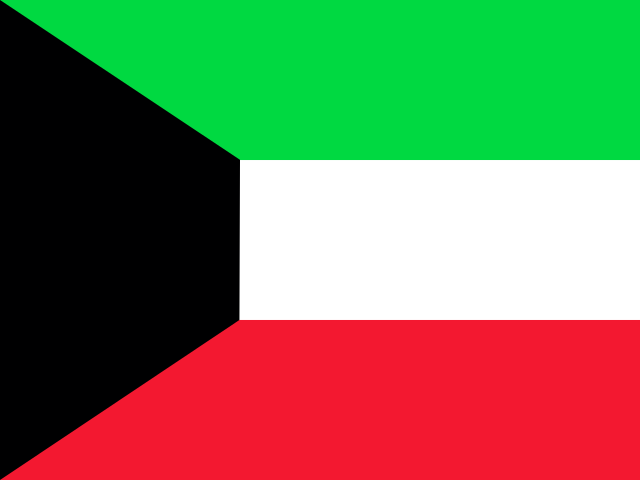
Kuwait, officially the State of Kuwait, is a small, oil-rich emirate on the northeastern edge of the Arabian Peninsula, at the top of the Persian Gulf. It has a coastline of roughly 500 km and shares land borders with Iraq to the north and Saudi Arabia to the south.
Nearly all of the population lives in the urban sprawl around Kuwait City, the capital and largest city. In 2024 the population was about 4.82 million, of whom roughly 1.53 million were Kuwaiti citizens and about 3.29 million were foreign nationals from over 100 countries. Citizens make up fewer than 30% of residents, one of the highest expatriate shares in the world.
Kuwait is a high-income economy resting on some of the largest oil reserves on Earth. The emir is head of state and the Al Sabah family dominates politics. Islam, in the Maliki school of Sunni Islam, is the state religion. Kuwait is a founding member of the Gulf Cooperation Council and belongs to the UN, OPEC, the Arab League and the Organisation of Islamic Cooperation.
For expatriates, Kuwait offers high wages in some sectors and a very large foreign community (Indian and Egyptian groups are the largest), but residence is tied to sponsorship (the kafala system), alcohol is banned, and tourism infrastructure is limited. Since early 2026 the country has also been affected by regional conflict, described below.
History
Rising sea levels after the last Ice Age flooded the Gulf basin, and sediment from the Tigris and Euphrates built a large delta that formed most of present-day Kuwait's land and coastline. Evidence of people dates to the Mesolithic era (around 8000 BC). During the Ubaid period (about 5500–3700 BC) the area was a central borderland between Mesopotamia and Eastern Arabia, with sites such as Bahra 1 and H3 in Subiya, and most of the area was historically part of ancient Mesopotamia.
Kuwait City began as a modest fishing village during the first half of the 1700s, governed by sheikhs from the Bani Khalid clan. Around the middle of that century the Bani Utbah settled in the area, and once Bani Khalid leadership weakened, the Utub gained control through marriage alliances; the territory is dated as a sheikhdom from 1752. During the later 1700s Kuwait grew into a maritime port and trading centre. It became a British protectorate in 1899, and until oil was discovered in 1938 it remained essentially a regional trade port.
Crude oil was first exported in 1946. A large public-works programme began in 1950, and by 1952 Kuwait was the largest oil exporter in the Gulf region. The period from 1946 to about 1980 is often called the golden era of Kuwait, marked by prosperity and a relatively liberal cultural climate. The British protectorate agreements ended in June 1961, when Kuwait became independent. The constitution was promulgated in 1962, and Kuwait joined the UN in 1963. The National Assembly was suspended in 1976. The stateless Bedoon population, many of them Shia or of Persian or Iraqi ancestry, lacked access to the same services as citizens.
The 1980s brought instability: a stock market crash and economic crisis, and pro-Iranian attacks during the Iran–Iraq War because Kuwait financially supported Iraq. The ruling family leaned on Islamist allies, and electoral districts were redrawn in 1981 in their favour. In 1990 Iraq under Saddam Hussein invaded after disputes over oil production, installed a puppet regime and annexed Kuwait. A US-led coalition expelled Iraqi forces, ending the occupation on 26 February 1991. Retreating forces set oil wells ablaze, creating more than 500 oil lakes and leaving lasting soil and marine contamination.
After the war, Kuwait deported large numbers of Palestinians (nearly 400,000), as well as Iraqis and Yemenis, and many stateless Bedoon were expelled or displaced. In 2003 Kuwait served as the launch point for the US-led invasion of Iraq. Women won the right to vote and run for office in 2005. In January 2006 Emir Jaber died and Sheikh Saad briefly succeeded him but was removed nine days later because of ill health, making Sheikh Sabah Al-Ahmad emir. Chronic deadlock between government and parliament followed, bringing repeated cabinet reshuffles and dissolutions.
On 26 June 2015 a suicide bombing at a Shia mosque, claimed by ISIL, killed 27 and wounded 227, the largest terror attack in Kuwait's history. Falling oil prices in the mid-to-late 2010s caused a severe fiscal squeeze, and Kuwait deepened ties with China under the Belt and Road Initiative, including the Silk City project; the Sheikh Jaber Al-Ahmad Al-Sabah Causeway opened in May 2019 under Kuwait Vision 2035. COVID-19 deepened the crisis, with a roughly $46 billion deficit in 2020, the first since 1995.
Emir Sabah died in September 2020 aged 91 and was succeeded by Sheikh Nawaf, who died in December 2023; Sheikh Mishal Al-Ahmad Al-Jaber Al-Sabah then became emir. The National Assembly has been suspended since 10 May 2024.
Since April 2024 large-scale citizenship revocations have taken place; reports cite about 42,000 revoked in six months to March 2025 and estimates of up to 200,000 by December 2025. The Carnegie Endowment has described this as the weaponization of revocation. In January 2026 the US suspended immigrant visas for Kuwait and 74 other countries. Since February 2026 Kuwait has been subject to aerial attacks during the wider 2026 Iran war; Kuwait says it is neutral but hosts a large US military presence, and Iranian forces have targeted infrastructure including the international airport, government buildings, oil refineries and desalination plants. The full course and outcome of that conflict are not covered here.
Climate
Kuwait's climate is that of a hot desert. Its summer heat ranks with the most extreme anywhere in the world, and on 21 July 2016 Mitribah reached 54.0 °C, a figure that stands as the highest temperature ever recorded in Asia. Because the country lies close to Iraq and Iran, its winters are cooler than those of Gulf neighbours like the UAE, Qatar and Bahrain, and it also has lower humidity than those coastal states.
March, the spring month, is warm and sees occasional thunderstorms. Winds from the northwest turn cold in winter and hot in summer, whereas during spring and early summer the prevailing winds are hot, dry and southerly. In June and July the shamal, which blows from the northwest, brings dramatic sandstorms, and humid southeasterly winds follow from July through October.
Kuwait City, on Kuwait Bay, has extremely hot summers (often above 45 °C, approx.), mild winters with cool nights (around 8–20 °C, approx.) and very little rain, mostly in winter. Nearby urban areas such as Hawalli, Farwaniya, Salmiya and Jahra share broadly the same climate, with the interior slightly hotter in summer.
The country is low-lying, with a highest point of 306 m at Mutla Ridge, and has ten islands, the largest being Bubiyan. Only about 0.6% of land is arable. The 1991 oil fires left soil contamination that made parts of the east and southeast uninhabitable. Kuwait has no permanent rivers and relies on desalination for most fresh water, having pioneered large-scale domestic desalination (first plant 1951). Per-capita CO2 emissions rank among the highest in the world. Nature reserves include Mubarak al-Kabeer on Bubiyan, the first Ramsar site, and the country lies on major bird migration routes, with 444 recorded bird species.
Government and politics
Kuwait is a hereditary emirate. The emir is head of state and must descend from Mubarak Al-Sabah under Article 4 of the 1962 constitution. The emir appoints the prime minister, who selects the cabinet, and appoints judges. Legislative power is currently exercised by the emir, as the National Assembly has been suspended since 10 May 2024; earlier suspensions occurred in 1976 and 1986. The Polity series and the Economist Democracy Index classify Kuwait as an autocracy, while Freedom House previously rated it partly free.
Succession traditionally alternated between the Jabir and Salem branches of the Al Sabah family, a pattern broken in 2006. The constitution says the emir's choice of crown prince needs approval by a National Assembly majority. Sheikh Mishal Al-Ahmad Al-Jaber became emir in December 2023.
Power is highly centralised. Kuwait is a unitary state divided into six governorates (Al Asimah/Capital, Hawalli, Farwaniya, Mubarak Al-Kabeer, Ahmadi and Jahra), subdivided into areas. The governorates are administrative units; tax, health, education, law and the courts are all set at national level, with no autonomous regions or special jurisdictions with separate powers.
The legal system is civil law modelled on the French system, with Egyptian and Islamic influences. Courts are secular and there are no Sharia courts; Sharia governs only family law for Muslims, with separate Sunni (Maliki), Shia and non-Muslim sections. Alcohol consumption was criminalised in 1983.
Kuwait is often described as a rentier state: over 70% of government spending goes to public-sector salaries and subsidies, and the public wage bill (about 12.4% of GDP) is the highest in the GCC. Women have had the vote since 2005 and have the highest workforce participation among GCC citizens, though political participation has been limited. Human rights groups criticise the treatment of stateless Bedoon people and of foreign workers under the kafala system, as well as limits on criticising the ruling family. Corruption is described as a serious problem.
In foreign policy Kuwait is a long-standing member of the Arab League and the GCC, joined the UN in 1963 and is a major non-NATO ally of the US. It hosts the largest US military presence in the Middle East (over 14,000 personnel reportedly), at sites including Camp Arifjan, Camp Buehring, Ali Al-Salem Air Base and Camp Patriot. It also has close economic ties with China. The armed forces have about 17,500 active personnel, and mandatory service for men was reintroduced in 2017.
Economy
Kuwait has a wealthy, petroleum-based economy and the Kuwaiti dinar as currency. It has proven crude reserves of about 104 billion barrels, estimated at around 10% of world reserves, plus substantial natural gas, all state-owned. In 2019 mineral fuels made up about 89% of exports. In the early 2020s it was described as the region's most oil-dependent economy with the lowest diversification. Political deadlock has long slowed infrastructure projects.
Kuwait Vision 2035 aims to make the country a petrochemical and trade hub. Al Zour Refinery is the largest in the Middle East, and the Al Zour LNG import terminal is the largest in the region. Kuwait Oil Company announced a major offshore discovery at Al Jlaiaa in January 2025. Other projects include Silk City, Mubarak Al Kabeer Port and Al-Mutlaa under Chinese cooperation.
The Kuwait Investment Authority, founded in 1953, is the world's oldest sovereign wealth fund, with holdings around $700 billion in 2021. Kuwait was once a leading GCC finance centre; the National Bank of Kuwait dates from 1952, and Islamic banking expanded after a 2003 law (Boubyan Bank, 2004). The Kuwait Fund for Arab Economic Development provides aid to developing countries. Startup activity has grown, with Kuwait fourth in MENA startup funding in 2020.
Non-oil sectors are small. Steel is the largest non-oil industry, and Kuwait is self-sufficient in it. Food self-sufficiency is low (about 49.5% in vegetables, 38.7% in meat and 0.4% in cereals in 2016). Tourism is limited by weak infrastructure and the alcohol ban, though events such as the Hala Febrayer festival (1–28 February; Liberation Day is 26 February) and projects like Sabah Al Ahmad Sea City and the Kuwait National Cultural District draw visitors. Kuwait was early to roll out 5G and has a growing private space sector (QMR-KWT satellites, KuwaitSat-1).
Healthcare is state-funded and free for citizens, with a public insurance scheme at reduced cost for expatriates, 20 public hospitals, 16 private hospitals and the large Sheikh Jaber Al-Ahmad Hospital. Education is free through university for citizens; schooling is compulsory from ages 6 to 14, and there are two public and 14 private universities.
Transport is road-based: about 5,749 km of roads, over two million passenger cars, no railways, and bus services run by the Kuwait Public Transportation Company and private firms. Main ports are Shuwaikh, Shuaiba and Mina Al-Ahmadi. Kuwait International Airport is the main hub, with Kuwait Airways and Jazeera Airways; as of May 2025 14 foreign airlines had stopped flying there, and the airport has since been among sites targeted in the 2026 conflict.
Foreign labour is tightly regulated, with entry bans on domestic workers from about 20 countries. Foreign nationals make up the bulk of the workforce, and the kafala sponsorship system ties residency to employers.
Demographics and urbanization
Kuwait's population is about 4.82 million, with roughly 1.53 million citizens and 3.29 million foreign nationals. Citizenship revocations since 2024 (estimated up to 200,000 people) may affect these shares. Arabs, including Arab expatriates, were about 57.65% of the population at the end of 2018, and Indians and Egyptians are the largest expat communities. There is also a sizeable stateless Bedoon population, with 300,000 cited by Human Rights Watch in 1995.
Kuwait is almost entirely urban (approx. 100%, as the country is effectively a single city-state). The population is concentrated in the urban belt around Kuwait Bay, in the governorates of Al Asimah, Hawalli, Farwaniya, Ahmadi and Mubarak Al-Kabeer, with Jahra to the northwest. Largest urban areas (approx.): Kuwait City metropolitan area about 3 to 4 million; Farwaniya area about 1 million; Hawalli/Salmiya about 0.7 to 0.9 million; Jahra and Ahmadi each several hundred thousand.
Islam is the state religion. Among citizens an estimated 60–70% are Sunni and 30–40% Shia, and most Shia citizens are of Iranian ancestry. Christians numbered an estimated 837,585 (17.93%) in 2020, mostly expatriates from India, plus a few hundred Kuwaiti Christian citizens. There are also Hindu, Buddhist, Sikh and small Baháʼí communities.
Modern Standard Arabic is the official language, used mainly in media and education. Kuwaiti Arabic, a Gulf Arabic variant with loanwords from Persian, Indian languages, Balochi, Turkish, English and Italian, is used in daily life. English is widely understood and used in business. Kuwaiti Persian is used among Ajam Kuwaitis.
Capital city
Kuwait City is the capital, located on the south shore of Kuwait Bay, a natural deep-water harbour on the Persian Gulf. It lies in Al Asimah (Capital) Governorate and is the centre of a continuous urban area that includes neighbouring governorates. The city proper has several hundred thousand residents, while the wider metropolitan area has roughly 3 to 4 million (approx.).
The climate is hot desert: very hot summers with temperatures often above 45 °C, mild winters, little rainfall, and occasional sandstorms and dusty northwesterly winds (approx.).
It is the political, administrative, financial and cultural centre. The emir, the cabinet and the main ministries are based there, as are the Kuwait Investment Authority and the National Bank of Kuwait, the Kuwait Stock Exchange (approx.) and most major companies. Landmarks include the Kuwait Towers (water towers that won the 1980 Aga Khan Award for Architecture) and the Kuwait National Cultural District with Al Shaheed Park, which Sabah Al Ahmad Sea City complements elsewhere. Kuwait International Airport lies just south of the city. Since Kuwait is effectively a city-state, the capital is also the main economic city, though the main oil facilities are in Ahmadi governorate and at Al Zour to the south. The city has been exposed to the effects of the 2026 Iran war, with government buildings and the airport among targeted sites.
About this summary
Capital-city details (metro population, city climate, districts, role), major city populations, and some recent-context details come from general knowledge and are approximate.