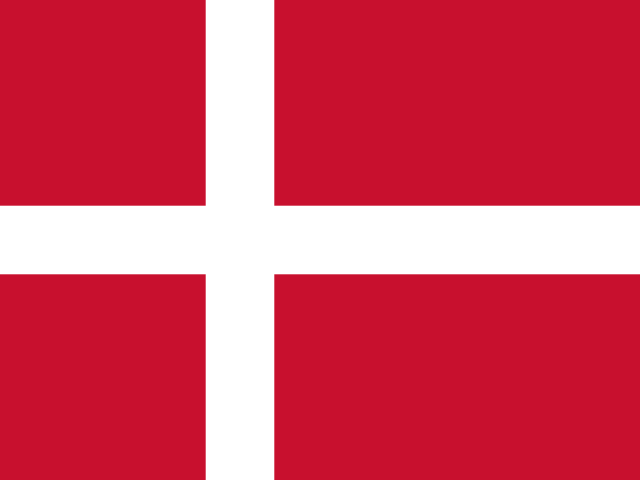
Overview
The Kingdom of Denmark, also called the Danish Realm, is a sovereign unitary state made up of three parts joined under one Constitutional Act: metropolitan Denmark (the territory in continental Europe and nearby islands), the Faroe Islands in the North Atlantic, and Greenland in North America. The Faroes and Greenland are autonomous but not sovereign. The bond among the three is called Rigsfællesskabet, meaning the Unity of the Realm; it has also been rendered in English as the Danish Commonwealth.
The Kingdom is not a federation. It is a concept that brings together three separate legal systems under one monarch. The Faroe Islands and Greenland have been under the Danish Crown de facto since 1397, when the Kalmar Union was ratified, and part of the Danish Realm de jure since 1814. Because of their distinct histories and cultures, both hold wide self-government and run many policy fields themselves.
The Kingdom has land borders with Germany and, on Hans Island, with Canada. A road and rail bridge-tunnel, the Øresund Bridge, links Denmark to Malmö in Sweden. The realm also makes Arctic seabed claims around the North Pole, covering features such as the Lomonosov Ridge, the Gakkel Ridge and the Alpha-Mendeleev Ridge complex.
History
The Faroe Islands and Greenland came under the Danish Crown in practice in 1397, when the Kalmar Union was ratified. Their place within the Danish Realm became formal in law in 1814.
Greater autonomy came in stages. The Faroe Islands were given home rule in 1946, after a referendum. Greenland obtained home rule through a referendum in 1979.
The Faroes then moved to a self-government arrangement in 2005. Greenland followed with self rule in 2009. Under both, Copenhagen keeps little influence over the internal matters that have been handed to the local governments.
Sovereignty over Hans Island was disputed between the Kingdom and Canada from 1978 to 2022. The two governments finally agreed on a border running roughly through the middle of the island, which created a land border between the two states.
In 2019, Iceland, Norway and the Kingdom settled their overlapping seabed claims in the area north of the Faroe Islands.
Climate
The realm spans very different climates. Denmark is in Northern Europe and is flat and largely arable, with a temperate maritime climate: mild, damp, windy, with cool summers and cold but rarely extreme winters. Copenhagen, the capital, typically has summer highs around 20 to 23°C and winter temperatures near 0°C (approx.), with rain spread through the year. Aarhus and Odense have similar conditions.
The Faroe Islands lie in the North Atlantic and are rugged, with cliffs along the coast. Their climate is oceanic (approx.): cool, cloudy, wet and windy, with mild winters and cool summers. Tórshavn, the capital, has winter temperatures around 3°C and summer highs of about 12 to 14°C (approx.).
Greenland is in the North Atlantic and the Arctic, and ice covers about 79% of it. Conditions are polar or subarctic. Nuuk, the capital on the southwest coast, has long cold winters well below freezing and cool summers with highs around 7 to 10°C (approx.).
Government and politics
The Kingdom of Denmark is a unitary sovereign state under a monarch. Its Constitution applies to all parts of the realm. It places legislative, executive and judicial power with the Parliament (the Folketing), the Government of Denmark and the Supreme Court of Denmark.
Power is divided asymmetrically. The Faroe Islands and Greenland have their own local governments, which hold legislative and administrative responsibility in a substantial number of fields. Under the 2005 Faroese arrangement and the 2009 Greenlandic self rule, internal affairs devolved to them are largely outside the influence of the Danish government. Detailed lists of which fields are devolved (for example taxation, health, education, justice) are not given in the source, so they are not set out here.
The three legal systems (Denmark, the Faroe Islands, Greenland) remain autonomous but united under the monarch. The Faroe Islands and Greenland are special jurisdictions with extended autonomy over their own affairs.
The Kingdom has submitted five claims to the United Nations for an exclusive economic zone beyond the usual 200 nautical miles: two in the Faroese area and three around Greenland. One of the Greenlandic claims takes in the North Pole and the Lomonosov Ridge and stretches to the Russian zone. Overlapping claims are left to negotiation.
Economy
The source gives no economic data for the realm. Approx., from general knowledge: Denmark has a highly developed, trade-oriented economy with strengths in pharmaceuticals, shipping, wind energy, food and design. The Faroe Islands depend heavily on fishing and aquaculture. Greenland relies on fisheries and an annual block grant from Denmark. These points are approx.
Demographics and urbanization
Denmark has just over six million people, far more than the Faroe Islands (about 52,000) and Greenland (about 56,000). Denmark has ten cities with more than 50,000 inhabitants. Denmark is home to the Danes, the Faroe Islands to the Faroese, and Greenland to the Greenlandic Inuit.
In both the Faroe Islands and Greenland, Danes make up 7.6% of the population (2018). As of 2020, about 11,000 Faroese-born and 17,000 Greenlandic-born people lived in Denmark.
Greenland makes up 98% of the realm's area of about 2.2 million km² (about 0.85 million square miles). The World Factbook lists the whole kingdom as twelfth-largest in the world, the same rank it gives Greenland alone. Denmark alone covers about 43,000 km² and is ranked 133rd on that list. The World Bank describes Greenland as the most sparsely populated territory in the world.
Approx., from general knowledge: Denmark is highly urbanized, with roughly 88 to 89% of people in towns and cities. Copenhagen's metro area has about 2 million people, Aarhus about 400,000 and Odense about 200,000. Nuuk has about 20,000 residents and Tórshavn about 14,000 to 22,000 depending on how the area is defined.
Capital city
Copenhagen is the capital of the Kingdom and of Denmark proper. It lies on the eastern coast of Zealand and partly on Amager, facing the Øresund strait and linked by the Øresund Bridge to Malmö in Sweden (approx.). The city proper has about 650,000 people and the urban area about 1.4 million (approx.), with the wider metro near 2 million (approx.).
Its climate is temperate maritime (approx.): mild summers, cold but not extreme winters near freezing, and year-round rain.
Copenhagen is the seat of the Folketing, the government, the Supreme Court and the monarchy (approx.). It is also Denmark's main economic, commercial and cultural centre, so the political capital and the main economic city are the same.
The realm has two further regional capitals (approx.): Tórshavn for the Faroe Islands and Nuuk for Greenland. Each hosts its own local government and parliament, while Copenhagen remains the capital of the realm as a whole.
About this summary
Approx. facts from general knowledge: metro populations, city climates, and capital-city details (Copenhagen, Tórshavn, Nuuk), plus recent political events.