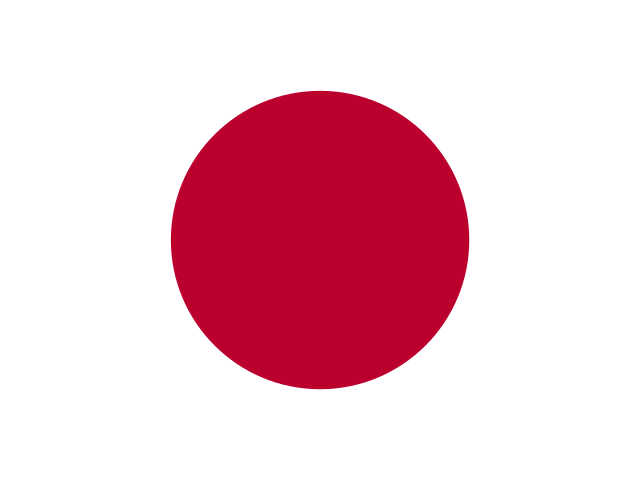
Overview
Japan is an island nation lying off the eastern edge of Asia, with the Pacific on one side and the Sea of Japan, the Sea of Okhotsk and the East China Sea around it. The archipelago has four major islands and more than 14,000 smaller ones. Official figures list 14,125 islands stretching over 3,000 km from northeast to southwest.
The country is split into 47 prefectures and eight traditional regions. About 75% of the land is mountainous and forested, so farming and the highly urbanized population are packed onto the coastal plains, mainly in the east. The population is almost 123 million as of 2026, and Tokyo is both the capital and the largest city.
Japan is a constitutional monarchy with a two-chamber parliament, the National Diet. It is a developed country, the only Asian member of the G7, and is widely regarded as a great power. It is a leader in cars, electronics and robotics, and has one of the highest life expectancies in the world, but its population is shrinking and aging fast.
Its popular culture, including anime, manga, cuisine, fashion, film, music and video games, is known around the world. Japan's constitution renounces the right to declare war, yet the country keeps a large and well-funded military, the Self-Defense Forces.
History
People first reached the archipelago in the Upper Paleolithic, around 36,000 BC. The Jōmon period began around 14,500 BC with semi-settled hunter-gatherers who made some of the oldest known pottery. Later the Japonic-speaking Yayoi arrived from the Korean Peninsula, mixed with the Jōmon, and brought wet-rice farming. Between the 4th and 6th centuries the kingdoms were brought under one emperor, first at Nara and later at Heian-kyō.
From the 12th century real power passed to warriors. In 1185, after the Minamoto defeated the Taira in the Genpei War, Minamoto no Yoritomo set up a military government at Kamakura, and the Hōjō later ruled as regents for the shōgun. Zen Buddhism arrived from China and spread among the samurai. The Kamakura shogunate beat back Mongol invasions in 1274 and 1281 but was overthrown, and Ashikaga Takauji began the Muromachi period in 1336. The Ashikaga failed to control the daimyō, and civil war from 1467 opened the century-long Sengoku (Warring States) era.
In the 16th century Portuguese traders and Jesuit missionaries arrived. Oda Nobunaga used European firearms to defeat rival lords, and after his death in 1582 Toyotomi Hideyoshi unified the country in the early 1590s and launched failed invasions of Korea in 1592 and 1597. Tokugawa Ieyasu won the Battle of Sekigahara in 1600, became shōgun in 1603 and set up his government at Edo (modern Tokyo).
The Tokugawa shogunate, with its code of conduct for the daimyō and the 1639 sakoku (closed country) policy, brought about two and a half centuries of fragile peace, the Edo period (1603–1868). Roads, water routes and Osaka's rice-broker finance, including futures, banking and insurance, laid foundations for later growth. Western science was still studied through the Dutch enclave at Nagasaki, and kokugaku (national studies) emerged.
Commodore Matthew Perry arrived at Uraga with four Black Ships in July 1853 and the Convention of Kanagawa followed in March 1854. Further treaties with Western powers caused economic and political crises, the shōgun resigned, and after the Boshin War the Meiji Restoration (1868) created a centralized state under the emperor. Japan adopted Western political, legal and military models, and the Meiji Constitution took effect in November 1890 with an Imperial Diet.
In the Meiji period (1868–1912) Japan became Asia's most developed state and an industrial power. Victories in the First Sino-Japanese War (1894–95) and the Russo-Japanese War (1904–05) gave it Taiwan, southern Sakhalin and influence over Korea, which it annexed in 1910. The population doubled from 35 million in 1873 to 70 million by 1935, with heavy urbanization.
The Taishō period (1912–1926) saw a brief spell of democracy. Japan sided with the Allies in World War I and took German Pacific possessions. The 1923 Great Tokyo Earthquake was followed by disorder, laws against dissent and attempted coups. In the 1930s radical nationalism grew. Japan occupied Manchuria in 1931 and created the puppet state of Manchukuo in 1932, left the League of Nations in 1933, signed the Anti-Comintern Pact in 1936 and the Tripartite Pact in 1940.
Full-scale war with China began in 1937. After Japan moved into French Indochina in 1940, the United States imposed an oil embargo. On December 7–8, 1941 Japan attacked Pearl Harbor and British territories including Malaya, Singapore and Hong Kong, opening the Pacific War. Occupied populations suffered widespread abuses, and many women were forced into sexual slavery.
The war ended in 1945 with the Soviet invasion of Manchuria and the atomic bombings of Hiroshima and Nagasaki, and Japan surrendered unconditionally. It lost millions of lives and its overseas territories, and millions of settlers were repatriated. A war crimes tribunal, the International Military Tribunal for the Far East, tried Japanese leaders but did not prosecute Emperor Hirohito.
Under Allied occupation a new liberal democratic constitution was adopted in 1947. The occupation ended with the Treaty of San Francisco in 1952, and Japan joined the United Nations in 1956. A long period of record growth made it the world's second-largest economy at the time, until the asset price bubble burst in the early 1990s and began the Lost Decades of stagnation and low inflation.
On March 11, 2011 the Tōhoku earthquake, the strongest in Japan's recorded history, and its tsunami triggered the Fukushima nuclear accident. On May 1, 2019 Emperor Akihito abdicated and his son Naruhito became emperor, starting the Reiwa era.
Climate
Japan's climate is mostly temperate but varies a great deal from north to south. Hokkaido in the north has a humid continental climate with long, cold winters, snowbanks and warm to cool summers. Sapporo is the main city there, with heavy winter snow.
On the Sea of Japan side of Honshu, northwesterly winter winds bring heavy snow, while summers can be very hot because of the foehn effect. The Central Highland is inland humid continental with large seasonal swings. The Seto Inland Sea is sheltered by the Chūgoku and Shikoku mountains and stays mild all year.
The Pacific coast, where most big cities lie, is humid subtropical, with milder winters, occasional snow, and hot, humid summers. Tokyo, Yokohama, Nagoya, Osaka and Kyoto fit this pattern (approx.): Tokyo winters are dry and sunny with daytime highs around 10°C, and summers are hot and muggy with highs often 30–35°C. Kyoto and Osaka are similar, with Kyoto's basin summers especially hot. Fukuoka on Kyushu is also humid subtropical and warmer in winter.
The Ryukyu and Nanpō Islands, including Okinawa and its capital Naha, are subtropical with warm winters, hot summers and very heavy rain. The main rainy season starts in early May in Okinawa and the rain front moves north. Typhoons often bring heavy rain in late summer and early autumn.
The highest temperature ever recorded in Japan is 41.8 °C, on August 5, 2025. The Environment Ministry says heavy rain and rising temperatures are causing problems for agriculture and other sectors.
Japan sits on the Pacific Ring of Fire, with 111 active volcanoes and frequent earthquakes and tsunami. The 1923 Tokyo earthquake killed over 140,000 people, and the 1995 Great Hanshin and 2011 Tōhoku quakes were also major disasters. About 67% of the land is forest and 14% agricultural; Honshu has the highest population density at about 450 people/km² (2010), and Hokkaido the lowest at about 65 (2016).
Environmental protection laws began in 1970 after widespread pollution in the 1950s and 1960s. Japan hosted the 1997 Kyoto Protocol and in 2020 announced a goal of carbon neutrality by 2050. Remaining issues include urban air pollution, waste, water eutrophication and climate change.
Government and politics
Japan is a unitary state and constitutional monarchy. The emperor, currently Naruhito (since 2019), has only a ceremonial role. Executive power is held by the prime minister and Cabinet, and sovereignty rests with the people. The head of government is appointed by the emperor after being chosen from among Diet members, and can appoint and dismiss ministers. Sanae Takaichi is prime minister, having taken office after winning the 2025 Liberal Democratic Party leadership election and agreeing a confidence-and-supply arrangement with Ishin.
The National Diet has two chambers: a House of Representatives of 465 seats, elected every four years or earlier if dissolved, and an upper chamber of 248 seats with six-year terms. Suffrage is universal from age 18 with a secret ballot. The conservative Liberal Democratic Party has dominated since the 1950s, a pattern called the 1955 System.
The 1947 constitution is the world's oldest unamended one. The legal system draws on German-style European civil law, with a civil code dating from 1896 modeled on the German BGB and modified after World War II. Statute law originates in the Diet, and the emperor must promulgate it without power to veto. The main statutes are the Six Codes. The courts have four tiers: the Supreme Court and three levels of lower courts.
Japan is a unitary state, so sub-national bodies hold only powers delegated under national law. It has 47 prefectures, each led by an elected governor and an elected assembly. Below them are municipalities (cities, towns and villages). In practice (approx.), local governments run local services such as schooling administration, local roads, public health centers, welfare and policing through prefectural police, while national law, the main tax system, defense, foreign policy and the courts remain national. Health insurance is set nationally, with fees fixed by a government committee and local governments administering the national health insurance program. Tokyo is an administrative prefecture with 23 special wards that function as municipalities (approx.).
Domestic security is handled mostly by prefectural police under the National Police Agency, overseen by the National Public Safety Commission. The Japan Coast Guard patrols territorial waters. Firearms, swords and similar weapons are tightly controlled, and UN-reported rates of murder, abduction, sexual violence and robbery are very low.
In foreign policy Japan has been a UN member since 1956, belongs to the G7, APEC and ASEAN Plus Three, takes part in the East Asia Summit, and is part of the G4 seeking Security Council reform. It has a security alliance with the United States, which has bases in Japan, and joined the Quad with the US, Australia and India. In 2016 it announced its Free and Open Indo-Pacific vision. It was the fifth-largest donor of official development assistance (US$9.2 billion in 2014) and had the fourth-largest diplomatic network in 2024.
Japan has territorial disputes: it contests Russian control of the Southern Kuril Islands, claims the Liancourt Rocks administered by South Korea, and has tensions with China over the Senkaku Islands, Taiwan and security, alongside deep economic ties.
The Self-Defense Forces are limited by Article 9, which renounces the right to declare war. Japan spent about 1.4% of GDP on defense in 2025 and had the tenth-largest military budget in the world. A 2015 law allows participation in foreign conflicts in an existential crisis situation, and in December 2022 Prime Minister Kishida ordered a 65% spending increase by 2027. Tensions with North Korea and China have renewed debate over the forces' status.
On human rights, the constitution bars racial and religious discrimination, but Japan has no specific anti-discrimination law covering race, ethnicity, religion, sexual orientation or gender identity and no national human rights institution. Critics point to gender inequality, the lack of same-sex marriage, racial profiling by police, capital punishment, and treatment of minorities, refugees and asylum seekers.
Economy
Japan has the world's fourth-largest economy by nominal GDP and the fifth-largest by PPP. Its labor force is over 69.2 million (2023), and unemployment is about 2.5% (2025). The poverty rate exceeds 15.7%, the second highest in the G7. Public debt is estimated at 237% of GDP in 2026, the highest among advanced economies. The yen is the world's third-largest reserve currency.
In 2024 Japan was the eighth-largest exporter and sixth-largest importer, with exports equal to 22.8% of GDP. In 2025 its main export markets were China including Hong Kong (22.8%) and the United States (18.5%). Exports are mainly motor vehicles, iron and steel products, semiconductors and auto parts. Main import sources were China (23.8%) and the US (11.4%), with machinery, fossil fuels, food, chemicals and raw materials coming in.
Japanese capitalism has distinctive features: influential keiretsu groups, lifetime employment and seniority-based promotion. It has a large cooperative sector, including the largest consumer and agricultural cooperatives. Tourism is significant: 36.9 million international visitors in 2024, and 2019 receipts of $46.1 billion. The 2024 Travel and Tourism Competitiveness Report ranked Japan third.
Agriculture is about 1.2% of GDP (2018). Only 11.2% of land is arable, so terraces are used and yields per unit area are among the highest in the world, yet self-sufficiency is only about 50%. The sector is heavily subsidized and protected, and farmers are aging with few successors. Japan caught about 3.17 million tonnes of fish in 2016, is among the top fishing nations with one of the largest fleets, and has been criticized over tuna stocks and commercial whaling.
Industry is about 27.5% of GDP, and manufacturing output was the third highest in the world in 2023. Japan makes motor vehicles, machine tools, steel and nonferrous metals, ships, chemicals, textiles and processed foods. It is in the top three for car production and exports, and Toyota is the world's largest automaker by production. Shipbuilding faces competition from South Korea and China, and consumer electronics has declined, though video games remain strong (a $9.6 billion consumer market in 2014).
Services make up about 69.8% of output (2023). Banking, retail, transport and telecoms are major, with firms such as Toyota, Honda, Mitsubishi UFJ, NTT, Aeon, SoftBank, Hitachi, Mitsui and Itochu among the world's largest.
R&D spending is the sixth or seventh highest relative to GDP, with 907,400 researchers sharing a 22-trillion-yen budget (2023). Japan has 14 researchers per 1,000 employees, has produced twenty-two Nobel laureates in physics, chemistry or medicine, and is a leading robotics producer (38% of the world total in 2024, down from 55% in 2017). JAXA runs the space program, which includes the Kibō module on the ISS, the Akatsuki Venus probe and the SELENE lunar mission, with plans to land astronauts on the Moon by 2030.
The economy has been marked by stagnation since the early 1990s, an aging workforce, and a heavy debt load, though it ranks highly for competitiveness and economic freedom.
Demographics and urbanization
Japan has nearly 123 million people, of whom almost 119 million are Japanese nationals, and about 3.74 million are foreign residents (September 2025). It is one of the fastest-aging countries, with roughly one-third elderly by the source's description and 29.3% over 65 in 2025. The fertility rate is about 1.2 against a replacement level of 2.1, and the median age of 48.4 is the highest in the world. The population is projected to fall to around 88 million by 2065.
Aging has shrunk the workforce and raised social security costs, and the government projects almost one elderly person per working-age person by 2060. Immigration and birth incentives are sometimes proposed, and a revised immigration law took effect on April 1, 2019 to protect foreign workers and ease labor shortages in certain sectors.
About 92% of the population lived in cities in 2023. Most people live on the coastal plains, especially on Honshu. Tokyo has about 13.9 million people (2022) and sits in the Greater Tokyo Area of about 37.4 million (2024), described as the biggest metropolitan area in the world. Other large cities (approx.) include Yokohama (about 3.7 million), Osaka (about 2.7 million, in a metro area of roughly 19 million), Nagoya (about 2.3 million), Sapporo (about 2 million) and Fukuoka (about 1.6 million).
Japanese make up 97.4% of the population. Minorities include the indigenous Ainu and Ryukyuan peoples, Zainichi Koreans, Chinese, Filipinos, and Brazilians and Peruvians mostly of Japanese descent. Burakumin form a social minority group.
Japanese is the de facto national language and uses kanji, two kana scripts, plus the Latin alphabet. English is compulsory in junior and senior high school and used as a business link language. Japanese Sign Language has some official recognition. Ryukyuan languages are spoken in the Ryukyus and the Hachijō variety on Hachijō-jima, though few children learn them; Ainu is moribund. Korean, Chinese and Portuguese are also used by minority and immigrant communities.
Religion is free under the constitution. Upper estimates say 84–96% are tied to Shinto, based on temple affiliation rather than belief, and many practice both Shinto and Buddhism or call themselves non-religious. Christians were 1–1.5% in 2018. In 2018 there were about 200,000 Muslims (43,000 Japanese nationals) and around 105 mosques.
Compulsory education covers nine years (elementary and junior high), and almost all children continue to a three-year senior high school. The University of Tokyo is the top-ranked university. OECD PISA ranks 15-year-olds third best in the world, and 56% of 25–64-year-olds had tertiary education in 2023, third in the OECD. Education spending was 7.4% of GDP in 2021.
Health care is provided by national and local governments through universal insurance with government-set fees. Spending was 11.42% of GDP in 2022. Life expectancy at birth in 2020 was 85 years (82 for men, 88 for women), the highest in the world, with infant mortality of about 2 per 1,000. Cancer is the leading cause of death (27% in 2018), followed by cardiovascular disease (15%). Suicide and smoking among men are significant public health issues.
Capital city
Tokyo is the capital and the largest city. It lies on the Pacific side of central Honshu, on the Kantō plain. The city proper (the Tokyo metropolis) has about 13.9 million people (2022), and the Greater Tokyo Area has about 37.4 million (2024). It grew from Edo, the seat of the Tokugawa shogunate from 1603, and was renamed Tokyo with the Meiji Restoration (approx. 1868).
Tokyo's climate is humid subtropical (approx.): winters are mild and mostly dry and sunny, with occasional light snow, and summers are hot and humid, with a rainy season in early summer and typhoons in late summer and autumn. It sits in a region exposed to earthquakes, and the 1923 Great Tokyo Earthquake killed over 140,000 people.
Tokyo is Japan's political, economic and cultural center. The Diet, the Cabinet, the Supreme Court and the Imperial Palace are located there (approx.). It is also the main economic city, home to the headquarters of many of the country's largest companies and financial institutions (approx.), and a hub for media, universities (including the University of Tokyo) and pop culture. Japan does not have separate capitals for different functions, and Tokyo is both the capital and the main economic city, though Osaka and Nagoya are major economic centers in their own regions.
About this summary
Some details on Tokyo's climate and role, metro and city populations, major-city climates, the structure of local government and other capital-city facts come from general knowledge and are approximate.