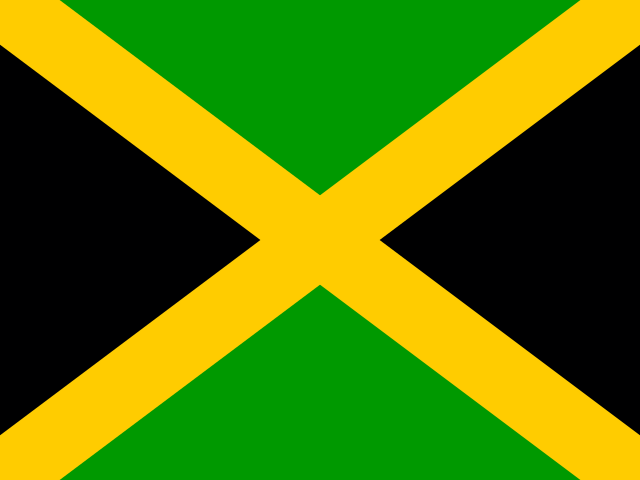
Overview
Jamaica is a Caribbean island nation of roughly 11,000 square kilometres (the source gives 10,991 sq km). It is the third-largest island of the Greater Antilles, behind Cuba and Hispaniola. It sits about 145 km south of Cuba, 191 km west of Hispaniola and 215 km southeast of the Cayman Islands.
About 2.8 million people live there. The source describes it as the third most populous English-speaking country in the Americas and the fourth most populous in the Caribbean. Kingston is both the capital and the largest city.
Spain claimed the island after Columbus arrived in 1494 and ruled it until England took it in 1655. It became a major sugar colony worked by enslaved Africans, slavery ended in 1838, and Jamaica became independent from the United Kingdom on 6 August 1962.
Jamaica is a parliamentary constitutional monarchy and a Commonwealth realm with King Charles III as head of state. Andrew Holness has been Prime Minister since March 2016. The government says the country is an upper-middle-income economy that relies heavily on tourism, with about 4.3 million visitors a year (source figure).
Culturally the island has an outsized global profile. It is the birthplace of Rastafari and of reggae, ska, dub and dancehall, and it is prominent in cricket and in sprinting and athletics. It has sometimes been called the world's least populous cultural superpower.
A large diaspora, concentrated in Canada, the United Kingdom and the United States, stems from emigration for work since the 1960s.
History
Archaeology shows no human presence before about 500 CE. A people known as the Redware people (after their pottery) arrived around 600 CE, followed by the Taíno around 800 CE, probably from South America. The Taíno farmed and fished, may have numbered around 60,000 at their peak, and lived in roughly 200 villages led by caciques. The south coast, around present-day Old Harbour, was the most densely settled.
Columbus sighted and claimed the island for Spain in 1494 on his second voyage. He returned in 1503, was shipwrecked, and spent a year stranded there. The first Spanish settlement, Sevilla, was founded near St. Ann's Bay in 1509 by Juan de Esquivel. Indigenous people died from violence and disease, and the Spanish brought enslaved Africans. The island was called Santiago under Spain.
England, after a failed attempt on Santo Domingo, invaded in 1655 under Admiral William Penn and General Robert Venables. Spanish defeats followed at Ocho Rios (1657) and Rio Nuevo (1658). In 1660 the Maroon community under Juan de Bolas switched sides to support the English. English civil government was set up in 1661.
In the 18th century the economy boomed on sugar, coffee, cotton and indigo, all worked by enslaved people who belonged to a small planter class. Growing numbers escaped and joined the Maroons, leading to the First Maroon War (1728–1740), which ended in stalemate. Britain signed treaties with the Leeward Maroons (Cudjoe, Accompong) in 1739 and the Windward Maroons (Quao, Queen Nanny) in 1740.
Emancipation came in 1838, and many freedpeople took up subsistence farming instead of plantation work. From the 1840s Britain brought in Chinese and Indian indentured labourers.
In 1907 an earthquake and fire devastated Kingston, killing an estimated 800 to 1,000 people. Poverty and unemployment fed political movements, notably Marcus Garvey's Universal Negro Improvement Association (1917). Garvey inspired Rastafari, founded in the 1930s, which blends Christianity with an Afrocentric theology centred on Ethiopian Emperor Haile Selassie.
The Depression hit hard, and labour unrest in 1934–39 culminated in a riot in 1938. A British commission recommended reforms, and a House of Representatives elected by universal adult suffrage was created in 1944. The two-party system emerged then: the Jamaica Labour Party (JLP) under Alexander Bustamante and the People's National Party (PNP) under Norman Manley.
Jamaica joined the Federation of the West Indies in 1958, voted narrowly to leave in a 1961 referendum, and became independent on 6 August 1962 with a Westminster-style system. Bustamante was the first prime minister.
The first decade of independence saw growth of about 6% a year under JLP governments (Bustamante, Donald Sangster, Hugh Shearer), driven by bauxite and alumina, tourism and manufacturing. Rising inequality and urban poverty led voters to elect Michael Manley's PNP in 1972, which raised the minimum wage, pursued land reform and expanded housing and education. Political and gang violence grew in the 1970s and the economy weakened; by 1980 output was about 25% below its 1972 level.
Edward Seaga's JLP won in 1980, cut ties with Cuba and backed the 1983 US action in Grenada. Alumina producers closed or cut back, debt rose, and the government turned to the IMF, whose austerity terms triggered strikes in 1985. Hurricane Gilbert struck in 1988. Manley and the PNP returned in 1989.
The PNP won a string of elections under Manley, P. J. Patterson (1992–2006) and Portia Simpson-Miller. Reforms included deregulating finance and floating the Jamaican dollar, and political violence declined. The JLP narrowly won in 2007 (Bruce Golding). In 2010 an operation to arrest Christopher Coke produced violence with over 70 deaths, and Golding resigned; Andrew Holness took over in 2011. The PNP won the late-2011 election, the JLP narrowly won in 2016, and Holness won again in 2020 (49 seats to 14), with low turnout of about 37%.
In the 2025 general election the JLP won a third consecutive term, 34 seats to 29 for the PNP led by Mark Golding, on turnout of about 39.5%. Later that year Hurricane Melissa struck as a Category 5 storm, the strongest landfall in Jamaican history per the source.
Climate
Jamaica has a tropical climate, hot and humid at the coast and cooler in the higher interior. Some south-coast areas, such as the Liguanea Plain (where Kingston sits) and the Pedro Plains, lie in rain shadow and are relatively dry.
Kingston is hot all year, with average highs roughly in the low 30s °C and mild nights, and a wetter season from about May to November (approx.). Montego Bay on the north coast is similarly warm and humid with a somewhat wetter profile (approx.). Higher places such as the Blue Mountains are noticeably cooler.
The island lies in the main development region for Atlantic tropical cyclones. Hurricane Charlie (1951) and Gilbert (1988) caused major damage, and Ivan, Dean and Gustav affected the island in the 2000s. In 2025 Hurricane Melissa made landfall as a Category 5, the strongest landfalling storm in the country's recorded history per the source.
Other hazards include floods, landslides, storm surge and earthquakes. The terrain rises to Blue Mountain Peak at 2,256 m, surrounded by a narrow coastal plain.
Government and politics
Jamaica is a parliamentary democracy and constitutional monarchy. The King is head of state, represented by a Governor-General (Patrick Allen since 2009) who is nominated by the prime minister and Cabinet and formally appointed by the monarch. The monarch and Governor-General have mostly ceremonial roles apart from reserve powers. Both main parties say they want to move to a republic with a president.
The constitution dates from 1962 and came into force through the UK's Jamaica Independence Act. Parliament has two chambers: a directly elected House of Representatives (63 seats per the source's election figures) and an appointed Senate whose members are nominated jointly by the prime minister and the Leader of the Opposition. The Governor-General appoints as prime minister the House member best able to command a majority.
The legal system is common law, based on English law. The final court of appeal is still the Judicial Committee of the Privy Council in London, though a proposal exists to replace it with the Caribbean Court of Justice.
Politics has traditionally been a two-party contest between the JLP (in power since 2016, re-elected in 2020 and 2025) and the PNP. Minor parties such as the National Democratic Movement have not won seats.
Power is highly centralised. Jamaica has 14 parishes, grouped into three historic counties with no administrative role. Parishes act as local authorities (municipal corporations) with limited local functions; national government holds the main powers over taxation, health, education and law. Kingston and St. Andrew are merged into one municipal corporation, and Portmore, created in 2003 and geographically in St. Catherine, is governed separately. A new city municipality needs at least 50,000 residents, and there are currently no town municipalities.
The Jamaica Defence Force, patterned after Britain's armed forces, consists of an infantry regiment, an air wing, a coast guard and an engineering unit. Alongside the police, it conducts patrols in areas with high crime to combat gangs and drug smuggling. In 2017, Jamaica put its signature to the United Nations treaty banning nuclear weapons, and in 2024 it committed personnel to the UN-backed mission in Haiti.
Economy
Jamaica is a mixed economy, classed by the World Bank as upper-middle income. Main sectors are tourism, mining (bauxite and alumina), agriculture, manufacturing, petroleum refining and financial and insurance services. About half the economy is services. Tourism and mining are leading foreign-exchange earners, and the country is vulnerable to hurricanes, flooding and climate change. Unemployment hit its lowest level in 50 years in 2019.
Since the 1980s, and especially since 1991, the government has liberalised the economy: removing exchange controls, floating the currency, cutting tariffs, easing foreign investment limits and privatising state assets. Free-trade zones operate at Kingston, Montego Bay and Spanish Town. A mid-1990s banking crisis led to the Finsac rescue and heavy debt. More recently the country has come out of an IMF programme with improved fiscal space.
Tourism is the biggest earner, with about 4.3 million visitors a year, mainly from North America, South America and Europe. Jamaica is described as the world's fifth-largest bauxite exporter and also exports limestone. Agricultural exports include sugar, bananas, cocoa, coconut, citrus, rum, yams, allspice (it is described as the world's largest exporter) and Blue Mountain Coffee.
Industry includes light manufacturing, metal fabrication, food and beverage processing, aircraft maintenance (but not heavy structural repair), software and data processing, printing, music recording and a self-sufficient construction sector.
Transport: about 22,100 km of road (about 16,100 km paved, 2011), with tolled highways built under the Highway 2000 programme (about 150 km by 2023: PJ Patterson Highway, Portmore Causeway, Edward Seaga Highway). Of 272 km of railway only 57 km operate, for bauxite, with a limited passenger service between May Pen, Spanish Town and Linstead since 2011. There are three international airports: Norman Manley (Kingston), Sir Donald Sangster (Montego Bay, the busiest) and Ian Fleming (Boscobel). The Port of Kingston handles heavy container traffic on the route to the Panama Canal.
Energy: Jamaica imports its oil, with refining at the Petrojam refinery in Kingston. Power comes mainly from oil-fired and LNG-capable plants near Old Harbour, plus small hydro and a wind farm at Wigton. The government signed a memorandum with Canadian bodies in 2024 on small modular nuclear reactors.
Communications: mobile penetration exceeds 95%, with two operators, FLOW and Digicel, and fibre broadband in parts of Kingston, Portmore and St. Andrew. Science and technology are overseen by national bodies under a ministry, though budgets limit results.
Demographics and urbanization
The population is about 2.8 million (2018 figure 2,812,000). Roughly 76% are of African descent, about 15% Afro-European (mixed), around 3% East Indian, 3% White, about 1% Chinese and smaller groups, including about 20,000 people of Lebanese or Syrian ancestry. The national motto is Out of Many, One People, and most Jamaicans identify by nationality rather than race. Maroon communities such as Accompong keep distinct traditions.
About 55–57% of people live in urban areas (approx.), mostly around Kingston and its suburbs, Portmore, Spanish Town and the north-coast tourist centre of Montego Bay. Approx. populations: Kingston metro about 600,000 to 1.2 million depending on definition, Portmore about 180,000, Spanish Town about 150,000, Montego Bay about 110,000.
Emigration is significant: an estimated 2.5 million Jamaicans and descendants lived abroad in 2004, about 800,000 in the UK in 2007, with big communities in New York, Miami, Toronto and other cities. About 20,000 Jamaicans a year gain US permanent residence.
English is official and used in government, courts, media and education. The main spoken language is Jamaican Patois, an English-based creole. A 2007 survey found 17.1% monolingual in standard English, 36.5% monolingual in Patois and 46.4% bilingual.
Christianity dominates, with about 70% Protestant (Church of God, Seventh-day Adventist, Pentecostal, Baptist and Anglican the largest) and about 2% Catholic. Rastafari had 29,026 adherents in 2011, and African-derived practices such as Kumina and Obeah persist. Small Muslim, Hindu, Bahá'í and Jewish communities exist.
Crime is a serious concern. The murder rate rose from 3.9 per 100,000 at independence to about 62 in 2009, among the world's highest, with gang violence concentrated in poor urban areas of Kingston and Montego Bay. Murders fell after 2010 but rose 22% in 2017. Homosexuality is illegal and LGBT people face hostility.
Education is free from early childhood to secondary level. There are five local universities, including the University of the West Indies (Mona campus) and the University of Technology, plus community and teacher colleges and the HEART Trust vocational programme.
Capital city
Kingston is on the south coast, set on the Liguanea Plain beside Kingston Harbour, described as the seventh-largest natural harbour in the world. It became capital in 1872. Its local government is merged with St. Andrew as the Kingston & St. Andrew Municipal Corporation. The metro area has roughly 600,000 to 1.2 million people depending on the boundary used (approx.).
Climate is tropical and warm all year, with average highs around 30–32 °C, mild nights, and rainier months mainly from May to November (approx.), with the city sitting in a relatively dry rain-shadow area. It is exposed to hurricanes.
Kingston is the political, administrative and business centre and is also the country's main economic city. It hosts Parliament, the Port of Kingston container terminal, the Petrojam refinery, a free-trade zone, Norman Manley International Airport and the Mona campus of the University of the West Indies. It is a cultural hub, strongly tied to reggae and music recording, and has the Shaare Shalom synagogue. The 1907 earthquake destroyed much of the city.
Jamaica has a single capital. Montego Bay on the north coast is the main tourism city and has the island's busiest airport, but Kingston remains the principal economic city. The city has areas of high crime and poverty, including some shanty settlements.
About this summary
Approximate general-knowledge facts: Kingston metro population, city climates (Kingston, Montego Bay), capital-city details, tourism and cultural context, recent hurricane aftermath and parish-level government detail.