Overview
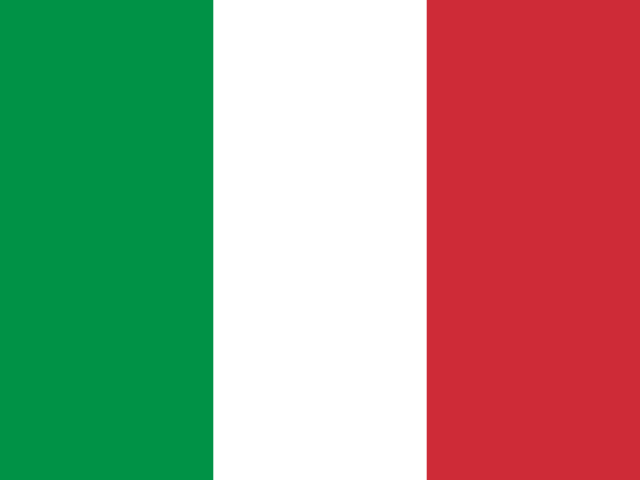
Italy, formally the Italian Republic, lies in Southern and Western Europe. It occupies a long boot-shaped peninsula reaching into the Mediterranean, with the Alps along its northern frontier, and it includes nearly 800 islands, the largest being Sicily and Sardinia. It borders France, Switzerland, Austria and Slovenia, and it surrounds two tiny sovereign enclaves, Vatican City and San Marino.
Italy covers roughly 301,000 km2 (the source gives 301,340 km2 in one place and 301,230 km2 in another, of which about 294,000 km2 is land) and had about 58.9 million residents in 2025. It is the third most populous member of the European Union. Rome is the capital; other major cities are Milan, Naples, Turin, Palermo, Bologna, Florence, Genoa, Bari and Venice.
It is a developed, high-income country with an advanced economy, the eighth-largest by nominal GDP, and a manufacturing sector that is the second largest in Europe. It is a founding member of the European Union, NATO, the G7 and the OECD. Italy is also known worldwide for art, music, literature, food, fashion and science, and it holds more UNESCO World Heritage Sites than any other country (62, of which 56 cultural and 6 natural).
History
Human presence in the Italian peninsula is very old: tools from Monte Poggiolo are about 850,000 years old, Neanderthals lived there around 200,000 years ago, and modern humans arrived about 40,000 years ago. Before Rome, the peninsula was home mostly to Italic peoples speaking Indo-European languages, alongside groups such as the Etruscans, the Elymians and Sicani in Sicily, and the Nuragic people of Sardinia.
Rome, on the River Tiber, was traditionally founded in 753 BC and was ruled by kings for 244 years. In 509 BC the monarchy was expelled and an oligarchic republic took its place. Through conquest, Rome brought the whole peninsula under one political unit called Italia, then went on to dominate the Mediterranean under the Republic and the Empire. As Christianity spread, Rome became the seat of the Papacy.
The Western Roman Empire declined and fell between late antiquity and the early Middle Ages. Italy passed to Odoacer, then to the Ostrogoths, and in the 6th century the Lombard invasion ended the peninsula's political unity, leaving the north and parts of the centre-south under the Lombards and other areas under Byzantium. In the late 8th century Charlemagne absorbed the Lombard kingdom into the Frankish realm as the Kingdom of Italy. By the 11th century, city-states and maritime republics were growing and bringing new wealth through trade, which helped lay the groundwork for modern capitalism.
The 15th and 16th centuries were the age of the Italian Renaissance, funded by merchant wealth and the patronage of ruling families such as the Medici of Florence. Courts became leading centres of art and science, and the movement spread across Europe. Italian navigators and explorers also played a major part in the Age of Discovery.
After centuries of division, the Risorgimento movement, shaped by figures such as Giuseppe Mazzini and by the House of Savoy, led to the Kingdom of Italy in 1861 through wars of independence and the Expedition of the Thousand. The Sardinian constitution was extended to the whole country, but voting rights excluded the propertyless. The north industrialised quickly while the south and rural areas stayed poor and overpopulated, driving millions to emigrate. The diaspora eventually exceeded 25 million people, with roughly 750,000 leaving each year at the 1898 to 1914 peak. Italy also acquired a colonial empire in this period.
Italy fought in World War I with the Entente from 1915 to 1918. Post-war unrest led the liberal establishment to back Mussolini's National Fascist Party. After the 'March on Rome' of October 1922, King Victor Emmanuel III named him prime minister, and he soon banned other parties and built a dictatorship. Italy invaded Ethiopia in 1935 (forming Italian East Africa), withdrew from the League of Nations, allied with Nazi Germany and Japan, and invaded Albania in April 1939. It entered World War II on 10 June 1940.
After military defeats and the Allied landing in Sicily in July 1943, the regime collapsed on 25 July and Mussolini was arrested. Italy signed the Armistice of Cassibile on 3 September 1943. German forces then occupied the north and centre, where they set up the Italian Social Republic with Mussolini as its head. The Italian Co-belligerent Army fought alongside the Allies, partisans waged a resistance war, and the period included civil conflict. Mussolini was captured and executed by partisans in April 1945, and German forces in Italy surrendered on 29 April 1945. Nearly half a million Italians died, and the economy was in ruins. The wartime record includes Italian war crimes and deportations, German massacres and deportation of Jews, and the foibe killings of ethnic Italians by Yugoslav partisans.
A referendum on 2 June 1946, the first national vote in which women took part, ended the monarchy, and the date is now celebrated as Festa della Repubblica. The Republican Constitution was approved in 1948. Under the peace treaty Italy lost its colonies and Adriatic territories to Yugoslavia, prompting the exodus of roughly 300,000 Istrian and Dalmatian Italians. Christian Democrats under Alcide De Gasperi won in 1948, Italy joined NATO in 1949, and Marshall Plan aid helped drive the 'economic miracle' that lasted to the late 1960s. Italy was also a founder of the European Communities in the 1950s.
From the late 1960s to the early 1980s the 'Years of lead' brought economic trouble, social conflict and terrorism. Italy entered the G7 in the 1970s as a leading industrial nation, but public debt rose above 100% of GDP. In 1992 and 1993 the Sicilian Mafia carried out attacks in response to new anti-mafia measures. The 'Clean Hands' corruption investigations helped bring down the Christian Democrats, who had dominated for almost 50 years. Centre-right coalitions led by Silvio Berlusconi and centre-left ones led by Romano Prodi then alternated in power.
The 2008 Great Recession brought austerity and several technocratic or broad-coalition governments. Matteo Renzi's institutional reform package was rejected by referendum in 2016. Italy became a central entry point for Mediterranean migration to the EU, which fuelled debate over immigration and support for populist parties. COVID-19 struck hard from 2020, and large European-coordinated recovery measures followed. In 2022 Giorgia Meloni became Italy's first female prime minister.
Climate
Italy's climate is very varied because the country is long, mountainous inland and surrounded by sea on all sides except the north. The seas store heat and moisture and give much of the country a Mediterranean climate, with local variations. Across the northern and central interior the climate ranges from humid subtropical to humid continental and oceanic.
The Po Valley in the north is largely humid subtropical, with chilly winters and hot summers. Liguria, Tuscany and most of the south follow the classic Mediterranean pattern (Köppen classification): mild winters and hot, mostly dry summers along the coast. Higher ground is cold, wet and often snowy in winter. Typical winter temperatures run from about 0 °C in the Alps to about 12 °C in Sicily, and summer averages range from about 20 °C to over 25 °C. Northern and central areas can have strong thunderstorms between spring and autumn.
Major cities (approx., general knowledge): Rome, Naples, Bari and Palermo have Mediterranean climates, with hot dry summers (often 30 °C or more in July and August) and mild, wetter winters; Palermo and the south are the mildest in winter. Milan, Turin and Bologna, in the Po Valley, have humid, often muggy hot summers and cold, foggy winters with occasional frost and snow. Florence is hot in summer and cool in winter. Venice and Genoa are moderated by the sea, with Genoa's winters milder because of the sheltered Ligurian coast. Winters are cold and snowy in the Alps and the Apennine highlands.
On the environment, air pollution remains a serious problem, especially in the industrialised north, and traffic congestion in large cities causes health issues even though smog has eased since the 1970s and 1980s. Deforestation, illegal building and poor land management have worsened erosion and contributed to disasters such as the 1963 Vajont Dam flood and the 1998 Sarno and 2009 Messina mudslides. About 11% of land and 12% of the coastline are protected. Italy has high biodiversity, with over 57,000 recorded animal species and more than 6,700 vascular plant species. Geography includes Mont Blanc (4,810 m) as the highest point, active volcanoes such as Etna, Vesuvius, Stromboli and Vulcano, and the Po Valley, which holds over 70% of the country's lowlands.
Government and politics
Italy has been a unitary parliamentary republic since 1946. The president is head of state, elected by parliament together with regional delegates in a joint session for a seven-year term. Sergio Mattarella has held the office since 2015 (he was re-elected in 2022, approx.). The constitution of 1948 was written by an assembly of anti-fascist forces.
Parliament is fully bicameral: the Chamber of Deputies (Palazzo Montecitorio) and the Senate of the Republic (Palazzo Madama) hold equal powers. Eight deputies and four senators are chosen by Italians living abroad. Some senators serve for life, including former presidents. The electoral system is mixed-member. The prime minister heads the government and is appointed by the president, but needs the confidence of parliament and cannot dissolve it. The prime minister also holds political responsibility for intelligence. The next general election is scheduled under the normal parliamentary term, and its result is not covered here.
The 2022 general election was won by a centre-right coalition including Giorgia Meloni's Brothers of Italy, the League, Forza Italia and Us Moderates. The other leading parties are the Democratic Party and the Five Star Movement. Democracy indices rate Italy in the high range, with weaker results on rule of law.
Power is divided among several levels. Italy has 20 regions, five of which have special autonomous status allowing them to legislate on additional matters (Aosta Valley, Sardinia, Sicily, Trentino-South Tyrol and Friuli-Venezia Giulia, approx.). The regions are split into 107 provinces or metropolitan cities and 7,896 municipalities (comuni). The national state controls foreign policy, defence, the main criminal and civil codes, the courts and most taxation. Regions have legislative and administrative powers in a number of fields, with health care the largest: the national health service is organised under the Ministry of Health but administered on a regional basis. Regions also have a role in areas such as local transport and regional planning, while schooling follows a national system. Smaller local units provide municipal services, and provincial and municipal police exist alongside national forces.
Special jurisdictions: Vatican City, the seat of the Holy See and the Catholic Church, and San Marino are sovereign enclaves inside Italy, and Campione d'Italia is an Italian exclave in Switzerland. Several regional minority languages have co-official status, as in the Aosta Valley, South Tyrol, parts of Trentino, and the Trieste, Gorizia and Udine provinces.
The legal system rests on the 1948 Constitution, with the Constitutional Court reviewing whether laws conform to it. Courts apply a civil-law tradition derived from Roman law, shaped by the Napoleonic Code and later statutes, and the Supreme Court of Cassation is the top court for civil and criminal appeals. Policing is complex: the Polizia di Stato, Carabinieri (a military gendarmerie), Guardia di Finanza, Polizia Penitenziaria and Guardia Costiera operate nationally. Italy is described as lagging other Western European countries on LGBT rights, and its anti-torture law is considered behind international standards. Organised crime, notably the Sicilian Mafia and the Calabrian 'Ndrangheta, has deeply infiltrated parts of the south, and estimates in the source put mafia revenue at up to 9% of GDP. Reported murder and rape rates are comparatively low for a developed country.
In foreign policy, Italy is a founding member of the EU and NATO, joined the UN in 1955, and belongs to the OECD, WTO, OSCE and the Council of Europe. It has held presidencies of the G7 (2017), the OSCE (2018) and the EU Council (2014), and is a frequent non-permanent member of the UN Security Council. It supports multilateral action and has contributed troops to UN and NATO missions in many places. The armed forces consist of the Army, Navy, Air Force and Carabinieri; service has been voluntary since 2005, and Italy hosts US B61 nuclear weapons under NATO sharing arrangements.
Economy
Italy has an advanced mixed economy: third largest in the eurozone and 11th in the world by purchasing-power GDP. It is a founding member of the G7, eurozone and OECD, and it uses the euro (adopted in 2002), with monetary policy set by the European Central Bank. It ranks 30th on the Human Development Index. In 2024 it exported about €612 billion of goods with a trade surplus of roughly €46 billion. Germany, France and the US were the largest export partners in 2019.
Manufacturing is the backbone. Italy has fewer multinationals than comparable economies and many small and medium-sized firms grouped in industrial districts, which concentrate on high-quality niche and luxury products. Key sectors include cars (Fiat, Alfa Romeo, Maserati, Ferrari, Lamborghini, Pagani), machinery, food, design and fashion. Energy company Eni is one of the world's large oil majors. Italy has Europe's largest onshore hydrocarbon field in Basilicata, moderate gas reserves in the Po Valley and Adriatic, and is known for Carrara marble. Banca Monte dei Paschi di Siena is among the world's oldest banks, and cooperatives employ a large share of workers.
Growth was strong at 5 to 6% a year from the 1950s to the early 1970s, then slowed, and the economy stagnated in the 2000s and was hit hard by the 2008 crisis. Public debt exceeded 132% of GDP in 2017, though most of it is held domestically and household debt is low by OECD standards. A deep north-south gap persists: Alto Adige-South Tyrol earns about 152% of national GDP per capita, while Calabria earns about 61%. Unemployment was about 11% in the source (about 7% in the north versus 19% in the south), median disposable income was about $27,949 in 2021 (PPP), and youth unemployment fell to around 20% in 2025. The government set quotas for around 452,000 non-EU workers to enter legally between 2023 and 2025.
Small family farms dominate Italian agriculture, numbering 1.6 million in 2010 with an average size of around 8 ha. The country ranks first worldwide in wine output and is also among the top producers of olive oil, as well as of fruit and vegetables including tomatoes and artichokes. Well-known wines include Chianti, Barolo, Brunello di Montalcino, Prosecco and Franciacorta, while numerous wines and cheeses carry protected EU DOC/DOP designations.
Tourism is a major sector: around 74 million arrivals were recorded in 2024, and in 2014 travel and tourism contributed about €163 billion (10% of GDP). The most visited regions are Veneto, Tuscany, Lombardy, Emilia-Romagna and Lazio, and Italy leads Mediterranean cruise tourism.
Transport: Italy pioneered motorways (autostrade), with about 6,500 km of them. The state rail network is about 16,900 km, of which about 12,400 km is electrified, with Trenitalia's Frecciarossa trains reaching 300 km/h. The main airports are Rome Fiumicino and Milan Malpensa, and the flag carrier has been ITA Airways since 2021. Genoa is the largest seaport, and Trieste is a growing northern gateway to Central and Eastern Europe. The Strait of Messina Bridge between Calabria and Sicily received final government approval in August 2025, with opening planned for 2032.
Energy: renewables supplied about 28% of electricity (hydro 13%, solar 6%, wind 4%, bioenergy 3.5%, geothermal 1.6%), with the rest from natural gas (38%), coal (13%), oil (8%) and imports. Italy pioneered geothermal electricity, and a nuclear programme (1963 to 1990) was ended after referendums. Science and innovation: Italy ranked 28th in the Global Innovation Index in 2025 and hosts the Gran Sasso underground laboratory, but the income gap produces a north-south digital divide.
Demographics and urbanization
Italy had about 58.9 million residents in 2025, with a density of about 195 per km2. Population is uneven: the Po Valley holds almost half of all residents, and the Rome and Naples areas are also dense, while the Alps, Apennine highlands, Basilicata plateaus, Sardinia and much of Sicily are sparse. The country is highly urbanised, roughly 70 to 75% urban (approx.), with a large share living in mid-sized cities and towns.
Largest cities (approx., city proper): Rome about 2.7 million, Milan about 1.4 million, Naples about 0.9 million, Turin about 0.85 million, Palermo about 0.63 million, Genoa about 0.56 million, Bologna about 0.39 million and Florence about 0.37 million. Bari and Venice are other notable cities. Metropolitan areas are much larger: roughly 4 million or more in Rome and Milan, and about 3 million in Naples (approx.).
The population is ageing and has fallen steadily since 2014, losing over 1.36 million people in a decade. The fertility rate was 1.2 in 2024 against a replacement level of 2.1, and births hit a record low of 379,000 in 2023. Median age is about 48, and nearly one in four people is over 65. Population growth in the 20th century came with heavy migration from the rural south to the industrial north.
Italy was a major emigration country until the 1960s, and began receiving immigrants in the 1980s, with later waves from Eastern Europe, North Africa, Asia and Latin America. In 2021 there were about 5.2 million foreign residents (9% of the population), with Romanians the largest group at about one million. In 2020, 61% of foreign citizens lived in the north and 24% in the centre.
Italian is the official language, and regional dialects have declined with national schooling and mass media. Twelve historical minority languages are recognised (including German, French, Slovene, Ladin and Sardinian), and four have co-official status in their regions. Romanian, Arabic, Albanian and Spanish are the leading mother tongues among foreign residents.
Catholicism historically dominates but is mostly nominal, and has not been the state religion since 1985. Other groups include about 1.5 million Orthodox Christians, a growing Protestant community, about 28,000 Jews, 120,000 Hindus and 70,000 Sikhs.
Education is free and mandatory from ages six to sixteen. Secondary schools are of three types (liceo, istituto tecnico, istituto professionale). Results are below the OECD average in reading and science, with a wide north-south gap. Bologna University, founded in 1088, is the oldest still operating, and others include Bocconi, Sapienza Rome, the Milan and Turin polytechnics and the Scuola Normale Superiore of Pisa.
Health: in 2015, women could expect to live 84.8 years and men 80.5, and obesity among adults is uncommon. Since 1978 the country has had a universal public health service, managed at the regional level inside a mixed public-private system. In 2020 health spending came to nearly 10% of GDP.
Capital city
Rome (Roma) is Italy's capital and its largest city, located in the Lazio region in the central-western part of the peninsula on the River Tiber. The city has roughly 2.7 million residents and the metropolitan area roughly 4 to 4.3 million (approx.). Vatican City, the seat of the Catholic Church, is a separate sovereign enclave inside Rome.
Rome's climate is Mediterranean (approx.): hot, dry summers with July and August highs around 30 to 32 °C, and mild, rainy winters with January highs around 12 to 13 °C and few freezing days.
Rome is the seat of the president, government and both houses of parliament, and it is the political capital with the main ministries and embassies. It is also a leading cultural and tourism centre, with ancient monuments, the Renaissance and baroque heritage, and the Catholic Church's global presence. The source reports 9.4 million arrivals in 2017. Founded traditionally in 753 BC, it was the heart of the Roman Republic and Empire.
Rome has Italy's largest city population and a big services, public administration and tourism economy, and Fiumicino is a main airport hub. However, Milan, in the north, is generally regarded as the country's leading financial and business centre (approx.), so Rome is not the sole economic hub. Italy has a single official capital.
About this summary
Some city-level details (metro and city populations, urbanization rate, city climates, capital-city facts, regional autonomy specifics, the 2022 presidential re-election) come from general knowledge and are approximate. Recent political timing, such as the next scheduled election, is also from general knowledge.