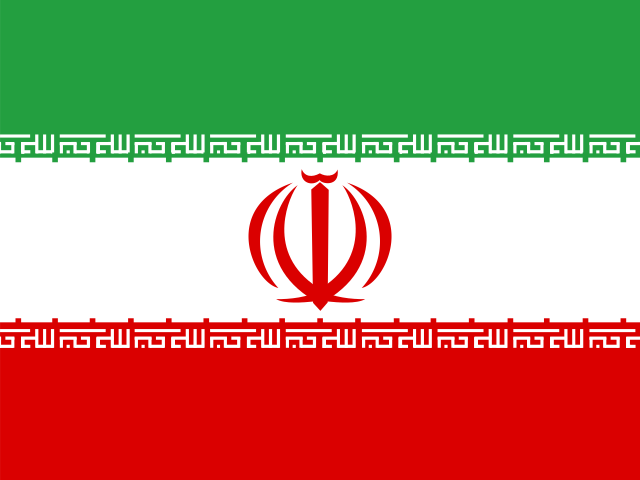
Overview
Iran is a West Asian state that has also been called Persia. Its official name is the Islamic Republic of Iran. It touches Iraq in the west and Turkey, Azerbaijan (including the Nakhchivan exclave) and Armenia in the northwest. The Caspian Sea lies to the north, Turkmenistan to the northeast, Afghanistan and Pakistan to the east, and the Persian Gulf and Gulf of Oman to the south.
The source gives a population of over 92 million and says Iran ranks 17th in the world for both area and population. The country has five regions and 31 provinces. Tehran is the capital, the largest city and the main economic centre.
Iran is described as one of the oldest continuous major civilizations. Its history includes the Medes, the Achaemenid, Parthian and Sasanian empires, Islamization from the 7th century, the Safavids, the Qajars and the Pahlavis. The 1979 revolution replaced the monarchy with an Islamic republic.
The state is a theocratic republic with a mix of elected and unelected bodies. Final authority rests with the supreme leader. The source says it has been widely criticised internationally for its human rights record. It treats Iran as a regional power because of its oil and gas, its location and its role as a centre of Shia Islam. Iran also has one of the most closely watched nuclear programmes. It is a founding UN member, has 30 UNESCO World Heritage Sites (10th-highest in the world per the source) and ranks 4th for intangible cultural heritage.
The source reports recent events: Israeli strikes on Iran in 2025 escalated into the Twelve-Day War. Large protests then began in 2025 amid an economic crisis, described as the biggest since 1979. In 2026 the United States and Israel launched a war with Iran after the killing of supreme leader Ali Khamenei, and his son Mojtaba Khamenei was chosen as successor. The source does not cover later developments, and none are described here.
History
Hominins were present in Iran about 800,000 years ago. Many Middle Paleolithic sites, some linked to Neanderthals, lie mainly in the Zagros Mountains. The Zarzian culture existed in the Epipaleolithic (25,000 to 11,500 years ago). Farming appeared around 12,000 years ago, with early emmer wheat domestication at Chogha Golan.
Settlements and urban life date back to about 4000 BC, including the Jiroft culture in the southeast. Proto-Elamite inscriptions, which predate cuneiform, date from the early third millennium BC. The west of the plateau was part of the ancient Near East through Elam (3200 to 539 BC) and peoples such as the Kassites, Mannaeans and Gutians. Early Iranian peoples arrived from Central Asia in the 2nd millennium BC. The Medes first unified the territory in the 7th century BC.
Under Cyrus the Great the Achaemenids defeated the Medes and created the largest Iranian state ever. Cyrus conquered Lydia and Neo-Babylonia. His son Cambyses II (r. 530 to 522 BC) took Egypt, and Darius the Great (r. 522 to 486 BC) followed. Alexander the Great conquered the empire in the 4th century BC.
The Parthian Arsacids began as Seleucid vassals from the northeastern steppes. They took Babylonia in 142 BC, and the Seleucid collapse followed Antiochus VII's death in 129 BC. The Parthian Empire lasted about five centuries before civil wars weakened it. The Sasanian Empire then took over, and the source describes it as a golden age of Iranian civilization. Much of its life was spent in wars with Byzantium. The Rashidun Caliphate conquered it between 632 and 654.
Under the Umayyads, Arabs adopted many Persian administrative and court customs, and Middle Persian stayed the official language until Arabic replaced it late in the 7th century. Some regions, such as Daylam and Tabaristan, held out. Non-Arab converts resented their lower status, and this fed the Abbasid revolution of 747 to 750. As Abbasid power faded in the 9th and 10th centuries, independent Iranian dynasties emerged and the Persian language and culture revived.
The conversion to Islam happened slowly over time. Around the middle of the 800s, Muslims made up about 40% of the population, and by the close of the 11th century that share had grown to nearly 90%. During this period Persians preserved and revitalized their own language and culture, a development known as Persianization. The Seljuk and Khwarazmian eras came next.
The Mongols arrived in the early 13th century. Bukhara fell in 1220 and the Khwarazmian Empire was destroyed. In 1220 to 1221 Samarkand, Herat, Tus and Nishapur were razed, and Baghdad fell in 1258, ending the Abbasid Caliphate. Timur founded the Timurid dynasty in 1370 and conquered most of Iran after 1381. His campaigns were brutal, including a massacre of about 70,000 people in Isfahan in 1387. The Timurids lost most of Iran in 1452.
The Safavids, founded by Ismail I (r. 1505 to 1524), ruled from 1501 to 1722, with a brief restoration from 1729 to 1736. They reunified Iran under native rule and made Twelver Shia Islam the state religion, forming the basis of the modern state. Nader Shah of the Afsharid dynasty built a large empire that briefly covered all or part of many neighbouring lands, but his military spending ruined the economy. Anarchy followed his death.
The Qajars gained power over the Afsharids and Zands. Agha Mohammad Shah proclaimed himself ruler in 1789, defeated the Zands in 1794 and was crowned in 1796. In the 19th century Iran lost major Caucasus territories to Russia.
The Persian Constitutional Revolution came in the early 20th century. Reza Shah founded the Pahlavi dynasty, ousting the last Qajar shah in 1925. After the Anglo-Soviet invasion of 1941 his son Mohammad Reza Pahlavi came to power. Mohammad Mosaddegh's attempt to nationalize oil led to the Anglo-American coup of 1953.
The 1979 revolution overthrew the monarchy, and Ruhollah Khomeini became the first supreme leader of the new Islamic Republic. Iraq invaded in 1980, starting the eight-year Iran-Iraq War. Iran has since been involved in proxy conflicts with Israel and Saudi Arabia. The source then reports the 2025 Twelve-Day War, the 2025 protests, and the 2026 war and leadership change noted in the overview.
Climate
Iran's climate is diverse, ranging between arid or semi-arid conditions and a subtropical type found by the Caspian shore and in the northern forests. Temperatures in the north seldom drop below freezing, humidity remains high, and summer heat rarely goes beyond 29 °C. Yearly precipitation averages roughly 680 mm across the eastern plains, while the west receives more than 1,700 mm.
The Zagros basin in the west has severe winters with freezing average daily temperatures and heavy snow. The eastern and central basins are arid, with under 200 mm of rain and some deserts, and summer averages can reach 38 °C. The southern coastal plains on the Persian Gulf and Gulf of Oman have mild winters and very hot, humid summers, with 135 to 355 mm of rain a year. The Lut Desert recorded a land skin temperature of 70.7 °C in 2005.
Major cities (approx., general knowledge): Tehran, the capital, is semi-arid with hot dry summers and cold winters with occasional snow. Tabriz in the northwest is cold and semi-arid. Isfahan and Shiraz in the centre and south are dry, with hot summers and cool winters. Mashhad in the northeast has a cold semi-arid climate. Rasht near the Caspian is humid and wet. Bandar Abbas and Bushehr on the Gulf coast have very hot, humid summers and mild winters.
Water scarcity is a major issue. The UN Resident Coordinator for Iran said it poses the most severe human security challenge in the country today. Iran is also seismically active, with a magnitude 7.0 or larger quake about once every ten years on average, such as the 2003 Bam earthquake. Mount Damavand, at 5,610 m, is the highest point and the highest volcano in Asia.
Nearly 60% of Iran is mountainous and under 10% is forested. There are five vegetation regions, including the Hyrcanian forests in the north. The country has over 8,200 plant species, over 200 protected areas and more than 570 bird species. The critically endangered Asiatic cheetah survives only in Iran.
Government and politics
The 1979 constitution sets up a theocratic Islamic republic mixing elected and unelected bodies. The supreme leader (Rahbar) is head of state and has the final say on policy, foreign affairs and security. He is commander-in-chief, and the only one who can declare war or peace. He appoints the heads of the judiciary, state broadcasting and military and police commanders. He also appoints the members of the Guardian Council, and is involved in appointing key ministers. The Assembly of Experts elects him and can dismiss him, but has never challenged any of his decisions, and many see it as largely ceremonial. The Setad, an enterprise under his control, was valued at $95 billion in 2013.
The president is head of government and ranks second to the supreme leader. He is elected by universal suffrage for four years, with a limit of two terms in a row, and candidates must be approved by the Guardian Council. The president runs the executive, chairs the Supreme National Security Council, and works with eight vice presidents and a 22-member cabinet. Ministers need parliamentary approval and the Rahbar's agreement.
The parliament (Majles) is unicameral, with 290 members elected for four years. It drafts laws, ratifies treaties and approves the budget. The 12-member Guardian Council vets all candidates and holds a veto over legislation, which it can strike down for conflicting with sharia or the constitution. The Expediency Discernment Council mediates disputes between parliament and the Guardian Council and advises the supreme leader. Seats include 5 reserved for recognized religious minorities (Sunni Islam is not among the minority seats counted there; Christians, Jews and Zoroastrians hold them).
The legal system is based on Ja'fari sharia with civil law elements. Courts include public courts and revolutionary courts, whose decisions on matters such as national security cannot be appealed. The Special Clerical Court handles alleged crimes by clerics and answers only to the Rahbar. The Chief Justice leads the judiciary and serves up to two five-year terms.
International indices rate Iran poorly on democracy. V-Dem ranked it 158th in electoral democracy for 2024 and classed it as an electoral autocracy. Observers cite limits on assembly, expression and the press, and the treatment of women, ethnic minorities and dissidents. Analyst Karim Sadjadpour is cited as describing two parallel systems: one run by military and intelligence forces answering to the Rahbar, and another of diplomats and politicians.
Centre and regions: the source says the country has five regions and 31 provinces, and that education is highly centralized under national ministries. In general, Iran is a unitary state, not a federation. Provincial governors are appointed by the national government (approx., general knowledge), and elected local councils exist at city and village level. Tax, health policy, law, education and security are set nationally, so provinces have only limited autonomy. Free trade and special economic zones, such as Kish, Qeshm and Chabahar, have their own rules (approx., general knowledge). The revolutionary courts and the Special Clerical Court are special jurisdictions inside the national judicial system.
Elections: the source does not name any upcoming election and no results after the retrieval date are covered.
Economy
Iran's economy ranked 19th in the world by PPP-adjusted GDP in 2024. It mixes central planning, state ownership of oil and large enterprises, village farming and small private trade. Services are the largest part of GDP, then industry (mining and manufacturing), then agriculture. The Tehran Stock Exchange has over 40 industries involved. The currency is the rial, managed by the Central Bank. Unemployment was 9% in 2022.
Energy: Iran holds about 10% of world oil reserves and 15% of gas reserves. It produced about 4% of world crude in 2023 (3.6 million barrels a day), earning about US$36 billion in exports and most of its foreign currency. The source says it ranks 3rd in oil reserves and is OPEC's 2nd-largest exporter, with the 2nd-largest gas reserves and 3rd-largest gas output. Iran found a southern field of 50 billion barrels in 2019 and shale deposits of 2.6 billion barrels in 2024. It makes 60 to 70% of its oil industry equipment at home.
Industry: Iran was 16th in global car production in 2024, building 1.188 million cars in 2023, and exports to Venezuela, Russia and Belarus. Cars are the second-most active industry after oil and gas. Other strengths are construction materials, appliances, food, pharmaceuticals, IT, petrochemicals, armaments, and biotech and nanotech. Construction turns over about US$38.4 billion a year, and about 70% of Iranians own homes. Iranian firms also win foreign contracts for dams, roads and power plants.
Agriculture and fishing: about one-third of the land could be farmed but only 12% is cultivated, and under a third of that is irrigated. Iran is among the world's top five producers of apricots, cherries, dates, figs, pistachios, walnuts, kiwifruit and watermelons, among others. It is the largest producer and exporter of caviar, exporting over 300 tonnes a year.
Tehran is the economic powerhouse: about 30% of public-sector workers and 45% of large industrial firms are located there. The government recognizes only Islamic labour councils and no independent trade unions. Subsidies on food and petrol are large, around $100 billion for energy alone in 2022, and have driven chronic budget deficits. Iran introduced a national basic income in 2010 and says it is reforming subsidies and privatising some industries.
Constraints: international sanctions have damaged the economy. Inflation is high, with food prices surging. The source blames the IRGC's involvement in the economy, particularly agriculture and food, and heavy spending on regional allies. Iran is one of three countries that have not ratified the Paris Agreement.
Tourism: nearly nine million foreign visitors came in 2019. About six million came in 2023, up 43%, and visa requirements were dropped for 60 countries that year. Tourism reached about 5% of the economy in 2022. Most visits (98%) are for leisure. Popular destinations are Tehran, Isfahan, Shiraz and Mashhad. Domestic tourism is very large, with $33 billion spent in 2021.
Demographics and urbanization
Iran's population grew from about 19 million in 1956 to about 85 million in early 2023, and the source lead cites over 92 million. Fertility fell from 6.5 children per woman to about 1.7, and growth is expected to slow and level off near 105 million by 2050.
Between 1950 and 2002, the proportion of Iranians living in cities climbed from 27% to 60%, giving the country among the fastest rates of urban expansion anywhere. The population is concentrated mainly in the western half of the country, particularly in the north, northwest and west. The urban share today is higher still, at roughly 75 to 80% (approx., general knowledge).
Largest cities (source figures): Tehran about 9.4 million (capital), Mashhad about 3.4 million (capital of Razavi Khorasan), and Isfahan about 2.2 million (capital of Isfahan province, the third capital of the Safavids). Other large cities include Karaj, Shiraz and Tabriz (approx., general knowledge).
Ethnicity is debated because there are no ethnic censuses. A 2003 estimate gives Persians 51%, Azerbaijanis 24%, Gilaks and Mazanderanis 8%, Kurds 7%, Arabs 3%, Lurs 2%, Balochis 2%, Turkmens 2% and others 1%. The Library of Congress (2008) gave Persians 65% (including Gilaks and Mazandaranis), Azerbaijanis 16%, Kurds 7% and Lurs 6%. A UN Fact-Finding Mission said minorities were disproportionately affected by the crackdown on the Woman, Life, Freedom movement.
Languages: Persian is the official and national language. Azerbaijani is the most-spoken minority language, and others include Kurdish, Gilaki, Mazenderani, Luri, Armenian, Georgian, Neo-Aramaic and Arabic.
Religion: Twelver Shia Islam is the state religion, followed by 90 to 95% of Iranians, and 5 to 10% are Sunni, mainly Hanafi. Sunni Islam, Christianity, Judaism and Zoroastrianism are officially recognized. Christians number about 250,000 to 370,000, mostly Armenian, and Iran has the largest Jewish community in the Muslim world outside Israel. Yarsanism has an estimated 500,000 to 1,000,000 followers. The Baháʼí Faith is not recognized and its followers face persecution. Conversion away from Islam is persecuted and irreligion is not recognized.
Migration: Iran hosts almost one million refugees, mostly from Afghanistan and Iraq, and by 2025 an estimated four million Afghan migrants and refugees.
Education and health: education is centralized, with literacy at 86% for people aged 15 and older in 2016 (men 90%, women 81%). Education spending is about 4% of GDP. Entry to university requires a diploma and the national entrance exam. About 90% of Iranians had health insurance in 2016, and a primary care network has cut child and maternal mortality. Iran is the only country with a legal organ trade, and is an emerging medical tourism destination.
Capital city
Tehran is the capital and largest city, with about 9.4 million people in the city proper (source). The wider metropolitan area has roughly 15 million (approx., general knowledge). It lies in the north of the country at the foot of the Alborz range (approx., general knowledge).
Climate (approx.): semi-arid, with hot, dry summers, cold winters with some snow, and limited rainfall, mostly in winter and spring. Air pollution is a recurring problem (approx., general knowledge).
Role: Tehran is the political centre, seat of the national government, and also the main economic city, so Iran does not split these roles between cities. About 30% of the public-sector workforce and 45% of large industrial firms are based there, and about half of those firms' employees work for government. It is also a major cultural and educational centre with many universities and museums (approx., general knowledge). It is the most popular tourist destination alongside Isfahan, Shiraz and Mashhad. Iran has a single capital.
About this summary
Some details on metro populations, city climates, provincial administration and free zones, Tehran's setting and recent events come from general knowledge and are approximate. Figures marked approx. are not taken from the source.