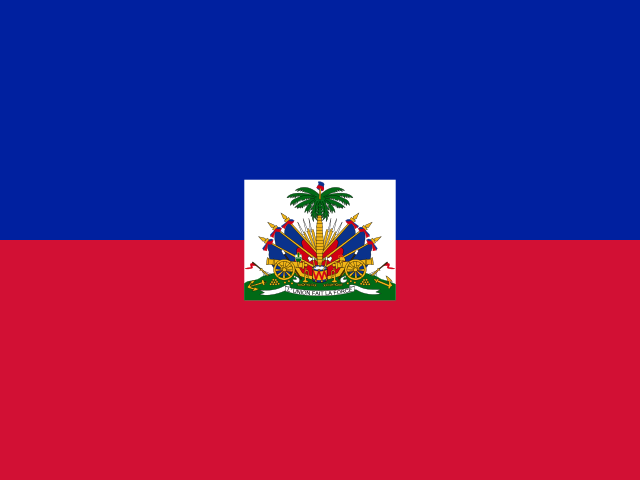
Overview
Haiti, officially the Republic of Haiti, occupies the western three-eighths of the island of Hispaniola in the Caribbean, east of Cuba and Jamaica and south of The Bahamas. It shares the island with the Dominican Republic. By area it is the third largest Caribbean country, and with roughly 11.4 million people (estimate) it has the biggest population of any Caribbean state. Port-au-Prince is both the capital and the largest city.
The Taíno were the earliest inhabitants of the country. When Columbus landed in 1492, he established La Navidad on the north-east coast, which became the first European settlement in the Americas. Spain controlled the island until 1697, at which point France took the western portion and named it Saint-Domingue, a plantation colony that depended on the labour of enslaved Africans. Through the Haitian Revolution (1791-1804), the Caribbean gained its first sovereign state, and the Americas gained their second republic. It also remains the only nation ever created by a slave revolt that succeeded.
Haiti is among the world's least developed countries. Gang violence has displaced more than 1.3 million people, state institutions have largely stopped functioning, and the country has been described as a failed state. The presidency has been empty since the assassination of Jovenel Moïse in July 2021, and no elected officials remain in office.
Haiti is a founding member of the United Nations, the Organization of American States, the Association of Caribbean States and the Organisation internationale de la Francophonie. It also belongs to CARICOM, the IMF, the WTO and the Community of Latin American and Caribbean States.
History
Hispaniola has been inhabited for about 6,000 years, first by Archaic hunter-gatherers believed to have come from Central or northern South America. During the 1st millennium BC, Arawakan-speaking ancestors of the Taíno arrived, bringing intensive pottery and agriculture.
Christopher Columbus landed on 6 December 1492 at a spot he called Môle-Saint-Nicolas and claimed the island for Castile. His ship Santa María ran aground near today's Cap-Haïtien on 25 December, and 39 men left behind founded La Navidad. Relations were at first friendly, but the settlers were later killed by the Taíno. Eurasian diseases brought by the Europeans caused epidemics that killed large numbers of Indigenous people.
In 1697 the western third went to France and was named Saint-Domingue. Sugar and coffee plantations worked by huge numbers of enslaved Africans made it France's richest colony, producing around 40% of French foreign trade. Enslaved people outnumbered settlers by almost 10 to 1.
Inspired by the French Revolution, settlers and free people of color pressed for more political rights. Vincent Ogé led a free-colored militia in 1790 and was captured and executed. In August 1791 slave armies formed in the north under leaders including Toussaint Louverture, inspired by the Vodou priest Boukman, and this grew into the full Haitian Revolution (1791-1804).
Jean-Jacques Dessalines proclaimed independence under the name Haiti on 1 January 1804 in Gonaïves and was acclaimed Emperor Jacques I. Between January and April 1804 an estimated 3,000 to 5,000 remaining whites were killed, with a few narrow categories spared.
After Dessalines's death the country split: a kingdom in the north under Henri Christophe, and a republic in the south around Port-au-Prince under Alexandre Pétion. Pétion carried out land reforms that benefited peasants and gave military and financial help to Simón Bolívar. Jean-Pierre Boyer reunified the country after Christophe's suicide and, after Santo Domingo declared independence from Spain in November 1821, took over the whole island. His Code Rural tied peasants to the land and bred resentment.
Boyer was ousted in 1843. Dominican nationalists seized Santo Domingo on 27 February 1844, ending Haitian rule over the east. Faustin Soulouque took power in 1847 and later ruled as emperor in the Second Empire (1849-1859), until the republic returned in 1859. Haiti then suffered repeated coups, including those of 1867 and 1869, with some modernisation under presidents such as Lysius Salomon (1879-1888). The 19th century also left Haiti with a crippling debt to France and international isolation.
Growing German influence in Haiti's economy alarmed the United States, which in December 1914 took control of Haitian National Bank funds by moving them to New York. U.S. forces then occupied Haiti from 1915 to 1934.
After the occupation, in 1937 Dominican dictator Rafael Trujillo ordered the Parsley Massacre, in which an estimated 20,000-30,000 Haitians on the Dominican side of the border were killed over about five days.
François 'Papa Doc' Duvalier was elected in 1957 and ruled until his death in 1971. He built a private militia, the Tontons Macoutes, and purged the army. His son Jean-Claude 'Baby Doc' succeeded him, and the family regime ended in 1986. Duvalier, his wife and their agents are estimated to have taken US$504 million from the treasury between 1971 and 1986.
After 1986 came military-led governments, aborted elections in 1987, fraudulent elections in 1988 and several coups. Jean-Bertrand Aristide won the 1990-91 election but was overthrown in September 1991 by the military under Raoul Cédras. In September 1994 the US negotiated the generals' departure and 20,000 US troops entered under Operation Uphold Democracy, restoring Aristide. René Préval won in 1995 and Aristide returned in 2000 with 92% of the vote in a boycotted election.
In 2004 a revolt began in the north and Aristide left the country; the circumstances are disputed, with Aristide describing it as a coup or kidnapping by US forces, which the US denies. A UN Stabilisation Mission (MINUSTAH) was deployed and became controversial over heavy-handed methods and alleged abuses. Préval was re-elected in 2006.
Natural disasters struck repeatedly: Tropical Storm Jeanne killed about 3,000 people in 2004, mostly around Gonaïves, and four storms in 2008 caused 331 deaths. On 12 January 2010 a magnitude-7.0 earthquake killed an estimated 160,000 to 316,000 people and left up to 1.6 million homeless. A cholera outbreak linked to waste from a UN peacekeeping base followed, killing roughly 10,000 people and sickening nearly a million by 2017; the UN apologised in 2016.
Michel Martelly won the 2010-11 elections and stepped down in 2016. Jovenel Moïse won the November 2016 election, on a record-low 17% turnout, and took office in 2017. Protests over fuel prices began in July 2018 and grew into demands for his resignation. Moïse was assassinated at his residence on 7 July 2021, and Ariel Henry became acting prime minister on 20 July. A strong earthquake on 14 August 2021 caused many more casualties.
Gang violence in Haiti intensified starting in 2021. By the end of 2023, gangs held an estimated 80% of Port-au-Prince, and over the course of 2023 they killed 4,789 people, kidnapped 2,490 and displaced roughly 362,000. On 3 March 2024, the capital's main prison was overrun by gangs, and about 3,700 inmates got out. Henry had to step down on 24 April 2024, after which a nine-member Transitional Presidential Council was established. The Kenyan-led Multinational Security Support Mission has not managed to bring back public safety. When the council's mandate lapsed on 7 February 2026, acting prime minister Alix Didier Fils-Aimé remained as the only executive, awaiting elections that were pushed back to the second half of 2026; their outcome is not covered here.
Climate
Haiti has a tropical climate that varies with altitude. The country is the most mountainous in the Caribbean, with plains covering only about 22% of its area, and the highest point is Pic la Selle at 2,680 m. Rainfall is heavier in some lowlands and on the northern and eastern mountain slopes.
Port-au-Prince is hot all year: January averages run from about 23 °C at night to 31 °C by day, and July from about 25 °C to 35 °C. Annual rainfall is around 1,370 mm, with two rainy seasons (April-June and October-November) and a dry season from November to January. Other major cities include Cap-Haïtien on the northern coast, Les Cayes in the south, Gonaïves on the west coast and Jacmel on the south coast, all with a hot, humid tropical climate (approx.), with Cap-Haïtien and the northern slopes generally wetter.
Hurricanes, floods, droughts and earthquakes are persistent hazards, made worse by deforestation and soil erosion. Haiti lies over the Enriquillo-Plantain Garden and Septentrional-Oriente fault systems, and the 2010 earthquake occurred on this system. Tree cover is estimated at about 30%, much higher than the often-cited 2%. The country has four ecoregions, about 5,000 identified plant species and over 260 bird species, 31 of them endemic to Hispaniola. Major national parks include La Visite and Pic Macaya.
Government and politics
Under the 1987 constitution (amended in 2012), Haiti is a semi-presidential republic with separate executive, legislative and judicial powers. The president is head of state, directly elected for five-year terms with no consecutive re-election, and the prime minister is head of government. The National Assembly has a Senate (three senators per department, six-year terms) and a Chamber of Deputies (at least one per commune, four-year terms). The judiciary is headed by the Supreme Court (Court of Cassation) and the Courts of Appeals. The legal system is based on a modified Napoleonic Code.
In practice this structure exists only on paper. The presidency has been vacant since 2021, the National Assembly and judiciary no longer function, and there have been no elected officials since 2023. Since April 2024 a Transitional Presidential Council operated until its mandate expired on 7 February 2026, leaving the acting prime minister as sole executive. Elections are scheduled for the second half of 2026 and their result is not covered here. Since independence Haiti has experienced 32 coups.
Sub-national structure: Haiti has ten departments, 42 arrondissements, 145 communes and 571 communal sections. Departments and communes are formally autonomous from the central government in their administration and finances, and each level is led by a three-member council, elected by universal suffrage at communal-section level and by assemblies of lower-level representatives at commune and department level. In practice the central government and ministries hold the main policy powers in areas such as health, justice and education, and local capacity is weak (approx.). Haiti has no special autonomous jurisdictions; Navassa Island is disputed with the United States, which administers it.
The Armed Forces of Haiti (FAd'H) were disbanded in 1995 and re-established in 2017, with about 2,000 members as of 2023. The Haitian National Police, created in 1995, had about 9,000 members in 2016 and has suffered high desertion and casualties since 2020. The country has ranked among the most corrupt in the world. In 2023 the homicide rate more than doubled to about 40.9 per 100,000. The UN reports that over 2.7 million people live under gang control, and prisons are severely overcrowded.
Economy
Haiti is one of the poorest countries in the Americas. Nominal GDP was about US$33.55 billion in 2025, with PPP GDP of about US$38.2 billion. About 30% of the population lived in extreme poverty in 2021 (under US$2.15 per day) and 87.6% earned under US$6.85. A formal economy controlled by an elite coexists with an informal sector that accounts for about 90% of employment.
Remittances are the main source of foreign exchange, equal to about a fifth of GDP in 2012. Many skilled workers emigrate; in 2004, 80% or more of college graduates lived abroad. Monopolies and oligopolies keep prices the highest in the region. Haiti joined the WTO in 1996 and liberalised trade in the 1980s, which hurt farmers. Foreign aid has been large, and about US$13.34 billion was earmarked for post-2010 reconstruction through 2020, though disbursement lagged.
About 40-50% of Haitians work in agriculture, yet only 11.3% of land is highly suitable for crops and Haiti imports about half its food and 80% of its rice. It is the world's leading producer of vetiver (about half of global supply). Exports include mangoes, cacao and coffee. The United States takes the great majority of exports, while the Dominican Republic and the US are the main import partners.
Energy is a major constraint: only about 27.5% of the population had electricity access (source figure), there is no national grid, power cuts are daily and wood and charcoal are the common fuels. Roads are poor, with two main highways from Port-au-Prince (Route Nationale 1 to Cap-Haïtien and Route Nationale 2 to Les Cayes). Toussaint Louverture International Airport near Port-au-Prince is the main gateway, along with Cap-Haïtien; it reopened in May 2024 after a three-month closure. Tap tap buses serve as shared taxis. The currency is the gourde (HTG), and US dollars are widely accepted.
The Caracol Industrial Park (opened 2012, 240 hectares, US$300 million) was meant to create up to 65,000 jobs but had only about 5,000 permanent jobs from its main tenant, and has been judged to have fallen short. Tourism is small (about 1.25 million visitors in 2014, mostly cruise passengers). Access to water and sanitation is very low.
Demographics and urbanization
Haiti's population was about 10.8 million in 2018 and about 11.4 million in a recent estimate. Density is roughly 350 people per km², concentrated in urban areas, coastal plains and valleys. The population is young (half under 20 in 2006). Life expectancy at birth was about 63.7 years in 2018. Urbanization is roughly 60% (approx.), with the Port-au-Prince metropolitan area home to roughly 2.5 to 3 million people (approx.).
Other main cities (approx. populations): Cap-Haïtien, a few hundred thousand; Carrefour and Delmas, large parts of the Port-au-Prince urban area, each several hundred thousand; Pétion-Ville, a hillside suburb; Gonaïves, Les Cayes and Jacmel, smaller regional cities. Gang violence has displaced over 1.3 million people.
A large diaspora lives in the United States (about 881,500 of Haitian ancestry in 2015), the Dominican Republic, Cuba, Canada and France. The elite is small and generally lighter-skinned, with mulattoes making up about 5% of the population.
French and Haitian Creole are official. Creole is spoken by nearly everyone, while French is spoken by about 42% and used in schools, administration and business. About 55% are Catholic and 29% Protestant. Vodou is formally practised by about 2.1%, though perhaps 50-80% blend elements of it with other beliefs; it was recognised in 2003.
Adult literacy was 61.7% in 2022. More than 80% of primary schools are privately run. Health indicators are poor: infant mortality was 48.2 per 1,000 in 2019, tuberculosis incidence is the highest in the region, and about 75% of households lack running water. Partners In Health built the solar-powered Hôpital Universitaire de Mirebalais.
Capital city
Port-au-Prince is the capital and largest city, on the Golfe de la Gonâve in the Plaine du Cul-de-Sac area of western Haiti. Its metropolitan area has roughly 2.5 to 3 million people (approx.).
The climate is hot and tropical: daytime highs around 31 °C in January and 35 °C in July, annual rainfall about 1,370 mm, a dry season from November to January and rainy seasons in April-June and October-November.
It is the political, economic and cultural centre. It hosts the presidency and government institutions, the country's main port, Toussaint Louverture International Airport, the University of Haiti and the Port-au-Prince penitentiary. It is also the main economic city, so the capital and the main economic centre coincide. Shantytowns surround the central city and climb the hillsides, while the middle and upper classes live in suburbs such as Pétion-Ville.
Security is severe: by late 2023 gangs were estimated to control about 80% of the city. Its main prison was stormed on 3 March 2024, and the airport closed for three months before reopening in May 2024. The city was devastated by the 2010 earthquake. Conditions for residents and visitors are extremely dangerous.
About this summary
Approximate general-knowledge facts: capital-city population and climate details, metro and city populations, and recent security and political developments. Some city-level and 2024-2026 context is approx.