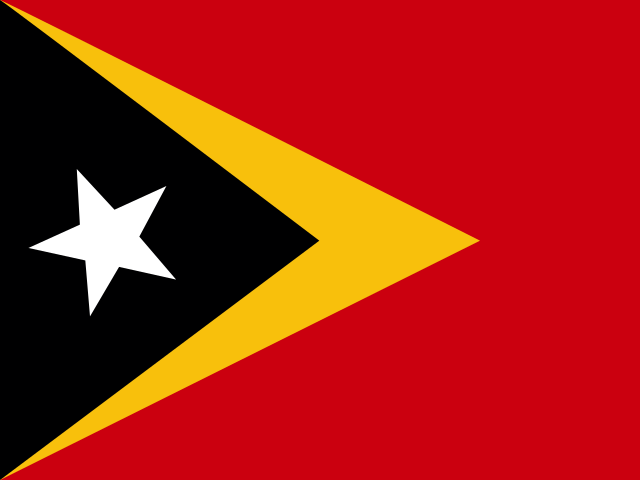
Overview
Timor-Leste, also called East Timor, is a small Southeast Asian country. It covers the eastern half of the island of Timor, the Oecusse exclave on the island's northwest coast, and the islands of Atauro and Jaco. Total land area is about 15,007 square kilometres. Indonesia lies to the west and surrounds Oecusse, while Australia is the southern neighbour across the Timor Sea.
The country was a Portuguese colony until 1975, was then invaded and annexed by Indonesia, and gained independence after a UN-sponsored vote in 1999 followed by a period of UN administration. On 20 May 2002 it became the first new sovereign state of the 21st century. Relations with Indonesia were established and normalised that same year.
It has a semi-presidential political system and is a member of ASEAN and of the Community of Portuguese Language Countries, and an observer of the Pacific Islands Forum. It is still a poor country whose economy depends heavily on oil revenue, government spending and foreign aid.
The population is young and mostly Catholic. Portuguese and Tetun are the two official languages, and about 30 indigenous languages and dialects are spoken. The 2026 census reported a population of over 1.44 million.
History
Evidence of human activity at Jerimalai, at the eastern tip of the country, dates back about 42,000 years. The earliest inhabitants arrived with the Australo-Melanesian migration and probably brought the forerunners of today's Papuan languages. A later Austroasiatic-speaking migration is suspected, but no such languages survive. Austronesian arrivals brought new languages and blended with existing cultures. Timorese origin myths tell of settlers sailing around the eastern end of the island and landing in the south.
Portuguese presence was very limited at first, with trade routed through settlements on nearby islands. A more direct presence developed in the 17th century, after the Dutch pushed the Portuguese out of other islands. Solor was lost in 1613 and the Portuguese relocated to Flores. In 1646 their capital moved to Kupang in western Timor, which fell to the Dutch in 1652, and they then settled at Lifau in what is now the Oecusse exclave. Effective European occupation of the east of the island began only in 1769. Portuguese rule lasted until 1975.
Civil strife in 1975 led to a unilateral declaration of independence, after which Indonesia invaded and annexed the territory. Fretilin, the party behind that declaration, fought the invasion, initially with a conventional army that kept hold of territory until November 1978 and afterward with guerrilla tactics. Violence and brutality characterized the occupation. A statistical report prepared for the Commission for Reception, Truth and Reconciliation cited a minimum of 102,800 deaths linked to the conflict between 1974 and 1999, comprising roughly 18,600 killings and 84,200 excess deaths caused by hunger and illness. Another estimate, based on Portuguese, Indonesian and Church data, indicates the overall toll might reach 200,000. These events are known as the East Timor genocide.
Under Indonesian rule, repression cancelled out improvements in health and education, so living standards barely improved, and economic growth mostly benefited immigrants from elsewhere in Indonesia. A large expansion of schooling aimed to spread the Indonesian language and strengthen internal security as much as to promote development.
In 1991, Indonesian troops killed over 200 protesters, an event that marked a watershed and intensified pressure from abroad. Following President Suharto's resignation, his successor BJ Habibie agreed to hold a referendum, a step he took after Australian Prime Minister John Howard sent him a letter. A vote supervised by the UN was held in August 1999 under an Indonesia-Portugal agreement sponsored by the UN. Although the result clearly favored independence, pro-integration militias, supported by elements of the Indonesian military, responded with a violent campaign. Indonesia subsequently permitted the multinational force INTERFET to restore order and aid refugees and displaced people. The UN assumed administration through UNTAET on 25 October 1999, and in February 2000 INTERFET's command passed to the UN.
The first UN-organised election, for a Constituent Assembly, was held on 30 August 2001. The assembly approved the constitution on 22 March 2002, and by May 2002 more than 205,000 refugees had returned. The constitution took effect on 20 May 2002, when independence was recognised. Xanana Gusmão became the first president, and the country joined the UN on 27 September 2002.
In 2006 unrest and factional fighting forced 155,000 people from their homes, and the UN sent in security forces. In 2007 Gusmão chose not to seek another presidential term, José Ramos-Horta was elected president in a largely peaceful process, and Gusmão became prime minister at the head of the CNRT after the June parliamentary elections. In February 2008 Ramos-Horta was critically injured in an assassination attempt, while Gusmão separately came under fire but was unharmed. Australian reinforcements were sent. The UN handed operational control of the police to Timorese authorities in March 2011 and ended its peacekeeping mission on 31 December 2012.
Francisco Guterres of Fretilin became president in May 2017, and Fretilin leader Mari Alkatiri formed a coalition government after the July 2017 elections. That government soon fell, leading to a new election in May 2018, after which former president and independence fighter Taur Matan Ruak became prime minister in June 2018. José Ramos-Horta won the April 2022 presidential runoff against Guterres and took office again on 20 May 2022. In 2026 the country took part for the first time as a full ASEAN member in an ASEAN summit, held in the Philippines.
Climate
The climate is tropical, with fairly stable temperatures all year. A wet season runs from December to May nationwide, and lasts a little longer in the south and interior because of the Australian monsoon. Monthly rainfall in the wet season can reach roughly 222–252 mm, dropping to about 12–18 mm in the dry season. The mountainous interior is cooler than the coasts.
Dili, the capital on the north coast, has a hot, tropical climate with a pronounced dry season, with average temperatures of roughly 27–28 °C (approx.) and little seasonal change in temperature; it is one of the drier parts of the country (approx.). Baucau, the second-largest town, sits on a plateau in the east at moderate elevation and is somewhat cooler and breezier than Dili (approx.). Upland towns such as Maubisse and Ermera in the central mountains are noticeably cooler, and the south coast is wetter than the north (approx.).
The country is prone to flooding and landslides after heavy rain, especially when La Niña increases rainfall. Many rivers partly dry up in the dry season. Coastal areas rely heavily on groundwater, which is under pressure from mismanagement, deforestation and climate change. Temperatures are thought to have risen slightly, with little change in annual rainfall.
Terrain is mountainous, with ridges of inactive volcanic mountains along the island and almost half of the land having a slope of at least 40%. The highest point is Tatamailau (Mount Ramelau) at 2,963 m. Soils are mostly shallow, poor and erosion-prone. The country is about 265 km long and 97 km wide, with roughly 700 km of coastline, and its exclusive economic zone covers about 77,051 km². Its waters are part of the Coral Triangle biodiversity hotspot. Forests covered about 35% of the land in the mid-2010s, and Nino Konis Santana National Park in the far east is the first conservation area. Deforestation, land degradation, overfishing and pollution threaten ecosystems.
Government and politics
Timor-Leste is a semi-presidential republic modelled on the Portuguese system. The constitution separates executive, legislative and judicial powers, and nobody may sit in both the legislature and the executive. In practice the executive has controlled the legislature under every party, reflecting the dominance of individual leaders. The judiciary is independent, with some instances of executive interference, and some courts move between locations to serve remote areas. Changes of government have been peaceful, elections are run by an independent body, and turnout is around 70% to 85%.
The president is directly elected for a five-year term, with a maximum of two terms. Formal powers are fairly limited, with no power to appoint or dismiss the prime minister or cabinet, but being directly elected has given presidents considerable informal influence. The president can veto legislation (parliament can override with a two-thirds majority), call referendums, and dissolve parliament if it cannot form a government or pass a budget. The prime minister is the leader of the majority party or coalition, appointed by the president, and presides over the cabinet. The José Ramos-Horta presidency began in May 2022.
The unicameral National Parliament is elected for five years, with between 52 and 65 seats. Voters choose among party lists in a single national district, parties need 3% of the vote to win seats, and seats are allocated by the D'Hondt method. At least one in every three candidates on party lists must be a woman, so women hold over a third of seats, though they are less prominent at other levels and in party leadership. Parties are tied more to personalities than ideology. Fretilin, the party of the resistance, is strongly associated with the east, while the CNRT, founded so Xanana Gusmão could run in 2007, became its main rival. Both are still led by an old guard from the resistance era. There is a broad east-west political divide arising from the Indonesian period.
Authority is concentrated in the capital. Dili's national government manages the majority of civil services and administration. Fourteen municipalities make up the country, and these break down further into 64 administrative posts, along with 442 sucos (villages) and 2,225 aldeias (hamlets). Municipalities correspond to the districts of the Portuguese period, which were given new names in 2009, and they hold very limited powers. From 2016 onward, each one has been headed by a civil servant whom the central government appoints, with advice from locally elected leaders. Matters of taxation, health, education and law stay under national control, so municipalities chiefly carry out services for the national government.
Oecusse, an exclave surrounded by Indonesian territory, is a Special Administrative Region with its own special administrative policy and economic regime under Articles 5 and 71 of the constitution. This was implemented by Law 3/2014, effective January 2015, and the region began running its own civil service in June 2015. Atauro became its own municipality in January 2022 (previously an administrative post of Dili), and there are plans to turn it into a special economic zone similar to Oecusse.
Sucos typically have 2,000 to 3,000 residents and reflect traditional customs and kinship ties. Some suco officials are elected under laws from 2004, 2009 and 2016, but they sit outside the formal state system and rely on municipal governments for formal administration. Nevertheless, suco leaders have great influence and are often seen as state representatives.
The National Police and the Defence Force (F-FDTL, set up in 2001) have held a monopoly on armed force since 2008, and few guns exist outside them. The army has about 2,200 soldiers and a naval component of about 80, with one aircraft and seven patrol boats. There is some military cooperation with Australia, Portugal and the United States. Civil society and media are active and independent, concentrated in the capital, there are no powerful trade unions, and the Catholic Church is influential.
On foreign policy, the country has long relied on international cooperation. Donors once supplied 80% of the budget, and five UN missions served from 1999 to 2012. It applied to join ASEAN in 2011, was accepted in principle in 2022, and was announced as the 11th full member in 2025 for admission at the October 2025 summit; it has participated as a full member since. It also belongs to the Community of Portuguese Language Countries and the g7+ group of fragile states, and is an observer in the Pacific Islands Forum and the Melanesian Spearhead Group. Australia, Portugal, Germany and Japan are continuing bilateral donors, and China has contributed to infrastructure in Dili. A long dispute with Australia over maritime resources was settled by a 2018 treaty setting the maritime boundary and revenue arrangements.
Economy
The economy is market-based but dependent on a few commodities, with a large public sector. It uses the US dollar, with locally produced coins. It is generally open to foreign investment, but foreigners cannot own land, so many need a local partner. Competition is limited more by the small market than by government barriers. Imports far exceed exports, prices are often higher than in neighbouring countries, and inflation is strongly influenced by government spending. Growth averaged only about 2.5% a year from 2011 to 2021.
Just over 40% of people live below the national poverty line, especially in rural areas where many are subsistence farmers or fishers; most urban residents are also poor. Women are poorer than men and have lower employment (in 2016, 91% of married men aged 15–49 worked versus 43% of married women). More than half of children show stunted growth. The three eastern municipalities, with about a quarter of the population, have less poverty than the western areas with half of the population. Dili residents are better off on average but still poor by international standards.
Roughly 66% of families depend partly on subsistence activities, but the country's own food production falls short, so it imports what is missing. Government spending on agriculture is minimal. One quarter of the population earns a living in the informal economy, and the public and private formal sectors each account for 9% of jobs. Looking at people of working age, around 23% hold formal-sector jobs, 21% are still in school, and 27% make their living through subsistence farming and fishing. Cash dominates the economy, bank lending is scarce, and remittances total approximately $100 million annually.
Natural resources, mainly oil and gas, were once worth as much per person as the wealth of an upper-middle-income country. The Petroleum Fund was set up in 2005. Between 2005 and 2021, $23 billion in oil earnings entered it, investments generated $8 billion and $12 billion was spent. It held about $19 billion in 2021, roughly ten times the national budget, and funds about 80% of government spending. Withdrawals have exceeded sustainable levels almost every year since 2009, and the fund is at risk of running down. The Bayu-Undan field is expected to run out soon, and Greater Sunrise remains undeveloped, with technical and political difficulties. Declining oil and gas output contributed to a falling HDI from 2010.
Taxes are the second-largest source of government income at under 8% of GDP, and 23 autonomous agencies (ports, infrastructure companies, the national university) also contribute. Government spending is among the highest in the world relative to the economy, but investment in education, health and water is small. Spending fell from 2012, which hurt the private sector and growth.
Private sector development is held back by a shortage of skills, weak infrastructure, an incomplete legal system and inefficient regulation. Property rights are unclear because of overlapping Portuguese-era and Indonesian-era titles and customary rights. As of 2010, household electricity access was 87.7% in urban areas and 18.9% in rural areas, 38.2% overall. The private sector shrank between 2014 and 2018, and the economy shows signs of a resource curse. Coffee made up 90% of non-fuel exports from 2013 to 2019, with those exports totalling around US$20 million a year. About 75,000 tourists visited in 2017.
Demographics and urbanization
The census counted 1,183,643 people in 2015 and 1,341,737 in 2022, and the 2026 census reported over 1.44 million. People live mainly along the coast, where all urban areas are found. Urban residents generally have better education, jobs and healthcare, and gender disparities are smaller in the capital. The wealthy minority often travel abroad for health care and education. The urbanization rate is roughly 30–35% (approx.).
Dili is by far the biggest city, with roughly 300,000 people in the municipality (approx.). Baucau, in the east, is the second-largest town, with a population in the tens of thousands (approx.). Other district capitals such as Maliana, Same, Suai, Lospalos, Viqueque and Oecusse town are small.
The population is very young, with a median age under 20. In 2015 almost 45% of males over 14 were aged 15 to 24, one of the biggest male youth bulges in the world. Fertility fell from about 7.8 at independence to 4.2 in 2016, and is higher in rural, poorer and less literate households. In 2016 average household size was 5.3, 41% of people were under 15, and 18% of households had a female head. Life expectancy rose from 48.5 years in 1990 to 69.5 in 2019. Infant mortality was 30 per 1,000 in 2016, down from 60 in 2003. Stunting among under-fives was 46%, down from 58% in 2010. Healthcare received 6% of the 2021 budget. In 2016, 45.8% of people were multidimensionally poor.
Communities are not sharply defined by ethnicity or language, and family descent tied to sacred house affiliation matters more for identity. A broad cultural distinction separates the east (Baucau, Lautém and Viqueque) from the west, rooted more in history than in language. Small minorities include mestiços of Portuguese and local descent, Hakka Chinese, Goan-descended Indians, people of African origin from other Portuguese colonies, and Hadhrami Yemeni descendants. The demonym is Timorese or East Timorese.
Portuguese and Tetun are the official languages, with English and Indonesian as working languages under the constitution's transitional provisions. It is the only sovereign state in Asia with Portuguese as an official language. In 2012, 35% could speak, read and write Portuguese, and the 2015 census found about 50% of 14–24-year-olds could speak and understand it. Reported literacy was 77.8% in Tetun, 55.6% in Indonesian and 39.3% in Portuguese, and about 15% of those over five were literate in English. The indigenous languages belong to the Austronesian and Papuan families. The 2015 census gave mother-tongue shares of Tetun Prasa 30.6%, Mambai 16.6%, Makasai 10.5%, Tetun Terik 6.05%, Baikenu 5.87%, Kemak 5.85%, Bunak 5.48%, Tokodede 3.97% and Fataluku 3.52%. Six languages are considered endangered.
The 2022 census found 97.6% Catholic, 1.98% Protestant, 0.24% Muslim and small shares of other faiths. Only about 20% called themselves Catholic at the time of the 1975 invasion, but the figure reached 95% within a decade, because Indonesian state ideology required belief in God and did not recognise traditional beliefs. There are three dioceses: Díli, Baucau and Maliana. In rural areas Catholicism is often blended with animist beliefs. Protestant and Muslim numbers fell after 1999, as those groups were over-represented among supporters of integration with Indonesia.
Adult literacy was 68% in 2021, and 84% among 15–24-year-olds. More girls than boys attend school, though some drop out at puberty. Primary schools are widespread but of uneven quality, secondary schools are mostly in municipal capitals, and education takes 10% of the budget. The National University of Timor-Leste is the main university, with four colleges as well. Portuguese has gained ground as the language of instruction: in 2001 only 8.4% of primary pupils attended Portuguese-medium schools, rising to 81.6% by 2005.
Capital city
Dili is the capital and largest city, on the north coast of the island of Timor. It is the seat of the national government, and the country is highly centralised around it. Its municipality has roughly 300,000 residents (approx.), and the metropolitan area is the main urban centre of the country.
The climate is hot and tropical, with a wet season from about December to May and a distinctly dry season for the rest of the year, with temperatures typically around 27–28 °C (approx.). Dili is drier than the interior and the south coast (approx.).
Dili is political, administrative and economic centre in one: government, the National University, the main port, the international airport, most civil society organisations and the Archdiocese of Díli are based here. People in Dili are on average better off than elsewhere, though still poor by international standards, and gender disparities are smaller than in the rest of the country. China has funded some infrastructure there. Dili is also the main economic city, and Timor-Leste has no separate economic or legislative capital. Oecusse has its own special administrative region and Atauro Island is a separate municipality, but neither is a capital.
About this summary
Capital-city details (Dili population, climate, role), city populations and city climates, plus some background on the pre-colonial and early colonial period, are from general knowledge and approximate.