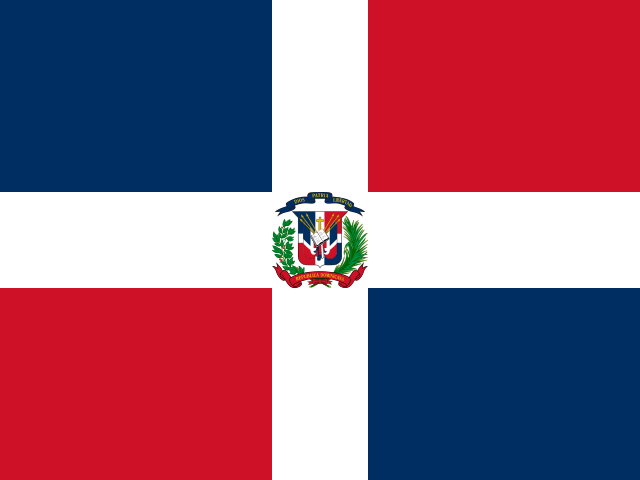
Overview
The Dominican Republic occupies the eastern part of Hispaniola, an island in the Greater Antilles. It covers roughly five-eighths of the island and shares a land border of about 376 km with Haiti to the west. Across the Mona Passage to the east lies Puerto Rico. Hispaniola is one of only two Caribbean islands divided between two sovereign states (the other is Saint Martin).
The country covers about 48,670 sq km, which makes it the second-largest in the Antilles after Cuba. Its population was around 11.4 million in 2024, and about 3.6 million of them live in the Santo Domingo metropolitan area. The capital sits on the southern coast.
Its history includes Taíno chiefdoms, the first permanent European settlement in the Americas (1490s), Spanish, Haitian and brief Spanish-restored rule, independence in 1844, two US occupations, the Trujillo dictatorship (1930-1961) and the Balaguer era. Since 1996 the country has moved toward representative democracy.
The economy is the biggest in the Caribbean and among the larger ones in Latin America. It grew at an average of about 5.3% a year from 1992 to 2018, driven by construction, manufacturing, tourism and mining. The Pueblo Viejo mine is among the world's biggest gold producers.
It is the most visited destination in the Caribbean. The landscape is varied: the Caribbean's highest peak (Pico Duarte, 3,098 m) and its lowest point and largest lake (Lake Enriquillo, about 45 m below sea level) are both here. The Colonial Zone of Santo Domingo is a World Heritage Site and holds the first cathedral, palace, monastery and fortress built in the Americas.
History
Pre-Columbian era: Caribbean islands were first settled about 6,000 years ago by hunter-gatherers from Central or northern South America. Arawakan-speaking ancestors of the Taíno arrived from South America during the 1st millennium BCE and reached Hispaniola by about 600 CE. They farmed, fished, hunted, gathered and made ceramics. Estimates of the 1492 population range from tens of thousands to 2 million, and the island was divided into five Taíno chiefdoms.
Colonization: Christopher Columbus landed on 5 December 1492 on his first voyage, claimed the island for Castile and named it La Española. His brother Bartholomew founded Santo Domingo in 1496, the first permanent European settlement in the Americas. The Spaniards built a plantation economy, and the Taíno resisted conquest, for example under Chief Anacaona of Xaragua. In 1697 Spain recognized French control of the western third of the island, which became Haiti and declared independence in 1804.
Ephemeral independence and Haitian rule: On 30 November 1821 José Núñez de Cáceres declared independence from Spain as Spanish Haiti. Two months later Haiti under Jean-Pierre Boyer occupied and annexed the territory, ruling it for 22 years as the Partie de l'Est.
First Republic: Juan Pablo Duarte founded the secret society La Trinitaria in 1838 to seek full independence. Duarte, Francisco del Rosario Sánchez and Ramón Matías Mella are regarded as the Founding Fathers. Independence from Haiti was declared on 27 February 1844, and the army was led by the wealthy rancher Pedro Santana, who dominated the early republic.
Return to Spain and Restoration: In 1861 Santana asked Queen Isabella II to take the country back, and Spain annexed it with about 30,000 troops. A rebellion in the Dominican Restoration War (1863-1865) ended Spanish rule permanently. The following decades saw civil wars, caudillos and corrupt governments.
Early 20th century: From 1902 short-lived governments were the norm and the state was bankrupt, with debts of around 32 million dollars and a threat of intervention by European creditors. The United States, wanting to protect routes to the future Panama Canal, intervened, and occupied the country from 1916 to 1924.
Trujillo era (1930-1961): Rafael Trujillo ruled with an iron fist. There was notable economic growth and building of hospitals, schools, roads and harbors, as well as a pension plan and housing, but much wealth was taken by the dictator and his circle. He settled the border with Haiti in 1935 and ended a customs arrangement with the US in 1941. He was assassinated in 1961, and after US pressure, including a naval task force off Santo Domingo, his family fled in November 1961.
Post-Trujillo: Leftist Juan Bosch took office in February 1963 and was overthrown by a military coup in September. A second coup in April 1965 sparked civil war between pro-Bosch Constitutionalists and the junta. US President Lyndon Johnson sent Marines and then forces that grew to about 24,000 troops, and an Inter-American Peace Force backed by the OAS followed. A ceasefire came on 5 May 1965, and after elections in 1966 Joaquín Balaguer, Trujillo's last puppet-president, won. He governed for 12 years with repression of civil liberties but also big infrastructure programs, and returned in 1986-1996.
In 1978 Antonio Guzmán of the PRD succeeded Balaguer, and Salvador Jorge Blanco won in 1982. Hurricane David (August 1979) left over 2,000 dead and 200,000 homeless. The flawed 1994 election led to international pressure and a new vote in 1996, in which Balaguer did not run.
1996-present: Leonel Fernández (PLD) won in 1996 and oversaw fast growth, averaging about 7.7% a year. Hipólito Mejía (PRD) governed from 2000 amid economic trouble. Fernández returned in 2004 and was re-elected in 2008. Danilo Medina (PLD) was elected in 2012 and 2016, with concerns about crime, corruption and a weak justice system. Luis Abinader of the PRM won in 2020 after protests, ending 16 years of PLD rule, and was re-elected in May 2024, helped by firm policies on migration from Haiti.
Climate
The Dominican Republic has a tropical rainforest climate in coastal and lowland areas, and a tropical savanna climate in places such as much of the Cibao region. Because of the varied relief, it has the most diverse climate of all the Antilles. The annual average is about 25 °C: around 28 °C near sea level and about 18 °C at higher elevations. Mountain lows can reach 0 °C and sheltered valleys can reach 40 °C, and snow is occasionally seen on the summit of Pico Duarte. January and February are the coolest months and August is the hottest.
Rainfall averages about 1,500 mm a year nationwide. The northern coast has its wet season from November to January, and elsewhere it runs from May to November, with May the wettest. The Neiba Valley can get as little as 350 mm, while the Cordillera Oriental gets about 2,740 mm. The driest part of the country is in the west, and the Enriquillo Basin is hot and desert-like.
Santo Domingo on the south coast has a tropical climate that is hot and humid all year, with highs around 30-32 °C, mild nights and a wetter season roughly May to November (approx.). Santiago de los Caballeros in the Cibao valley is a little hotter by day and has noticeably cooler nights in winter (approx.). Puerto Plata and the northern coast have their rain peak in winter. Punta Cana and the east are warm and humid with sea breezes (approx.). Upland towns such as Jarabacoa and Constanza are much cooler.
Tropical cyclones strike about every couple of years, with roughly 65% of impacts along the southern coast. The hurricane season runs from June to October. The last major hurricane mentioned in the source is Georges in 1998; Hurricane David in 1979 was devastating. The country also lies along a major fault system (the Septentrional fault), so earthquakes are a hazard.
Government and politics
The Dominican Republic operates as a representative democracy divided into executive, legislative and judicial branches. As both head of state and head of government, the president names the members of the cabinet and serves as the supreme commander of the armed forces. Voters directly elect the president and vice-president, who campaign together on a single ticket, to four-year terms. The legislature, Congress, has two chambers: a Senate of 32 members and a Chamber of Deputies of 190 members.
The judiciary is topped by the 16-member Supreme Court of Justice, which hears cases against the president, some cabinet members and members of Congress. Its members are chosen by a National Council of the Magistracy made up of the president, the leaders of both houses, the president of the Supreme Court and an opposition member.
Since a constitutional reform, presidential, congressional and municipal elections have been held together (from 2016) rather than separately. Observers have found elections since 1996 generally free and fair. The main parties are the PRSC, the PRD, the PLD (in power 1996-2000 and 2004-2020) and the PRM, whose candidate Luis Abinader won in 2020 and again in 2024. International IDEA places the country in the mid-range on democratic measures, with strengths in civil society, inclusive suffrage and free political parties.
The state is unitary rather than federal. There are 31 provinces plus the Distrito Nacional (Santo Domingo), and provinces are divided into municipalities and municipal districts (about 124 municipal districts in the source). The president appoints a civil governor for each province, and regional offices of the central government sit in provincial capitals. Mayors and municipal councils run municipalities and are elected. Fiscal, health, education and legal powers rest largely with the national government, and local governments have limited powers (approx.).
The Distrito Nacional, created in 1936, is a special jurisdiction. It has no appointed governor, consists of one municipality, and is run by an elected city council (ayuntamiento) and mayor (síndico). It should not be confused with the separate Santo Domingo Province, created in 2001.
Foreign relations: the country has a close relationship with the United States and cultural ties to Puerto Rico. Relations with Haiti are strained over migration and border issues. It has a free trade agreement with the US and Central American states (DR-CAFTA) and an economic partnership agreement with the EU and the Caribbean Community. It is an observer in the Francophonie and ranked 89th in the 2026 Global Peace Index.
Military: about 56,000 active personnel, including an army of about 28,750, an air force with about 75 aircraft and a navy with bases in Santo Domingo and Las Calderas. Specialized airport, port and (planned) border security corps exist, and drones are used for border surveillance. The country signed the UN Treaty on the Prohibition of Nuclear Weapons in 2018.
Economy
The economy has moved over three decades from dependence on sugar, cocoa and coffee exports to a diversified mix of services, manufacturing, agriculture, mining and trade. Services make up almost 60% of GDP and manufacturing about 22%. Tourism, telecommunications and finance are the main service sectors, none above 10% of GDP. The country has a stock exchange (BVRD), advanced telecommunications and road infrastructure.
Growth has been strong: an average of about 5.3% a year in 1992-2018, with 7.3% in 2014 and 7.0% in 2015. The country is home to the Pueblo Viejo gold mine, with national gold output of 31 tonnes in 2015. Earlier turmoil included the late 1980s crisis with inflation reaching 100%, and the 2003 recession after the collapse of Baninter bank in a fraud of about 3.5 billion dollars, when inflation passed 27%.
Remittances are large: about 4.57 billion dollars in 2014, sent mainly from the United States and Spain. Informal employment and income inequality are long-term challenges. There are concerns about child labor in coffee, rice, sugarcane and tomato sectors, and the US Department of Labor has reported forced labor in sugarcane. The 2023 Global Slavery Index estimated about 72,000 people in modern slavery.
Currency: the Dominican peso (DOP). US dollars, euros and some other currencies are accepted at many tourist sites. The rate was about 50 pesos per dollar in September 2018, and was higher later (approx. 58-63 in recent years).
Tourism: the most visited Caribbean destination and a key growth driver. Resort developments include Cap Cana, Casa de Campo and Punta Cana; ecotourism is growing around Jarabacoa, Constanza, Pico Duarte and Bahía de las Águilas.
Infrastructure: telecommunications are well developed (regulator INDOTEL; main operator Claro). Electricity has been unreliable, with an old grid, large transmission losses and frequent blackouts, though a 345 kV Santo Domingo-Santiago line improved the grid. Power is 110 V at 60 Hz, compatible with US appliances. Tourist areas, business and health facilities generally have better supply.
Transport: three trunk highways (DR-1 to the north/Cibao, DR-2 to the southwest, DR-3 to the east) radiate from Santo Domingo, with a toll road of 106 km to the Samaná Peninsula. Many secondary roads remain unpaved. Buses are run by government (OMSA) and private operators. The Santo Domingo Metro, with two lines and about 27 km (2013), is the most extensive in the insular Caribbean and Central America by length and stations, carrying about 61 million passengers in 2014. A Santiago light rail is planned but on hold.
Demographics and urbanization
The population was about 11.1 million in 2021 (up from about 2.4 million in 1950), and about 11.4 million in 2024. Density was around 192 per sq km in 2007. About 63% lived in urban areas (2007 figure; likely higher now, approx.). The most densely populated areas are the southern coastal plain and the Cibao Valley. The population is young: in 2010 about 31% were under 15 and about 6% over 65.
Largest cities: Santo Domingo (about 2.9 million in 2010; the metropolitan area about 3.6 million), Santiago de los Caballeros (about 745,000), La Romana (about 214,000), San Pedro de Macorís (about 185,000), Higüey (about 153,000), San Francisco de Macorís (about 133,000), Puerto Plata (about 118,000) and La Vega (about 105,000).
Ethnicity: a 2022 survey recorded Indio 34.2%, Moreno 26.1%, Afro-Dominican 7.7%, Mulatto 3.8%, White 18.7%, Black 7.4% and Other 0.3%. Genetic studies describe a population mainly of European and African ancestry with a smaller Indigenous (Taíno) component. European and Indigenous ancestry is strongest in the Cibao and interior, and African ancestry in coastal, southeastern and border areas.
Citizenship is based mainly on descent rather than birth on the soil. A 2017 survey counted about 10.19 million people, of whom about 848,000 were immigrants or descendants of recent immigrants. About 751,000 of those had Haitian origin, and Venezuela, the US, Spain, Italy, China, Colombia, Puerto Rico and Cuba were the other main origins. Human Rights Watch and others give much larger estimates for undocumented Haitians, and the issue is politically sensitive.
Expats: about 300,000 US citizens reportedly live in the country, mostly returned Dominican Americans (about 250,000) and about 50,000 other Americans. Roughly 10,000 Puerto Ricans, plus many European and North American retirees, live there. There are also Arab (about 80,000), East Asian, and Cocolo (Anglo-Caribbean descendant) communities, and a Jewish community in Sosúa founded by WWII refugees.
Languages: Spanish (Dominican Spanish) is the official and main language. Haitian Creole is the largest minority language. A few elders speak Samaná English. English and French are taught in schools but teaching quality is poor, and the country ranked 63rd in the 2025 EF English Proficiency Index at a moderate level.
Religion: about 95% Christian. As of 2014, about 57% identified as Roman Catholic and 23% as Protestant (evangelical and Pentecostal). Catholicism has special status through a concordat with the Vatican, although the constitution provides for freedom of religion. Small groups include Spiritists, Latter-day Saints, Buddhists, Baháʼí, Muslims and Jews.
Capital city
Santo Domingo, the capital and largest city, lies on the southern Caribbean coast. The city proper had about 2.9 million people in 2010, and the metropolitan area has about 3.6 million. It was founded in 1496 and is the oldest European settlement in the Americas. Its Colonial Zone is a World Heritage Site with the first cathedral, palace, monastery and fortress in the Americas.
It forms the Distrito Nacional, a single-municipality special jurisdiction with an elected mayor and city council and no appointed governor, within a wider urban area that extends into Santo Domingo Province.
Climate: tropical, hot and humid all year, with daytime highs around 30-32 °C, nights around 21-25 °C, and a wetter season from about May to November. The city is exposed to hurricanes, most often between June and October (approx.).
Role: Santo Domingo is the political, administrative, cultural and main economic centre. It hosts the government, congress, courts, major universities, the main banks and head offices, and much of the country's commerce (approx.). It also has the Santo Domingo Metro, the largest metro in the insular Caribbean and Central America by length and stations, with two lines opened by 2013. Tourism is centered more on the resort coasts (Punta Cana, Puerto Plata, Samaná), while the capital draws business and heritage visitors. The country has a single capital, and it is also the main economic city; Santiago is the main secondary urban center in the Cibao.
About this summary
Some details on climate by city, capital-city characteristics, metro-area populations, recent economic and tourism context and the regional government structure come from general knowledge and are approximate.