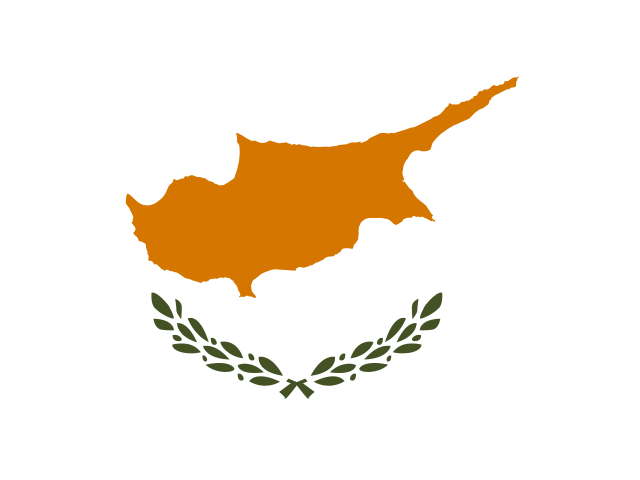
Overview
The Republic of Cyprus occupies an island in the eastern Mediterranean, lying close to the Levant coast of West Asia. The island is the third largest and third most populous in the Mediterranean, after Sicily and Sardinia. It is split by a UN-patrolled buffer zone between the internationally recognised Republic in the south and the self-declared Turkish Republic of Northern Cyprus, which only Turkey recognises. Two British Sovereign Base Areas, Akrotiri and Dhekelia, also lie on the southern coast. The capital, Nicosia, is also the largest city.
The country is classed as developed, with a representative democracy, an advanced high-income economy and very high human development. It is a Commonwealth member, was a founding member of the Non-Aligned Movement until it joined the EU in 2004, and adopted the euro in 2008. It has long cooperated with NATO and announced in 2024 that it intended to seek membership.
Its warm Mediterranean climate and mixed Greek and Turkish cultural heritage make it a major tourist destination. Tourism is about 14% of GDP.
Geography: the island is about 240 km long and 100 km wide at its widest, between roughly 34° and 36° N. Turkey lies about 75 km to the north, Syria and Lebanon about 105 to 108 km to the northeast, Israel about 200 km to the southeast and Egypt about 380 km to the south. The nearest Greek territory is Kastellorizo, about 280 km west, and the Greek mainland is about 800 km away. Some sources place the island in Europe and others in Western Asia.
History
Hunter-gatherers reached Cyprus about 13,000 to 12,000 years ago, around the time the island's dwarf hippos and dwarf elephants died out. Farming communities appeared by about 8500 BC.
From about 1650 BC, in the Late Bronze Age, the island (known in texts as Alashiya) became tied into Mediterranean trade through copper from the Troodos Mountains. Urban settlements grew, and kings corresponded with rulers such as the Egyptian pharaohs, as the Amarna letters show. After the collapse of Mycenaean Greece around 1100 to 1050 BC, a major wave of Greek settlement gave the island its lasting Greek character. Phoenicians were present at Kition from early on. Greek myth makes Cyprus the birthplace of Aphrodite.
Assyrians, Egyptians and Persians held the island in turn until Alexander the Great took it in 333 BC. The Ptolemies and then Rome followed. When the Roman Empire split in 286, Cyprus went to the eastern half (later Byzantine) and stayed there for about 900 years, which deepened its Greek Christian character. From 649 it suffered Umayyad raids.
In 1191 Richard I of England seized the island during the Third Crusade. He sold it to the Knights Templar, who passed it to Guy of Lusignan, and the Lusignan Kingdom of Cyprus lasted until 1473. Venice then took control, formally annexing the island in 1489. It built the walls of Nicosia and fortified Famagusta and Kyrenia.
The Ottomans conquered the island in 1570 to 1571 with about 60,000 troops, killing many Greek and Armenian Christians and ending the Latin elite. A Muslim community formed from settled soldiers and Anatolian peasants and craftsmen, the first major demographic change since antiquity.
In 1878, after the Russo-Turkish War and the Congress of Berlin, Britain took over administration under a lease, though the island stayed legally Ottoman until Britain annexed it on 5 November 1914. Famagusta harbour was completed by 1906, and the island served as a key military base.
Under British rule Greek Cypriots (77% of the population in 1960) pursued enosis, union with Greece, while Turkish Cypriots (18%) first backed British rule, then favoured taksim, partition. After violence in the 1950s, independence came in 1960. Further intercommunal violence in 1963 to 1964 displaced more than 25,000 Turkish Cypriots into enclaves and ended their participation in government.
On 15 July 1974 Greek Cypriot nationalists and the Greek military junta ousted President Makarios III and installed Nikos Sampson. On 20 July Turkey invaded, citing the 1960 Treaty of Guarantee, a justification the UN and international community rejected. Turkey took the northern third; over 150,000 Greek Cypriots and about 50,000 Turkish Cypriots were displaced. Makarios returned in December 1974. In 1983 the Turkish Cypriot parliament under Rauf Denktaş proclaimed the Turkish Republic of Northern Cyprus. UN resolutions condemning this are reaffirmed every year by the Security Council. The Republic of Cyprus regards Turkish settlers in the north as a violation of the Geneva Convention, while many settlers and their children now regard Cyprus as home.
In the 2004 referendum on the UN Annan Plan, about 65% of Turkish Cypriots voted yes and about 74% of Greek Cypriots voted no; overall 66.7% rejected it. Cyprus joined the EU on 1 May 2004 as a whole island, with EU law suspended in the north pending a settlement. Checkpoints eased in 2003, and Ledra Street in Nicosia reopened on 3 April 2008. Reunification talks relaunched in 2015 and collapsed in 2017.
Controversies include the sale of EU passports to foreign nationals (criticised by the EU in 2019; the law changed in July 2019) and the 2023 Cyprus Confidential leak about financial links to Russian figures. Since 2020 Cyprus and Turkey have disputed their exclusive economic zones amid gas exploration. In July 2024, on the 50th anniversary of the invasion, President Erdoğan backed a two-state solution; Greek Cypriots rejected it.
Climate
Cyprus has a subtropical climate: Mediterranean (Köppen Csa) and semi-arid (BSh) in the northeast, with very mild coastal winters and warm to hot summers. Rain falls mainly in winter and summer is generally dry. Snow is possible only in the Troodos Mountains.
On the coast, average daytime temperatures are about 24 °C and nights about 14 °C over the year. Summer-like weather lasts about eight months, from April to November. Coastal sunshine is about 3,200 hours a year, around double that of northern European cities (London gets about 1,540).
Nicosia, in the central Mesaoria plain, is hot and dry inland, with summer highs often above 35 °C (approx.) and cool, rainy winters. Limassol, Larnaca and Paphos on the south and west coast are somewhat milder and more humid, with warm summers and mild winters (approx.). Troodos is cooler, and Mount Olympus (1,952 m) can see winter snow and skiing.
Water is a chronic problem. Rainfall has declined over 30 years and droughts have become more frequent, while demand grows from population, newcomers and tourists. The island has 108 dams and reservoirs with about 330 million cubic metres of capacity. Desalination has supplied nearly half of domestic water since 2001. Turkey built a water pipeline from Anamur to the north of the island.
Relief is dominated by the Troodos range (roughly half the area of the island) and the narrow Kyrenia Range (up to 1,024 m), with the Mesaoria plain between them, drained by the Pedieos, the longest river. Endemic species include the Cypriot mouse, the golden oak and the Cyprus cedar.
Government and politics
Cyprus is a presidential republic. The president is both head of state and government, elected by universal suffrage for five years. Legislative power lies with the House of Representatives and the judiciary is independent. The 1960 Constitution created a power-sharing system with a Greek Cypriot president and a Turkish Cypriot vice-president, each with veto rights, and separate voter rolls. After the 1963 to 1964 clashes the Turkish Cypriot seats stayed vacant.
The House has 56 elected members (by proportional representation, five-year term), 24 seats reserved for Turkish Cypriots that have been vacant since 1964, and three observer members for the Armenian, Latin and Maronite minorities. Main parties include the communist AKEL, the Democratic Rally, the Democratic Party and the social-democratic EDEK.
Dimitris Christofias became the first Communist head of state in 2008. Nicos Anastasiades of the Democratic Rally won in 2013 and was re-elected in 2018. Nikos Christodoulides won the 2023 run-off and was sworn in on 28 February 2023 as the eighth president.
Sub-national structure: the Republic is divided into six districts: Nicosia, Famagusta, Kyrenia, Larnaca, Limassol and Paphos. Cyprus is a unitary state, so these districts are mainly administrative; tax, health, law and education policy are set nationally (general knowledge), with municipalities handling local services.
Special jurisdictions: the UN recognises the Republic's sovereignty over the whole island, but it effectively controls about 59.7% of it. The Turkish Republic of Northern Cyprus holds about 34.9%, the UN buffer zone (Green Line) about 2.7%, and the British Sovereign Base Areas of Akrotiri and Dhekelia about 2.7%. EU law is suspended in the north. Dhekelia contains four exclaves of the Republic.
Military and rights: the National Guard is the main armed force; conscription was cut from 24 to 14 months in 2016 and a professional enlisted force was added. Freedom House rates Cyprus as free (2026). The 2024 Global Peace Index ranks it 88th. The UN has noted that the division affects freedom of movement, missing persons and property rights. Cyprus has been criticised over human trafficking. In 2014 the European Court of Human Rights ordered Turkey to pay over $100m to Cyprus, which Ankara said it would ignore. Disputes also exist over cultural heritage damage in the north; characterisations differ between Greek Cypriot sources and others who note damage to heritage on both sides.
Cyprus belongs to the UN, EU, Council of Europe, OSCE, WTO, IMF and many other bodies. Unusually for continental Europe, vehicles drive on the left.
Economy
Services employ about 82% of workers (2026), industry 16% and agriculture 2%. Tourism contributes about 14% of GDP, and financial services and shipping are also significant. Low taxes have made Cyprus a base for offshore businesses.
Cyprus was the wealthiest of the ten countries that joined the EU in 2004. The 2008 global crisis and the euro crisis hit hard: in 2012 the government sought €1.8 billion for Cyprus Popular Bank and Fitch cut its rating to junk. In March 2013 a €10 billion bailout from the European Commission, ECB and IMF required restructuring of Cyprus Popular Bank and losses on uninsured deposits (many held by wealthy Russians); insured deposits up to €100,000 were protected.
Recovery in the 2010s was strong: IMF estimates put 2023 GDP per capita at about $54,611, the highest in Southern Europe and slightly below the EU average. The euro replaced the Cypriot pound on 1 January 2008.
Energy: the Aphrodite gas field (Block 12) lies in Cyprus's EEZ about 175 km south of Limassol. Noble Energy signed a production-sharing agreement in 2011 and drilling began in September 2011. Maritime borders were agreed with Egypt (2003), Lebanon (2007) and Israel (2010), but Turkey does not recognise them and disputes the EEZ. Cyprus is the last EU member without energy interconnection; the planned EuroAsia Interconnector (2,000 MW undersea cable) would link Greece, Cyprus and Israel.
Transport: vehicles drive on the left. Motorways run along the coast from Paphos to Ayia Napa, with inland routes to Nicosia from Limassol and Larnaca. Car ownership is high (the source ranks it 29th in the world). Bus networks were reorganised in 2010. The two international airports in government-controlled areas are Larnaca (busier) and Paphos; Ercan in the north requires a stopover in Turkey. The main ports are Limassol and Larnaca. There are no active railways; the Cyprus Government Railway ran from 1905 to 1951, and new lines have been advocated in the 2020s.
Telecoms: state-owned Cyta handles most connections, with private competitors including epic, Cablenet, OTEnet, Omega Telecom and PrimeTel. In the north, Turkcell and KKTC Telsim run mobile networks.
Demographics and urbanization
The 2021 census counted 918,100 people in government-controlled areas. Nicosia district holds 38% of them and Limassol 28%. The Nicosia metropolitan area (seven municipalities) is the largest urban area, with 255,309 people. Island-wide, the International Crisis Group estimated 1.1 million in 2010, including about 300,000 in the north. Urbanisation is high, roughly 67 to 70% (approx.). Other main urban centres are Limassol (roughly 240,000 in the urban area, approx.), Larnaca (about 150,000, approx.), Paphos (about 90,000, approx.) and, in the north, Famagusta and Kyrenia.
In the 1960 census, the island had 573,566 people: 77.1% Greek, 18.2% Turkish and 4.7% others. The Republic's later censuses (1976, 1982, 1992, 2001, 2011, 2021) excluded the Turkish community in the north. The Republic hosts about 110,200 foreign permanent residents and an estimated 10,000 to 30,000 undocumented migrants. In 2011 about 10,520 people of Russian origin lived there. The 2006 census in the north counted 256,644 residents, of whom 178,031 were citizens (27,333 born in Turkey). There are large Greek Cypriot and Turkish Cypriot diasporas in the UK, Australia, Canada, the US, Greece and Turkey, and about 1,250 Roma.
Religion: Most Greek Cypriots are Greek Orthodox and most Turkish Cypriots Sunni Muslim. In the 2001 census of government-controlled areas, 94.8% were Orthodox, 0.9% Armenian and Maronite, 1.5% Latin Catholic, 1.0% Anglican and 0.6% Muslim. A Jewish community exists. Hala Sultan Tekke near Larnaca Salt Lake is a Muslim pilgrimage site.
Languages: Greek and Turkish hold official status, while Armenian and Cypriot Maronite Arabic are recognised minority languages. English has no official standing but is widely spoken and appears on signs; under British rule it was the only official language, remaining in use in courts until 1989 and in legislation until 1996. In 2010, 80.4% of Cypriots could speak English well as a second language. Russian is common among post-Soviet residents, appearing on signs in Limassol and Paphos. In 2006, 12% spoke French and 5% German. Day-to-day speech is Cypriot Greek and Cypriot Turkish, both of which differ considerably from the standard forms.
Education: spending is nearly 7% of GDP, among the top three in the EU. Cyprus has the EU's highest share of working-age citizens with higher education (30%) and 47% of 25 to 34-year-olds have tertiary education. About 78.7% of Cypriot students study abroad. University admission rests on centrally administered entrance exams rather than high-school grades. Cyprus ranked 25th in the Global Innovation Index in 2025.
Capital city
Nicosia (Lefkosia) lies in the centre of the island on the Mesaoria plain and is the capital and largest city. It is the seat of government, parliament and the presidency. The Nicosia metropolitan area of seven municipalities has 255,309 people in the government-controlled south (source); including the northern part, the urban area is larger (approx. 330,000 to 350,000 overall).
Nicosia is the only divided capital in Europe: the UN Green Line cuts through the city, and the northern part is the capital of the self-declared Turkish Republic of Northern Cyprus, recognised only by Turkey. The crossing at Ledra Street reopened in April 2008 after a wall was demolished. The Venetian walls surround the old city.
Climate: hot, dry summers with highs often above 35 °C and mild, wetter winters with occasional cool spells (approx.); it is among the hottest of the island's major cities in summer because it is inland.
Role: Nicosia is the political and administrative centre, and also hosts many financial, legal and business services, universities and cultural institutions. Limassol is the main port and a major business and shipping hub, and Larnaca has the main international airport, so the economic activity of the island is spread across several cities (general knowledge).
About this summary
Includes approximate general-knowledge facts such as recent population estimates, city metro sizes, city climates, capital-city details and the status of the Green Line crossings.