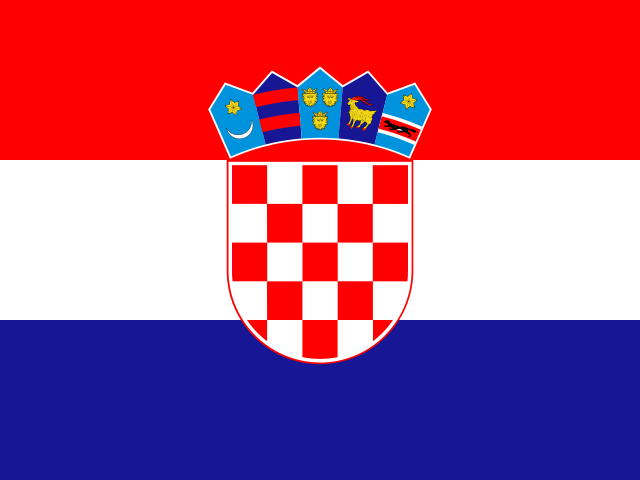
Overview
Croatia, officially the Republic of Croatia, lies in Central and Southeastern Europe along the Adriatic Sea. It borders Slovenia to the northwest, Hungary to the northeast, Serbia to the east, and Bosnia and Herzegovina and Montenegro to the southeast. It also shares a maritime border with Italy to the west.
The country covers about 56,594 square kilometres and has a population of nearly 3.9 million. It is divided into twenty counties, grouped in four administrative regions. Zagreb is the capital, the largest city and the main cultural and economic centre. Split, Rijeka and Osijek are other major urban centres.
Its coastline is dotted with more than a thousand islands and islets, of which 48 are permanently inhabited. Croatia is a representative democracy and a member of the EU, NATO, the UN and the WTO. It adopted the euro and joined the Schengen Area in 2023, and began the OECD accession process in 2022.
It is classed as a developed, high-income country with a strong tourism sector. It offers universal health care and subsidised primary and secondary education. Croatia describes itself as an emerging energy hub, with investment in LNG, geothermal networks and electric transport.
History
Early times: The territory was inhabited from the prehistoric era. Neanderthal remains from the middle Palaeolithic were found at Krapina in the north. Neolithic and Chalcolithic cultures such as Starčevo, Baden and Vučedol left traces, especially in the northern valleys. In the Iron Age the area saw the Illyrian Hallstatt culture and the Celtic La Tène culture. Illyrians and Liburnians lived here before Roman rule.
Early Middle Ages: Roman rule collapsed when Avars and Croats arrived between the late 6th century and the middle of the 7th. Nearly every Roman town was destroyed. Survivors withdrew to coastal sites, islands and mountains. Dubrovnik was founded by refugees from Epidaurum. Scholars debate the ethnogenesis of the Croats, and the prevailing view is based on historical chronicles. The Croats formed two duchies, and Croatia was granted independence in 878 under Duke Branimir. It became a kingdom under King Tomislav in 925.
Union with Hungary and the Habsburgs: When the Trpimirović dynasty hit a succession crisis, Croatia entered a personal union with Hungary in 1102. Over the following four hundred years, the kingdom's government consisted of the Sabor, its parliament, together with a Ban, or viceroy, whom the king named. Noble families including the Frankopans and Šubićs gained prominence. Croatia came under mounting Ottoman pressure and also competed with Venice for control of the coast. By 1428 Venice controlled most of Dalmatia, though Dubrovnik stayed an independent city-state. The Ottoman advance brought the Battle of Krbava field in 1493 and the Battle of Mohács in 1526. In 1527 Croatia allied itself with the Habsburg monarchy.
Yugoslavia: On 29 October 1918 the Sabor declared independence and joined the State of Slovenes, Croats and Serbs. That state entered a union with Serbia on 4 December 1918, forming the Kingdom of Serbs, Croats and Slovenes. The Sabor never ratified this union. The 1921 constitution created a unitary state, abolished the Sabor and the historical divisions, and ended Croatian autonomy. The Croatian Peasant Party under Stjepan Radić opposed it. Radić was assassinated in the National Assembly in 1928, and King Alexander I set up a dictatorship in January 1929. The Cvetković–Maček Agreement of August 1939 created the autonomous Banovina of Croatia, with Belgrade keeping defence, internal security, foreign affairs, trade and transport.
World War II: In April 1941 Germany and Italy invaded Yugoslavia and installed the puppet Independent State of Croatia (NDH), covering most of Croatia, Bosnia and Herzegovina and Syrmia. Italy annexed parts of Dalmatia, and Hungary annexed Baranja and Međimurje. The regime, led by Ante Pavelić and the Ustaše, introduced racial laws and carried out a genocidal campaign against Serbs, Jews and Roma. The largest camp complex was Jasenovac. Italy also ran camps for Slovenes and Croats, including Rab, Gonars and Molat. The Chetniks conducted a campaign against Croats and Muslims.
Resistance came first with the 1st Sisak Partisan Detachment, formed on 22 June 1941. The Partisans, led by Josip Broz Tito, gained Allied recognition at the Tehran Conference in December 1943. They controlled Yugoslavia by May 1945. Demographic studies cited in the source put total deaths from the territory at about 295,000, or 7.3% of the population, including roughly 125,000–137,000 Serbs, 118,000–124,000 Croats, 16,000–17,000 Jews and 15,000 Roma.
Socialist period: Croatia became a federal unit of socialist Yugoslavia in 1943–45, with some autonomy. In 1967 Croatian writers and linguists issued a declaration on the status of the Croatian language, which fed the Croatian Spring of 1971. Yugoslav leaders suppressed it, but the 1974 constitution gave the federal units more autonomy. After Tito died in 1980 the political situation worsened. In January 1990 the Communist Party split along national lines. The first multi-party elections were held in 1990 and Franjo Tuđman won. Some Serbs left the Sabor and declared the unrecognised Republic of Serbian Krajina.
Independence and war: Croatia declared independence on 25 June 1991, with the declaration taking full effect on 8 October 1991 after a three-month moratorium. The Serb-controlled Yugoslav People's Army and Serb paramilitaries attacked, and by the end of 1991 Croatia controlled about two-thirds of its territory. Between 400,000 and 500,000 Croats and other non-Serbs were expelled or displaced from occupied areas. Croatia was recognised by the European Economic Community on 15 January 1992, followed by the UN. The war effectively ended in August 1995 with a Croatian victory, commemorated on 5 August. About 200,000 Serbs fled the Krajina region, and roughly half have since returned. The remaining occupied areas returned to Croatia under the Erdut Agreement of November 1995, with the UNTAES mission ending in January 1998. Most sources put war deaths at about 20,000.
Since 2000: Constitutional amendments in 2000–2001 changed parliament from two chambers to one and later limited presidential powers. Croatia joined the WTO in 2000 and NATO in April 2009, and held a UN Security Council seat in 2008–2009. The 2008 financial crisis and austerity brought protests in 2009 and 2011. After negotiations from 2004 to 2013, it became the EU's 28th member in July 2013. In 2015 more than 700,000 migrants passed through Croatia. Andrej Plenković has been prime minister since 19 October 2016. Zoran Milanović was elected president in the election of 12 January 2025. Croatia joined the Eurozone and the Schengen Area in 2023.
Climate
Most of Croatia has a moderately warm, rainy continental climate. Mean monthly temperatures range from about −3 °C in January to about 18 °C in July. The coldest areas are Lika and Gorski Kotar above 1,200 metres, with snowy, forested conditions. The Adriatic coast and its nearby hinterland have a Mediterranean climate, where the sea moderates the highs, so temperature extremes are greater inland.
Records: the lowest temperature was −35.5 °C (Čakovec, 1919) and the highest 42.8 °C (Ploče, 1981). Annual precipitation ranges from about 600 mm to 3,500 mm. The driest areas are the outer islands and eastern Slavonia, where rain falls mostly in the growing season. The wettest are the Dinaric Alps, including Risnjak and Snježnik in Gorski Kotar.
Winds: the interior has light to moderate northeast or southwest winds. The coast gets the cold northeasterly bura and, less often, the warm southerly jugo, mostly in cooler months. Hvar, Korčula and the outer islands get more than 2,700 sunshine hours a year, and the rest of the Adriatic coast more than 2,000.
Major cities: Zagreb in the north has a continental climate, with cold winters, warm to hot summers and rain year-round (approx.). Split and Dubrovnik on the Dalmatian coast have a Mediterranean climate with hot, dry summers and mild, wetter winters (approx.). Rijeka on the northern Adriatic is milder in winter and rainier than the south (approx.). Osijek in Slavonia is continental, with hot summers and cold winters (approx.).
Government and politics
Croatia is a representative democracy with a multi-party system. The constitution separates the executive, legislative and judicial branches. The unicameral parliament (Sabor) replaced a two-chamber body through constitutional amendments in 2000–2001, and presidential powers were later limited. The prime minister, currently Andrej Plenković (in office since October 2016), leads the government. The president, currently Zoran Milanović (elected in January 2025), is the head of state.
In territorial terms, the country is divided into twenty counties grouped into four administrative regions, and Zagreb holds separate status as a city. Local units may officially use minority languages when minorities make up more than a third of the population or when local legislation permits it. The central government runs protected areas such as national parks and strict reserves, whereas counties are responsible for managing the remaining protected areas. In practice (approx.), counties and municipalities deliver local services including primary and secondary school facilities, local roads and some health institutions, while taxation, law, defence and the main health insurance system are determined at the national level.
Foreign relations: Croatia belongs to the EU, UN, WTO and NATO and is in OECD accession. It sits in the Eurozone and Schengen Area. It describes itself as a small regional power in Southeast Europe. Its armed forces have joined peacekeeping missions since 1999.
Economy
Croatia has a highly developed mixed, open economy that depends heavily on trade in Europe. It is one of the larger economies in Southeast Europe by nominal GDP. Services and industry together make up about 70% of GDP. It has a very high level of human development and low income inequality. Weaknesses cited are an inefficient labour market, a weak investment climate and an ineffective corporate and income tax system. Growth is strongest in Central Croatia and Zagreb, the financial centre. The war of 1991–95 cut output by an estimated 21–25%. The euro has been the currency since 2023.
Trade: the main partner is the rest of the EU, led by Germany, Italy and Slovenia. Croatia has been in the WTO since 2000 and the EEA since 2013. It has a growing defence industry, with firms such as HS Produkt and Đuro Đaković.
Tourism: Tourism routinely accounts for 10% to 15% of GDP. It is concentrated on the Adriatic coast and peaks in July and August. The most visited places include Dubrovnik, Rovinj, Zagreb, Split, Poreč, Umag and Zadar. Some 20.2 million tourists visited in 2024. The country has ten World Heritage Sites, 111 Blue Flag beaches, eight national parks and thirteen nature parks. Inflation and overtourism have led to more regulation and higher costs since 2024.
Transport: about 1,314 km of motorways (as of December 2020) connect Zagreb with the regions, notably the A1 to Split and the A3 across the northwest and Slavonia. The 2.4 km Pelješac Bridge opened in July 2022, linking the Dubrovnik area to the mainland without crossing Bosnian territory. The rail network is 2,604 km, of which 984 km is electrified, and the main corridors link Rijeka to Budapest and Ljubljana to Belgrade through Zagreb. The EIB committed €400 million to rail modernisation in 2024.
Air and sea: the busiest airport is Zagreb, followed by Split, Dubrovnik and Zadar. Airports handled more than 14 million passengers in 2025. Croatia Airlines is the flag carrier and is renewing its fleet with Airbus A220 aircraft. Rijeka is the busiest cargo port, Ploče the second largest and the gateway for Bosnia and Herzegovina, and Split, Dubrovnik and Zadar are the busiest passenger ports. Jadrolinija runs island ferries and services to Bari and Ancona. Vukovar is the main river port on the Danube.
Energy: the LNG terminal off Krk opened on 1 January 2021. Pipelines carry crude oil (610 km, 20 million tonnes a year capacity) and natural gas (2,113 km). In 2017 Croatia imported about 40% of its electricity. It co-owns half of the Krško nuclear plant in Slovenia, which supplies about 15% of national electricity. Hydropower is a major domestic source. Eurostat data show Croatia has the most water resources per capita in the EU.
Demographics and urbanization
Croatia had about 3.87 million people in 2024, with a density of about 73 per square kilometre (2018). The population peaked at 4.7 million in 1991 and has since fallen, with a 10% drop between 2008 and 2018. The fertility rate is 1.46 and deaths have exceeded births since 1998. The average age is 45.1, among the oldest populations in the world. Life expectancy at birth was 77.7 years in 2024. The government has raised foreign-worker permit quotas, reaching 68,100 in 2019, and tries to attract emigrants back. Immigrants make up an estimated 12.5% to 14.6% of the population (2024). About 4 million Croats live abroad.
Urbanization is roughly 58% to 60% (approx.). People are concentrated in Zagreb and its surroundings, the Adriatic coastal cities and the larger Slavonian centre of Osijek. Approximate city populations: Zagreb about 770,000 in the city and over 1 million in the wider area, Split about 160,000, Rijeka about 105,000 and Osijek about 95,000 (approx.). Island and rural interiors, especially in Lika, are sparsely populated.
Ethnicity (2021 census): Croats 91.6%, Serbs 3.2%, Bosniaks 0.62%, Roma 0.46%, Albanians 0.36%, Italians 0.36%, Hungarians 0.27%, with smaller groups making up the rest. The 1990s war displaced very large numbers. After 1995 about 250,000 people remained displaced, and many abandoned areas were resettled by Croat refugees from Bosnia and Herzegovina.
Religion: there is no official religion. In 2021, 87.39% identified as Christian, with Catholics at 83.04% and Orthodox at 3.36%. Muslims were 1.32% and 4.71% were non-religious.
Languages: Croatian is official nationally and in the EU. 95.25% gave it as their native language and 1.16% gave Serbian. Standard Croatian is based on the Shtokavian dialect, alongside the Chakavian and Kajkavian dialects. Czech, Hungarian, Italian, Pannonian Rusyn, Serbian and Slovak are in official local use where minorities are large enough. A 2005 survey found 49% speak English as a second language, 34% German and 14% Italian. English is widely spoken in cities and tourist areas, which suits expats (approx.).
Education: the literacy rate stands at 99.45% (2024). Pupils must complete eight grades of elementary school, after which they move on to gymnasiums or vocational schools. Since 2009–10, a national leaving exam (državna matura) has been used. The country has eight public and two private universities. Southeast Europe's oldest university that has run without interruption is the University of Zagreb, which dates from 1669. In total, 131 higher-education institutions enroll more than 160,000 students. In 2022, R&D spending came to roughly 1.43% of GDP, and in 2025 Croatia placed 40th in the Global Innovation Index. The Ruđer Bošković Institute in Zagreb is the leading research institute.
Healthcare: a universal system with statutory basic insurance and optional supplementary cover. Health spending was about 7.2% of GDP in 2022. There are 75 hospitals and 13 clinics with 23,049 beds. Life expectancy in 2025 was 75.8 years for men and 81.9 for women, and infant mortality was 3.3 per 1,000 live births. Cardiovascular disease is the main cause of death. About 37% of people smoke and 35.65% of adults are obese.
Capital city
Zagreb is the capital, the largest city and the country's main political, cultural and economic centre, so there is no separate economic capital. It lies in the north of the country, in the continental interior, on the Sava river (approx.). The city has roughly 770,000 residents and more than 1 million in its wider metropolitan area (approx.).
Climate (approx.): a humid continental to oceanic climate with cold, sometimes snowy winters, warm to hot summers and rainfall spread through the year. It is much cooler in winter than the Dalmatian coast.
Role: Zagreb hosts the government, the Sabor and the president, and it is the country's financial centre, where growth is strongest. The Franjo Tuđman Airport is the busiest in Croatia, and the city is a hub on the road and rail corridors linking Rijeka, Budapest, Ljubljana and Belgrade. It is home to the University of Zagreb (founded 1669), the Ruđer Bošković Institute and the Croatian Academy of Sciences and Arts (1866). It is among the most visited Croatian cities. In 2024 the EIB lent €207 million to the City of Zagreb for energy efficiency, social housing, schools and kindergartens.
About this summary
Approximate general-knowledge facts: capital-city population and climate, other city populations, urbanization rate, currency and GDP-level details, and the early-medieval and Habsburg-era background.