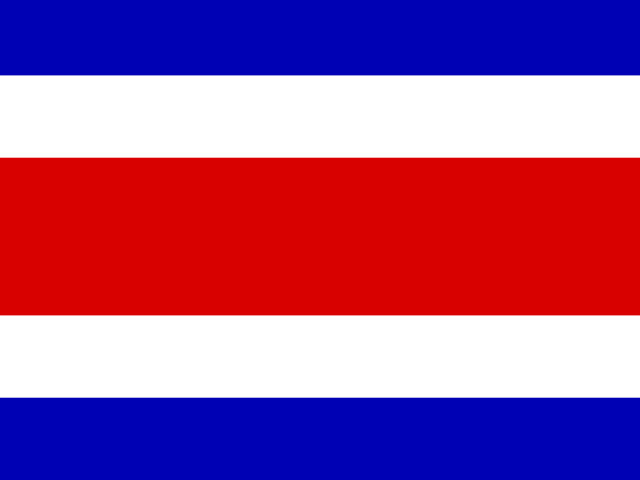
Overview
Costa Rica is a Central American country between Nicaragua to the north and Panama to the southeast, with the Caribbean Sea on its east and the Pacific Ocean on its west. It also shares a maritime boundary with Ecuador near Cocos Island. It covers roughly 51,180 km2 and had about 5.04 million people at the 2022 census.
The capital and largest city is San José, with around 350,000 residents in the city proper and about two million in the wider metropolitan area. The country is a presidential republic with a long record of stable democracy, and since 1949 it has had no standing army.
Costa Rica ranks 62nd on the Human Development Index (2023), which the source describes as fifth in Latin America. The World Bank classifies it as a high-income economy, and it is the only OECD member in Central America and the Caribbean. The UNDP has noted that it achieves higher human development than most countries at similar income levels.
The economy has moved from farming toward finance, corporate services for foreign firms, pharmaceuticals, medical devices and ecotourism. About a quarter of the national budget goes to education, equal to roughly 6.2% of GDP. The country is regarded as a regional leader in environmental protection and human rights, and it scores well on press freedom and measures of happiness.
History
People have lived in the area since roughly 10,000 to 7,000 BCE, and the oldest evidence is stone tools from the Turrialba Valley. Historians place the pre-Columbian peoples in the Intermediate Area, where Mesoamerican and Andean cultures overlapped. More recently the region has also been described as part of the Isthmo-Colombian Area.
The name 'la costa rica' means 'rich coast'. By some accounts Columbus first used it after his 1502 voyage to the eastern shore, where he saw many gold ornaments worn by local people. Another account credits the conquistador Gil González Dávila, who arrived on the Pacific side in 1522 and acquired gold from the inhabitants, partly by force and partly through gifts from local leaders. Spain ruled the territory for about three centuries, and for most of that time it was the southernmost and a peripheral province of the Captaincy General of Guatemala.
Costa Rica did not fight a war of independence. On 15 September 1821, after Spain's final defeat in the Mexican War of Independence, authorities in Guatemala declared the independence of Central America, and that date is still the national Independence Day. The country was then part of the First Mexican Empire and in 1823 joined the Federal Republic of Central America. It formally declared full independence in 1847.
Coffee was first planted in 1808 and had overtaken tobacco, sugar and cacao as the main export by the 1820s. It made a wealthy planter class, known as the Coffee Barons, and paid for much of the country's modernization. Beans from the Central Plateau went by oxcart to the Pacific port of Puntarenas along a road finished in 1846, and Britain was the chief buyer by the mid-1850s.
In the 1870s the government hired the American businessman Minor C. Keith to build a railway from San José to the Caribbean port of Limón. After great difficulty with construction, disease and finance, it opened in 1890. Many Afro-Costa Ricans descend from the Jamaican workers who built it, and they now make up about 3% of the population. Italian and Chinese workers and U.S. convicts also took part. Keith received large land grants and a lease on the line, used them to grow bananas for export to the United States, and bananas came to rival coffee. Foreign-owned firms, later including the United Fruit Company, gained a large role in the economy. The Great Banana Strike was a milestone for labour organizing, and the company had to sign a collective agreement with its workers in 1938.
The 20th century brought two violent episodes in an otherwise relatively peaceful history. General Federico Tinoco Granados ruled as a military dictator in 1917–1919 until he was overthrown, and his unpopularity weakened the military's size, wealth and political influence. In 1948 José Figueres Ferrer led an uprising after a disputed presidential election between Rafael Ángel Calderón Guardia and Otilio Ulate Blanco. The 44-day civil war killed more than 2,000 people and was the bloodiest event of the century in the country.
The victorious rebels formed a junta that abolished the military on 1 December 1948 and oversaw a new constitution drafted by an elected assembly. The junta handed power to Ulate on 8 November 1949. Figueres became a national hero and won the first election held under the new constitution, in 1953. Presidential elections have been held every four years since 1958, and the source reports a 2026 vote. Democracy has been uninterrupted since at least 1948, which makes Costa Rica the most stable country in the region.
Climate
Costa Rica has a tropical climate year-round with two seasons. The dry season runs from December to April and the rainy season from May to November. March and April are the hottest months, and December and January are the coolest. There are some rainy days in the dry season and some dry weeks in the wet season.
Climate varies strongly with altitude and coast. San José sits in the Central Valley at roughly 1,100 m (approx.) and has a mild, spring-like climate, with daytime highs around 25–27 °C (approx.) and a pronounced wet season from May to November. Liberia in the northwest (Guanacaste) is hotter and drier, with highs often above 33 °C (approx.) in the dry season. The Caribbean city of Limón is hot and humid, with rain spread across much of the year. The Pacific port of Puntarenas is hot, with a marked wet season.
The country is highly exposed to extreme weather. About 78% of the population and 80% of GDP are in regions vulnerable to floods, landslides, cyclones, storm surges and sea-level rise. Temperatures are rising, especially at higher elevations, and rainfall patterns are changing, which raises drought risk on the Pacific slope and flood risk everywhere. Heat and shifting rainfall threaten health, agriculture (notably coffee and bananas), water security, tourism and biodiversity.
The highest point is Cerro Chirripó at 3,819 m, and the highest volcano is Irazú at 3,431 m. Lake Arenal is the largest lake. Costa Rica has 14 known volcanoes, six of which have been active in the past 75 years. The country has exceptional biodiversity, with Corcovado National Park known for big cats, tapirs and all four native monkey species. Costa Rica is described as the first tropical country to have halted and reversed deforestation.
Government and politics
The 1949 Constitution established a unitary presidential republic. Voters choose the president through a direct, secret and universal ballot to serve a four-year term, and the office combines the roles of state leader and government leader. Among the president's powers are naming the heads of autonomous institutions, appointing and removing ministers and diplomats, vetoing legislation, signing decrees and granting pardons. Laura Fernández Delgado has held the presidency since 8 May 2026, and her vice presidents are Francisco Gamboa and Douglas Soto.
The unicameral Legislative Assembly has 57 deputies elected for four-year terms on a provincial basis, and its president is Rodrigo Arias Sánchez. The judiciary is independent. The Supreme Court of Justice has 22 judges elected by the Assembly for eight-year terms and is led by Orlando Aguirre. The Court appoints the magistrates of the Supreme Electoral Tribunal. International IDEA places Costa Rica in the high range for democracy, with strengths in religious freedom, elected government and freedom of movement.
The state is unitary, so power is concentrated nationally rather than shared with federal states. There are seven provinces, but they have no legislatures. Below them are 82 cantons, each led by a mayor elected every four years, and the cantons are divided into 488 districts. Local government therefore operates mainly at the canton level. Autonomous institutions, such as the social insurance fund CCSS that runs health care, handle many public services nationally. There are no special autonomous jurisdictions in the source.
Costa Rica abolished its army on 1 December 1948, a ban later written into Article 12 of the 1949 Constitution. The money once spent on the military went to health and education, and policing is done by the Public Force. In 2017 the country signed the UN Treaty on the Prohibition of Nuclear Weapons. It ranked 58th on the 2024 Global Peace Index.
In foreign affairs it is active in the UN and the Organization of American States, and it hosts the Inter-American Court of Human Rights and the UN-mandated University for Peace. It is a member of the International Criminal Court and an observer in the Francophonie. It restored relations with Cuba in 2009 after a break dating from 1961. In 2007 it switched recognition from Taiwan to the People's Republic of China, which later paid for the national stadium in San José's Parque la Sabana.
A long-running disagreement with Nicaragua concerns the San Juan River boundary. In 2009 the International Court of Justice upheld Costa Rica's commercial navigation and subsistence fishing rights on its side, while allowing Nicaragua certain controls such as requiring boats to stop at Nicaraguan ports and carry identity documents. A related dispute over Isla Calero and dredging arose in 2010. Costa Rica also co-launched the Beyond Oil and Gas Alliance in 2021 with Denmark. The source reports a 2026 presidential election, and its outcome beyond the stated incumbent is not covered here.
Economy
Costa Rica's nominal GDP per capita was about US$17,501 in 2024. Unemployment fell to 6.9% in December 2024, and the national poverty rate fell to 10.0% in 2024. The World Bank reclassified the country as high income in 2025.
Pharmaceuticals, financial and business outsourcing, software development and ecotourism are the leading industries. Tourism has earned more foreign exchange than bananas and coffee combined since 2004. In 2015 the top exports were medical instruments, bananas, tropical fruit, integrated circuits and orthopedic appliances, and the top imports were refined petroleum, cars, packaged medicines, broadcasting equipment and computers. Exports were US$12.6 billion against imports of US$15 billion, a deficit of about US$2.4 billion.
Free Trade Zones attract manufacturing and service firms. In 2015 they supported over 82,000 direct jobs, with average pay 1.8 times that of private-sector work elsewhere in the country. Amazon had about 3,500 employees in 2016. The country has free trade agreements with many partners, including the United States. High education levels help attract investment.
Coffee shaped the country's history but now supplies under 1% of world output. Coffee exports were US$305.9 million in 2015, within agricultural exports of US$2.7 billion. Bananas and pineapples are the other main crops. Mining adds little, with about 5.2 tonnes of gold produced in 2018.
About 95% of electricity came from renewable sources in 2023, mainly hydropower, followed by geothermal, wind, solar and biomass. In 2019 the figure was 99.62%. Drought forced electricity rationing in 2024. The country has a payments system for environmental services, a tax on water pollution, and the 1996 Forest Law, which pays landowners for environmental services. It targets net-zero emissions by 2050.
Challenges include ageing ports, roads, railways and water systems, a slow and cumbersome bureaucracy, and weak STEM and foreign-language skills, according to a 2016 U.S. government report. The country ranked 72nd in the Global Innovation Index in 2025.
Tourism drew 2.9 million visitors in 2016, and the United States was the largest source with about one million. The sector contributed around 5–6% of GDP and about 110,000 direct jobs. Popular destinations include Tamarindo, Arenal, Liberia, San José, Manuel Antonio and Monteverde. It ranked 38th in the 2017 Travel and Tourism Competitiveness Index.
Demographics and urbanization
The 2022 census counted 5,044,197 people. Under the 2011 census, 83.6% were white or mestizo, 6.7% mulatto, 2.4% Indigenous and 1.1% Black or Afro-Caribbean. The 2022 census again recorded ethnic identity categories separately for the first time since 1927. More than 104,000 Indigenous people live mostly in reserves among eight groups, including Bribri, Cabécar, Ngäbe, Maleku and Boruca.
About 80% of people are urban (approx.), and most live in the Central Valley, which holds San José, Alajuela, Cartago and Heredia. Other regional centres include Liberia in Guanacaste, Puntarenas on the Pacific and Limón on the Caribbean, where the Afro-Costa Rican community is concentrated. In approximate terms, San José has about 350,000 residents (about two million in the metro area), and Alajuela, Cartago and Heredia each have well under 300,000 in their central cantons.
Nicaraguans make up an estimated 10–15% of residents, many of them seasonal workers, and the country has also taken in refugees from Colombia and elsewhere in Latin America. About 420,000 immigrants lived there in 2015, and asylum seekers numbered over 110,000.
Spanish is the main language, and at least five Indigenous languages are spoken, including Bribri, Maléku, Cabécar and Ngäbere. Limón has speakers of a Jamaican English-based creole. About 10.7% of adults speak English as a second language. Catholicism is the state religion under the 1949 Constitution, with freedom of religion guaranteed. Surveys from 2017–2018 found about 52–57% Catholic, 22–25% Protestant and 15–17% with no religion.
Literacy is about 97%. Primary education is compulsory, and preschool and secondary school are free. The University of Costa Rica has about 25,000 students. Life expectancy at birth was 79.3 years in 2010, and the Nicoya Peninsula is considered a Blue Zone. The CCSS provides universal health care for wage earners and their dependants, with about 7% of GDP going to health, over 70% of it public. Private care is available to avoid waiting lists, and medical tourism is popular, with about 150,000 foreign patients in 2006.
Capital city
San José is the capital and largest city, in the Central Valley in the centre of the country. It has about 350,000 residents, or around two million in the greater metropolitan area, which is by far the country's main urban concentration.
At roughly 1,100 m (approx.) above sea level, San José has a mild climate. Daytime highs are usually in the mid-20s °C (approx.), with a dry season from December to April and a rainy season from May to November, often with afternoon downpours.
It is the political centre, home to the national government, the Legislative Assembly and the Supreme Court, and it also hosts the Inter-American Court of Human Rights. It is also the main economic and business hub, so the capital and main economic city are the same. The country has a single capital.
The city has important cultural sites, including the University of Costa Rica and the Parque la Sabana area, home to the national stadium built with Chinese funding and opened in 2011. A synagogue, Sinagoga Shaarei Zion, stands near the park. A temple of the Church of Jesus Christ of Latter-day Saints serves the region. Juan Santamaría International Airport, serving the capital area, handles about 16% of tourist arrivals, according to the source's cited figures.
About this summary
Some details on San José (metro population, climate, role), city climates, the 2026 election outcome, and a few recent economic and demographic figures come from general knowledge and are approximate.