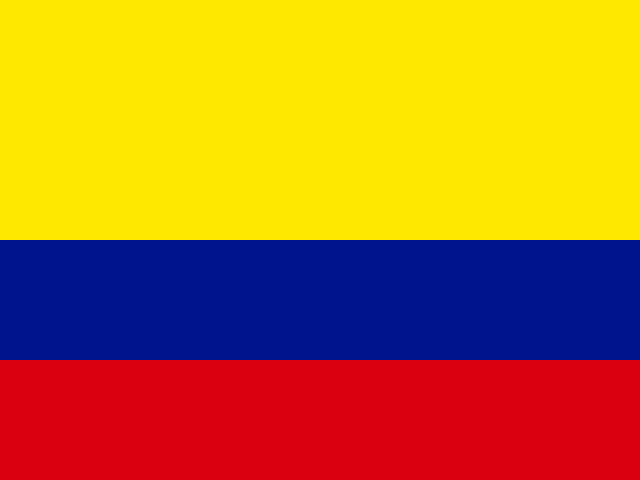
Overview
Colombia is a country in northern South America with some island territories in the Caribbean and Pacific. Its mainland has coasts on both the Caribbean Sea and the Pacific Ocean. Its land neighbours are Panama, Venezuela, Brazil, Peru and Ecuador. It has 32 departments plus the Capital District of Bogotá.
Its area is about 1.14 million square kilometres (roughly 441,000 square miles). The population is around 52 million according to the lead of the source; another passage gives about 50 million for 2020. Spanish is the official language, and other languages are recognised regionally, including English in the San Andrés archipelago.
The culture blends Indigenous, Spanish, African and later European and Middle Eastern influences. The source describes a country with a history of long internal armed conflict and political violence, followed by improved security, stability and economic growth since about 2000.
The source reports that the World Health Organization ranked its health system best in the Americas and 22nd worldwide. The economy is described as the third largest in South America, with macroeconomic stability. The country is also noted for broad legal recognition of LGBT rights, including same-sex marriage and adoption, as well as legal abortion and euthanasia.
Colombia is one of the world's megadiverse countries. Its landscapes include Amazon rainforest, Andean highlands, grasslands and deserts. It belongs to the UN, WTO, OECD, OAS, the Pacific Alliance and the Andean Community. It is also a NATO Global Partner and a major non-NATO ally of the United States.
History
Pre-Columbian era: The territory acted as a corridor for early peoples moving between Mesoamerica, the Caribbean, the Andes and the Amazon basin. The oldest archaeological finds are at Pubenza and El Totumo in the Magdalena Valley, about 100 km southwest of Bogotá, dating to the Paleoindian period (about 18,000–8000 BCE). Archaic-period traces (about 8000–2000 BCE) appear at Puerto Hormiga and other sites, and there was early occupation at El Abra and Tequendama in Cundinamarca. Indigenous peoples have lived here since at least 12,000 BCE.
Colonial period: In 1499, Alonso de Ojeda arrived at the Guajira Peninsula. The following year, 1500, Rodrigo de Bastidas headed the earliest exploration along the Caribbean coast, and in 1502 Columbus passed by the region on his voyage. In 1508, Vasco Núñez de Balboa joined an expedition across the Gulf of Urabá. Santa María la Antigua del Darién, established in 1510, became the continent's first lasting settlement. Santa Marta followed in 1525, and Cartagena in 1533. By the middle of the 16th century, Spain had colonised a large part of the country and created the New Kingdom of Granada.
Population collapse: Estimates for the pre-conquest population range from 2.5 to 12 million in 1500. By 1600 the figure had fallen to about 1.2 million, and by the end of the colonial period to around 800,000. It did not return to pre-conquest levels until the 1940s.
Independence: On 20 July 1810 the declaration of independence was issued, a date now marked as Independence Day. The territory initially took shape as the United Provinces of New Granada. Following a Spanish reconquest, freedom was won in 1819, and with it the era of Gran Colombia started. The country subsequently experimented with federalism, first as the Granadine Confederation (1858) and then as the United States of Colombia (1863), before it became a centralised republic in 1886.
Panama and early 20th century: With US and French backing, Panama broke away in 1903, which fixed Colombia's present borders. US interest in the Panama Canal contributed to this. In 1921 the United States paid Colombia 25 million dollars under the Thomson–Urrutia Treaty, and Colombia recognised Panama. A war with Peru over Amazon territory ended with a League of Nations settlement that awarded the area to Colombia in June 1934.
La Violencia: A bloody conflict between the two main parties ran from the late 1940s to the early 1950s. It escalated after the assassination of Liberal presidential candidate Jorge Eliécer Gaitán on 9 April 1948. The riots in Bogotá that followed, known as El Bogotazo, spread nationwide, and the conflict killed at least 180,000 people. Colombia joined the Korean War as the only Latin American country in a direct military role, fighting alongside the United States. Violence eased after Gustavo Rojas deposed the president in a coup and negotiated with guerrillas, then under the junta of General Gabriel París.
National Front: The Conservative and Liberal parties agreed to share power, alternating the presidency every four years for 16 years with parity in other elected offices. This ended La Violencia and brought reform attempts alongside the Alliance for Progress. Social and political problems persisted, and guerrilla groups such as the FARC, ELN and M-19 formed.
Armed conflict: From the 1960s a low-intensity asymmetric conflict involved government forces, leftist guerrillas and right-wing paramilitaries. It intensified in the 1990s, mainly in remote rural areas. The United States was heavily involved from the early 1960s. The source also names mercenaries and multinational firms such as Chiquita Brands as contributing international actors. Some guerrilla groups demobilised after negotiations in 1989–1994. From the mid-1970s drug cartels became major producers and exporters of marijuana and cocaine. A new Constitution was promulgated on 4 July 1991, and its changes are viewed positively by Colombian society.
21st century: President Álvaro Uribe (2002–2010) pursued a democratic security policy combining counter-terrorism and counter-insurgency, and sought to build investor confidence. The AUC paramilitaries ceased to function formally as an organisation under a controversial peace process. In February 2008 millions demonstrated against the FARC.
Peace deal: After talks in Cuba, President Juan Manuel Santos and the FARC-EP announced a final agreement. A referendum to ratify it failed. A revised deal was signed in November 2016 and approved by Congress. Santos received the 2016 Nobel Peace Prize. The deal led to victim reparation efforts and a Special Jurisdiction for Peace to investigate and punish serious rights violations from the conflict. Human Rights Watch is cited as noting modest progress. Pope Francis visited and paid tribute to victims.
Recent years: Iván Duque, of the right-wing Democratic Center party, won the 2018 election and assumed office on 7 August 2018. Ideological differences have caused relations with Venezuela to shift over time. Colombia has offered humanitarian assistance, and in February 2019 Nicolás Maduro severed diplomatic ties after Duque helped deliver aid alongside Venezuelan opposition politicians. In August 2019, Colombia granted citizenship to over 24,000 Colombian-born children of Venezuelan refugees. Gustavo Petro became the first leftist president in 2022, and Francia Márquez became the first Black vice president. The source does not address later political developments, such as the 2026 presidential election.
Climate
Colombia is tropical, so climate varies mainly with altitude rather than season, along with humidity, winds and rainfall. Zones include tropical rainforest, savanna, steppe, desert and mountain climates.
Altitude bands: below 1,000 m is the warm zone, above 24 °C, covering about 82.5% of the area. The temperate zone (1,001–2,000 m) averages 17–24 °C. The cold zone (2,001–3,000 m) runs 12–17 °C. Above that come forested alpine conditions, then páramo grasslands. Above 4,000 m it is freezing and glacial, with permanent snow and ice.
City examples: Bogotá (2,600 m) is the highest city of its size in the world and has a cool highland climate. Approx. average temperature is about 14 °C, with mild days and chilly nights and rain through much of the year. Medellín, in the Cordillera Central, has a mild spring-like climate (approx. 22 °C average). Cali, in the west, is warm (approx. 24–25 °C). The Caribbean ports of Barranquilla and Cartagena are hot and humid year-round (approx. 27–28 °C average), with distinct wet and dry seasons. Santa Marta and Cúcuta are also hot (approx.). Bucaramanga, Pereira and Manizales are cooler Andean cities (approx.).
Natural regions: The Andes, Caribbean coast, Pacific coast, Llanos plains, Amazon and insular area. The Pacific lowlands are dense with vegetation and sparsely populated. The La Guajira Desert lies in the north.
Hazards: Colombia lies on the Pacific Ring of Fire. Reported major earthquakes include a magnitude 6.2 quake on 25 January 1999 that killed about 1,200 people and an offshore 8.2 subduction quake near the Ecuador border that caused a deadly tsunami on the Pacific coast. According to the source, a magnitude 7.4 earthquake struck western Colombia on 10 August 2026, the strongest recorded to originate in the country. Its epicentre was near San José del Palmar, about 250 miles west of Bogotá, and at least 110 deaths were reported at day's end. Figures may have changed since.
Biodiversity: About 10% of Earth's species live here, including over 1,900 bird species. The country is first in birds and orchids, 40,000–45,000 plant species, and 314 ecosystem types. Protected areas cover about 12.77% of the territory (about 142,682 km²). Deforestation rates are relatively low compared with neighbours. Colombia is sixth worldwide in total renewable freshwater supply.
Government and politics
Colombia is a presidential, participatory democratic republic under the 1991 Constitution, with executive, legislative and judicial branches. The president is head of state and government, elected by popular vote for a single four-year term. The source notes that in 2015 Congress repealed a 2004 amendment that had allowed two terms. A vice president and a Council of Ministers support the executive.
Congress is bicameral: a 102-seat Senate elected nationally and a 166-seat Chamber of Representatives elected by district. Members serve four-year terms and are elected two months before the president. The judiciary has four high courts: the Supreme Court (penal and civil), the Council of State (administrative law and advice to the executive), the Constitutional Court, and the Superior Council of Judicature (auditing the judiciary). The legal system is civil law, applied through an adversarial system since 1991.
Elections: Santos won in 2010 with 69% in a run-off and in 2014 with nearly 51%. Duque won in 2018 with 54% against 42% for Gustavo Petro. Petro won in 2022. Regional elections take place one year and five months after the presidential vote. Presidential elections were scheduled for 2026, but their results are not covered here.
Sub-national structure: Colombia has 32 departments plus the Capital District of Bogotá, which is treated as a department (and is also capital of Cundinamarca). Each department has a directly elected governor and assembly with four-year terms. Departments are divided into municipalities, each with a mayor and council. Municipalities are divided into corregimientos (rural) and comunas (urban), each with an elected local administrative board.
Division of powers (general knowledge, approx.): Colombia is a unitary state rather than a federation. Major taxes, the legal code and national policy are set nationally. Departments and municipalities administer services such as health, education and local roads, largely funded by national transfers. They also collect some local taxes. The source does not detail this.
Special jurisdictions: Besides Bogotá, four cities are designated districts, a type of special municipality: Barranquilla, Cartagena, Santa Marta and Buenaventura. Sparsely populated departments such as Amazonas, Vaupés and Vichada use department corregimientos, a hybrid of municipality and corregimiento. Indigenous reserves (resguardos) cover about 27% of the country. English has official status in San Andrés, Providencia and Santa Catalina. A Special Jurisdiction for Peace handles conflict-era crimes.
Foreign relations and defence: Foreign affairs are directed by the president and administered through the foreign minister. Colombia was among the four founders of the Pacific Alliance, and it holds membership in the UN, WTO, OECD, OAS, Organization of Ibero-American States and the Andean Community. The country also serves as a global partner of NATO, and the US counts it as a major ally outside NATO. With roughly 455,000 active personnel, its armed forces are the biggest in Latin America. They consist of the Army, Aerospace Force and Navy, while the National Police functions separately as a gendarmerie. In 2016, military spending reached 3.4% of GDP. In 2018, Colombia signed the UN Treaty on the Prohibition of Nuclear Weapons.
Economy
Historically agrarian, Colombia urbanised rapidly in the 20th century. By its end only 15.8% of workers were in agriculture (6.6% of GDP). Industry employed 20% (33% of GDP) and services 65% (60% of GDP). Household consumption is the largest part of GDP, and domestic demand drives production. It is a middle-income country.
GDP grew over 4% a year on average from 1970 to 1998. A recession in 1999 was the first full year of negative growth since the Great Depression. Growth reached 7% in 2007. The IMF estimated 2023 GDP (PPP) at about 1 trillion dollars, 32nd in the world and third in South America.
Indicators: Government expenditure is about 28% of the economy and external debt about 40% of GDP. Inflation closed 2017 at 4.09% and unemployment averaged 9.4% in 2017. Informality is the main labour-market problem. In 2017, 26.9% lived below the poverty line, 7.4% in extreme poverty, and the multidimensional poverty rate was 17.0%. Free-trade zones include Zona Franca del Pacífico in Valle del Cauca. The Colombian Stock Exchange participates in the MILA regional market, and the World Bank gives Colombia a perfect score on legal rights strength.
Trade: Exports include mineral fuels, oils, fruit, sugars, food products, plastics, precious stones, metals, chemicals, pharmaceuticals, vehicles, electronics, machinery, textiles, clothing and software. Main partners are the US, China, the EU and Latin American countries. Free trade agreements have diversified export destinations.
Agriculture: Colombia is among the five largest producers of coffee, avocado and palm oil, and among the ten largest for sugarcane, banana, pineapple and cocoa. It also produces rice, potato and cassava and is among the top 20 in beef and chicken. It is the second-largest flower exporter after the Netherlands. Agriculture accounts for 55% of national greenhouse gas emissions, mostly through deforestation and extensive cattle ranching.
Energy and mining: Over 40% of exports in 2020 were coal and petroleum. The country was the fifth-largest coal exporter in 2018 and produced about 791,000 barrels a day of oil in 2019. It is the world's largest emerald producer and among the 25 largest gold producers (52.2 tons in 2017, with a record 66.1 tons in 2012). About 70% of electricity comes from hydropower.
Infrastructure: In 2021 there were 204,389 km of roads, of which 32,280 km were paved. Rail is almost entirely freight, about 1,700 km of potentially active track. The country has gas, oil and refined-product pipelines. A large transport investment programme (about 50 billion dollars) aimed at toll-road concessions, rail, Magdalena River navigation, ports and El Dorado airport expansion.
Other: Tourism contributed about 2.0% of GDP and 2.5% of employment in 2016, and foreign visits were predicted to rise from 0.6 million in 2007 to 4 million in 2017. Colombia has over 3,950 research groups, and iNNpulsa supports start-ups. Colombia ranked 71st in the Global Innovation Index in the edition cited in the source.
Demographics and urbanization
Colombia had an estimated 50 million people in 2020, the third-most populous country in Latin America per the source. The population was about 4 million in 1900. Fertility, mortality and growth rates have declined since the early 1970s, with growth about 0.9% in 2016. About 26.8% were 15 or under, 65.7% were 15–64 and 7.4% were over 65. A projection puts the 2050 population at 55.3 million.
Urbanisation: About 77.1% of people live in urban areas. The urban share rose from 31% in 1938 to nearly 60% in 1973 and 76% by 2014. Bogotá grew from just over 300,000 in 1938 to roughly 8 million. Seventy-two cities had 100,000 or more people in 2015.
Settlement patterns: most residents cluster in the Andean highlands and on the Caribbean coast, and the latter alone accounts for 21.9% of the people. Nine eastern lowland departments make up roughly 54% of the territory yet contain less than 6% of the population. Few people live in the Pacific lowlands.
Largest cities per the source: Bogotá about 7.39 million, Medellín about 2.38 million, Cali about 2.17 million, and Barranquilla about 1.21 million. Other major urban areas include Cartagena, Bucaramanga, Pereira, Santa Marta, Cúcuta, Ibagué, Villavicencio and Manizales. Metro populations are larger than city-proper figures.
Ethnicity: The 2018 census reported 87.6% as non-ethnic population (whites and mestizos), 6.7% of African ancestry and 4.3% Indigenous. Raizal people were 0.06% and Palenquero 0.02%. A 2023 Latinobarómetro estimate gives 50.3% mestizo, 26.4% white, 9.5% Indigenous, 9.0% Black, 4.4% mulatto and 0.4% Asian. A genetic study cited puts average ancestry at 47% Amerindian, 42% European and 11% African. Indigenous reserves cover about 27% of the country and are home to over 800,000 people. Large groups include Wayuu, Paez, Pastos, Emberá and Zenú. Afro-Colombian communities are concentrated on the Pacific coast, with Jamaican-descended people on San Andrés and Providencia. Barranquilla and other Caribbean cities have large Lebanese, Palestinian and other Levantine communities.
Displacement and migration: As of 2012, Colombia had the world's largest internally displaced population, up to 4.9 million. There is a major flow of Venezuelan migrants.
Social indicators: Life expectancy was 74.8 years in 2015 and infant mortality 13.1 per thousand in 2016. Literacy was 94.58% for adults and 98.66% for youth, and education spending was about 4.49% of GDP.
Languages and religion: About 99.2% speak Spanish. Other languages include 65 Amerindian languages, two Creoles, Romani and Colombian Sign Language, with English official in San Andrés and Providencia. Ethnologue lists 101 languages, and more than 850,000 people speak native languages. The statistics agency DANE does not collect religious data, so reliable figures are scarce.
Capital city
Bogotá is the capital and is administered as the Capital District, treated as a department. It also serves as the capital of Cundinamarca department. It lies in the Cordillera Oriental of the Andes at about 2,600 m, the highest city of its size in the world.
Population: The source gives about 7.4 million in the city proper, with roughly 8 million in other passages. Approx. the wider metropolitan area has around 11 to 12 million people. It has grown from just over 300,000 in 1938.
Climate: Its high altitude gives a cool, mild climate year-round. Approx. average temperatures are around 14 °C, with chilly nights, frequent rain and little seasonal change. This falls in the cold altitudinal zone in the source's classification.
Role: Bogotá is the seat of the national government, the main financial and cultural hub, and the largest city. It is therefore both the political capital and the main economic city, so no separate capital applies. Other economic centres such as Medellín, Cali, Barranquilla and Cartagena have their own strengths. El Dorado International Airport serves the city, and the source mentions plans to expand it.
History: Bogotá was the scene of the El Bogotazo riots after Gaitán's assassination on 9 April 1948. The earthquake reported on 10 August 2026 had its epicentre about 250 miles to the west.
About this summary
Approximate general-knowledge facts are used for metro populations, city climates and capital-city details. The description of how power is shared between national and department levels is also general knowledge.