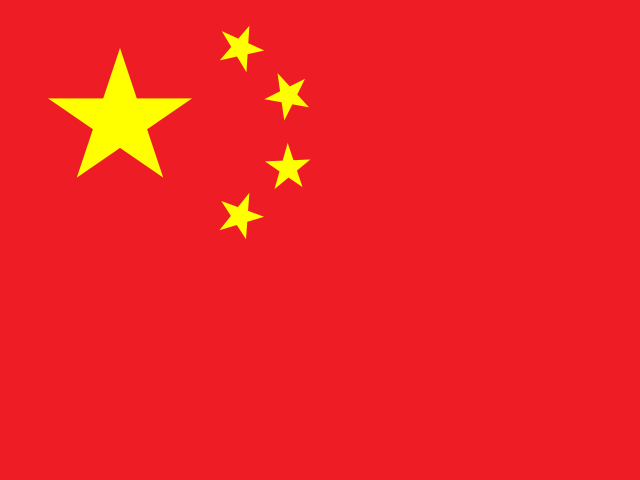
Overview
China, officially the People's Republic of China (PRC), lies in East Asia. It is made up of 33 province-level divisions, two of which are special administrative regions. Beijing is the capital, and Shanghai is the biggest city by urban population. With more than 1.4 billion people, about 17% of humanity, it is the second most populous country, and at roughly 9.6 million square kilometers it is the third largest by area.
The landscape ranges from the Central Plain and the great Yangtze and Yellow River valleys to deserts, plateaus, subtropical and temperate forests, and high mountain chains such as the Himalayas.
Politically it is a unitary state in which the Chinese Communist Party (CCP) is the only governing party. It holds a permanent seat on the UN Security Council, belongs to many multilateral bodies, has the second-largest economy by nominal GDP and is the leading manufacturer. International organizations and foreign governments have criticized it over authoritarian rule and human rights; it is often described as a superpower given its weight in geopolitics, technology, manufacturing, economics and culture.
Its cultural heritage is deep: a written literary tradition reaching back thousands of years, the birthplace of Confucianism and Daoism (which, with Buddhism, form the traditional three teachings), a highly regional cuisine (rice in the south, wheat in the north) and 60 World Heritage Sites including the Great Wall and the Grand Canal. The Han are the dominant ethnic group, alongside 55 other officially recognized minorities such as the Hui, Mongols, Tibetans, Uyghurs and Zhuang.
History
Early humans (Homo erectus) lived in China about 1.7 million years ago, with some unconfirmed sites possibly older. Modern humans appear from around 50,000 years ago. After the last ice age, around 8,000 BCE, pottery-using Neolithic cultures arose, and by the 6000s BCE farming villages spread across the lower Yellow River basin. Many of these societies grew complex and urbanized, then declined sharply in the late 2000s BCE for reasons that remain unclear.
After 2000 BCE a Bronze Age culture appeared in the Central Plain, named Erlitou after its main site; some scholars link it, controversially, to the traditional first dynasty, the Xia, though no written record confirms this. The Shang dynasty is said to have followed around 1600 BCE, and its late phase is documented by oracle bone inscriptions, the earliest known Chinese writing.
The state of Qin conquered its rivals in the 220s BCE, and in 221 BCE Qin Shi Huang declared himself the first emperor. His Legalist regime used a system of commanderies and counties but lasted only fifteen years. The Han dynasty (206 BCE to 220 CE) restored centralized rule and based its legitimacy on Confucian scholarship and institutions that endured for centuries.
The Sui dynasty reunified China in 589 and built the Grand Canal linking north and south. The Tang that followed centralized the state, sent out military expeditions, and built a cosmopolitan society around its capital Chang'an, with reformed civil service examinations and a flowering of poetry, art and scholarship. The An Lushan rebellion of 755 to 763 weakened it.
In 1206 Genghis Khan united the Mongols; his successors conquered the Western Xia and Jin, and Kublai Khan founded the Yuan dynasty and defeated the Song in the 1270s. The Yuan kept a Mongol elite and an ethnic hierarchy while Eurasian trade connections grew. Later dynasties (Ming and Qing, from general knowledge) followed until the empire's end.
Under growing Western pressure, the 1911 Revolution replaced the empire with the Republic of China. Yuan Shikai ruled as a dictator from 1912 until his death in 1916 after a failed attempt to restore monarchy. A Warlord Era followed, with regional strongmen dominating and Tibet and Mongolia declaring independence. Student protests in 1919 launched the May Fourth Movement, and many intellectuals turned to ideas such as communism.
In the mid-1920s the Kuomintang under Chiang Kai-shek allied with the young CCP and partly reunified the country, then violently purged the communists from 1927 and set up a government at Nanjing. The CCP regrouped in the northwest. Japan seized Manchuria in 1931 and invaded the rest of China in 1937; the two parties fought it together in a theater of World War II, and Japanese forces committed widespread atrocities. After Japan surrendered in 1945 the ROC became a founding UN member and regained Manchuria and Taiwan, but civil war resumed in 1946.
In 1949, Mao Zedong declared the founding of the PRC, while the ROC government retreated to Taiwan and continues to assert its legitimacy there. Tibet was taken over by the PRC in 1950. Under the new regime, the state assumed control of the economy, heavy industry grew, and efforts were made to raise literacy and advance equality between men and women. Between 1950 and 1952, land reform redistributed land, though the violence that accompanied it caused as many as a million deaths or more, and collectivization came shortly afterward.
The Great Leap Forward (from 1958) caused the Great Chinese Famine and millions of deaths. China split from the Soviet Union, tested its first atomic bomb in 1964, and then underwent the Cultural Revolution (1966 to 1976), a decade of political violence and upheaval that lasted until Mao died.
Deng Xiaoping was paramount leader from 1978 to 1989. His reform and opening-up moved the country toward a socialist market economy, with rapid growth and better relations with the West. Dissent led to a mild crackdown in 1987 and a far harsher one in 1989, including the Tiananmen Square massacre. Rapid urbanization followed, along with sharp urban-rural inequality and environmental damage; since the 1990s markets have been the main economic driver.
Xi Jinping became CCP general secretary in 2012. He launched a broad anti-corruption campaign, extended Chinese economic reach through the Belt and Road Initiative and removed term limits on the state presidency for himself.
Climate
China's climate is shaped by dry seasons and wet monsoons, producing strong seasonal contrasts. Winter winds from high latitudes are cold and dry, while summer winds from the southern coast are warm and moist. Northwestern deserts get as little as 50 mm of rain a year, whereas much of the south exceeds 1,000 mm.
Terrain is varied: a dry, mountainous west with the Himalayas, Tian Shan and the high Tibetan Plateau (Mount Everest, 8,848 m, sits on the Nepal border), against lowlands and river valleys in the east. The Turpan Depression is among the lowest land points. Eastern China is good farmland, with two or three harvests a year; rice dominates in the south and wheat and maize in the north.
Major cities (approx., general knowledge): Beijing has a continental monsoon climate with cold, dry winters often near or below freezing and hot, humid summers where most rain falls. Shanghai is humid subtropical, with mild damp winters, hot muggy summers and typhoon-season rain. Guangzhou and Shenzhen in the Pearl River Delta are subtropical to tropical, warm most of the year with long humid summers and typhoon risk. Chengdu is mild and humid with frequent overcast skies and little extreme cold. Harbin in the northeast has very cold winters, and Urumqi and other northwestern cities are dry and continental.
Natural hazards are frequent. Earthquakes cause most disaster deaths, and the 1976 Tangshan quake killed hundreds of thousands. Floods are common, especially along the Yellow River, and typhoons regularly hit the southeast. The north suffers chronic water shortages, partly eased by the South–North Water Transfer Project drawing on the Yangtze basin.
Environmentally, China is one of 17 megadiverse countries, with about 92,300 known species and subspecies (2018). Forest cover rose from 10% of territory in 1949 to 25% in 2024. Pollution and habitat loss threaten about 11% of plant and 21% of vertebrate species. It has the world's highest total CO2 emissions, though about 8 tons per capita in 2020; it aims to peak emissions before 2030 and reach carbon neutrality by 2060. In 2025, 54.4% of electricity came from coal and 41.6% from clean sources, and it is the top investor in renewables (about US$546 billion in 2022).
Government and politics
China is constitutionally a unitary state under the leadership of the CCP, which describes its system as socialism with Chinese characteristics and itself as a people's democratic dictatorship. Many scholars describe it as authoritarian, while others call that label too simple. The current constitution dates from 1982.
The National People's Congress (NPC) is the top organ of state power, and its Standing Committee operates in the periods between the body's yearly sessions. Its members are chosen through indirect elections, while the CCP holds control over who gets nominated. The NPC chooses the president, vice president, military chairman and chief justice, and it approves the premier, who heads the State Council (26 ministers, including ministry and commission heads); in practice, party leadership picks these individuals. The Chinese People's Political Consultative Conference serves as an advisory body linked to the party's united front work, which involves non-CCP intellectuals, eight minor parties and organizations.
The CCP has about 101 million members and is the longest continuously ruling large party. Its National Congress meets every five years and elects the Central Committee, which in turn nominally chooses the Politburo, its Standing Committee and the general secretary, though it typically approves slates prepared by current leaders. Xi Jinping has been general secretary since 15 November 2012 and also serves as president and chair of the Central Military Commission, making him the informal paramount leader. Because party and government are intertwined, disputes within the party are the main form of political contention, and the party's Organization Department manages senior appointments, including heads of major state firms.
Power is highly centralized politically but considerably decentralized economically. The country has 23 provinces, five autonomous regions (each tied to a minority group), four directly governed municipalities, and two special administrative regions, Hong Kong and Macau, which have their own autonomous arrangements. Below these come prefectures and prefecture-level cities, then counties, county-level cities and districts, with townships as the basic local unit. Direct elections happen only at township and county level and below. About 85% of government spending is carried out at provincial or local level, and local governments adapt national plans, often piloting policies before wider adoption. Courts, police and law are nationally organized under the Supreme People's Court and Ministry of Public Security, rather than controlled by regions.
The judiciary is led by the Supreme People's Court, with local, provincial and specialized courts, all closely controlled by the CCP; law blends civil law, traditional Chinese law and socialist law. Policing is run by the Ministry of Public Security through provincial and local bureaus, with the paramilitary People's Armed Police under the CMC. A social credit system keeps blacklists of rule-breakers. China carries out the most executions of any country.
Abroad, China is a permanent UN Security Council member, the second-largest UN funder, a member of the G20, BRICS, APEC and the East Asia Summit, and has diplomatic ties with 179 UN members. Policy rests on the Five Principles of Peaceful Coexistence and non-alignment; its only defense treaty is with North Korea (1961). Relations with the United States are marked by trade disputes and disagreement over Taiwan's status. The PRC and the ROC on Taiwan each claim to be the legitimate government of China; the PRC treats Taiwan as a province. Border and maritime disputes include areas with India, the Senkaku/Diaoyu Islands and parts of the South China Sea.
The People's Liberation Army (about 2 million active personnel) is under CCP control and has Ground Force, Navy, Air Force and Rocket Force services. A 2026 study estimated 2025 military spending at about 2.27 trillion yuan (US$336 billion).
Human rights organizations, UN assessments and foreign governments have accused China of repression, restrictions on speech and religion and heavy use of capital punishment. In Xinjiang, over a million Uyghurs were interned in the late 2010s; some UN experts and scholars have described the treatment as crimes against humanity or genocide, claims China rejects as interference. Since the 2019 to 2020 protests, Hong Kong's political autonomy has been sharply reduced, and Tibet is under tight surveillance. Same-sex marriage is not recognized and LGBTQ content is censored. Travelers and expats should be aware of internet censorship and the Great Firewall.
Economy
China describes its model as a socialist market economy; analysts often call it state capitalism. Five-year plans guide policy. The economy has grown more than 20-fold since 2000 and is second largest by nominal GDP (about 135 trillion yuan) and largest by purchasing power parity. Roughly 800 million people have been lifted out of extreme poverty.
It is the leading manufacturer, with 28% of global manufacturing in 2024, and the biggest producer of steel, rare earths, ships and automobiles and the largest exporter of electronics and textiles. The private sector is the largest part of the economy, with about 30 to 40% under state ownership; state firms dominate transport, utilities and finance but produce under 10% of exports.
The main stock exchanges are Shanghai and Shenzhen, and the stock market is the second largest after the US. Banking is large relative to the economy, with four state banks holding around 40% of assets (2022). The renminbi (yuan) is the seventh largest currency in foreign exchange reserves (2025).
About a third of the workforce are internal migrants (the floating population). The hukou household registration system limits access to services outside one's home registration, especially in big cities where property purchase may require local hukou, though rules have loosened. Urban unemployment was 5.0% per 2026 state data. Debt is high (almost 300% of GDP in 2020, household debt about 65%), and a property crisis has persisted since 2020.
In science and technology, China has made advances in AI, robotics and biotech and stresses green technology and self-reliance, while bringing big private tech firms under regulation. Western restrictions target semiconductors and firms such as Huawei. Its space program put astronauts in orbit independently in 2003, has landed on the Moon and Mars, and operates the Tiangong station since 2021.
Infrastructure is extensive: over 6 million km of roads (2021), the world's largest highway and rail systems by capacity, a rail network of roughly 165,000 km, and high-speed rail serving over 95% of cities with more than a million people (2022). It has 18 of the 50 busiest container ports, including Shanghai, the world's busiest, and 262 airports (2025). Tier-one cities like Beijing and Shanghai have advanced networks, while smaller cities and rural areas lag.
Most of the electric grid is operated by the State Grid Corporation, while hydropower supplies the bulk of renewable electricity. By capacity, no power station in the world is larger than the Three Gorges Dam. In 2025 the country had 1.125 billion internet users, roughly 80% of its population, who go online under heavy censorship, and authorities occasionally crack down on VPNs.
Demographics and urbanization
The 2020 census counted 1,411,778,724 people: about 17.95% aged 14 or under, 63.35% aged 15 to 59 and 18.7% aged over 60. Deaths have exceeded births since 2022, and the population fell by about 850,000 from 2021 to 2022, the first decline since 1961. The fertility rate is around 1.0 (2025) and the birth rate was 5.6 per 1,000 in 2025. Those over 65 are projected to reach 26% by 2050.
The one-child policy ran from 1979 to 2015, followed by a two-child policy; limits and penalties were removed in July 2021. It left a skewed sex ratio of about 120 boys per 100 girls by the late 1990s.
People live mainly in the eastern half: although 64% of the territory lies west of the Heihe–Tengchong Line, only 6.5% of people live there (2020).
Urbanization rose from 20% in 1980 to over 68% in 2025 by Chinese government figures (the UN puts the 2025 rate at 83.7% using a different method). Chinese cities often include surrounding towns and rural areas. The Yangtze River Delta and Pearl River Delta agglomerations hold many large cities and tens of millions of people. Shanghai is the largest city by urban area (approx. 25 million or more in its municipality), Beijing has approx. 21 million, and other large cities include Guangzhou, Shenzhen, Chongqing, Chengdu and Tianjin, each in the range of roughly 13 to 30 million depending on boundaries (approx.). Floating migrant populations make urban counts difficult.
The state recognizes 56 ethnic groups; Han Chinese are over 91%. Minorities live mostly in western and border regions, and the Zhuang are the largest minority, followed by groups such as Uyghurs, Hui, Mongols and Tibetans. Standard Chinese (Mandarin, based on the Beijing dialect) is the official language; about 300 million people speak other Chinese varieties such as Wu, Yue (Cantonese), Min, Gan, Hakka and Xiang, which are not easily mutually intelligible. Simplified characters are used on the mainland and traditional characters in the SARs and Taiwan; Hanyu Pinyin is the official romanization. Minority languages include Tibeto-Burman, Hmong-Mien, Kra-Dai, Turkic and Mongolic languages, and schools increasingly require Standard Chinese.
Religion is syncretic, mixing folk practice with Confucianism, Daoism and Buddhism, plus Christianity and Islam. The state is officially atheist while guaranteeing freedom of religion on paper, and recognizes five religions: Buddhism, Taoism, Islam, Catholicism and Protestantism. Most religious activity occurs outside registered bodies, and unregistered groups and minority religious practice face scrutiny.
Education includes nine years of free compulsory schooling; about 95% of junior high students continue to senior high and higher education enrollment is 59.6% (2022). There were 158 million students in compulsory school and 46.5 million in higher education, with over 3,000 colleges and universities. Foreign-language study starts in 3rd grade, mainly English.
Health care combines Western and traditional Chinese medicine, with community health centers in cities and township centers and village clinics in rural areas. Life expectancy exceeds 79 years and infant mortality is 4 per 1,000 (2025). Mental health services are underfunded. The COVID-19 pandemic was first identified in Wuhan, and a zero-COVID policy lasted until protests in late 2022.
Immigration is restrictive: only around 12,000 foreigners held permanent residence in 2023 and 845,697 foreign nationals lived in mainland China at the 2020 census. The Chinese diaspora numbers about 40 million, about two-thirds in Indonesia, Thailand, Malaysia and the United States.
Capital city
Beijing is the national capital, in northern China on the North China Plain (general knowledge). Its metropolitan population is roughly 21 million (approx.).
Climate (approx.): continental monsoon, with cold, dry winters, hot humid summers when most rain falls, and short spring and autumn seasons. Spring dust and winter or autumn air pollution episodes have been recurring concerns.
It is the seat of the CCP leadership, the NPC, the State Council, the Supreme People's Court and the Central Military Commission, as well as foreign embassies, so it is the political center. It is also a major cultural and educational hub, with historic sites such as the Forbidden City, and a tier-one city with advanced infrastructure and high-speed rail links. It was also an imperial capital in earlier eras (general knowledge).
Beijing is a directly administered municipality, outside any province. It is not the country's main commercial city: Shanghai is the largest city by urban area and its leading financial and port center, home to the Shanghai stock exchange and the world's busiest container port, while Shenzhen hosts the other main exchange. Beijing is nonetheless a major economic center for headquarters of state-owned firms and big technology companies (approx.). China has one capital in the PRC, although the ROC government on Taiwan has its seat in Taipei.
About this summary
Beijing and Shanghai metro populations, city climates, capital-city details (role, districts, institutions) and some historical background are approximate and drawn from general knowledge.