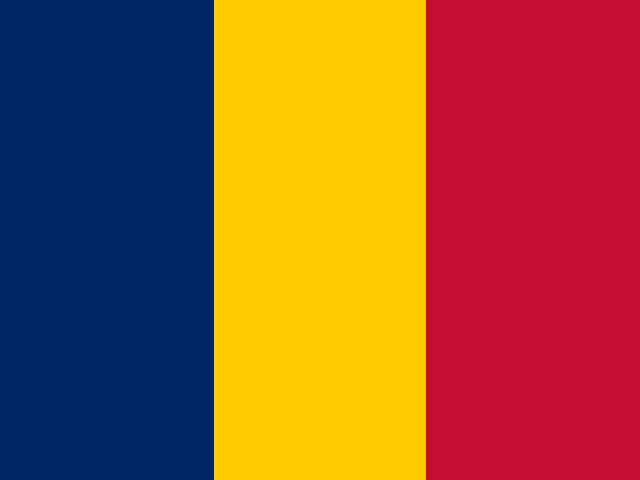
Overview
Chad, officially the Republic of Chad, is a landlocked country in north-central Africa. It borders Libya to the north, Sudan to the east, the Central African Republic to the south, Cameroon and Nigeria to the southwest (the latter around Lake Chad) and Niger to the west.
It covers about 1,284,000 km2 and has roughly 20 million people, with about 1.6 million in the capital and largest city, N'Djamena. The source describes it as the fifth-largest country in Africa and the twentieth largest in the world by area.
More than 200 ethnic and linguistic groups live here. French and Arabic are the official languages, and French serves as the lingua franca and the language of government and schooling. About 55% of people are Muslim and about 41% Christian.
The country is one of the least developed in the world, sitting near the bottom of the Human Development Index, and it is also widely cited for poverty and corruption. Most people are subsistence farmers or herders. Crude oil has been the main export earner since 2003. The human rights record is poor, and political violence and attempted coups have recurred.
Because of its distance from the sea and its largely desert climate, Chad is sometimes nicknamed the Dead Heart of Africa. The nearest seaport, Douala in Cameroon, is about 1,060 km from the capital.
History
From about the 7th millennium BC, ecological conditions in the northern half of today's Chad favoured settlement, and the population grew considerably. Some of Africa's most important archaeological sites lie in the Borkou-Ennedi-Tibesti region, and some date to before 2000 BC.
The Chad Basin has hosted settled farming communities for more than 2,000 years, and it developed into a meeting point for different civilisations. The earliest of these peoples were the legendary Sao, known from artefacts and oral tradition, who were eventually conquered by the Kanem Empire. Across the Sahelian strip, several states and empires had emerged and collapsed before the 1st millennium AD ended, each competing to dominate the trans-Saharan trade routes.
French expansion created the Territoire Militaire des Pays et Protectorats du Tchad in 1900. By 1920 France had full control and made Chad part of French Equatorial Africa. French rule was marked by few efforts to unify the territory and by slow modernisation compared with other colonies. The colony was treated mainly as a source of unskilled labour and raw cotton, and large-scale cotton production was introduced in 1929. The administration was badly understaffed.
Chad gained independence in 1960, with François Tombalbaye as its leader. Two years later, in 1962, he outlawed opposition parties and established a one-party state. His autocratic rule aggravated ethnic divisions, and in 1965 Muslims in the north, under the National Liberation Front of Chad (FRONILAT), launched a civil war. Over time his regime grew more erratic and even turned away its southern supporters, as when public servants were compelled to undergo yondo (ritual scarring), and when the exiled dissident Outel Bono was assassinated in Paris in 1973.
In 1979 rebels took the capital and ended southern dominance, and the rebel commanders then fought one another. The breakdown of the state undermined France's position, and Libya moved into the vacuum and became involved in the war. The Chadian–Libyan conflict began in 1978 and ended in 1987 after a French military intervention. President Hissène Habré, backed by France, drew a united national response and drove the Libyan army from Chadian soil.
Habré governed as a dictator, relying on corruption and violence, and an estimated thousands of people died under his rule. He gave preference to his own Toubou group while mistreating the Zaghawa, who had once been his allies. In 1990 his general Idriss Déby drove him from power. Senegal put Habré under house arrest in 2005, and in 2013 he was charged with war crimes. In May 2016 a court convicted him of human-rights violations, among them rape, sexual slavery and ordering the deaths of 40,000 people, and imposed a life sentence.
Déby tried to reconcile rebel groups and reintroduced multiparty politics. A 1996 constitution followed a referendum, and he won the 1996 presidential election and a second term five years later. Modernisation of the national army began in 1991 with French support. Oil exploitation started in 2003, raising hopes of peace and prosperity, but internal dissent grew and a new civil war broke out. Déby removed the two-term limit by unilateral constitutional change, which caused an uproar among civil society and opposition parties.
Déby won a third term in 2006 in elections the opposition boycotted. Rebels tried to take the capital by force in 2006 and 2008 and failed both times. From 2003 the Darfur crisis in Sudan spilled across the border and destabilised the east, and Chad struggled to host more than a million Sudanese refugees by the source's account. An agreement signed on 15 January 2010 ended a five-year war with Sudan, with rebels returning home, the border reopening after seven years and a joint border force deployed. In May 2013 security forces foiled a coup plot against Déby. Chad became a leading partner in a West African coalition against Boko Haram and other Islamist militants.
Déby died on 20 April 2021 after an incursion in the north by the FACT group. A Transitional Council of military officers named his son Mahamat Déby interim president; the council replaced the 2018 constitution with a charter giving him presidential powers and command of the armed forces. Mahamat Idriss Déby was sworn in as president on 23 May 2024 after a disputed election held on 6 May. The last French soldiers left in early 2025, ending France's direct military presence.
Climate
A tropical weather system called the intertropical front crosses Chad from south to north each year, bringing a wet season of May to October in the south and June to September in the Sahel. Differences in rainfall create three main zones.
The Sahara covers the northern third, with under 50 mm of rain a year and only occasional palm groves. Central Chad is Sahelian, with roughly 300 to 600 mm a year, where thorny steppe, mostly acacia, gradually gives way southward to East Sudanian savanna. The south receives over 900 mm a year.
Among cities, N'Djamena (approx.) has a hot semi-arid climate with a long dry season, very hot spring months and a rainy season from about June to September. Moundou and Sarh in the south (approx.) are wetter, with a tropical savanna climate and a longer rainy season. Abéché in the east (approx.) is hotter and drier, with a semi-arid Sahelian climate.
The land forms a broad basin, with the Ennedi Plateau and the Tibesti Mountains closing it off along the north and east. The Tibesti include the dormant volcano Emi Koussi, which rises to 3,414 m. Lake Chad is the remnant of a much larger lake that spread across roughly 330,000 km2 about 7,000 years ago. Today it measures about 17,806 km2, changes greatly from one season to the next, and ranks as the second-largest wetland in Africa. The Chari and Logone rivers cross the southern savannas and drain into the lake.
Chad has six terrestrial ecoregions, including East Sudanian savanna, Sahelian Acacia savanna and Lake Chad flooded savanna. The country has at least 134 mammal species, 509 bird species and over 1,600 plant species. Elephants, lions, giraffes, hippopotamuses and cheetahs are among the animals found, though large carnivores have fallen sharply since the early 20th century. Elephant poaching, notably around Zakouma National Park, is a severe problem and rangers have been killed. A small group of West African crocodiles in the Ennedi Plateau is one of the last such colonies in the Sahara.
Forest covers about 3% of land (about 4.3 million ha in 2020, down from 6.7 million ha in 1990). Deforestation, hunting and livestock farming have cost habitat. Efforts supported by the FAO aim to improve relations between farmers and pastoralists in several national parks, and over 1.2 million trees have been replanted to hold back the desert, including acacias that yield gum arabic.
Government and politics
Chad is a presidential republic with a powerful executive under the constitution adopted following the 2023 referendum. The president names the prime minister and the cabinet, and also wields substantial sway when it comes to choosing judges, generals, provincial officials, and the leaders of state-owned firms. Chosen by direct election, the president may serve no more than two consecutive five-year terms. In the event of a grave and immediate threat, the president can declare a state of emergency after consulting the National Assembly. Mahamat Déby holds the office today, and many of his main advisers are Zaghawa, although figures from the south and the opposition also serve in government.
The legal system blends customary law and French civil law. Although the constitution guarantees judicial independence, the president names most key judicial officials. The top courts are the Supreme Court and the Constitutional Council, the latter having nine judges serving nine-year terms and the power to review legislation and treaties before adoption.
Parliament has two chambers. The Senate has 69 members, 46 indirectly elected by provincial and municipal councillors and 23 appointed by the president, serving six-year terms. The National Assembly has 188 members. The Assembly must approve the prime minister's programme and can force resignation by a no-confidence vote, but if it rejects the executive's programme twice in a year the president may dissolve it. In practice the Patriotic Salvation Movement (MPS) holds a large majority in both chambers and gives the president wide influence.
Power is highly centralised. Chad is divided into 23 provinces, each led by a governor appointed by the president. Prefects run the 120 departments, which are split into 454 sub-prefectures. The constitution provides for decentralisation with elected local assemblies in each subdivision, but the appointed officials hold the executive role. The source does not describe any special jurisdictions or federal-style division of taxation, health, law or education powers; these sit largely with the central government.
The MPS was the only legal party until opposition parties were legalised in 1992; since then 78 parties have registered. Referendums and elections in 2005 and 2006 were boycotted by the opposition amid reports of irregularities and media censorship. Chad ranked tenth in the 2024 Fragile States Index and was listed as a failed state by the Fund for Peace, ranked 164th of 180 in Transparency International's 2021 index, and 16th lowest electoral democracy worldwide in the 2023 V-Dem indices. Critics accused Idriss Déby of cronyism and tribalism. In the south, land conflicts are increasingly common and often violent.
After Idriss Déby's death in 2021, the National Assembly and government were dissolved and a military council led by Mahamat Déby took over. In October 2022 he extended the transition and was sworn in as transitional president, which prompted the 2022 protests, among the most violent in Chadian history, suppressed by government forces. A new constitution in December 2023 was followed by the May 2024 presidential election won by Mahamat Déby, formally ending three years of transitional military rule. He appointed Allamaye Halina prime minister in May 2024.
Historically Chad had strong ties with France, but relations cooled and the last French troops left in early 2025. Numerous rebel groups have existed; a 2007 peace treaty integrated United Front for Democratic Change soldiers into the army, and the Union of Resistance Forces (UFR) continues to fight the government. Janjaweed fighters from Sudan have also attacked civilians in the east. UAE aid, including support for Sudanese refugees, was inaugurated in Amdjarass on 3 August 2023.
As of 2024 Chad had about 33,250 active military personnel, including 27,500 in the Ground Forces, 350 in the Air Force, 5,400 in the General Directorate of the Security Services of State Institutions, 4,500 in the National Gendarmerie and 7,400 in the National and Nomadic Guard. Chad belongs to the G5 Sahel and the Multinational Joint Task Force and contributed nearly 1,500 troops to the UN mission in Mali. Military spending was estimated at 4.2% of GDP in 2006 and about 2.0% in 2011 per the World Bank.
Economy
Chad is among the poorest countries in the world, with about 80% of people reported as living below the poverty line, and GDP per capita (PPP) was estimated at US$1,651 in 2009. It belongs to the Bank of Central African States, the Customs and Economic Union of Central Africa and OHADA, and uses the CFA franc.
Over 80% of people depend on subsistence farming and livestock. The most fertile land lies in the southernmost tenth of the territory, producing sorghum and millet. The Sahel supports hardier millet and large herds of cattle, goats, sheep, donkeys and horses, while Saharan oases offer only dates and legumes. Cotton once dominated industry and made up about 80% of export earnings before oil; it remains a main export alongside cattle, sesame and gum arabic. The cotton company Cotontchad was rehabilitated with outside financing and is expected to be privatised.
Oil changed the export picture from 2003. A consortium led by ExxonMobil with Chevron and Petronas invested $3.7 billion in southern reserves estimated at one billion barrels, linked by a pipeline to Cameroon's Atlantic coast. The World Bank initially required 80% of revenue go to development, suspended its loans in January 2006 when Chad reduced this, and in July 2006 agreed a memorandum under which 70% of spending goes to poverty reduction priorities. Mining historically produced natron, and gold-bearing quartz has been reported in the Biltine area. Decades of conflict deterred foreign investors; major foreign investment in oil began in 2000.
Poverty declined from 55% to 47% between 2003 and 2011. Even so, the count of poor people climbed from 4.7 million in 2011 to 6.5 million in 2019, and by 2018 roughly 4.2 out of every 10 people lived below the poverty line. The UN has spoken of a humanitarian crisis since at least 2001, and insecurity along with the killing of aid workers has repeatedly disrupted relief operations. In 2026, Chad made its debut in the Global Innovation Index, where it placed 139th. Safe water reaches only 48% of urban residents, and a mere 2% have basic sanitation.
Transport is limited. Paved roads totalled only 30 km in 1987 and about 550 km by 2004, and roads are often unusable for months. Chad has no railways and relies on Cameroon's rail to the port of Douala. Three trans-African routes cross it: Tripoli-Cape Town, Dakar-N'Djamena and N'Djamena-Djibouti. It had about 59 airports in 2013, nine with paved runways. N'Djamena International Airport has regular direct flights to Paris and several African cities.
Electricity is scarce: the state utility serves about 15% of the capital's residents and only about 1.5% of the national population, and most people burn wood and manure. Telecommunications are basic and expensive; in 2000 there were 14 fixed lines per 10,000 people, and mobile penetration was about 24.3% in 2010. Chad is investing over €175 million in a 1,200 km national fibre-optic backbone, and ranked last in the World Economic Forum's Network Readiness Index.
Demographics and urbanization
The national statistics agency assessed the population at about 20.0 million in 2026. In 2015 its medium projection gave roughly 13.7 million, of whom about 3.2 million lived in urban areas and 10.5 million in rural areas, implying an urbanisation rate of about 23% then (approx.). The population is very young: about 47% are under 15. The birth rate is about 42 per 1,000, the death rate about 17 per 1,000 and life expectancy about 52 years.
Distribution is very uneven. Density is about 0.1 per km2 in the Saharan Borkou-Ennedi-Tibesti region versus about 52 per km2 in Logone Occidental, and higher still in the capital. About half the population lives in the southern fifth of the country.
Urban life centres on N'Djamena (about 1.6 million), where most people work in commerce. Other main towns are Sarh, Moundou, Abéché and Doba, much smaller but growing quickly; Moundou and Sarh are each roughly several hundred thousand people or fewer (approx.).
Chad hosts about 1.5 million refugees as of 2025, over 1.3 million Sudanese and about 145,000 Central Africans. It has the highest refugee population per capita in Africa according to the source, and the number of Sudanese refugees has doubled since 2023. Border towns such as Adré have received large influxes. Earlier, since 2003, 230,000 Sudanese fled to the east, joining 172,600 displaced Chadians, which strained communities.
There are more than 200 ethnic groups. The Sara, whose basic social unit is the lineage, are the main group in the south; Arabs, the second major group, live in the Sahel alongside sedentary peoples; the north is home to nomads, mostly Toubou. Local or regional identity matters more to most people than a national one. Over 100 regional languages are spoken, including Chadic, Central Sudanic, Maban and Niger-Congo languages, with French and Arabic official.
Estimates put Muslims at 52–58% and Christians at 39–44% (about 22% Catholic and 17% Protestant). Most Muslims are Sunni, with many belonging to Sufi orders such as Tijaniyah. Some follow indigenous religions, and Baháʼí and Jehovah's Witness communities are small. Muslims are concentrated in the north and east, Christians and animists mainly in the south and Guéra. The constitution provides for a secular state and religious freedom, and communities generally co-exist peacefully.
Polygamy is common, with 39% of women in such unions. Domestic violence is common despite prohibition, and female genital mutilation, though prohibited, affects about 45% of women, with rates of 90% or more among Arabs, Hadjarai and Ouaddaians, 38% among the Sara and 2% among the Toubou. Women face unequal access to education and formal jobs, and local leaders usually decide inheritance in men's favour.
Education faces dispersed population and parental reluctance. Only 68% of boys attend primary school, and literacy is about 33%, among the lowest in Sub-Saharan Africa. Higher education is offered at the University of N'Djamena. A 2013 US Labor Department report put attendance for ages 5 to 14 at 39%, with 53% of children in that age group working. In the 2024 Global Hunger Index Chad ranked 125th of 127 countries, with a score of 36.4.
Capital city
N'Djamena is the capital and largest city, with about 1.6 million people. It lies in the southwest of the country on the Chari River near the Cameroon border (general knowledge, approx.). It is about 1,060 km from the nearest seaport, Douala in Cameroon.
Its climate (approx.) is hot semi-arid, with a long dry season, extremely hot weather before the rains, and a rainy season from roughly June to September. The source places the capital within the wetter southern part of the Sahelian belt, with population density far higher than elsewhere.
N'Djamena is the political centre, housing the presidency and national institutions, and it is the commercial hub where much of the population works in commerce. It hosts the University of N'Djamena and N'Djamena International Airport with direct flights to Paris and several African cities. It was the target of rebel attacks in 2006 and 2008, including the Battle of N'Djamena in February 2008.
N'Djamena is both the main political and main economic city; Chad has a single capital. Services such as power and water are limited: the state utility supplies about 15% of the capital's residents.
About this summary
Capital-city details (climate, role, approx. population context), city climates and approximate populations of other towns come from general knowledge, as do some recent-context remarks.