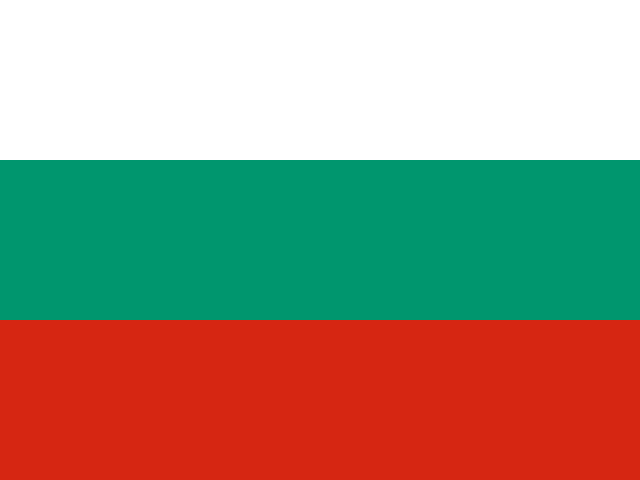
Overview
Bulgaria, officially the Republic of Bulgaria, is a country in Southeastern Europe, on the eastern side of the Balkans. It lies south of the Danube and west of the Black Sea. Neighbours are Romania to the north (across the Danube), Serbia and North Macedonia to the west, and Greece and Turkey to the south.
The country covers 110,994 square kilometres. The source describes it as the tenth largest in the European Union and the sixteenth largest in Europe by area. It has 1,808 km of land borders and a 354 km Black Sea coastline.
Sofia serves as both the capital and the biggest city, with Plovdiv, Varna and Burgas ranking among the other important urban centres. Bulgaria is a parliamentary republic divided into 28 provinces, and its political, administrative and economic life is highly centralised.
It is described as a developed, high-income economy, based mainly on services, followed by manufacturing, mining and agriculture. It is a transit country for gas and oil pipelines and has a strategic Black Sea position.
Bulgaria belongs to the European Union, the Schengen Area, the eurozone (since 1 January 2026), NATO and the Bucharest Nine.
History
Human traces in the area go back to Neanderthals about 150,000 years ago. Remains of modern humans from around 47,000 years ago found in Bacho Kiro cave mark some of the earliest arrivals of Homo sapiens in Europe. The Karanovo culture arose around 6,500 BC, and the Varna culture produced what is described as the oldest worked gold jewellery in the world, over 6,000 years old.
In the 6th to 3rd centuries BC the region was contested by Thracians, Persians, Celts and Macedonians. Rome conquered it in AD 45. After Roman power fragmented, tribal invasions resumed and Slavs settled the area from about the 6th century.
The Bulgars under Khan Asparuh, a remnant of Old Great Bulgaria north of the Black Sea, attacked Byzantine Moesia and subdued Slavic tribes in 680. A treaty with Byzantium in 681 founded the First Bulgarian Empire, which came to dominate most of the Balkans and influenced Slavic cultures through the Cyrillic script. The Bulgarian Orthodox Church became the first national church to gain autocephalous status, in 927. Byzantine emperor Basil II conquered the empire in the early 11th century.
After Basil II's death in 1025 Byzantine administration weakened, and unrest followed, notably the uprising of Peter Delyan in 1040-41. A successful revolt in 1185 created the Second Bulgarian Empire, which peaked under Ivan Asen II (1218-1241). Wars and feudal strife weakened it.
The Ottomans took Adrianople in 1362, Sofia in 1382, Tarnovo in 1393 and Vidin in 1396; Sozopol, the last Bulgarian settlement, fell in 1453. Nearly five centuries of Ottoman rule followed. The nobility was eliminated, peasants were enserfed, taxes were heavy, and there was partial Islamisation. Orthodox Christians were governed through the Rum Millet, and monasteries helped preserve ethnic identity.
Austria and Russia backed several uprisings (1598, 1686, the Chiprovtsi Uprising of 1688, and Karposh's rebellion of 1689). Enlightenment ideas fed a national awakening and the April Uprising of 1876, in which up to 30,000 Bulgarians were killed. Russia declared war on the Ottomans in 1877 and won, aided by Bulgarian rebels, including at the Battle of Shipka Pass.
The Treaty of San Stefano (3 March 1878) set up a large autonomous principality, but the other Great Powers rejected it. The Treaty of Berlin (13 July 1878) created a much smaller Principality of Bulgaria, leaving many ethnic Bulgarians outside its borders; this fed irredentism and a militaristic foreign policy. The principality absorbed Eastern Rumelia in 1885 and declared full independence as a kingdom on 5 October 1908.
Between 1912 and 1918 Bulgaria fought in two Balkan Wars and World War I. It lost the Second Balkan War and was on the losing side in World War I as an ally of the Central Powers, capitulating in 1918 with major territorial losses and 87,500 soldiers killed. More than 253,000 refugees arrived between 1912 and 1929.
Tsar Boris III ruled as a royal authoritarian dictator (1918-1943). Bulgaria joined the Axis in 1941 but did not take part in Operation Barbarossa and protected its Jewish population from deportation to camps. The USSR invaded in September 1944, and the communist-led Fatherland Front took power and switched sides. Bulgaria suffered little war damage and paid no reparations to the USSR, though it lost its wartime gains except Southern Dobrudzha.
The coup of 9 September 1944 ended the monarchy, and some 1,000-3,000 people were executed. A one-party people's republic was set up by referendum in 1946 under Georgi Dimitrov, a repressive and rapidly industrialising Stalinist state. Under Todor Zhivkov (1954-1989) living standards rose, though debt crises occurred in 1960, 1977 and 1980. In 1984 ethnic Turks were forced to adopt Slavic names, and some 300,000 emigrated to Turkey.
The Communist Party gave up its monopoly on 10 November 1989 and Zhivkov resigned. The renamed Bulgarian Socialist Party won the first free elections in June 1990, and a new constitution was adopted in July 1991. Living standards and economic performance stayed below communist-era levels into the early 2000s. Conditions improved after 2001, and Bulgaria reached high Human Development status in 2003, joined NATO in 2004 and the EU in 2007. It held the EU Council Presidency in 2018. It joined the Schengen Area fully in January 2025 and adopted the euro on 1 January 2026.
Climate
Bulgaria sits where Mediterranean, oceanic and continental air masses meet, with mountains acting as barriers. Northern Bulgaria is about 1 °C cooler and gets around 200 mm more precipitation than the area south of the Balkan Mountains. Recorded extremes are -38.3 °C and 45.2 °C. Average annual precipitation is about 630 mm, ranging from around 500 mm in Dobrudja to over 2,500 mm in the mountains.
The continental zone dominates because continental air flows freely into the Danubian Plain, bringing abundant winter snow. Mediterranean influence grows in the second half of summer, bringing hot, dry weather. The source divides the country into five climatic zones: continental, transitional, continental-Mediterranean, a Black Sea coastal strip of 30-40 km, and alpine above about 1,000 m.
Major cities (approx.): Sofia, at about 550 m, has a humid continental climate with cold, sometimes snowy winters and warm summers. Plovdiv, in the Upper Thracian Plain, is milder in winter and hotter in summer. Varna and Burgas on the Black Sea coast have a milder, more maritime climate with warm summers and moderate winters. Ruse on the Danube is distinctly continental, with colder winters and hot summers.
Geographic features: the Danubian Plain, Balkan Mountains, Upper Thracian Plain and Rila-Rhodope massif. Musala (2,925 m) is the highest peak in the Balkans. Forest covers about 36% of the land, and Natura 2000 areas cover 33.8% of the territory.
Environmental issues: air quality is poor, with the source citing the highest particulate levels in Europe, particularly in traffic-heavy urban areas and near coal power stations such as Maritsa Iztok-2. Water quality has moderately improved since 1998, with over 75% of surface rivers meeting European good-quality standards. Bulgaria ranked 37th in the 2024 Environmental Performance Index.
Government and politics
Bulgaria is a unitary parliamentary republic under the 1991 constitution. The prime minister is head of government and the most powerful executive figure. The directly elected president is head of state and commander-in-chief, with more limited domestic powers, including returning bills to parliament, which can override the veto by simple majority.
The National Assembly has 240 deputies elected for four years. It enacts laws, approves the budget, schedules presidential elections, appoints and dismisses the prime minister and ministers, declares war, deploys troops abroad and ratifies treaties. Voting age is 18, and the constitution allows petitions and referendums. An independent Central Election Commission supervises elections.
Power is divided between the national government and sub-national levels in a very centralised way. There are 27 provinces plus Sofia City as a metropolitan capital province, divided into 265 municipalities. Provincial governors are appointed directly by the Council of Ministers, and provinces and municipalities depend heavily on the centre for funding. Municipalities have directly elected mayors and councils serving four-year terms. Local authorities levy real estate, inheritance and vehicle taxes, while VAT, excise duties, and corporate and personal income tax are national.
The legal system is civil law. The Supreme Administrative Court and the Supreme Court of Cassation are the highest appeal courts, and the Supreme Judicial Council manages the judiciary and appoints judges. Observers regard it as among Europe's least efficient, citing a lack of transparency and corruption. Police are under the Ministry of the Interior (about 26,578 officers), which also runs the Border Police and National Gendarmerie. Homicide rates are low.
Political instability has been recurring. Boyko Borisov's GERB led governments in 2009-2021 amid protests over corruption and living standards. Repeated inconclusive elections followed in 2021-2023 (five parliamentary elections from April 2021 to April 2023). A coalition under Nikolai Denkov formed in June 2023 with a planned rotation to Mariya Gabriel, which collapsed in March 2024. Caretaker PM Dimitar Glavchev led until elections on 9 June 2024. In January 2025 a minority government under Rosen Zhelyazkov took over and oversaw preparations for euro adoption. It resigned in December 2025 after protests over the 2026 budget and corruption.
President Rumen Radev opposed the euro rushed timeline and tried to call a referendum, which was rejected by parliament and the Constitutional Court. He resigned to contest elections, and Iliana Iotova became the first female president. A caretaker government under Andrey Gyurov was appointed on 18 February 2026, and the 19 April 2026 election was, according to the source, won by Radev by a landslide with a majority. He was sworn in as prime minister on 8 May 2026.
Freedom House lists Bulgaria as Free but a semi-consolidated democracy with declining scores, citing weaker media independence and stalled reforms. The Democracy Index calls it a flawed democracy.
Foreign relations: UN member since 1955, OSCE founder (1975), NATO member since March 2004, EU member since 1 January 2007, Schengen full member in January 2025. It has ties with Romania and Greece, China, Vietnam and a historical relationship with Russia. After Gazprom halted gas exports in 2023, Bulgaria in turn stopped importing Russian oil and gas. It also hosts joint US-Bulgarian training facilities at Bezmer, Graf Ignatievo, Novo Selo and Aytos.
Military: about 36,950 active troops and 3,000 reservists, with land forces, navy and air force. Equipment is largely Soviet-era, with modernisation under way including F-16 Block 70 jets and new corvettes. Bulgaria ranks 26th on average in the Global Peace Index per the source.
Economy
Bulgaria has an advanced, high-income economy in which the private sector produces over 70% of GDP. It moved from an agrarian economy in 1948 to an industrial one by the 1980s. The loss of COMECON markets in 1990 and shock therapy led to a steep decline and a collapse in 1997, followed by recovery in the 2000s. The average salary of 2,072 leva (about $1,142) a month is the lowest in the EU, per the source.
Public finances: a balanced budget was reached in 2003. Taxes form about 30% of GDP in revenue. The flat corporate income tax rate is 10%, among the EU's lowest. Government debt fell from 79.6% of GDP in 1998 to 14.1% in 2008 and was 22.6% in 2022, the second lowest in the EU per the source.
Regional and income data: the Yugozapaden planning area, including Sofia City and Sofia Province, produces 42% of national GDP with 22% of the population, with GDP per capita (PPP) of about $29,816 in 2018. In 2019 GDP per capita in PPS was 53% of the EU average and cost of living was 52.8%. The informal economy is described as the largest in the EU relative to output.
Structure: the labour force is about 3.36 million; 6.8% work in agriculture, 26.6% in industry and 66.6% in services. Industry includes metals and mineral extraction, chemicals, machine building, steel, biotechnology, tobacco, food processing and petroleum refining. Mining generates about 5% of GDP, and Bulgaria is described as Europe's fifth-largest coal producer. Agriculture includes grains, maize, barley, oats, rice and tobacco, and Bulgaria is the world's largest producer of lavender and rose oil. Main non-EU export markets are Turkey, China and Serbia; main import partners are Russia, Turkey and China.
Tourism is significant: Sofia, Plovdiv, Veliko Tarnovo, the coastal resorts Albena, Golden Sands and Sunny Beach, and the winter resorts Bansko, Pamporovo and Borovets. Most visitors are Romanian, Turkish, Greek and German.
Currency: the lev (pegged to the euro at 1.95583) was replaced by the euro on 1 January 2026. Dual circulation ran until 31 January 2026, and from 1 February 2026 the euro is the sole currency.
Corruption is a major problem. Bulgaria ranked 71st in the 2017 Corruption Perceptions Index and is described as having the worst corruption in the EU. Public procurement is a key risk area, with large contracts going to a few politically connected companies. Corruption and organised crime delayed Schengen entry.
Science and technology: R&D spending is 0.78% of GDP. Bulgaria ranked 37th in the Global Innovation Index in 2025. The ICT sector produces about 3% of output and employs 40,000-51,000 software engineers. It operates Avitohol, the most powerful supercomputer in Southeast Europe, and launched BulgariaSat-1 in 2017.
Infrastructure: thermal plants generate 48.9% of electricity, nuclear (Kozloduy) 34.8% and renewables 16.3%, with 12,668 MW installed capacity and net exports. The road network is 19,512 km and railways 6,238 km, with rail links to Romania, Turkey, Greece and Serbia. Sofia is the air hub, and Varna and Burgas are the main ports. Internet use was 69.2% of people aged 16-74 in 2020. Mobile operators are Vivacom, A1 and Yettel.
Demographics and urbanization
The 2022 official estimate was 6,447,710 people, down from 6,519,789 at the 2021 census. About 72.5% live in urban areas. Density is roughly 55-60 people per km², about half the EU average.
Largest cities (2019 figures): Sofia 1,241,675; Plovdiv 346,893; Varna 336,505; Burgas 202,434; Ruse 142,902.
Ethnic groups: Bulgarians 84.6%, Turks 8.4%, Roma 4.4% (possibly up to 11% according to the source, as the census underestimates them), about 40 smaller groups 1.3%, and 1.3% not self-identifying.
Bulgaria has had negative population growth since 1989, with roughly 937,000-1,200,000 people, mostly young adults, emigrating by 2005. Total fertility was 1.59 in 2024 (record low 1.1 in 1997). The average age is about 43, among the oldest populations in the world. A third of households are single-person.
Health: universal in principle, but out-of-pocket costs make up nearly half of health spending. Doctor emigration, understaffed regional hospitals and supply shortages are cited. Life expectancy is 74.8 years against an EU average of about 81.
Education: free and compulsory in public primary and secondary schools, with 12 grades. Higher education is a 4-year bachelor plus a 1-year master. Literacy is 98.4%, but standards have declined since the early 2000s, and PISA 2018 found 47% of 9th graders functionally illiterate in reading and sciences. Sofia University is the top-ranked institution.
Language: Bulgarian is the only official language. It is Slavic but lacks noun cases and infinitives and uses a suffixed definite article.
Religion: the state is secular, with Eastern Orthodoxy as the traditional religion. In the 2021 census 71.5% were Christian, 10.8% Muslim, 0.1% other, and 12.4% unaffiliated or no response.
Gender: Bulgaria ranked 18th in the 2018 Global Gender Gap Report, with a high share of women in the technology sector (44.6%).
Capital city
Sofia is the capital and largest city, in western Bulgaria in a valley beneath Vitosha mountain. The source gives a city population of 1,241,675 (2019); the metro area is approx. 1.5 million. Sofia City is its own province, separate from surrounding Sofia Province.
It is the political, economic and cultural centre. It houses the National Assembly, government and the supreme courts, and is the country's main air hub. Together with Sofia Province, the Yugozapaden region produces 42% of national GDP with 22% of the population, so the capital is also the main economic city; there is no separate economic or judicial capital.
Climate (approx.): humid continental, with cold winters that often bring snow, mild springs and autumns, and warm summers with occasional hot spells. Its elevation of about 550 m makes it cooler than the southern lowlands.
Sofia fell to the Ottomans in 1382 and became part of the small Principality of Bulgaria in 1878. It hosted the 2018 EU Council Presidency at the National Palace of Culture. Sofia University, the country's top-ranked higher-education institution, is located there. Air quality, with high particulates in urban areas, is a recognised concern.
About this summary
Capital-city details (Sofia metro population, city climates, role) and some city climate and recent-event context are from general knowledge and marked approx.; the dates of the 2026 events follow the supplied text.