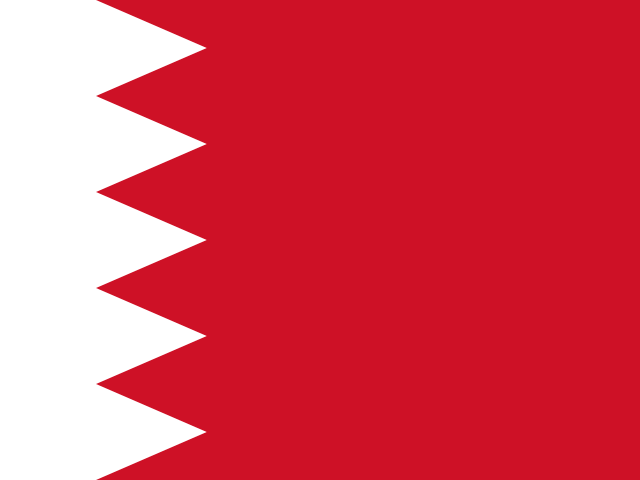
Overview
The Kingdom of Bahrain is a small Gulf island state off the western shore of the Persian Gulf, in West Asia. It is an archipelago of 33 natural islands plus about 50 artificial ones, with Bahrain Island making up roughly 80 percent of the land. It lies between Qatar and the northeastern coast of Saudi Arabia and is linked to the Saudi mainland by the King Fahd Causeway.
The 2024 population was about 1.59 million, of whom roughly 740,000 (46.6%) were Bahraini citizens and about 849,000 (53.4%) were expatriates. The land area is around 760 to 780 sq km, which makes it the third-smallest country in Asia by area. Manama is the capital and largest city.
Bahrain has a long history as the site of the ancient Dilmun civilisation and was famous for pearl fishing until the 19th century. Since 1783 it has been ruled by the Al Khalifa family. It became a British protectorate in the late 19th century and independent in 1971. It was an emirate until 2002, when it was declared a kingdom with a semi-constitutional monarchy; the constitution names sharia as a principal source of legislation.
It is regarded as one of the first post-oil economies in the Gulf, having built up banking and tourism over decades, although oil still supplies a large share of government revenue. The World Bank classes it as high-income. It belongs to the UN, the Arab League, the Organisation of Islamic Cooperation, the Non-Aligned Movement and the Gulf Cooperation Council, and is a dialogue partner of the Shanghai Cooperation Organisation.
History
Antiquity: Bahrain was home to Dilmun, a Bronze Age trading hub linking Mesopotamia and the Indus Valley. It was later ruled by Sumerians and Babylonians, and formed part of the Achaemenid Empire from the 6th to 3rd century BC. By about 250 BC the Parthians controlled the Persian Gulf and placed garrisons along its southern coast to guard trade routes. The ancient Greeks called the island Tylos and knew it as a centre of the pearl trade.
Arrival of Islam: Bahrain was among the earliest regions to come under Islamic influence, in the lifetime of Muhammad around AD 628, when he sent an envoy and the local ruler Munzir ibn Sawa Al Tamimi accepted Islam according to traditional accounts.
Middle Ages: In 899 the Qarmatians, a millenarian Ismaili sect, seized Bahrain, aiming at a society based on reason and shared property. They pressed the caliph in Baghdad for tribute and in 930 sacked Mecca, taking the Black Stone to their base in Ahsa. It was returned in 951.
Early modern period: In 1521 the Portuguese, allied with Hormuz, took Bahrain from the Jabrid ruler Muqrin ibn Zamil, who was killed. They ruled for about 80 years, relying mainly on Sunni Persian governors, until Abbas I of Safavid Iran expelled them in 1602, a change that boosted Shia Islam. Persian rule continued for about two centuries, interrupted by Ibadi Omani invasions in 1717 and 1738, and was often exercised indirectly.
19th century: Omanis and the Al Sauds both invaded in the early 1800s. In 1783 the Bani Utbah and allied tribes had captured the islands from Nasr Al-Madhkur, and since then the Al Khalifa family has ruled, with Ahmed al Fateh as the first hakim. In 1816 the British resident William Bruce reassured the Sheikh of Bahrain with an informal agreement, and successive treaties with Britain in the late 19th century made Bahrain a British protectorate.
Oil and independence: Oil was found in 1932 below Jabal ad Dukhan, the first discovery on the Arabian side of the Gulf. A US naval presence has existed since 1948. On 15 August 1971, after the Shah of Iran, who had claimed historic sovereignty, accepted a UN-held referendum, Bahrain declared independence and signed a new friendship treaty with Britain. It joined the UN and the Arab League that year. The 1970s oil boom helped greatly, and diversification, plus the Lebanese Civil War, which moved Middle East banking from Beirut to Bahrain, supported the economy.
Politics since the 1970s: The first parliamentary elections took place in 1973, but in 1975 the emir dissolved parliament and suspended the constitution. The 1975 to 1999 period, known as the State Security Law era, saw widespread rights abuses. After Hamad succeeded his father Isa in 1999 he introduced reforms, and in 2002 the country became a kingdom.
2011 protests: Inspired by the Arab Spring, Bahrain's Shia population began large protests against the Sunni rulers in early 2011, centred on Pearl Roundabout. The government requested security help from Saudi Arabia and other GCC states and declared a three-month state of emergency. A crackdown followed with thousands of arrests, and by March 2014 more than 80 civilians and 13 police were reported killed. A government-appointed commission confirmed grave rights violations in September 2011. Amnesty International later said that repression had intensified in the decade after the uprising.
2026 Iran war: The United States and Israel began a war on 28 February 2026 by jointly striking Iran from the air. Iran retaliated with missiles and drones aimed at Israel as well as at American bases and allied states across the region. Bahrain was among those hit, suffering material damage and civilian casualties. In July 2026, Bahrain and Kuwait carried out their first-ever airstrikes on Iran in response.
Climate
Bahrain is flat and arid: a low desert plain rising gently to a central escarpment, with the highest point at Jabal ad Dukhan (the Mountain of Smoke), 134 m. About 92% of the land is desert, and periodic droughts and dust storms are the main natural hazards. Arable land is under 3% of the territory.
The climate has mild winters and very hot, humid summers. Shallow surrounding seas warm quickly, producing high humidity, especially at night, unlike drier desert cities such as Baghdad or Phoenix. Summer temperatures can reach 40 °C or higher. Rainfall is low and irregular, about 70.8 mm a year on average, falling mostly in winter. The northwesterly shamal wind carries dust from Iraq and Saudi Arabia and cuts visibility in June and July. Widespread flooding hit in April 2024.
City climates (approx.): Manama, the capital, has a hot desert climate with winter lows near 14 to 15 °C and summer highs of about 40 °C or more with heavy humidity. Muharraq, Riffa and the other main towns of the northern island share this pattern, since the country is small and the north is urbanised almost continuously.
Climate change brings more frequent extreme heat, drought, flooding and dust storms, and a threat from sea-level rise, which endangers food and water security. Bahrain was the second highest greenhouse gas emitter per person in 2023, at about 42 tonnes. It has committed to net zero by 2060 and a 30% emissions cut by 2035.
Environment and wildlife: Land reclamation has raised the area from 665 to about 780 sq km and increased the number of islands and island groups to 84 by 2008. Problems include desertification, coastal damage from oil discharges and illegal reclamation (for example at Tubli Bay), and salinisation of the Dammam Aquifer. More than 330 bird species have been recorded. The Hawar Islands hold the world's largest breeding colony of Socotra cormorants and a major dugong population. Bahrain has five protected areas, four of them marine.
Government and politics
Bahrain is a semi-constitutional monarchy headed by King Hamad bin Isa Al Khalifa. The king has wide executive powers: he appoints the prime minister and ministers, commands the Bahrain Defence Force, chairs the Higher Judicial Council, appoints the upper house of parliament and can dissolve the elected lower house. The prime minister is head of government. About half of the cabinet came from the Al Khalifa family in 2010.
The bicameral National Assembly has a 40-seat Shura Council appointed by the king and a 40-seat Council of Representatives elected for four-year terms in single-member constituencies. Critics describe the districts as gerrymandered. The appointed chamber has a de facto veto because bills need approval from both. The king may ratify a bill or return it within six months, after which a two-thirds vote of both chambers is needed to pass it.
Territorial structure: Bahrain is a unitary state. Its small size means there is no federal or autonomous sub-national level with tax, health, law or education powers; these are handled by the central government and ministries. The country is divided into governorates, the Southern Governorate being the least densely populated, but they are administrative units. Islamic law matters for personal status, and Bahrain's constitution makes sharia a principal source of legislation. The country has no special jurisdictions in the source, although the US Fifth Fleet headquarters in Juffair and a British naval base at Mina Salman operate under bilateral agreements.
Political history: The 1973 parliament was dissolved in 1975. Elections resumed in 2002 (boycotted by the opposition al-Wefaq), 2006 and 2010, with al-Wefaq winning the largest bloc in the last two. In 2011 its 18 members resigned in protest at the crackdown. Women gained voting and candidacy rights in 2002. Nada Haffadh became the first female cabinet minister in 2004 and Lateefa Al Gaood the first female MP in 2006. Haya bint Rashid Al Khalifa presided over the UN General Assembly in 2006.
Democracy and rights assessments: V-Dem ranked Bahrain as the 4th least electoral democratic country in the Middle East in 2023. Freedom House has rated it Not Free, and International IDEA notes weaknesses in judicial independence and freedom of assembly. Human Rights Watch, Amnesty International and the European Parliament have criticised the government's treatment of dissidents and Shia citizens. The government has also introduced reforms. Same-sex relations between consenting adults over 21 have been legal since 1976. Media is mostly state-run, and journalists risk prosecution.
Military and foreign relations: The Bahrain Defence Force has about 8,200 personnel, plus a National Guard of about 2,000, and uses mainly US equipment such as F-16s. The US Fifth Fleet is headquartered in Juffair, and the US designated Bahrain a major non-NATO ally in 2001. Bahrain is a founding GCC member, took part in the Saudi-led intervention in Yemen, and established relations with Israel in 2020. Relations with Iran are tense: Bahrain blames Iran for a failed 1981 coup and followed Saudi Arabia in cutting ties with Iran in 2016. It remains militarily and financially dependent on Saudi Arabia and the UAE.
Economy
Bahrain is a high-income economy and one of the Gulf's earliest post-oil economies. It was named the world's fastest-growing financial centre by the Global Financial Centres Index in 2008, and many large financial institutions have a presence in Manama, with strength in Islamic banking. It ranked 55th in the 2025 Index of Economic Freedom.
Oil remains central: petroleum production and processing account for about 60% of export receipts, 70% of government revenue and 11% of GDP. Aluminium is the second major export, followed by finance and construction materials. Much of the petroleum export is refined from imported crude. Oil output in 2023 was about 189,000 barrels a day, with reserves of 168 million barrels, and natural gas output was 16.7 bcm a year. The first oil well, below Jabal ad Dukhan, has operated since 1932.
Diversification: The 'Vision 2030' plan, introduced in October 2008, aims for a diversified and sustainable economy. Reforms also promote tourism as a compact alternative to Dubai with an 'authentic Arab experience'. Projects include The Avenues waterfront mall (opened October 2019). Agriculture is only about 0.5% of GDP, and Bahrain imports much of its food, including 75% of its fruit.
Tourism: Bahrain received over 11 million visitors in 2019, mostly from nearby Arab states. Attractions include Qalat al-Bahrain (a UNESCO World Heritage Site), the Bahrain National Museum, Barbar temple, the A'ali Burial Mounds, the Tree of Life, the Manama Souq and Gold Souq, and malls such as City Centre and Seef Mall. The Bahrain Grand Prix raises its profile. Manama held several regional capital titles between 2012 and 2016.
Fiscal position: Public debt was about $44.5 billion, or 130% of GDP, in 2020 and the IMF expected it to reach 155% of GDP in 2026, with military spending cited as the main reason. VAT was introduced on 1 January 2019 at 5% and raised to 10% on 1 January 2022. Bahrain has a free trade agreement with the US (signed 2004).
Labour and long-term issues: Youth unemployment and depletion of oil and groundwater are long-term concerns. Bahrain was the first Arab country to introduce unemployment benefits (2007). Total employment was about 770,000 in Q2 2023, fully recovered from the COVID downturn. Its ecological footprint is far above its own biocapacity. In 2011, growth fell to 1.3%, the lowest since 1994.
Demographics and urbanization
Bahrain's population was about 1.59 million in 2024, of whom 46.6% were citizens and 53.4% expatriates. It passed one million in 2007. It is very densely populated, at about 1,646 people per sq km in 2010, and most people live in the north, which is so urbanised that some consider it one continuous metropolitan area; the Southern Governorate is the least dense. The urbanisation rate is very high (approx. 89% to 90%).
Main urban areas (approx.): Manama with its metro area holds several hundred thousand people (the city proper is about 150,000 to 200,000, the greater area more), with other large settlements including Riffa, Muharraq, Hamad Town, A'ali, Isa Town and Sitra, each with tens of thousands of residents.
Ethnic groups: Shia Bahrainis are divided into the Arab Baharna and the Persian-origin Ajam, with a small number of Hasawis. Sunni Bahrainis include Arabs, who hold most government positions and include the ruling family, the Huwala and people of Baloch origin. Many African Bahrainis come from East Africa and live in Muharraq and Riffa. South Asians are a large expatriate group, with about 290,000 Indians (mostly from Kerala) in 2008.
Religion: Islam is the state religion. Estimates give Sunnis about 51% and Shia about 49% of Muslims, though other sources estimate 55% Shia among citizens in 2018. Christians make up about 14.5% of the population, mostly expatriates, with about 1,000 native citizens. There is a tiny native Jewish community (about 37 citizens) and a Hindu community, with the Shrinathji temple in Manama dating from 1817. The 2010 census recorded Muslims at 70.2% of the population.
Languages: Arabic is official, with Bahrani Arabic the main dialect, and English is widely used. Commercial signs and road signs are bilingual in Arabic and English. Balochi, Persian, Urdu, Nepali, Malayalam, Tamil, Telugu, Bangla and Hindi are also spoken.
Education: Schooling is compulsory from age 6 to 14 and free for citizens in government schools, which are single-sex. Modern state schooling began in 1919. Private and international schools offer British, American, IB and A-Level curricula, including the American DoD Bahrain School. Higher education includes the University of Bahrain, Ahlia University, the Royal University for Women (2005), the American University of Bahrain (2019) and the Royal College of Surgeons in Ireland's Bahrain campus.
Health: Universal healthcare dates from 1960. It is free for citizens and heavily subsidised for non-citizens, and spending was 4.5% of GDP. Life expectancy is 73 for men and 76 for women. Obesity (28.9% of men, 38.2% of women in 2012) and diabetes are major problems, cardiovascular disease causes 32% of deaths, and sickle-cell and thalassaemia are common. The main public hospital is Salmaniya Medical Complex in Manama.
Capital city
Manama is the capital and largest city, on the northeastern tip of Bahrain Island. The city proper has a population of roughly 150,000 to 200,000 (approx.), within a larger metropolitan area of several hundred thousand that merges with Muharraq and other northern towns.
Climate: it has a hot desert climate with very hot, humid summers (around 40 °C at peak), mild winters, and little rain, mostly in winter, in line with the national average of about 71 mm a year.
Role: Manama is the political centre, home to the government and the diplomatic missions, and the economic and financial centre, where many major banks and financial institutions have offices. It is the main economic city; there is no separate economic capital. Districts include Seef, with the large Seef Mall, and the old Manama Souq and Gold Souq. Salmaniya Medical Complex and the Shrinathji temple are also in the city.
Cultural role: Manama was named Arab Capital of Culture for 2012, Capital of Arab Tourism for 2013, and Gulf tourism capital for 2016. It hosts the Spring of Culture festival each March. The US Fifth Fleet is headquartered in nearby Juffair.
About this summary
Some details on metro populations, city climate, Manama's role, recent economic and political context, and a few historical dates come from general knowledge and are approximate.