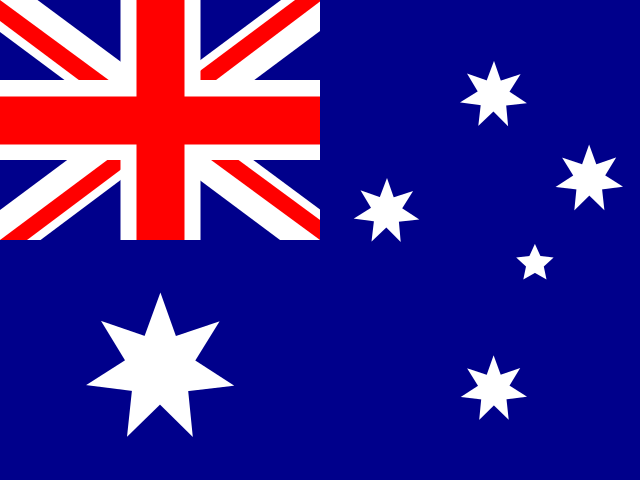
Overview
Australia, officially the Commonwealth of Australia, covers the mainland of the Australian continent, the island of Tasmania and many smaller islands. With a land area of about 7.69 million square kilometres it is the sixth-largest country in the world. The mainland is the flattest and driest inhabited continent, and the country is often called the island continent.
The landscape ranges from huge central deserts to tropical rainforest along parts of the coast. Around 70% of the land is arid or semi-arid, and the population is packed into the coastal fringes, above all the south-east. Australia is one of 17 megadiverse countries, with a very high share of endemic animals and plants.
It is a federation of six states and several territories, run as a parliamentary democracy with a constitutional monarchy. The economy is highly developed, rich in resources and closely tied to Asia, with China the largest trading partner. Australia ranks high for quality of life, health, education, economic freedom and civil liberties.
It describes itself as, and is described as, a middle power. It belongs to the UN, G20, OECD, WTO, APEC, the Pacific Islands Forum and the Commonwealth of Nations, and takes part in the ANZUS, AUKUS and Five Eyes security arrangements. It is a major non-NATO ally of the United States.
History
Humans are thought to have reached the Australian continent 50,000 to 65,000 years ago, crossing from what is now Southeast Asia by land bridges and short sea voyages. Indigenous Australians form two broad groups: Aboriginal peoples of the mainland and many islands (including Tasmania), and Torres Strait Islanders, a distinct Melanesian people. By the time Europeans arrived, over 250 Aboriginal languages were spoken and the societies were among the oldest continuing cultures on Earth.
The first documented European landing was by the Dutch ship Duyfken under Willem Janszoon in 1606. Luís Vaz de Torres passed through the strait now bearing his name the same year. Abel Tasman reached Van Diemen's Land in 1642 and charted the northern coast in 1644. Dutch navigators went on to map much of the northern and western coasts.
British colonisation began in 1788 with the penal colony of New South Wales. A settlement followed in Van Diemen's Land (Tasmania) in 1803, and in 1813 Blaxland, Lawson and Wentworth crossed the Blue Mountains, opening the interior to settlers. Britain extended its claim to the entire continent in 1827, the Swan River Colony (Perth, later Western Australia) was founded in 1829, and further colonies were carved out of New South Wales. Settlers had explored most of the continent by the middle of the 19th century, and five additional self-governing colonies had appeared, each with responsible government by 1890.
The colonies federated on 1 January 1901 after about a decade of conventions and referendums, creating the Commonwealth of Australia under a new Constitution. Australia was a self-governing dominion of the British Empire, a founding member of the League of Nations (1920) and later of the United Nations (1945). It adopted the Statute of Westminster in 1942, backdated to 1939. The Australian Capital Territory was set up in 1911 for the future capital, Canberra; Melbourne was the temporary seat of government from 1901 to 1927. The Northern Territory passed from South Australia to the Commonwealth in 1911. Australia administered Papua and New Guinea until their independence in 1975.
In the First World War about 324,000 Australians served overseas; roughly 60,000 died and 152,000 were wounded. The 1915 Gallipoli campaign is widely seen as a formative national moment and is marked each year on Anzac Day. In the Second World War, the fall of Singapore in 1942 and Japanese attacks on Australian soil, including the bombing of Darwin, shifted Australia's main security partnership from Britain to the United States. The ANZUS treaty has linked the two since 1951.
After the war, living standards, leisure time and suburbs expanded. Governments promoted mass immigration from Europe under the slogan 'populate or perish', and the White Australia policy was gradually relaxed from the 1960s and fully ended in 1973. Australia fought in Korea, Malaya and Vietnam during the Cold War. A 1967 referendum let the federal government legislate for Aboriginal Australians and include them in the census. The High Court's Mabo decision recognised native title by rejecting the idea that the land belonged to no one before settlement.
The Australia Acts of 1986 cut the last constitutional links with the UK while keeping the monarch as King or Queen of Australia. In a 1999 referendum, 55% voted against becoming a republic. Australia joined the US in Afghanistan (2001 to 2021) and Iraq (2003 to 2009). Immigration from Asia grew strongly and trade shifted toward East Asia. COVID-19 brought lockdowns and border controls from March 2020, eased after vaccines arrived in 2021; in October 2023 the pandemic was declared no longer a communicable disease incident of national significance.
Climate
Australia's climate runs from wet tropical in the north-east and north-west to arid in the centre. The south coast is temperate and humid, with winter frosts and snow in the south-eastern highlands and Tasmania. The country sits in the horse latitudes, which favour dry conditions. Average annual rainfall on the mainland is about 470 mm, about 70% of the land is arid or semi-arid, and about 18% is desert.
Rainfall varies strongly from year to year and is shaped by El Niño–Southern Oscillation, the Indian Ocean Dipole and the Southern Annular Mode, so droughts and floods are frequent. The north gets a summer monsoon and tropical cyclones; the south gets winter rainfall from low-pressure systems. The north-west is the hottest region and the south-east the coolest. Bushfire conditions are common in the south.
Major cities (climate descriptions approx., general knowledge): Sydney has a humid subtropical climate with warm, humid summers and mild winters. Melbourne is temperate oceanic with changeable weather, mild to hot summers and cool winters. Brisbane is humid subtropical with hot, wet summers and mild, dry winters. Perth has a Mediterranean climate with hot dry summers and mild wet winters. Adelaide is also Mediterranean, with hot dry summers and cool wet winters. Darwin in the far north is tropical with a wet season and a dry season. Canberra, the capital, is inland and has a temperate climate with warm summers, cold winters with frosts, and occasional light snow on nearby ranges.
Temperatures have risen about 1.5 °C since 1910, with more extreme heat and heavy rain events. Southern Australia has seen less April to October rain since 1970 and a longer bushfire season since the 1950s. Northern rainfall has increased since the 1970s, tropical cyclone numbers have fallen since 1982, alpine snow has declined since the late 1950s, and sea levels are rising.
Government and politics
Australia is a constitutional monarchy, parliamentary democracy and federation, and has kept its largely unchanged constitution since 1901. It blends British features (a fused executive, constitutional monarchy, strong party discipline) with American ones (federalism, written constitution, a strong Senate with equal state representation), a mix sometimes called a 'Washminster mutation'.
Federal power is split three ways. The legislature is the bicameral Parliament of the monarch, Senate and House of Representatives. The executive is the Australian Government, led by the prime minister, who commands a majority in the House. The judiciary is headed by the High Court. King Charles III is represented by the governor-general federally and by governors in each state; in practice they act on ministerial advice, though reserve powers exist, most famously used in the 1975 dismissal of the Whitlam government. After elections on 3 May 2025 the prime minister is Anthony Albanese of the Labor Party.
The Senate has 76 members: twelve from each state and two from each mainland territory. The House has 150 members from single-member electorates, allocated by population with at least five per state. The House term is a maximum of three years, and senators generally serve overlapping six-year terms, so about 40 Senate seats are contested each election unless there is a double dissolution. Voting is compulsory for citizens aged 18 and over. The House uses preferential voting; Tasmania and the ACT use the Hare-Clark system for their own parliaments. The main groupings are the centre-left Labor Party and the centre-right Coalition of the Liberal and National parties; the Greens have been the third-largest party since 2004. The date and result of any election after the retrieval date are not covered.
Division of powers: the six states (New South Wales, Victoria, Queensland, Western Australia, South Australia, Tasmania) hold general lawmaking power except in the areas the constitution gives exclusively to the Commonwealth. The Commonwealth may legislate only on listed topics, but its laws override inconsistent state laws. Its power has grown over time through broad court interpretation and because states depend heavily on federal grants. In health, states run hospitals and related outpatient services while the Commonwealth funds Medicare, medicines subsidies and general practice. In education, states and territories hold primary responsibility, with the Commonwealth influencing through funding and a national curriculum used since 2014. Taxation is largely federal, with grants flowing to states (the source stresses this financial reliance).
Each state and the two main mainland territories (the Australian Capital Territory and the Northern Territory) has its own parliament, headed by a premier or, in the territories, a chief minister. Parliaments are unicameral in Queensland, the ACT and the Northern Territory, and bicameral elsewhere. The Commonwealth directly administers the Jervis Bay Territory and external territories: Ashmore and Cartier Islands, Coral Sea Islands, Heard Island and McDonald Islands, Christmas Island, the Cocos (Keeling) Islands, Norfolk Island and the Australian Antarctic Territory. Macquarie Island belongs to Tasmania and Lord Howe Island to New South Wales. Australia claims about 42% of Antarctica, a claim recognised by only four other countries.
In foreign policy, three bipartisan pillars are the US alliance, engagement with the Indo-Pacific and support for international rules and institutions. Australia is a UN founding member and belongs to the Commonwealth, OECD, G20, Pacific Islands Forum, Pacific Community, ASEAN+6 and East Asia Summit. It is part of Five Eyes, ANZUS and AUKUS, and has the world's fourteenth-highest military spending.
Economy
Australia has a highly developed mixed-market economy rich in natural resources. It is the twelfth-largest in nominal terms and twenty-third by PPP. It had the second-highest wealth per adult after Luxembourg as of 2021, and ranks among the highest for per capita income. Services make up about 71.2% of GDP, industry 25.3% and agriculture 3.6%.
The labour force is about 14.6 million, with unemployment of 4.2% as of December 2025. The Australian Council of Social Service puts poverty above 13.6% of the population (over 3.2 million people). The Australian dollar is the national currency and is also used by Kiribati, Nauru and Tuvalu. Government debt was about 963 billion in June 2022, over 45% of GDP. Household debt is among the highest in the world, and house prices are among the highest, especially in big cities, which matters for anyone planning to live there.
China is the largest trading partner, taking roughly 40% of exports and supplying 17.6% of imports; Japan, the United States and South Korea are other key export markets. Australia is the 24th-largest exporter and 21st-largest importer. It ranked tenth on the Human Development Index (2022) and twelfth on the Index of Economic Freedom. Tourism drew 9.5 million international visitors in 2019, bringing about 45.7 billion in receipts.
Electricity in 2021–22 came from black coal (37.2%), gas (18.8%), solar (13.3%), brown coal (12%), wind (11.1%), hydro (6.5%) and other sources. Overall energy use was led by oil (37.3%), then coal and gas. Renewables supplied 27.7% of electricity in 2020, and targets are 82% renewable electricity by 2030 and net zero emissions by 2050.
Research and development spending was about 35.6 billion in 2019 (1.79% of GDP). The tech sector contributes about 167 billion a year and employs around 861,000 people, and Sydney and Melbourne startup ecosystems were valued at 34 billion in 2022. Australia ranked 22nd in the Global Innovation Index 2025. With 0.3% of the world's population it produced over 4% of published research in 2020. Notable Australian contributions include atomic absorption spectroscopy, key components of Wi-Fi and the first successful polymer banknote. Fourteen Australian scientists have won Nobel prizes in science or medicine. Space-related facilities include the Square Kilometre Array, Siding Spring Observatory and the Canberra Deep Space Communication Complex.
Demographics and urbanization
The population was estimated at 27.8 million in December 2025, 54th in the world and the largest in Oceania. Density is about 3.4 people per square kilometre, among the lowest anywhere, but about 95% live within 100 km of the coast, against a world average of 39%. Central Melbourne exceeds 38 people per square kilometre. Most people live in the east, especially the south-east belt between South East Queensland and Adelaide.
The country is highly urbanised: 67% lived in Greater Capital City Statistical Areas in 2018. Five metropolitan areas have more than one million people: Sydney and Melbourne (each over 5 million), plus Brisbane, Perth and Adelaide (approx. 2.7 million, 2.2 million and 1.4 million respectively, general knowledge). The average age was 39 in 2021, and the population is ageing.
About 30% of residents were born overseas, the highest share among major Western nations, and Australia has the world's eighth-largest immigrant population. In 2022–23, 212,789 permanent migrants arrived, and net migration including temporary residents was 518,000, mostly via skilled visas. Asia is now the biggest source region. At the 2021 census, ancestry groups included 57.2% European, 33.8% Oceanian, 17.4% Asian, 3.2% North African and Middle Eastern, 1.4% from the Americas and 1.3% Sub-Saharan African (people may name two ancestries). Indigenous people made up 3.8%.
English has no legal status but is the de facto national language. In 2021, 72% spoke only English at home; the next most common were Mandarin (2.7%), Arabic (1.4%), Vietnamese (1.3%), Cantonese (1.2%) and Punjabi (0.9%). Over 250 Aboriginal languages existed at first contact; 167 Indigenous languages were spoken at home by 76,978 people in 2021, and many are endangered.
There is no state religion. In 2021, 38.9% said they had no religion (15.5% in 2001), and 43.9% were Christian (Catholic 20%, Anglican 9.8%). Islam was 3.2%, Hinduism 2.7%, Buddhism 2.4%, Sikhism 0.8% and Judaism 0.4%.
Life expectancy is 83 years (81 for men, 85 for women), fifth-highest globally. Australia has the world's highest skin cancer rate, and 63% of adults are overweight or obese. Health spending was about 9.91% of GDP in 2021. Medicare, universal since 1981, is funded partly by a 2% levy. School is compulsory from about age 5 to 16, run mainly by the states and territories, with some states requiring school or training to 17.
Capital city
Canberra is Australia's capital. It lies inland in the Australian Capital Territory, between Sydney and Melbourne (general knowledge: it was chosen partly as a compromise between those two rivals). The territory was created in 1911 for the purpose, and Melbourne served as the temporary seat of government until 1927. Canberra is a planned city, designed by Walter Burley Griffin around an artificial lake (approx., general knowledge).
Its population is approx. 470,000 (general knowledge), far smaller than Sydney or Melbourne, so it is not among the two cities with over five million people. The climate is temperate and continental-influenced: warm to hot dry summers, cold winters with frosts, and low rainfall spread through the year (approx.).
Canberra is the political capital: Parliament, the High Court, the federal ministries and the Governor-General's office are there, along with national museums, galleries and embassies, and the Canberra Deep Space Communication Complex nearby. It is also an education and research centre, home to major universities and national institutions (approx., general knowledge). The ACT is a self-governing territory with its own unicameral parliament and chief minister, and has two senators.
Canberra is not the main economic city. Sydney and Melbourne are the largest business, finance and population centres, with Sydney the largest city overall. Canberra's economy is dominated by government, public administration and related services. Australia has only one national capital, but the state capitals Sydney, Melbourne, Brisbane, Perth and Adelaide are the key urban centres for expats seeking work and services.
About this summary
Facts from general knowledge, all approximate: Canberra's metro population (about 470,000), Sydney, Melbourne, Brisbane, Perth and Adelaide metro populations, city climate descriptions and temperatures, Canberra's role details (national institutions, universities, public-service employment), the Greater Sydney and Melbourne comparisons with Canberra as an economic centre, the Lake Burley Griffin and Walter Burley Griffin design detail, and the Canberra site choice as a compromise between Sydney and Melbourne. Population figures in the source differ slightly between sections (almost 29 million in the lead, 27.8 million in the demographics section); the lead figure is treated here as a rounded or later estimate and the demographics figure is used for the key figures. Election outcomes after the retrieval date (2026-10-09) are not covered.