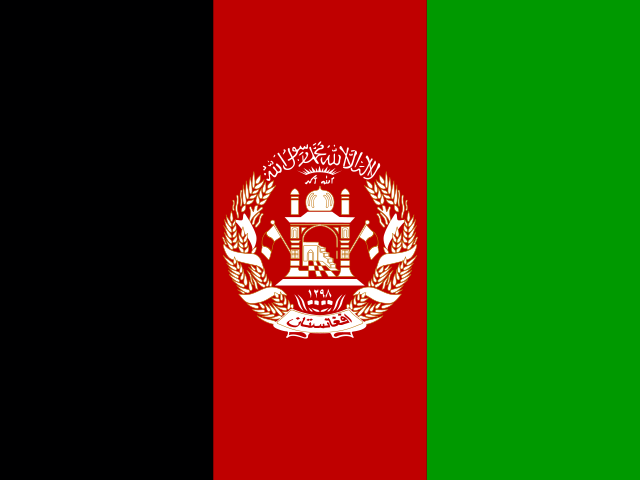
Overview
Afghanistan, officially the Islamic Emirate of Afghanistan under the Taliban authorities, is a landlocked country at the meeting point of Central and South Asia. It borders Pakistan (east and south), Iran (west), Turkmenistan (northwest), Uzbekistan (north), Tajikistan (northeast) and China (far northeast and east).
The land area is about 652,864 sq km (252,072 sq mi), roughly the size of Texas. The terrain is mostly mountainous, with plains in the north and southwest separated by the Hindu Kush range. Population estimates vary widely, from about 35.7 million (national statistics authority, 2024) to over 42 million (UN), and the source gives a general range of 35 to 50 million.
The area has been inhabited since the Middle Paleolithic and has been crossed or ruled by many powers, including the Achaemenids, Alexander the Great, the Mauryas, Arab Muslim armies, the Mongols, the British, the Soviet Union and a US-led coalition. Since the late 1970s the country's history has been shaped by coups, invasions, insurgency and civil war.
The Taliban returned to power in August 2021 after taking Kabul. Their government is widely unrecognized internationally, mainly over human rights concerns, especially the treatment of women. As of July 2025 only Russia had formally recognized it.
Afghanistan has resources such as lithium, iron, zinc and copper, and is described in the source as the third largest producer of saffron and cashmere. It remains among the least developed countries, with one of the lowest output per capita figures in the world, and has faced terrorism, poverty and child malnutrition. It is a member of SAARC and a founding member of the Organization of Islamic Cooperation.
History
Excavations indicate people lived in the territory around 50,000 years back or more, and that farming communities here were among the world's earliest. Finds span the Paleolithic, Mesolithic, Neolithic, Bronze and Iron Ages. Urban life is thought to have begun by about 3000 BCE, with early towns such as Mundigak near Kandahar. Some scholars compare the value of its archaeological sites to Egypt's.
Arab Muslims reached Herat and Zaranj in 642 CE and Islam spread eastward, with some locals accepting it and others rebelling. Before that, the region mixed Zoroastrian, Buddhist, Greco-Buddhist, Iranian, Hindu, Christian and Jewish traditions, often blended together.
In 1709 Mirwais Hotak, a Ghilzai tribal leader, rebelled against the Safavids at Kandahar and founded his own kingdom. His son Mahmud took the Persian capital Isfahan in 1722 and proclaimed himself King of Persia, but the Afghan dynasty was later driven out of Persia.
The modern state is traced to the Durrani Empire of the 18th century under Ahmad Shah Durrani, though Dost Mohammad Khan is sometimes seen as founder of the first modern Afghan state. Ahmad Shah ran campaigns into Khorasan in 1750–51 and 1754–55.
In the early 19th century the empire was pressed by Persia in the west and the Sikh Empire in the east. After Fateh Khan of the Barakzai was killed in 1818, civil war broke out and the territory split into polities such as the Principality of Qandahar, the Emirate of Herat and the Khanate of Qunduz.
Afghanistan became a buffer in the Great Game between Britain and Russia. The British were repelled in the First Anglo-Afghan War, won the Second, and after the Third (1919) Afghanistan was free of foreign political control. It emerged as the independent Kingdom of Afghanistan in 1926, a monarchy that lasted almost half a century.
In 1973 King Zahir Shah was overthrown by his cousin Mohammad Daoud Khan, who set up a republic and ruled as an autocrat. In April 1978 the communist PDPA seized power in the Saur Revolution, killing Daoud and founding the Democratic Republic of Afghanistan under Nur Muhammad Taraki. Infighting led the Soviet Union to invade in 1979.
The mujahideen prevailed in the Soviet–Afghan War and the Soviets withdrew in 1989. The socialist republic fell and the Islamic State of Afghanistan was set up under the Peshawar Accord, but a second civil war between mujahideen factions began in 1992, with heavy damage to Kabul. The Taliban emerged in 1994 as a student militia from madrassas in Pakistan, with Pakistani military support, and controlled most of the country by 1996.
In October 2001 the United States invaded after the Taliban refused to hand over Osama bin Laden, and with the Northern Alliance ended the Taliban regime. An interim administration under Hamid Karzai formed in December 2001 and the UN-mandated ISAF was set up. A constitution adopted in 2004 created the Islamic Republic of Afghanistan. Nearly five million Afghans were repatriated after 2002. NATO troop numbers peaked at 140,000 in 2011 and fell to about 16,000 by 2018. Ashraf Ghani became president in 2014 in the first democratic transfer of power in the country's history. NATO ended ISAF combat operations on 28 December 2014 and began Operation Resolute Support. A report titled Body Count estimated 106,000–170,000 civilians were killed by all parties.
The US–Taliban deal signed in Qatar on 19 February 2020 is cited in the source as a key factor in the collapse of the Afghan National Security Forces. NATO announced withdrawal on 14 April 2021, the Taliban offensive followed, and they captured Kabul on 15 August 2021. President Ghani left the country. Vice president Amrullah Saleh declared himself caretaker president and an anti-Taliban front formed in the Panjshir Valley, but the Taliban took most of Panjshir by early September 2021.
Climate
Afghanistan's climate is continental. In the central highlands and in the glaciated northeast, which takes in Nuristan and the Wakhan Corridor, winters are harsh: January averages dip below −15 °C, and minimums may reach about −26 °C. At lower elevations, summers are hot. The Sistan Basin in the south-west, the Jalalabad basin in the east, and the Amu River's Turkestan plains in the north are all examples. In those places, July averages go beyond 35 °C, and readings can climb past 43 °C.
Summers are generally dry, with most rain between December and April. The north and west lowlands are driest and the east gets more precipitation. The country is mostly outside the monsoon zone, apart from Nuristan, which occasionally gets summer monsoon rain.
Major cities: Kabul (high plateau, approx. 1,800 m) has cold snowy winters and warm dry summers. Kandahar in the south and Jalalabad in the east are very hot in summer. Herat in the west is hot and dry in summer with cold winters. Mazar-i-Sharif and Kunduz in the north have hot summers and cool to cold winters. These city descriptions are approx. general knowledge.
Afghanistan is among the countries most vulnerable to climate change. Severe drought affects 25 of 34 provinces and over half the population, driving desertification, food and water insecurity and displacement. Short intense rain raises flood and landslide risk. About 14% of glacier coverage was lost between 1990 and 2015, raising the risk of glacial lake outburst floods. Climate change could displace an additional 5 million people internally by 2050.
The Hindu Kush region around Badakhshan is seismically active. A June 2022 magnitude 5.9 earthquake near the Pakistan border killed at least 1,150 people, and a magnitude 6.3 quake northwest of Herat on 7 October 2023 killed over 1,400.
Geography: the highest point is Noshaq at 7,492 m and the lowest is 258 m on the Amu River in Jowzjan. Forest covers only about 2% of land. Much of the country is dry, the Sistan Basin is among the world's driest regions, and two-thirds of the country's water flows to neighbouring countries. Wildlife includes snow leopards, brown bears, Marco Polo sheep in the Wakhan Corridor, and about 460 bird species. There are three national parks: Band-e Amir, Wakhan and Nuristan.
Government and politics
After the Islamic Republic collapsed in 2021, the Taliban declared an Islamic Emirate. The 2004 constitution was effectively abolished on 15 August 2021, and in August 2022 it was confirmed that Supreme Leader Hibatullah Akhundzada had formally abolished it. A caretaker government was announced on 7 September 2021. A decree of 15 August 2025 dropped the interim label, keeping ministers in post on a permanent basis. The cabinet was men-only and the Ministry of Women's Affairs was abolished.
The government is a centralised unitary system. Day-to-day governance sits with a cabinet headed by a prime minister, under the Supreme Leader. In V-Dem indices Afghanistan is classed as a closed autocracy, ranking 176th and 177th of 179 in electoral and liberal democracy. The traditional loya jirga (grand assembly) has been held since at least 1747, most recently in June–July 2022.
Sub-national structure: there are 34 provinces (wilayat) and nearly 400 districts. Provincial governors are appointed by the prime minister and represent the central government in Kabul, handling administrative and formal matters. District governors are chosen by provincial governors. Provincial councils exist in law with four-year terms and a role in development planning and monitoring, and mayors are in practice appointed although the earlier constitution and electoral law called for elections. Provinces therefore have no independent tax, health, law or education powers, and these remain centrally directed. The source describes no special autonomous jurisdictions.
Recognition: as of July 2025 only Russia had recognized the Taliban government. The UN has said recognition is not possible while restrictions on female education and employment remain. The government has unofficial ties with China, Pakistan and Qatar. Relations with Pakistan have often been tense over the Durand Line border and alleged Pakistani links to insurgent groups. Afghanistan joined the UN in 1946. The US rescinded Afghanistan's major non-NATO ally status in July 2022.
Military and rights: the Taliban's forces captured large amounts of equipment from the former Afghan forces, valued at an estimated US$83 billion. Homosexual acts carry up to a year in prison under the earlier Penal Code and can be punished by death under Sharia law. Girls' secondary education has been restricted (see demographics). The Taliban suspended polio vaccination campaigns on 16 September 2024, though campaigns were later carried out in 2025 and 2026.
Economy
Nominal GDP was about $20.1 billion in 2020 (about $81 billion in PPP), with GDP per capita about $611 nominal and $2,459 PPP. Output per capita is among the lowest of any country. Services contribute 55.9% of GDP, agriculture 23% and industry 21.1%. Imports exceed $7 billion against exports of about $784 million, mainly fruit and nuts. External debt is about $2.8 billion.
The currency is the Afghani (AFN), roughly 75 per US dollar, issued by Da Afghanistan Bank. Banks include Afghanistan International Bank, New Kabul Bank, Azizi Bank and Pashtany Bank. Afghanistan belongs to the WTO, SAARC, ECO and OIC and is an SCO observer. In 2018 imports came mostly from Iran, China, Pakistan and Kazakhstan, and 84% of exports went to Pakistan and India.
After August 2021 the US froze about $9 billion of central bank assets. GDP is estimated to have fallen about 20%, then stabilized thanks to limits on smuggled imports and banking transactions plus UN aid. From 2023 there were signs of recovery, with stable exchange rates, low inflation and rising exports, and the Afghani was briefly the world's best performing currency in the third quarter of 2023.
Agriculture employs about 40% of the workforce. Products include pomegranates, grapes, apricots and melons. Saffron, grown especially in Herat, was ranked world's best from 2012 to 2019, with record output of 19,469 kg in 2019. Cannabis production was banned by decree in March 2023. Opium was the major crop, but Taliban campaigns cut poppy cultivation by over 95% by November 2023, per a UN report. Cheap pumps and solar power expanded farming in the southwestern deserts in the 2010s, though water is limited.
Mining: resources include coal, copper, iron ore, lithium, uranium, rare earths, chromite, gold, zinc, natural gas and oil. US and Afghan officials in 2010 estimated untapped deposits at $1 trillion or more. The Aynak copper mine was leased to China Metallurgical Group in 2007 for $3 billion, and an Indian state steel firm won rights to the Hajigak iron ore deposit. A 2011 oil contract was signed with CNPC for fields along the Amu Darya. Lithium reserves are cited at about 21 million tonnes.
Other: rugs were the fourth most exported item group in 2016–17. About 400,000 people enter the labor market each year. Construction projects include New Kabul City (about $35 billion). Biocapacity is 0.43 global hectares per person, versus consumption of 0.73.
Demographics and urbanization
Population is estimated at 35.7 million (national statistics authority, 2024) or over 42 million (UN). In 1979 it was about 15.5 million. Growth is about 2.37% a year, and the population could reach 82 million by 2050 on current trends. Total fertility was about 4.4 in 2024. About 3 million Afghans live temporarily in Pakistan and Iran.
Urbanization is low: about 26% (CIA estimate, 2020), or 25.3% urban, 70.4% rural and 4.3% nomadic per the source. Urban growth has been rapid, driven by returnees, displaced people and rural migrants, and is concentrated in a few cities.
Kabul is the largest city with about 5 million people. Other large cities lie in a ring around the Central Highlands: Kandahar (south), Herat (west), Mazar-i-Sharif and Kunduz (north) and Jalalabad (east). Populations of these are approx. several hundred thousand each.
Ethnicity: no census since 1979, and no group is a majority. Pashtuns are about 37–42%, Tajiks about 27%, Hazaras and Uzbeks about 9% each, with ten other recognized groups.
Languages: Dari and Pashto are official and bilingualism is common. Dari is the lingua franca (spoken by about 78%), Pashto about 50%, Uzbek 10%, English 5%. Many understand Urdu-Hindi, and some know Russian.
Religion: about 99.7% Muslim, mostly Sunni Hanafi; Pew estimates up to 90% Sunni and 7% Shia. Small Sikh and Hindu communities remain (about 250 in 2021 per Deutsche Welle), Christians number 500–8,000 and practise secretly, and the Jewish community has almost entirely left.
Education: over 16,000 schools and about 9 million students, about 60% male. The literacy rate (15+) was 43.02% in 2018 (men 55.48%, women 29.81%). Over 174,000 university students, about 21% female. The Taliban have barred girls and women from secondary schools, though six provinces were reported to allow girls' schools from grade 6. Leading universities are the American University of Afghanistan and Kabul University.
Capital city
Kabul is the capital and largest city, with about 5 million people (approx.). It lies in the east on a high plateau in the Hindu Kush region, at roughly 1,800 m (approx.).
Climate (approx.): cold winters with snow and warm to hot dry summers, with most precipitation in winter and spring.
Role: Kabul is the seat of the Taliban government and of the central administration that appoints provincial governors. It is also the leading university center (Kabul University, American University of Afghanistan), and it has grown quickly through returnees, displaced people and rural migrants. It was captured by the Taliban on 15 August 2021.
Kabul is both political capital and the main economic city in practice (approx.), and the source mentions the large New Kabul City project next to it. Kandahar is the base of the Supreme Leader and a centre of Taliban power (according to a news report cited in the source), but the national capital remains Kabul.
About this summary
Kabul's climate and role, city populations, and some recent-event context are approximate and drawn from general knowledge rather than the source.